

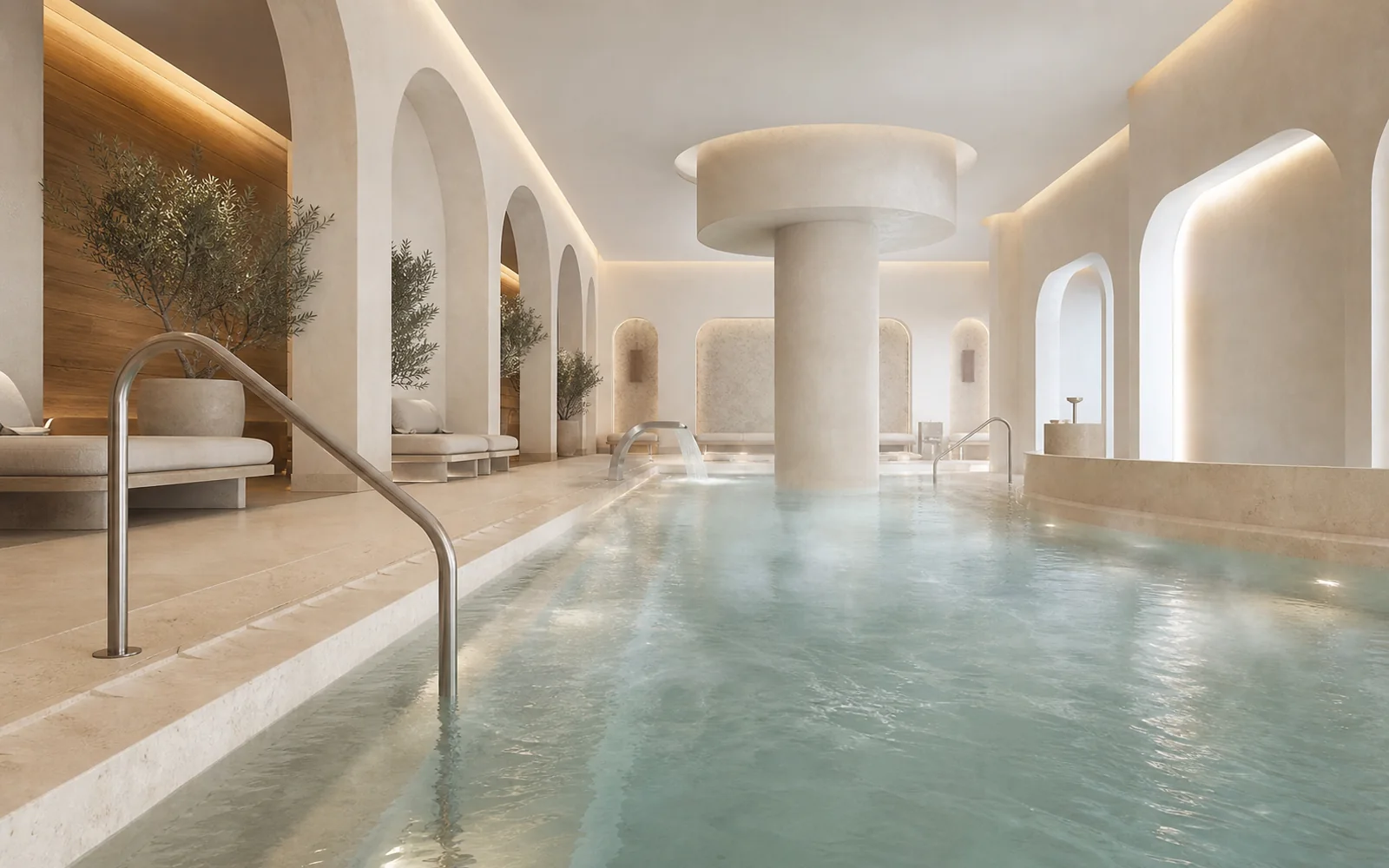
Thermal Pool Solutions: Systems Designed for Mineral Water
Hot, mineral-rich thermal water quickly wears out standard pool materials. We explain how material selection, filtration, corrosion and scale control, and heat management must be engineered for it.
Hot, mineral-rich thermal water quickly wears out standard pool materials. We explain how material selection, filtration, corrosion and scale control, and heat management must be engineered for it.
Thermal water comes from its source at high temperature and with a rich mineral content. Calcium, magnesium, sulfate, chloride and, in some sources, sulfur compounds create a chemical environment that a standard swimming pool would never encounter. This water acts much more corrosive when in contact with conventional materials and equipment; For this reason, the thermal pool is designed with a completely different engineering approach.
Temperature is the determining factor of this table. As water warms, minerals become more prone to precipitation, metals become more prone to corrosion, and seals become more prone to fatigue. Problems that occur over the years in a standard pool can manifest themselves in a much shorter time in a thermal pool. When the thermal system is designed correctly from the beginning, this accelerated wear is taken into account and the design is made accordingly.
Material selection in thermal pools is the decision that directly determines the life. Structures, pipelines, fittings and equipment bodies in contact with water; It must maintain its chemical stability under high temperatures and aggressive mineral loads. An incorrectly selected material will show itself in punctures, cracks or loss of color within a few seasons.
Ordinary steels and some alloys are known to quickly succumb to corrosion in thermal water; Therefore, the metals to be used in the wet volume are carefully selected according to the water chemistry. On the coating side, the surface is expected to consist of chemically stable materials that are resistant to temperature and mineral load. Gaskets and gasket materials should also be selected that will not lose their flexibility in hot water.
The material decision is not made alone, but by looking at the laboratory analysis of the water. The chemical fingerprint of each thermal source is different; The mineral that is dominant in one may remain secondary in the other. For this reason, a solution that works smoothly in one region may be inadequate in another. The correct approach is to set up the project according to the actual water profile of the source.
Filtration of thermal water is critical not only for clarity but also for system life. Suspended mineral particles and compounds that tend to precipitate accumulate in the filter and pipeline over time. A well-designed circulation keeps the water moving at every point in the pool, preventing the formation of stagnant areas and precipitation there.
Filter type and sizing is determined by the mineral load of the water. In waters with high precipitation tendency, a filter system with more frequent backwashing and easier maintenance is preferred. Additionally, positioning the equipment easily accessible for maintenance makes a big difference during the operation phase; The maintenance frequency in thermal pools is higher than standard pools and should be designed accordingly.
The two main enemies of the thermal pool are corrosion and scale; Both are directly related to the chemical balance of water. When the water chemistry is unbalanced, metal surfaces begin to corrode, and when the balance shifts in the other direction, surfaces and pipes begin to be covered with lime crust. The aim is to keep the water in a balanced band between these two extremes.
For this, regular water monitoring and balance correction when necessary are essential. Limescale accumulation is not just an appearance problem; By narrowing the pipe cross-section, it weakens circulation, reduces heating efficiency and shortens equipment life. Corrosion is the beginning of the path to leakage and structural damage. A system that starts with the right material selection, when supported by regular water management, can keep both of these problems at bay for many years.
Automatic dosing and continuous monitoring reduce human error, especially in continuously operated spa and hotel pools. Compared to manual monitoring, automatic systems keep the water balance more stable throughout the day and prevent sudden deviations.
The water in the thermal pool is already hot, but maintaining and controlling this temperature is a separate engineering issue. If the water coming from the source is too hot, it should be brought to a safe usage temperature; if it tends to cool, its temperature should be maintained. The largest source of heat loss is the water surface; Therefore, covering and insulation solutions directly affect the energy bill.
It should not be forgotten that heat is a source. In a well-designed system, heat recovery from the hot water used can be considered, significantly reducing operating costs. When building insulation, use of cover and correct temperature setting come together, both comfort and efficiency are achieved at the same time. In facilities operated continuously, these gains accumulate throughout the season and turn into meaningful savings.
Thermal springs and thermal hotel pools operate at high occupancy throughout the day and most of the time without interruption. This intensity requires both constant protection of water quality and backing up of equipment to provide uninterrupted service. In a commercial-scale thermal facility, the design must cover the entire water cycle, technical volume and operating scenario beyond a single pool.
In commercial thermal projects, operational continuity, comfort and compliance with legislation are considered together. Our hotel and commercial pool article, in which we discuss the general operation, maintenance and technical infrastructure approach of facilities of this scale in more detail, offers a holistic framework that also includes thermal projects. Thermal water-specific solutions are built on this general framework with resource-specific engineering.
In the work we have carried out in the field of pools, saunas, Turkish baths and spas since 1993, we have seen many times that each thermal source requires a unique solution. A correctly designed thermal pool will provide trouble-free service for years and maintain its value as an investment in your business.
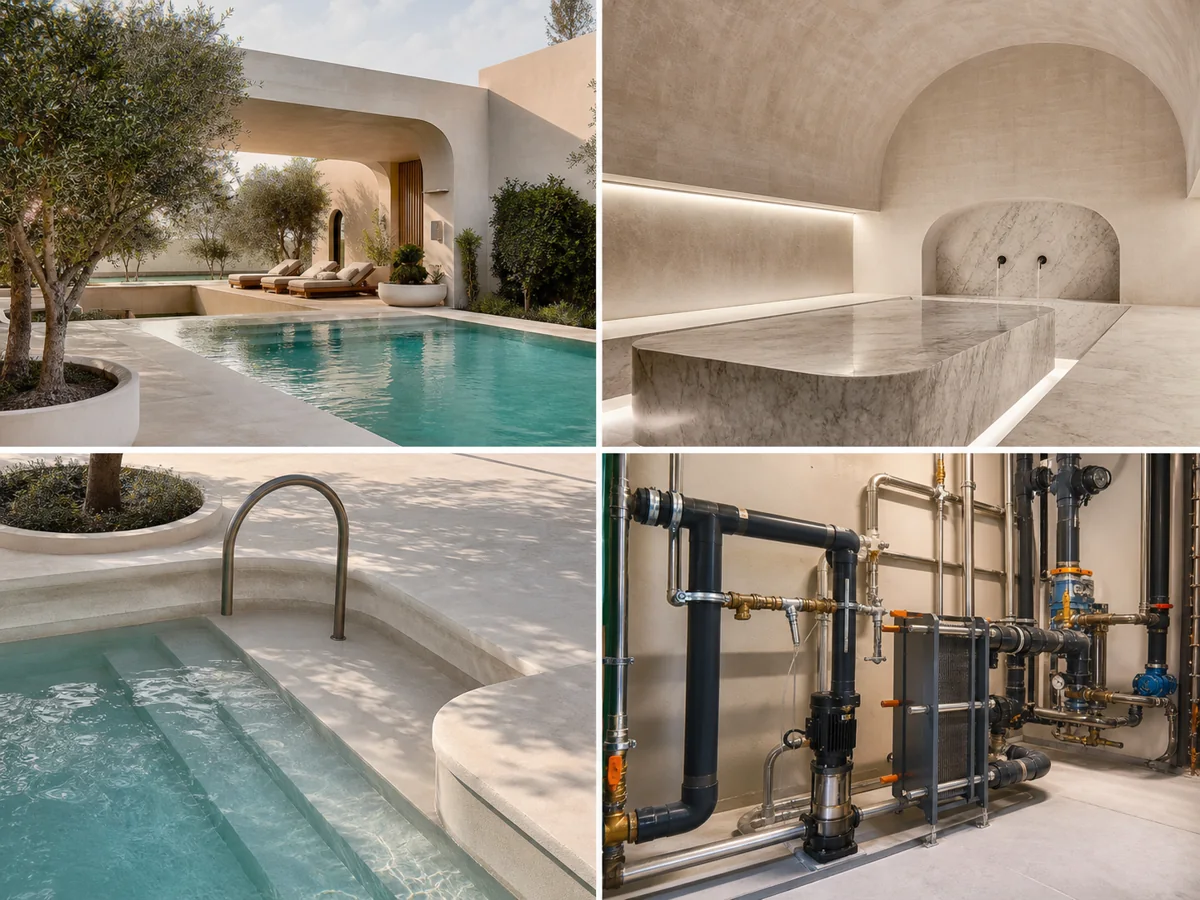
Image gallery
04 görsel
 01
01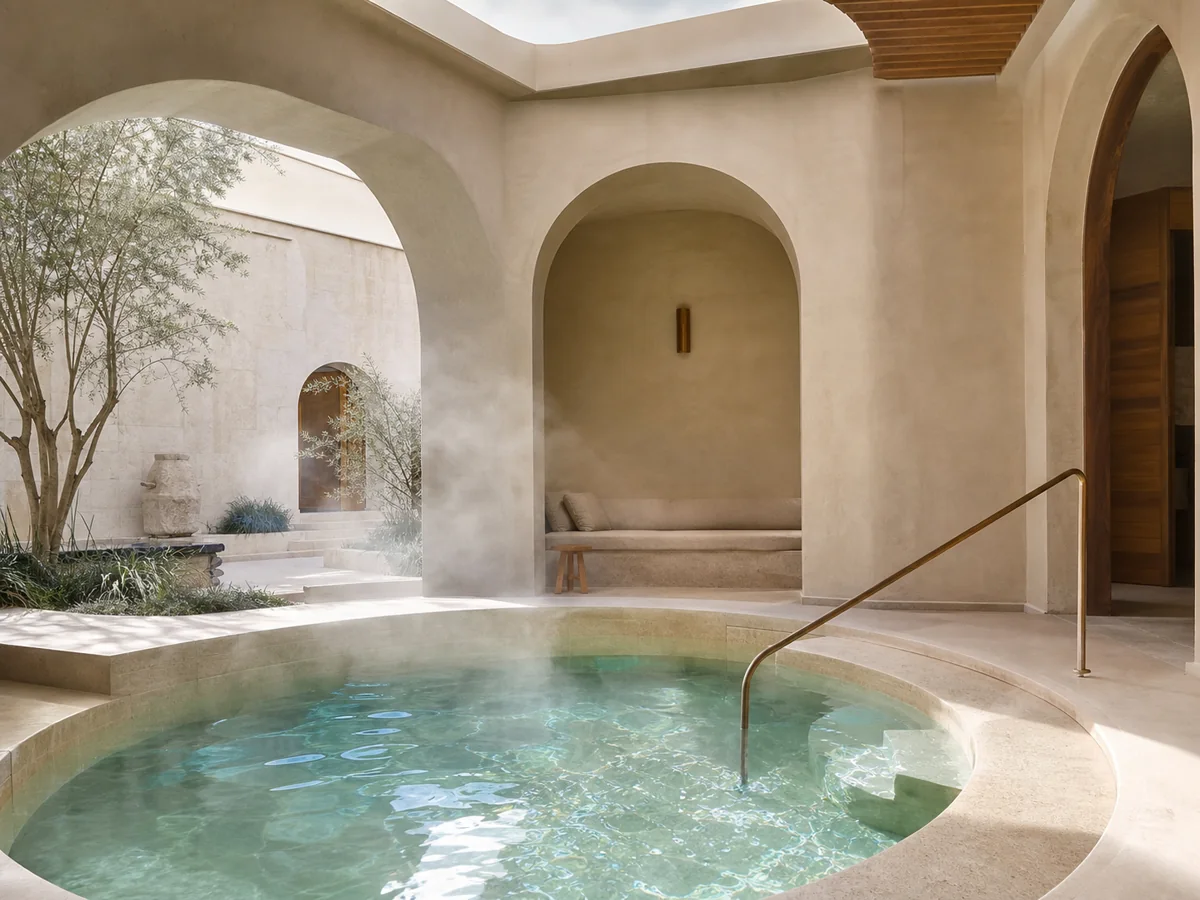 02
02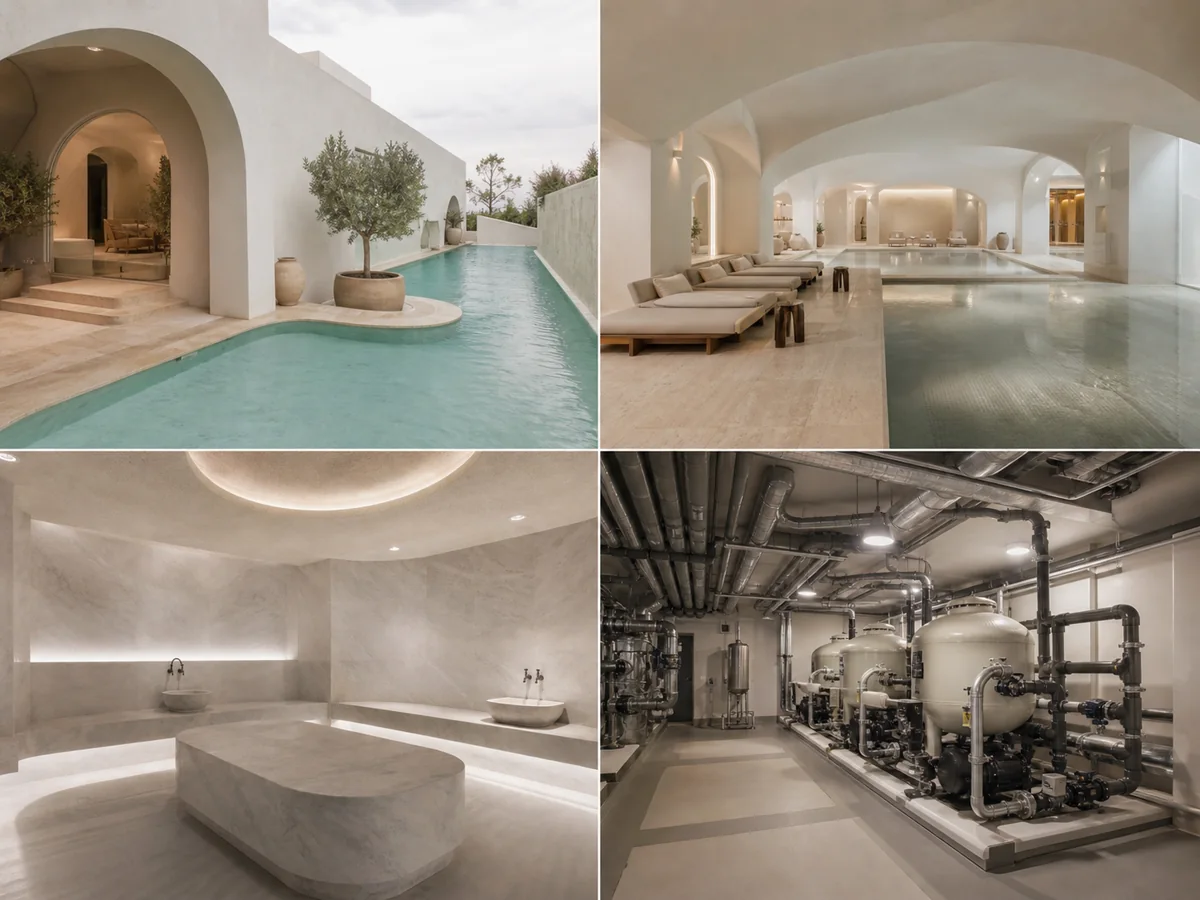 03
03 04
04Company & Contact
To talk about your project, we are one call away.
Legal Name
Çilek Havuz
Founded
1998 · Istanbul
Head Office
Çilek Plaza, Eyüp Sultan Mah. Yakacık Cd. Feshane Cd. No: 2 D:4 D:1, 34885 Sancaktepe / İstanbul
Service Area
All of Türkiye · exports to 14 countries
Related articles
Keep reading.

Sık Sorulan Sorular
Our readers' most asked; with expert answers.
Çilek Havuz Content & Technical Team
Guides & Technical Content
- Response Time
- Same day
- Channels
- Phone · E-mail · WhatsApp
If the answer you are looking for is not here, send your question directly to us and our team will reply as soon as possible.
Book a free site surveySulfur compounds found in some thermal sources can emit a distinctive odor, and this odor can intensify in closed environments. For this reason, strong and correctly designed ventilation in thermal pools is important for both comfort and protection of building materials. The ventilation solution should be planned according to the chemical profile of the source and whether the space is enclosed or not.
Çilek Havuz Content & Technical Team
Since the mineral load and chemical behavior of thermal water may change over time, periodic laboratory analyzes are also valuable in addition to regular water monitoring. These analyzes ensure that material selection and balance management remain in line with the actual water profile. Together, we can determine a resource-specific monitoring program based on the operating intensity of your facility.
Çilek Havuz Content & Technical Team
Since a standard pool is not designed for aggressive mineral load and high temperature, its adaptation to thermal water often requires a comprehensive engineering assessment. Whether the materials, pipeline and equipment can withstand these conditions should be examined one by one. The best approach is to make the adaptation decision based on the analysis of the existing structure and the laboratory profile of the water.
Çilek Havuz Content & Technical Team
While heating is often the biggest item, constantly running circulation pumps, filtration and ventilation also consume significant energy. These items accumulate throughout the season, especially in spa and hotel pools that operate uninterruptedly. Insulation, use of covers and, if possible, heat recovery help keep the total energy load under control.
Çilek Havuz Content & Technical Team
Weakening of water flow, decrease in heating efficiency, accelerated lime crust on surfaces or color change on metal surfaces are often early signs of corrosion or clogging. These symptoms may progress faster in thermal water than in a standard pool. Recognizing these signs early and intervening will prevent a minor problem from turning into costly damage.
Çilek Havuz Content & Technical Team
The right start is to have laboratory analysis of the water before design decisions; Because the chemical fingerprint of each thermal source is different and all material and equipment selection is shaped according to this profile. Decisions made without analysis may work for another source, but may not be sufficient for yours. We can build the process together, starting from the real profile of your source.
Çilek Havuz Content & Technical Team