

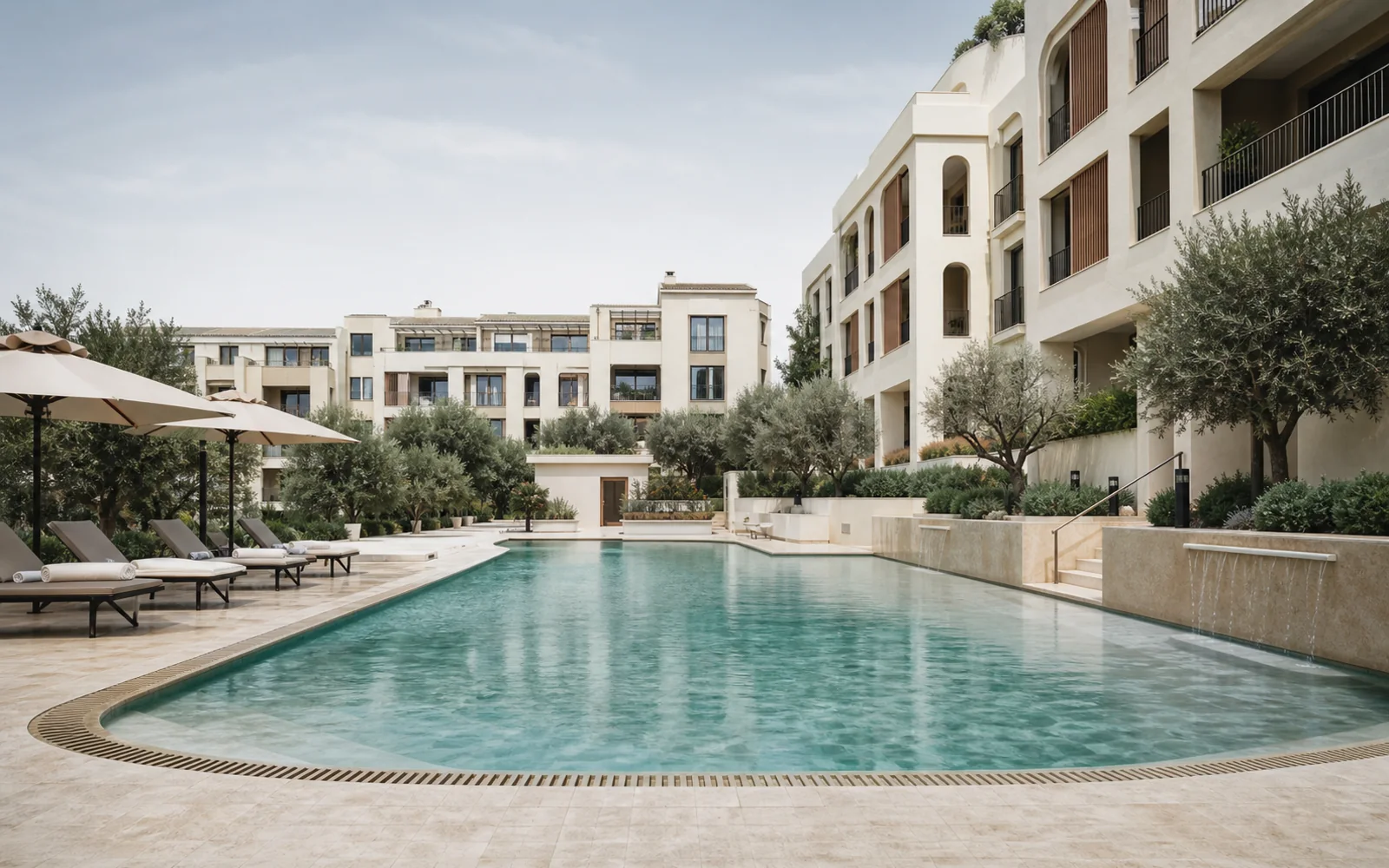
Residential Complex Pools: Management, Regulation, Maintenance
A shared community pool carries responsibilities a private garden pool never does. We cover health regulations, operation and maintenance contracts, safety, and management.
A shared community pool carries responsibilities a private garden pool never does. We cover health regulations, operation and maintenance contracts, safety, and management.
A community or apartment pool is a shared facility that is available for use by many people at the same time. This situation brings a responsibility that cannot be compared to a garden pool used by a single family. Intensive and variable use requires constant protection of water quality; The coexistence of different age groups requires security to be designed much more carefully.
Common use also carries a legal and administrative dimension. The site management is responsible for the operation of the pool, and this responsibility covers a wide range of areas, from health legislation to security measures. For this reason, the site pool should be planned from the design stage, taking into account not only aesthetics but also operability and harmony.
Pools open to public use are subject to legislation regulating the health principles of swimming pools. These regulations; It covers many topics, from the chemical and microbiological quality of water to regular sampling, record keeping and standards of technical equipment. The aim is to ensure the health of everyone using the pool.
Regular monitoring and recording of water quality is one of the basic expectations of the legislation. Analyzing water at appropriate intervals, storing the results and presenting them to authorized units when necessary is both a legal obligation and an assurance to users. Connecting this monitoring to a regular system by the management will be protective against both audits and possible disputes.
Since legislation can be updated over time, it is important for administrations to follow the rules in force from reliable sources. This article provides a general framework; It would be appropriate for each facility to confirm its local obligations with the competent authorities.
Regular maintenance of the site pool is often carried out through an operation and maintenance contract with a specialist company. A well-prepared contract clearly defines the responsibilities of the parties, maintenance frequency, how water will be monitored and response times in case of possible malfunctions. Any topic left unclear has the potential to turn into a dispute in the future.
The contract should clearly include the scope of chemical monitoring, cleaning routines, equipment control and reporting. Receiving regular reports allows management to see that work is actually being done and to track the history of water quality. This transparency means both accountability to residents and a secure chain of records for management.
Leaving care to experts does not completely absolve management of its responsibility; but it significantly reduces the risk. A regular and documented maintenance schedule both prolongs the life of the facility and prevents possible health and safety problems.
Safety in public pools is not the result of a single measure, but a series of complementary measures. Covering the pool area with a non-slip surface, visible marking of depth information, regulations controlling children's access and necessary warning signs are parts of this whole. In particular, separating the children's and adult pools significantly reduces the risk of accidents.
Technical security is at least as important as physical measures. Ensuring that discharge points are at safe standards, electrical installations are protected in accordance with the aquatic environment, and regular inspection of equipment prevents invisible but vital risks. Security is an integrity established at the design stage and maintained throughout the operation; Partial solutions added later are often inadequate.
The cost of a site pool is not just about the initial construction cost; The real burden accumulates in operating expenses throughout the season. Water, chemicals, energy and maintenance items can be significantly optimized with a correctly designed system. Energy efficient equipment and good insulation may seem like a cost at first glance, but they pay back over time.
Regular, preventive maintenance is almost always cheaper than unplanned repairs. A small imbalance, if not noticed in time, can turn into major expenses such as coating damage or equipment failure. Allocating a predictive maintenance budget by the management prevents sudden and high expenses and spreads the expense evenly over the season.
The healthy functioning of the site pool depends on well-defined routines. By whom and how often will water monitoring be done? how records will be kept; When it is clarified in advance who to contact in case of a malfunction, the order will not be disrupted even if the management changes. An institutionalized business approach works based on the system, not individuals.
Communal pools have much in common with commercial facilities in terms of business continuity and professional management. Our article, which covers the operation, maintenance and technical infrastructure approach of hotel and commercial-scale pools in a more comprehensive manner, also provides a useful framework for site management; This perspective provides guidance when planning the responsibilities that come with shared use.
In the projects we have carried out since 1993, we have seen that a well-designed pool maintains its value only with a good operating order. A correctly installed system provides safe and comfortable use to site residents for years, while also relieving the burden of management.
Image gallery
04 görsel
 01
01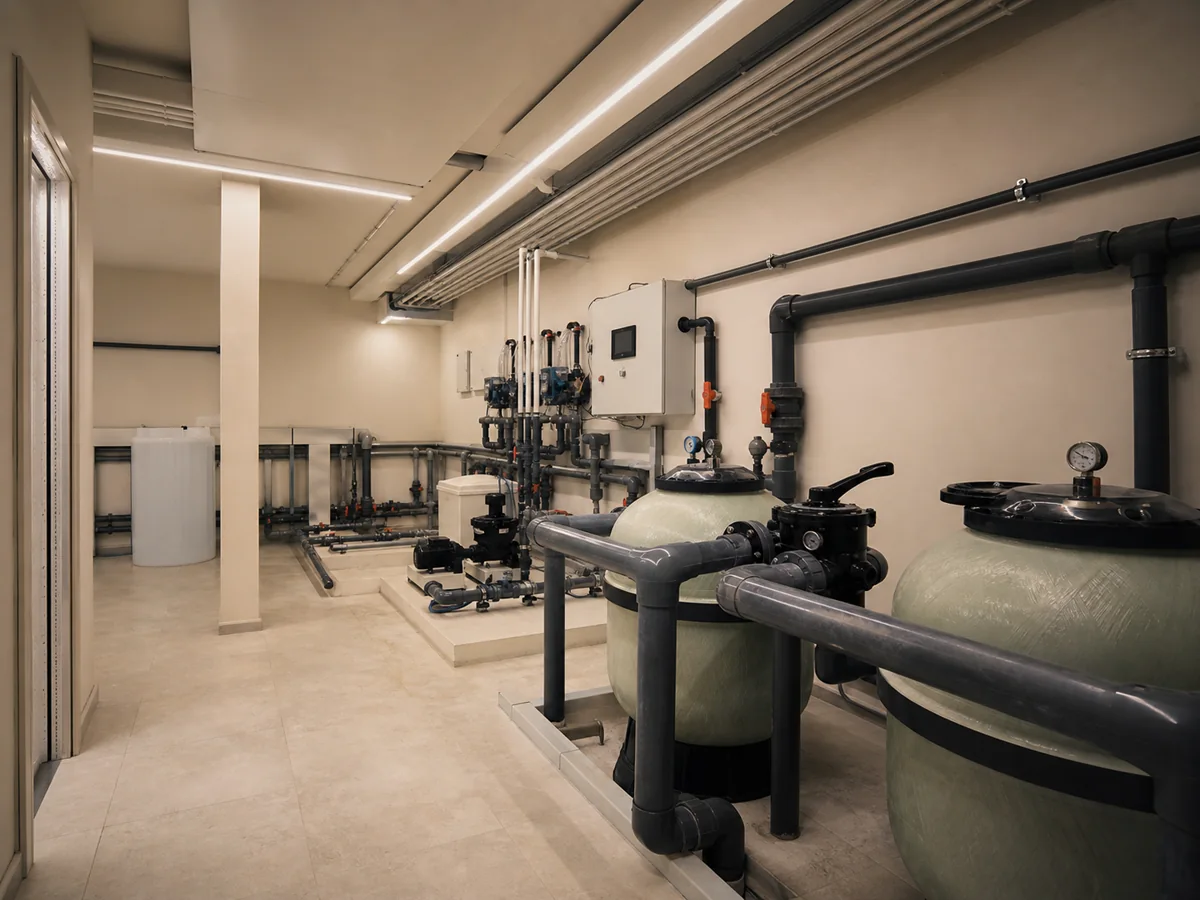 02
02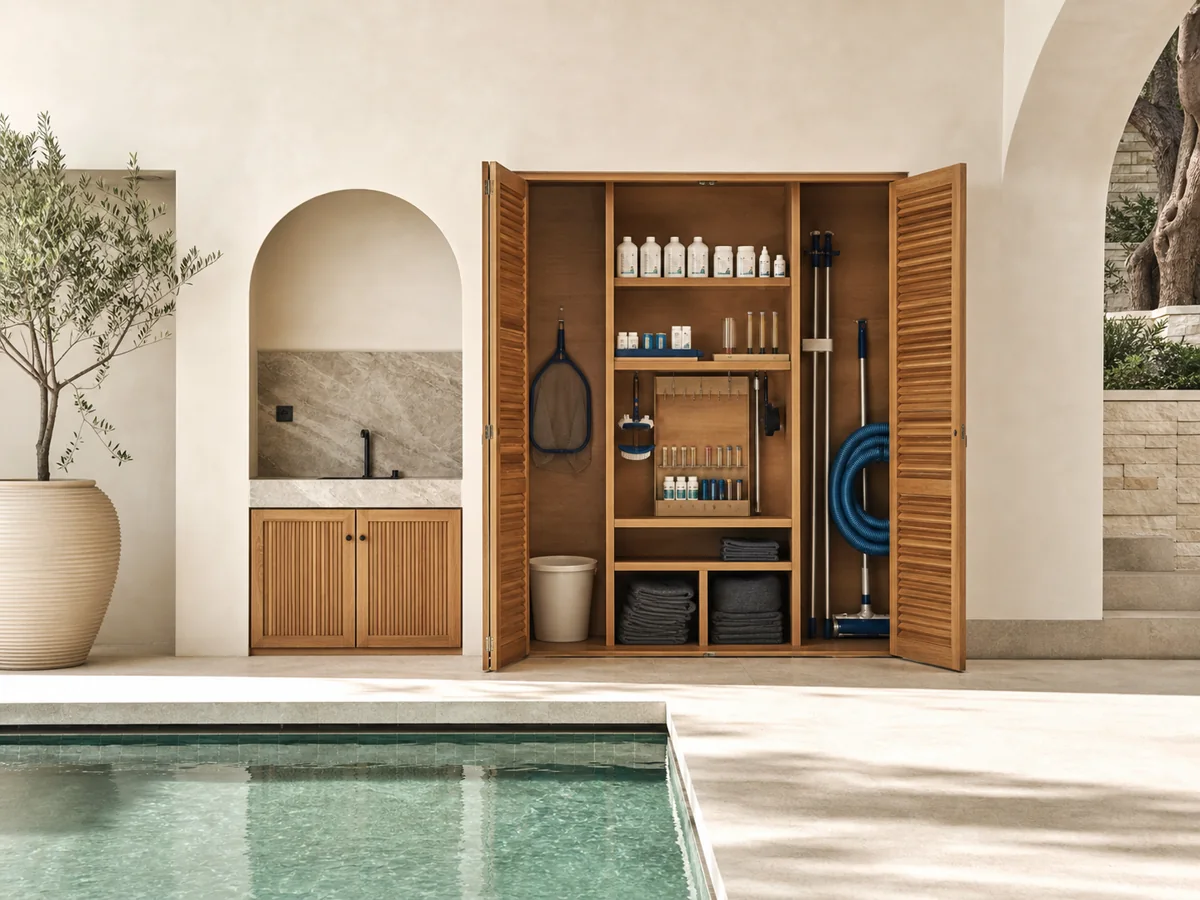 03
03 04
04Company & Contact
To talk about your project, we are one call away.
Legal Name
Çilek Havuz
Founded
1998 · Istanbul
Head Office
Çilek Plaza, Eyüp Sultan Mah. Yakacık Cd. Feshane Cd. No: 2 D:4 D:1, 34885 Sancaktepe / İstanbul
Service Area
All of Türkiye · exports to 14 countries
Related articles
Keep reading.



Sık Sorulan Sorular
Our readers' most asked; with expert answers.
Çilek Havuz Content & Technical Team
Guides & Technical Content
- Response Time
- Same day
- Channels
- Phone · E-mail · WhatsApp
If the answer you are looking for is not here, send your question directly to us and our team will reply as soon as possible.
Book a free site surveySite management is generally responsible for the safe operation of a public pool; This includes taking necessary security measures and maintaining regulatory compliance. Delegating maintenance to a specialist company does not completely eliminate management responsibility. Since the limits of liability are a legal issue, it would be appropriate to clarify this framework with a legal advisor.
Çilek Havuz Content & Technical Team
Since crowded use rapidly affects water quality, establishing rules such as determining working hours, regulating guest use, and entering by showering makes the operation easier. A clear and visible operating instructions maintains both hygiene and order. Sharing these rules with site residents increases the continuity of compliance.
Çilek Havuz Content & Technical Team
At the beginning of the season, the structural condition of the pool, the condition of the coating and insulation after winter, the operation of the equipment and the durability of the installation should be checked. These checks, made before filling the water, catch any problems that may arise during the season. Establishing the initial water balance correctly and reviewing the safety equipment are also integral parts of the opening.
Çilek Havuz Content & Technical Team
Because children's pools are shallower and generally used more intensively, water quality can deteriorate more quickly there and require more meticulous monitoring for safety. Controlling access, visible marking of shallow depth and separate monitoring of water are important. The most basic precaution to be taken is for children to be under adult supervision in all situations.
Çilek Havuz Content & Technical Team
Keeping regular water analyzes and maintenance records creates a protective chain of documentation for management, both during inspections and in the event of a dispute. Since the duration and manner of storage may vary according to local legislation, it is important to confirm this obligation with the competent authorities. Keeping records organized and accessible is the foundation of a corporate operating system.
Çilek Havuz Content & Technical Team
If water monitoring routines, recording format and technical infrastructure information are connected to a documented system, the order will continue intact even if the maintenance company or management changes. It is critical that historical records, equipment information and contract scope are fully transferred during the transfer. A structure that depends on the system, not individuals, is the strongest assurance of continuity.
Çilek Havuz Content & Technical Team