

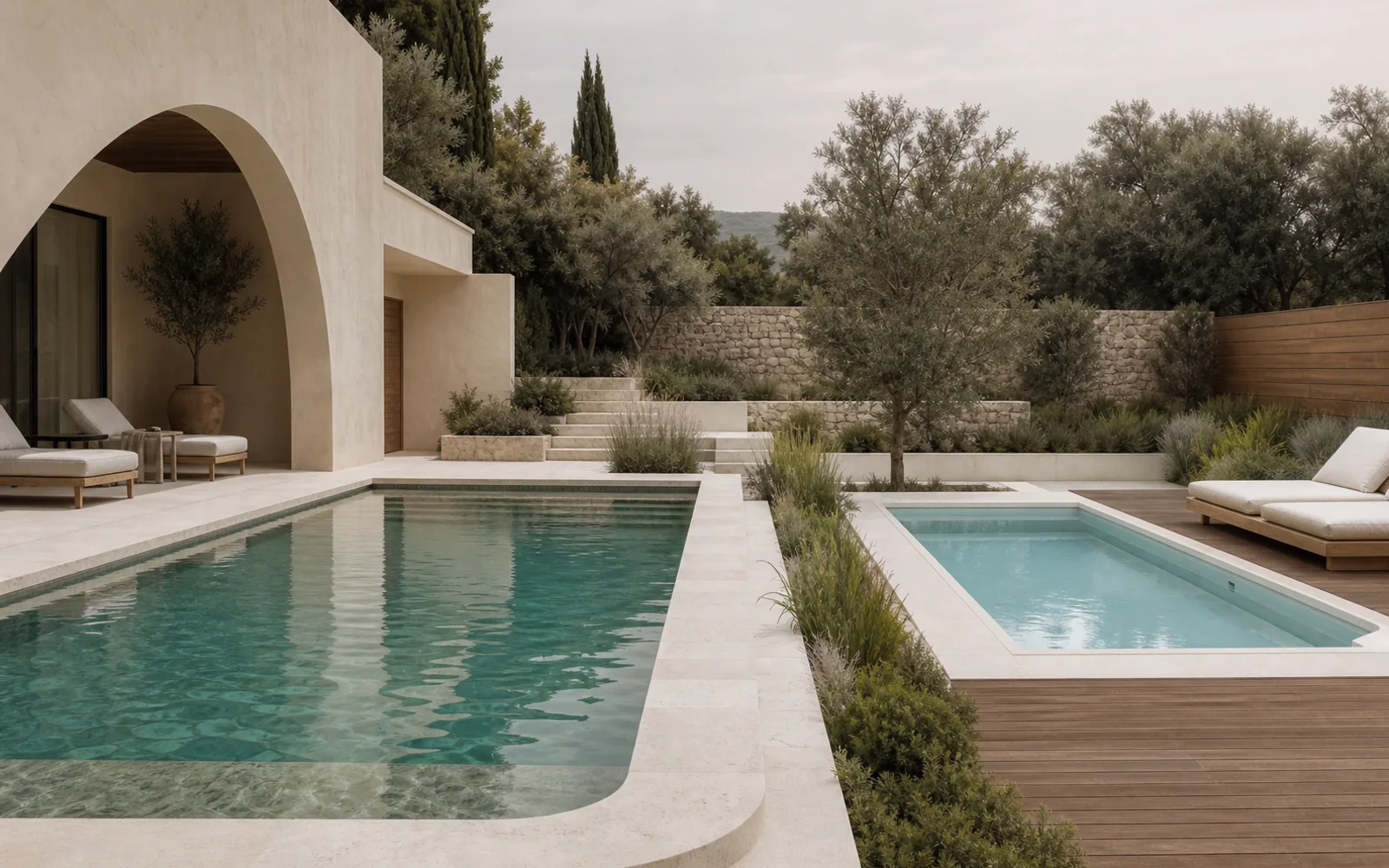
Concrete vs Prefab Pool? 2026 Comparison & Decision Guide
Should you choose a concrete or prefabricated pool? We compare both systems by lifespan, cost, design flexibility and installation time with an unbiased decision matrix.
Should you choose a concrete or prefabricated pool? We compare both systems by lifespan, cost, design flexibility and installation time with an unbiased decision matrix.
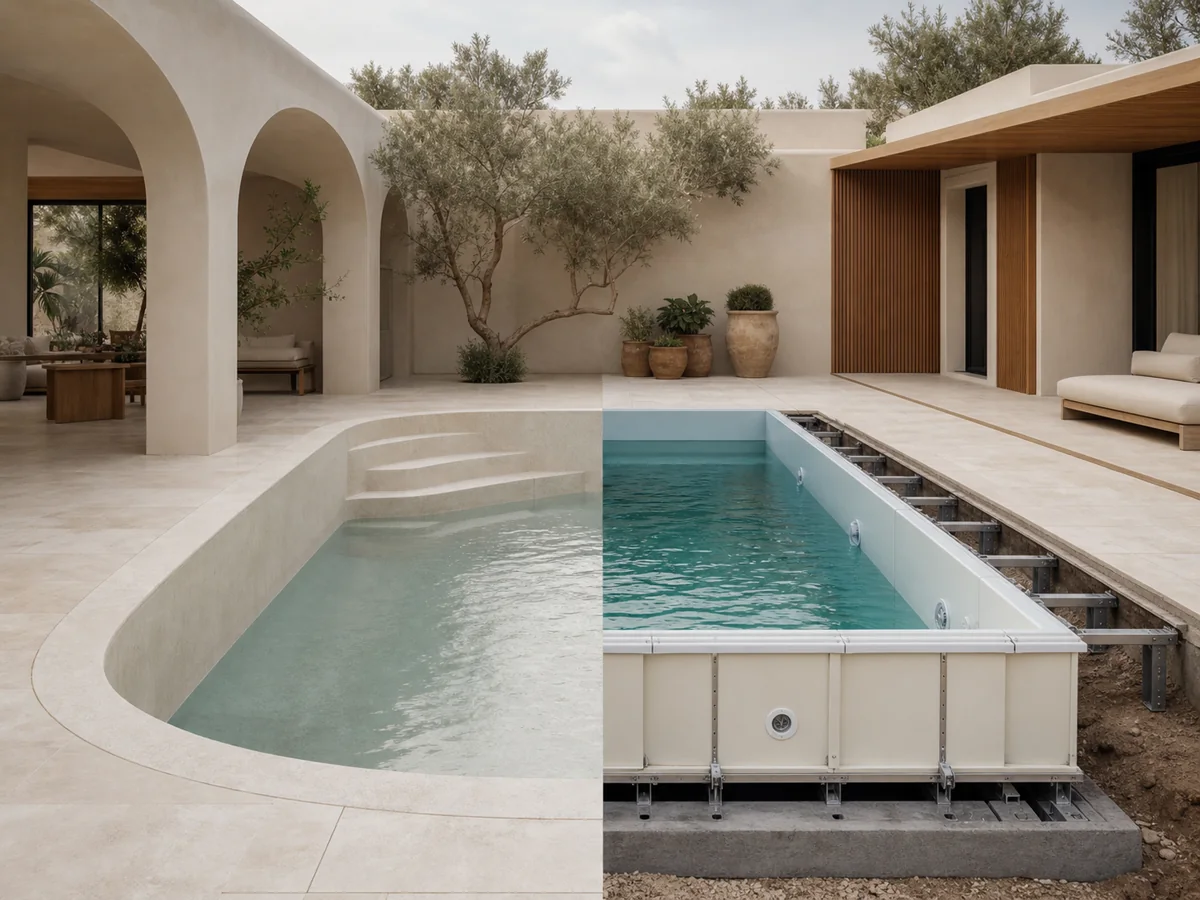
A reinforced concrete pool is built directly on-site with steel rebar reinforcement and poured concrete forming a monolithic structural shell; its dimensions, depth profile and architectural contours are completely bespoke. A prefabricated pool, by contrast, is constructed by assembling factory-manufactured modular panels (steel, polymer, or fiberglass) onto a prepared concrete foundation slab.
This core structural distinction dictates the advantages and trade-offs of each system. Reinforced concrete excels in bespoke architectural freedom and multi-decade permanence, while prefabricated systems lead in rapid assembly and budget predictability.
Reinforced concrete is the undisputed leader in design freedom. It accommodates any freeform contour, variable depths, integrated Baja tanning shelves, submerged seating, built-in spas, and custom steps. Architectural overflow channels and vanishing infinity edges are predominantly executed in reinforced concrete.
Prefabricated pools are bound by the manufacturer's modular panel configurations and factory molds. If standard rectangular or geometric dimensions fulfill your brief, modular panels are an excellent option; however, for custom estates demanding seamless integration with surrounding architecture, reinforced concrete is the superior solution.
The greatest strength of prefabricated pools is construction speed; because the modular panels arrive pre-engineered, assembly proceeds rapidly once excavation and slab preparation are complete. This offers a clear advantage for projects facing strict seasonal deadlines.
Reinforced concrete pools require a longer construction schedule due to structural formwork, steel tying, concrete curing periods, and multi-layer waterproofing. However, on challenging sites—such as steep slopes, rocky terrain, or properties with restricted crane access—reinforced concrete offers superior adaptability to ground conditions.
A properly engineered and waterproofed reinforced concrete pool is a permanent civil structure lasting 50+ years; refreshing the mosaic or tile finish restores it to brand-new condition. Localized structural repairs or future modifications are straightforward to execute.
Quality prefabricated pools are also highly durable, but surface repairs or liner replacements depend on factory-specified membranes and parts. In both systems, the deciding factor for trouble-free operation is equipment quality. Specifying commercial-grade pumps and filtration from AstralPool ensures decades of reliable performance regardless of structural shell type.
In terms of initial capital outlay, prefabricated panel pools are generally more economical for standard residential dimensions. Reinforced concrete pools represent a higher upfront investment for custom designs, but balance this over time with multi-decade structural permanence and higher property appraisal value.
We advise evaluating options based on lifecycle cost rather than initial quote alone. Rather than relying on generic estimates, exact pricing is determined through an engineering discovery of your site topography and design requirements.
If you require rapid installation, standard geometric dimensions, and a predictable budget, a prefabricated modular pool is an excellent choice. If you envision an infinity edge, bespoke curves, luxury mosaic tiling, or complete architectural integration with your estate, reinforced concrete is the premier choice.
Our engineering philosophy is recommending the right system for your site, not pushing a single proprietary product. Having engineered and delivered both technologies since 1993, we guide you objectively based on your land and lifestyle expectations.
Image gallery
04 görsel
 01
01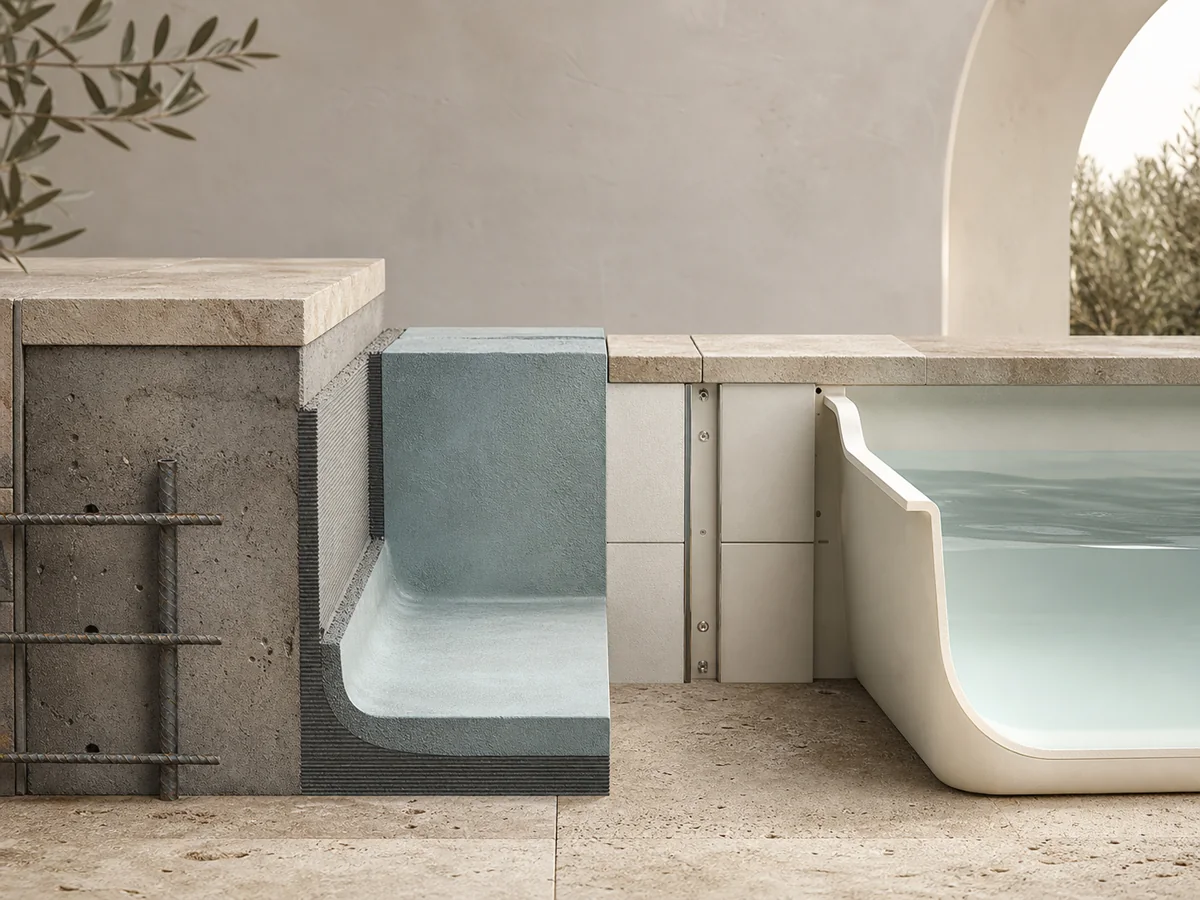 02
02 03
03 04
04Company & Contact
To talk about your project, we are one call away.
Legal Name
Çilek Havuz
Founded
1998 · Istanbul
Head Office
Çilek Plaza, Eyüp Sultan Mah. Yakacık Cd. Feshane Cd. No: 2 D:4 D:1, 34885 Sancaktepe / İstanbul
Service Area
All of Türkiye · exports to 14 countries
Related articles
Keep reading.


Sık Sorulan Sorular
Our readers' most asked; with expert answers.
Çilek Havuz Content & Technical Team
Guides & Technical Content
- Response Time
- Same day
- Channels
- Phone · E-mail · WhatsApp
If the answer you are looking for is not here, send your question directly to us and our team will reply as soon as possible.
Book a free site surveyQuality prefabricated shells and PVC membranes resist UV and freeze-thaw cycles effectively, but their long-term stability depends heavily on subsoil compaction and drainage; uncompacted backfill can settle and stress the panels. Reinforced concrete, poured as a monolithic box, provides superior resistance against challenging seismic and soil movement.
Çilek Havuz Content & Technical Team
On the mechanical side (pumps, sand filters, salt chlorinators, heat pumps), both systems utilize the identical high-grade equipment. Finishes differ: reinforced concrete accommodates glass mosaic, porcelain ceramics, and membranes, while prefabricated pools are primarily finished with factory PVC liner membranes.
Çilek Havuz Content & Technical Team
One-piece fiberglass shells require heavy crane access and wide clearance, which can be challenging in tight urban gardens. Modular panel systems are transported in pieces and assembled on-site, making them easier to maneuver. Reinforced concrete rebar and concrete pumping lines offer maximum versatility on restricted-access plots.
Çilek Havuz Content & Technical Team
Prefabricated modular pools are ready for water filling significantly faster once the base slab is poured, making them advantageous for tight deadlines. Concrete pools require dedicated concrete curing and multi-stage waterproofing intervals.
Çilek Havuz Content & Technical Team
Reinforced concrete is vastly more adaptable to future structural remodeling, allowing extensions, step additions, or integrated spa retrofits. Prefabricated panel geometries are factory-fixed and cannot be enlarged on-site. If you anticipate future expansion, concrete provides the adaptable foundation.
Çilek Havuz Content & Technical Team
Disassembling, transporting, and reassembling used shells risks micro-fractures, degraded membrane seals, and brittle fittings. Initial savings are quickly erased by remediation costs, with zero manufacturer warranty. Investing in a properly engineered new installation is far safer.
Çilek Havuz Content & Technical Team