

Sauna or Steam Room? Differences, Benefits and the Right Choice
Clear differences between a dry-hot sauna and a saturated-humidity steam room: temperature-humidity, materials, experience and installation compared, plus honest guidance on which suits you.
Clear differences between a dry-hot sauna and a saturated-humidity steam room: temperature-humidity, materials, experience and installation compared, plus honest guidance on which suits you.
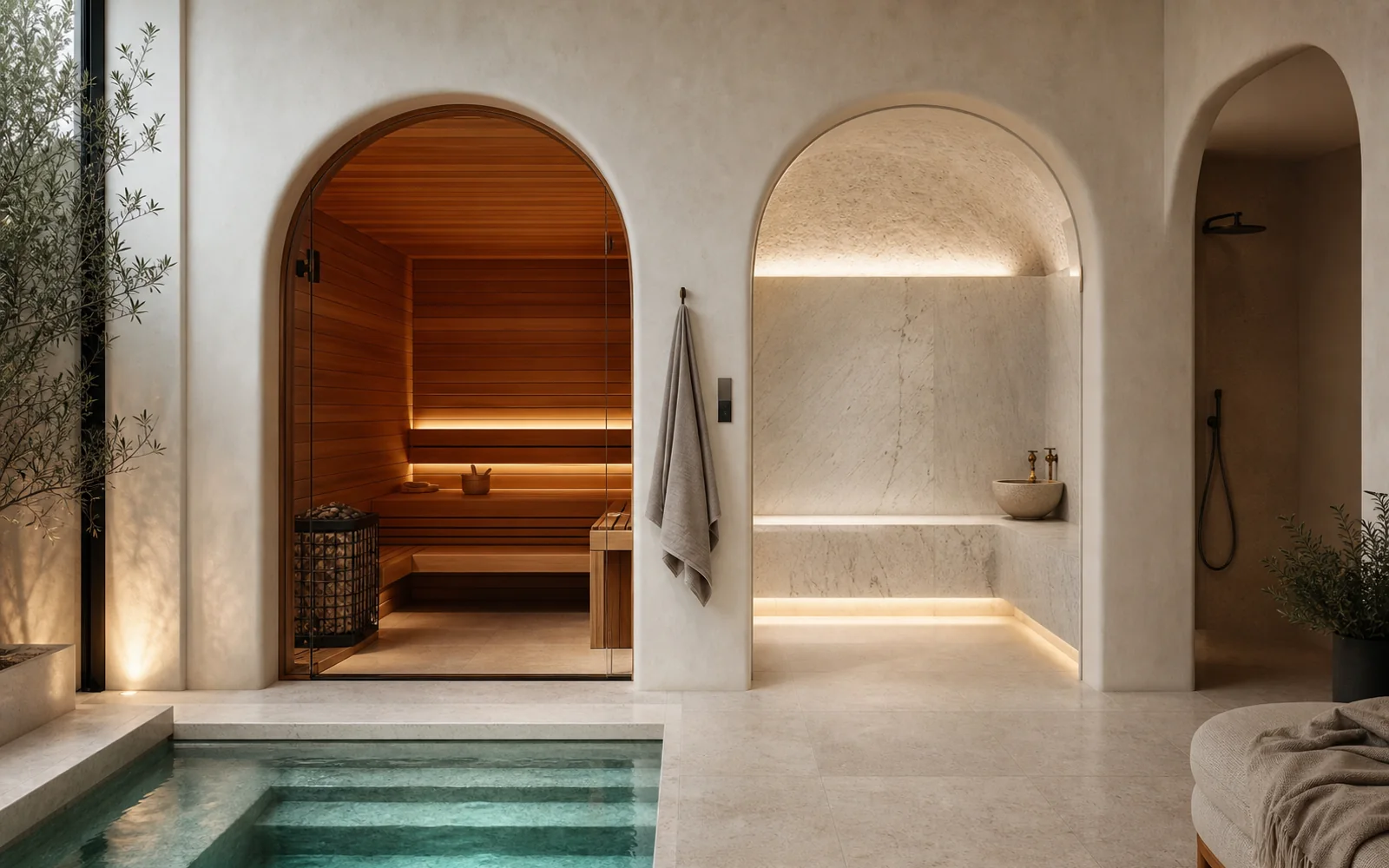
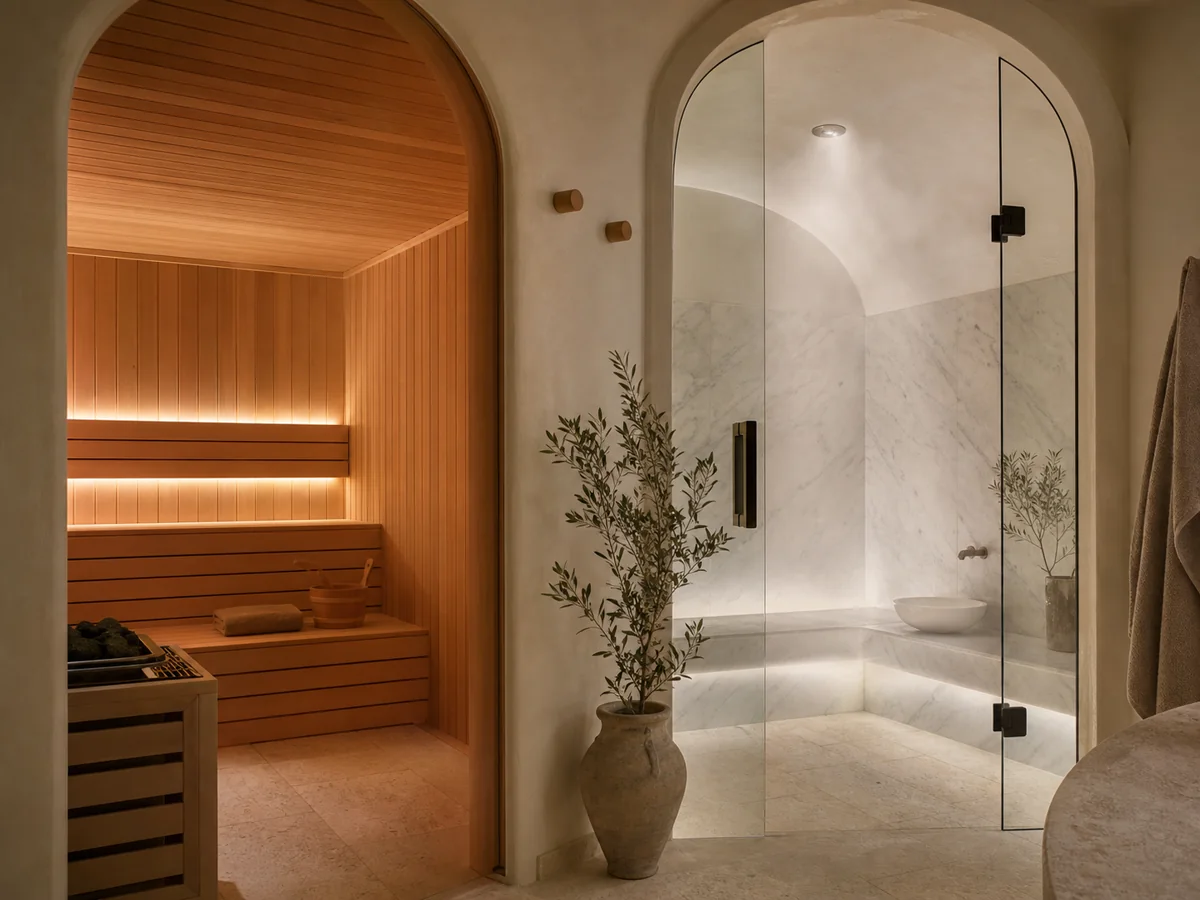
While appearing similar at first glance, a sauna and a steam room create two completely opposite indoor microclimates. A sauna operates with dry, high-temperature heat; a steam room operates at lower temperatures in 100% saturated humidity. This single distinction dictates everything from materials and construction to the physiological experience.
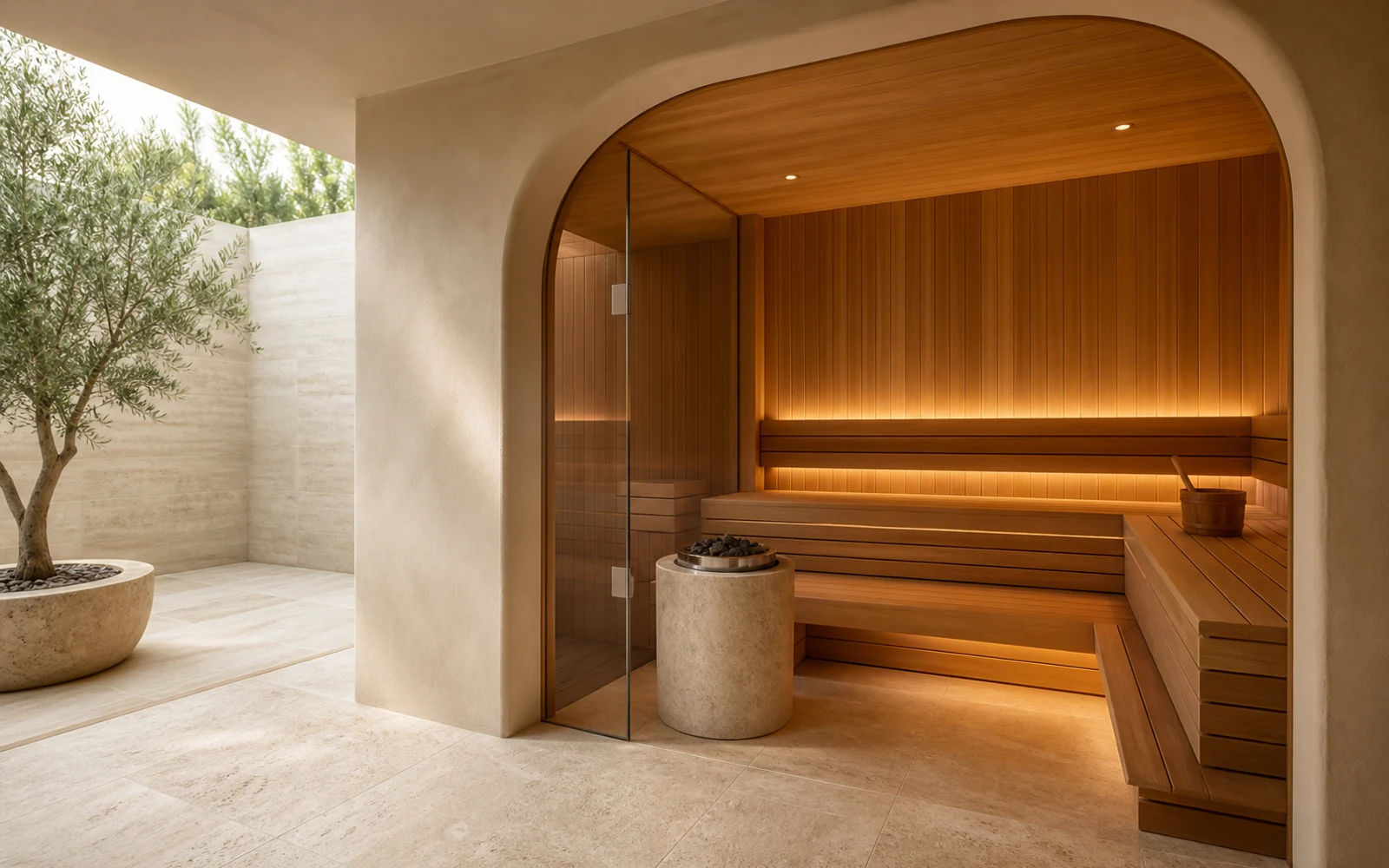
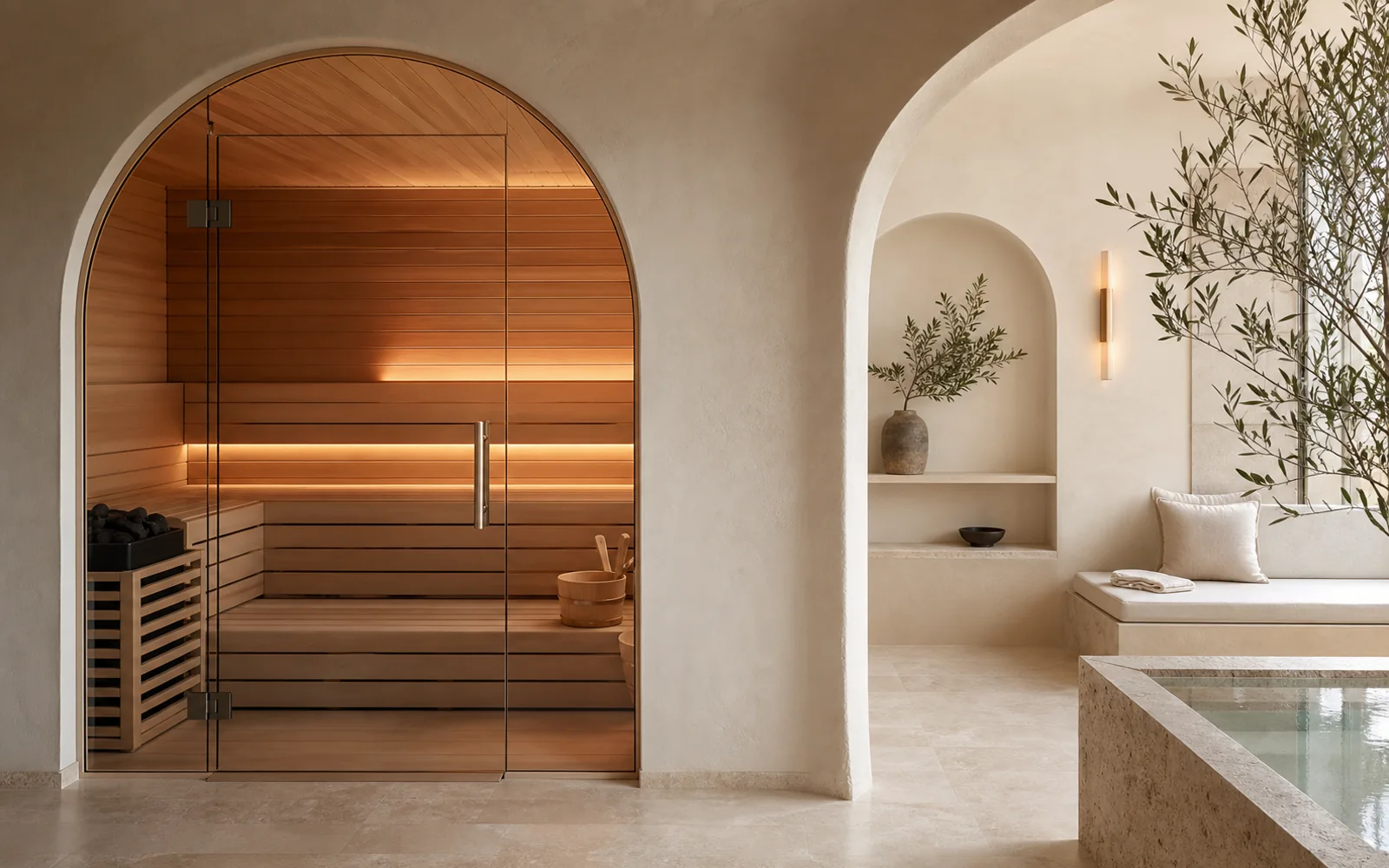
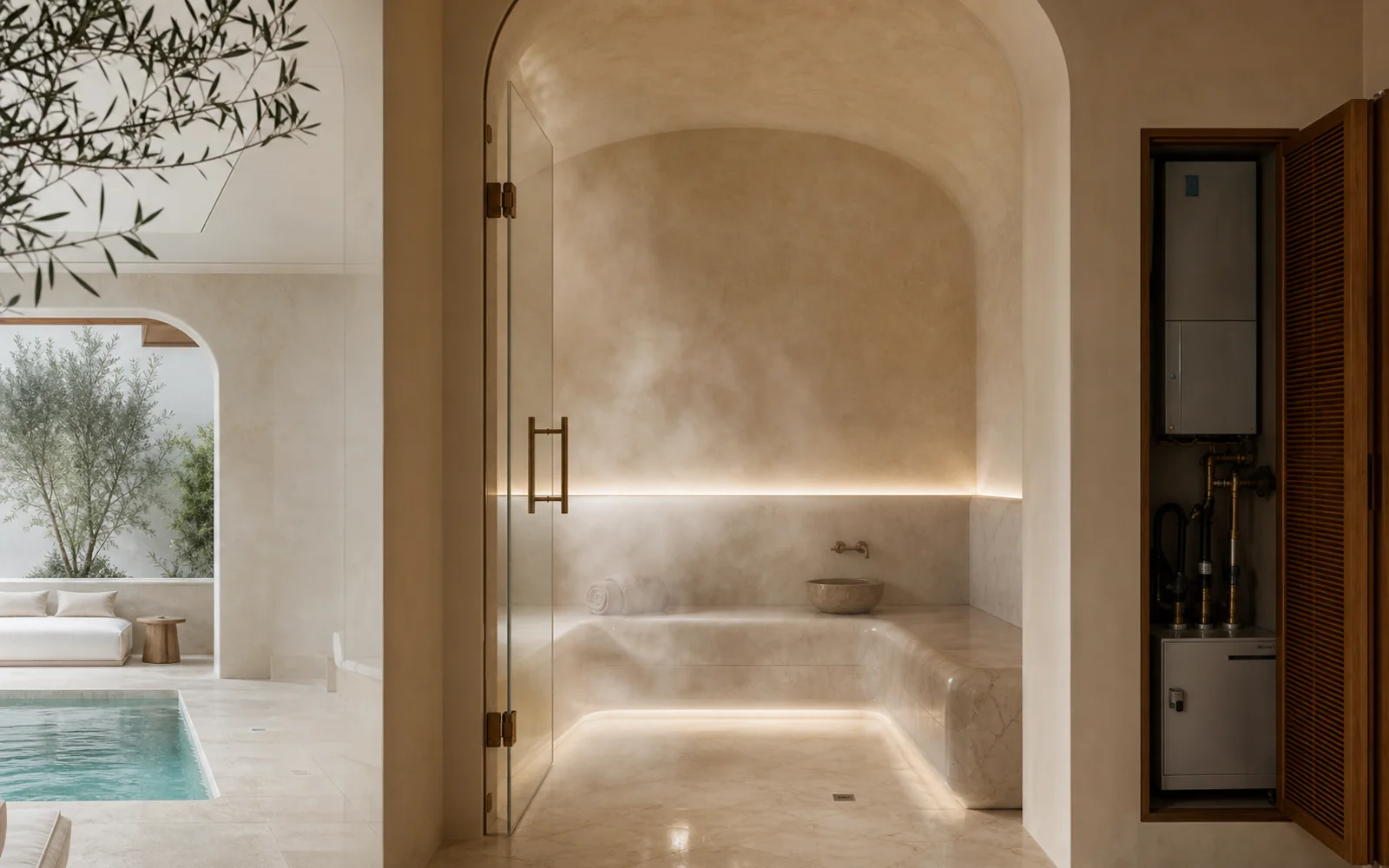
In brief: Finnish Sauna: 75–95°C (167–203°F), 10–20% relative humidity, timber-clad interior, crisp dry heat. Steam Room: 40–48°C (104–118°F), 100% relative humidity, tiled or mosaic interior, warm enveloping steam.
Neither is inherently 'better'; they are distinct wellness experiences. The right choice is the environment in which you feel most refreshed.
The sauna experience is intense, dry, and invigorating; it induces heavy sweating quickly, providing a crisp radiant warmth favored by those who enjoy traditional heat and contrast cold showers.
The steam room experience is softer, humid, and soothing. Saturated warm steam hydrates the skin and respiratory pathways, favored by bathers who find high dry heat uncomfortable.
Ask yourself: do you prefer crisp dry heat or humid tropical steam? If space and budget allow, many luxury residential projects incorporate both side by side.
Saunas and steam rooms represent opposite civil engineering challenges. In a sauna, the primary task is thermal insulation and air circulation: rockwool insulation, timber selection, and gravity ventilation.
In a steam room, the primary challenge is moisture containment: continuous vapor-barrier membranes, sloped ceilings, floor drains, and corrosion-proof tiled surfaces.
Their mechanical hearts differ: a sauna relies on an electric or wood-burning stone heater; a steam room relies on an external steam generator and plumbing circuits.
Both environments promote physical relaxation, muscle recovery, and stress reduction; neither is a medical cure. Warm environments serve as restorative wellness rituals.
Bathers with respiratory sensitivity often prefer the soothing hydration of steam, while athletes frequently choose the deep muscular recovery of dry sauna heat.
Important health precaution: individuals with cardiovascular conditions, hypertension, or pregnancy must consult a physician prior to using either environment. Always stay hydrated and exit immediately if feeling faint.
For identical dimensions, total investment is generally comparable: sauna budgets focus on timber quality and stone heaters, while steam room budgets allocate to waterproofing, mosaic tiling, and steam generators.
In terms of spatial flexibility, saunas are easier to retrofit into dry bedrooms or basements without drainage. Steam rooms require wet-area plumbing, floor drainage, and dedicated ventilation.
Base your choice on the experience you will genuinely use rather than minor initial cost differences.
Combining a sauna and a steam room within a unified wellness suite is a premier approach for luxury villas, boutique hotels, and spa residences. It offers bathers both dry and humid heat therapies under one roof.
Planning both together from the start streamlines costs: sharing relaxation lounges, shower circuits, ventilation shafts, and electrical distribution.
We design and build combined wellness suites with coordinated equipment from AstralPool and Harvia under unified engineering accountability.
Image gallery
04 görsel
 01
01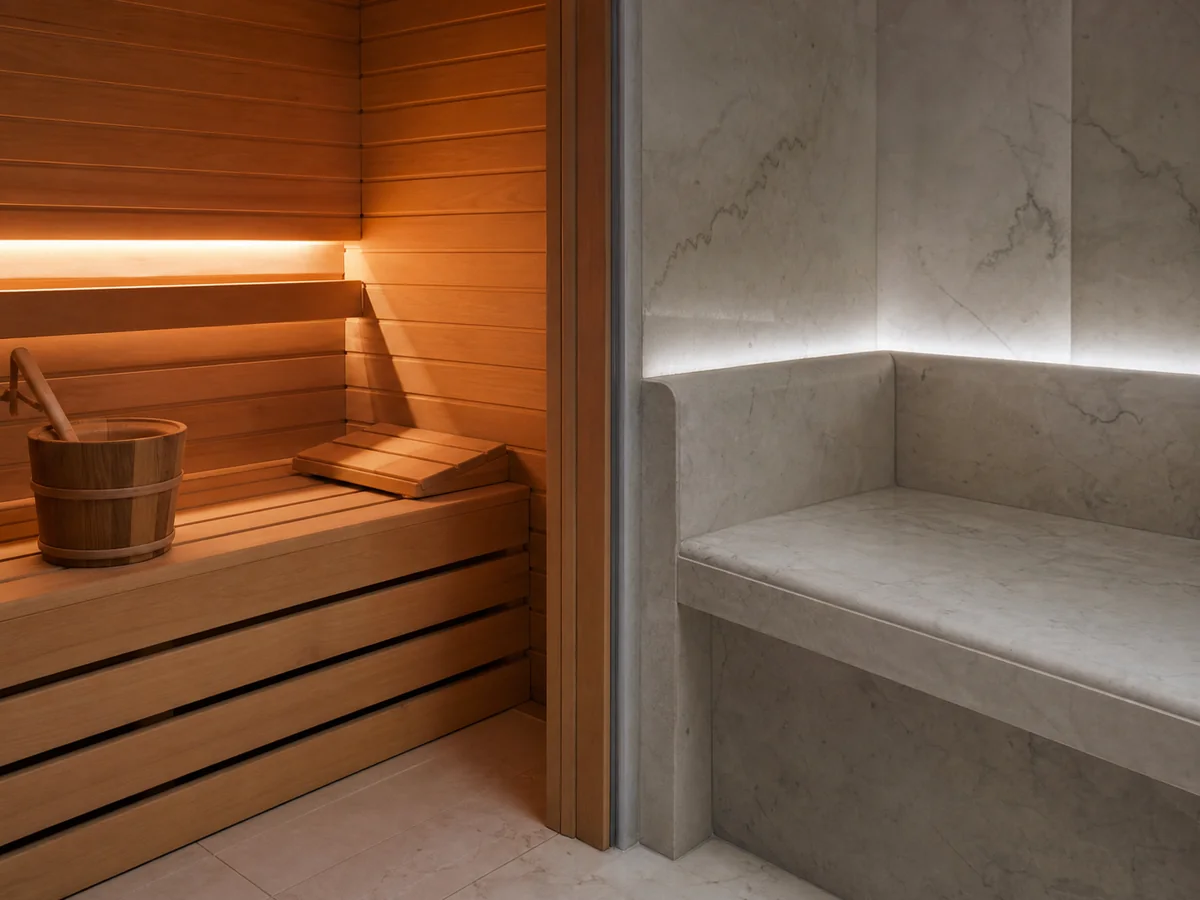 02
02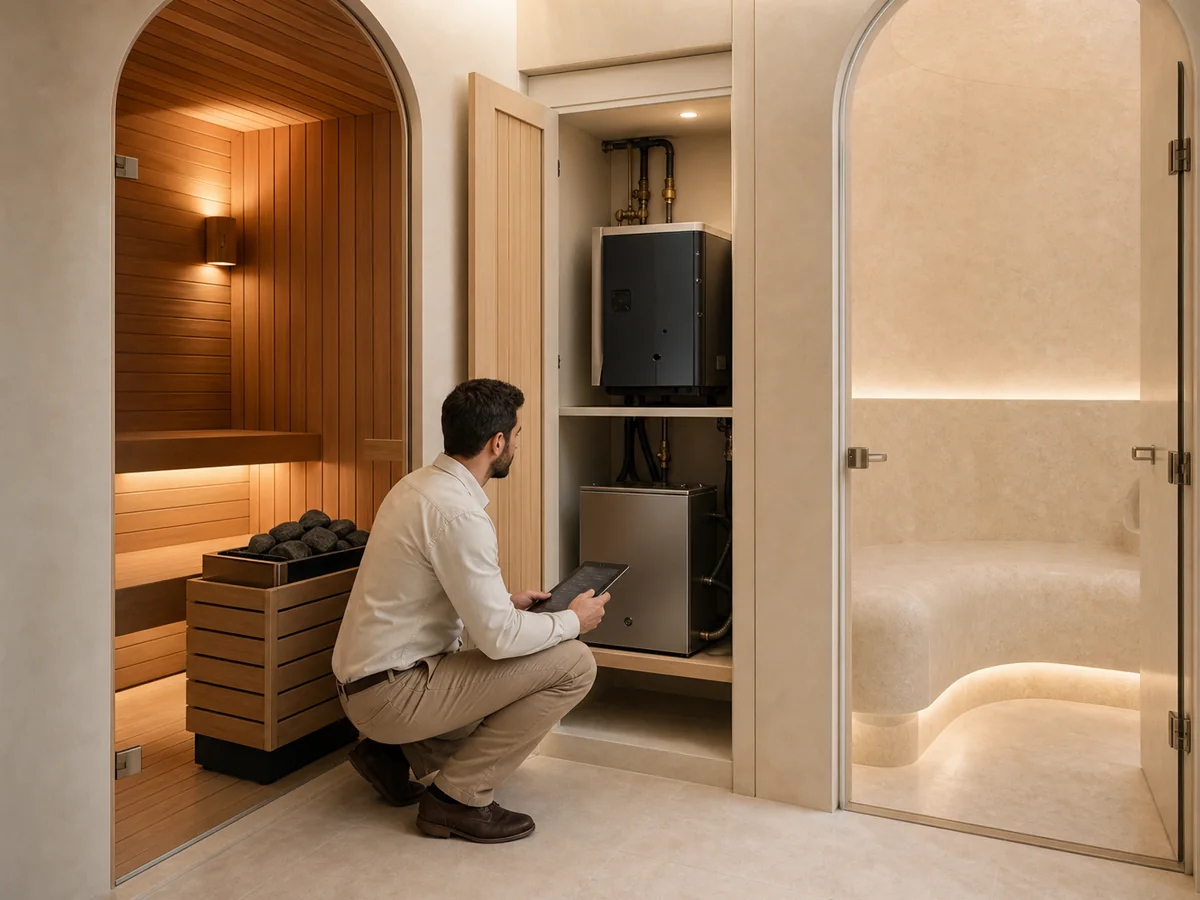 03
03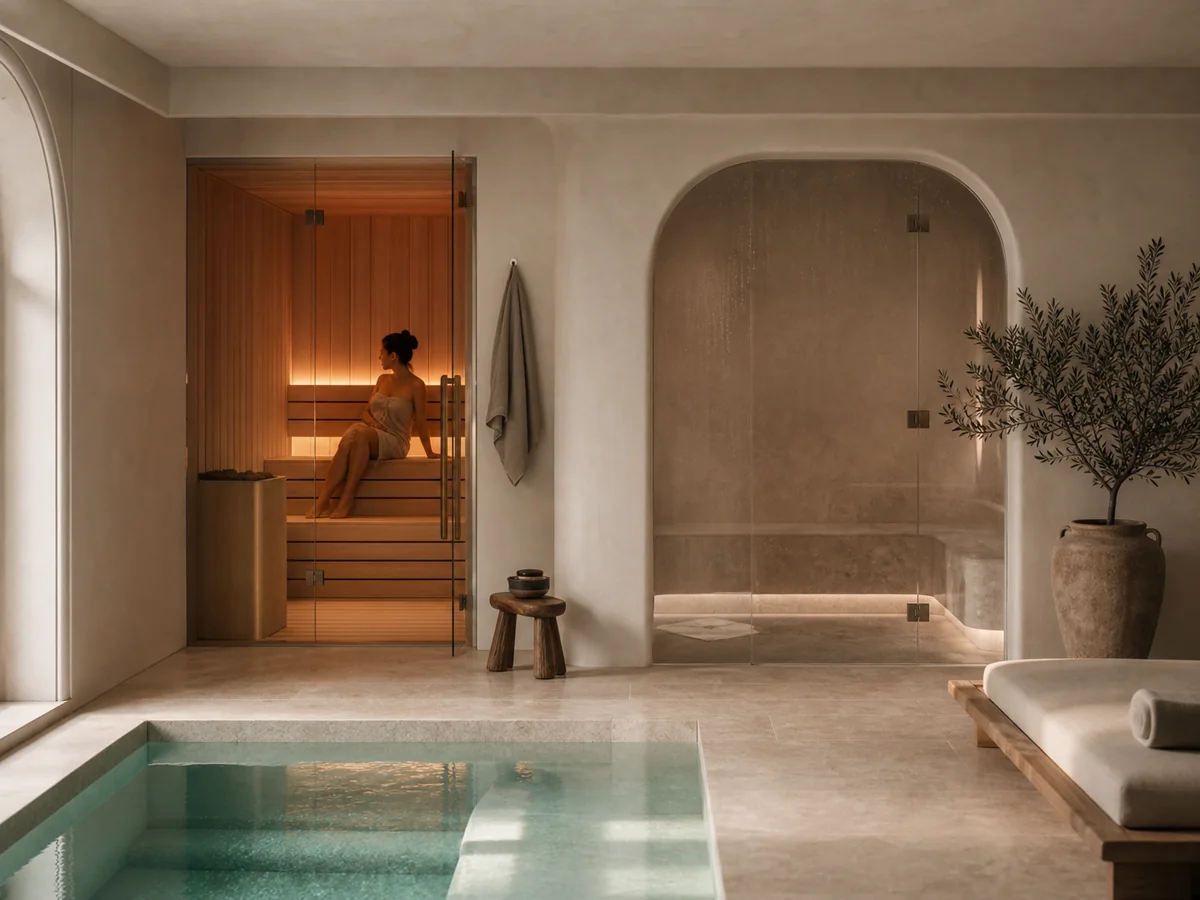 04
04Company & Contact
To talk about your project, we are one call away.
Legal Name
Çilek Havuz
Founded
1998 · Istanbul
Head Office
Çilek Plaza, Eyüp Sultan Mah. Yakacık Cd. Feshane Cd. No: 2 D:4 D:1, 34885 Sancaktepe / İstanbul
Service Area
All of Türkiye · exports to 14 countries
Related articles
Keep reading.
Sık Sorulan Sorular
Our readers' most asked; with expert answers.
Çilek Havuz Content & Technical Team
Guides & Technical Content
- Response Time
- Same day
- Channels
- Phone · E-mail · WhatsApp
If the answer you are looking for is not here, send your question directly to us and our team will reply as soon as possible.
Book a free site surveyEnergy consumption is comparable: saunas draw power to heat air to high temperatures, while steam rooms consume power boiling water into steam. Usage frequency, room insulation, and cabin volume are the deciding factors.
Çilek Havuz Content & Technical Team
Experience both at a spa to evaluate whether you prefer crisp dry heat or humid steam. If space and budget permit, building both side by side resolves the dilemma.
Çilek Havuz Content & Technical Team
Designing them together within a shared wellness zone reduces costs by sharing relaxation areas, shower plumbing, and electrical distribution compared to building them separately.
Çilek Havuz Content & Technical Team
A sauna fits slightly more easily into dry spaces because it requires no floor drain or wet-area plumbing. A steam room requires dedicated plumbing and waterproofing.
Çilek Havuz Content & Technical Team
Neither is a medical treatment. Consult your physician regarding high blood pressure, heart conditions, or respiratory profiles before using either heat therapy.
Çilek Havuz Content & Technical Team
Yes: saunas focus on timber oiling and post-session airing, while steam rooms focus on tile hygiene and steam generator descaling.
Çilek Havuz Content & Technical Team