


Steam Room Guide: Generator System, Temperature and Cost Factors
The generator is the heart of a steam room. A mechanical engineer's guide to the right temperature-humidity balance, why waterproofing is non-negotiable, and transparent cost items.
The generator is the heart of a steam room. A mechanical engineer's guide to the right temperature-humidity balance, why waterproofing is non-negotiable, and transparent cost items.
A steam room operates on the opposite thermodynamic principle of a Finnish sauna: low temperature combined with 100% saturated relative humidity. Operating temperatures range between 40°C and 48°C (104–118°F). Do not let the lower temperature fool you: saturated steam feels intensely hot because high humidity prevents sweat from evaporating, transferring heat into the body rapidly.
This operating principle makes a steam room an entirely different engineering challenge. While a sauna focuses on thermal insulation, a steam room is about moisture containment and condensation management. Surfaces are permanently wet, requiring continuous drainage and impermeable finishes.
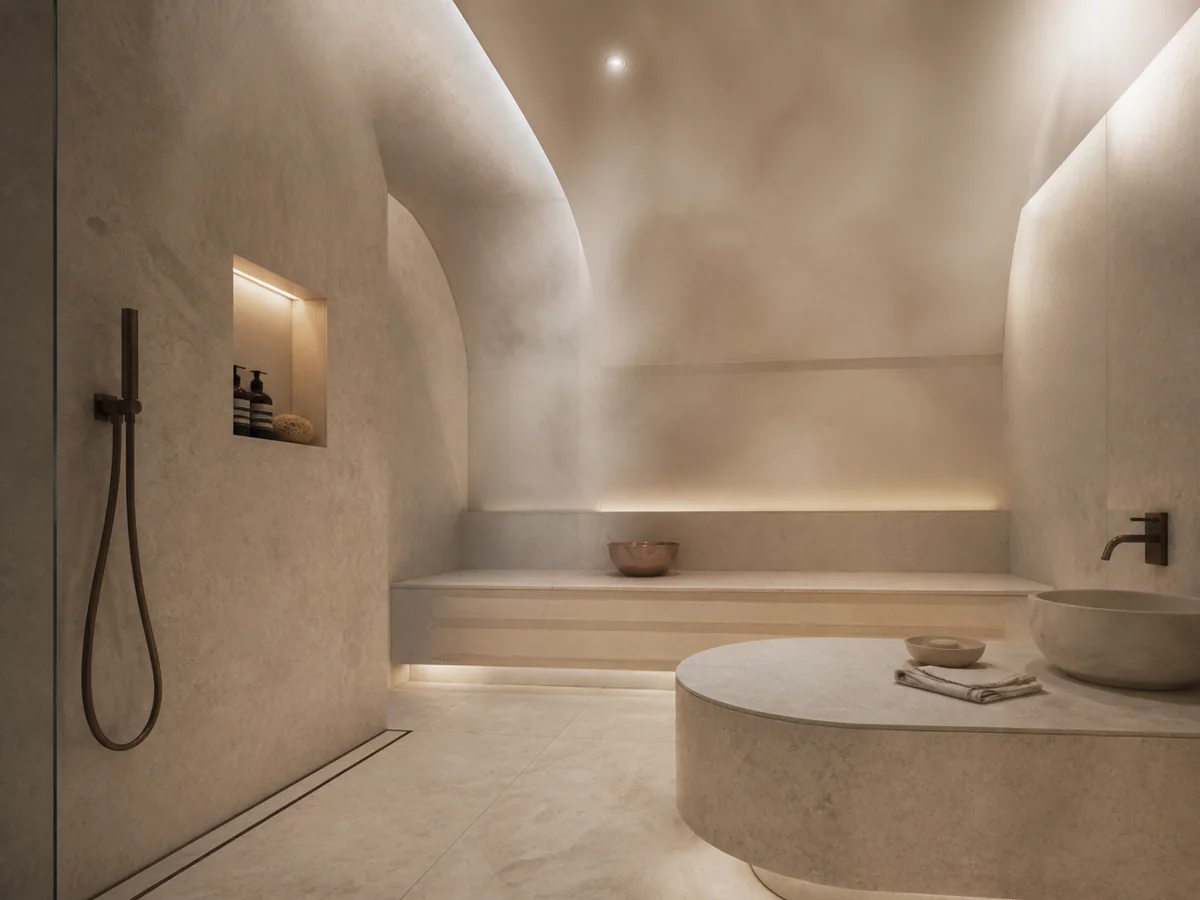
Steam rooms are constructed from waterproof materials—ceramic tiles, glass mosaic, marble, or solid surface acrylics. Ceilings are always domed or sloped so that condensing droplets run down the walls rather than dripping cold onto bathers.
The steam generator, located in an adjacent plant space, is the critical mechanical engine of the room. An undersized generator fails to saturate the room, while a low-quality unit suffers premature failure from mineral calcification.
Generator kW capacity is sized according to cabin volume, wall surface thermal mass (dense marble and stone absorb significant heat and require up to 30–50% extra generator output), and exterior wall exposure.
Two features dictate generator longevity: automated auto-drain flushing and descaling cycles. Water leaves behind mineral scale when boiled; quality commercial generators flush sediment automatically after every session to prevent element burnout.
The primary enemy of a steam room is vapor migration. Saturated steam under positive pressure penetrates minute pores in masonry, condensing inside adjacent walls and structural subfloors to cause mold and structural rot. Waterproofing is the single most critical quality gate.
A proper steam room features a continuous elastomeric vapor-barrier membrane beneath all finishes, sealed with waterproof tape at wall-to-ceiling cove joints. Glass doors must utilize hermetic silicone perimeter gaskets.
When evaluating proposals, look beneath the mosaic finish to the waterproofing membrane specification. Fine tilework is common; flawless vapor-tight waterproofing separates engineering excellence from premature failure.
Comfort in a steam room is achieved through the delicate equilibrium of temperature and humidity: target parameters are 42–46°C with 100% relative humidity. In this narrow band, steam feels enveloping and therapeutic while breathing remains effortless.
Overheating a steam room makes breathing suffocating, as saturated air prevents evaporative cooling. Precision electronic thermostats maintain temperatures strictly within this optimal band.
Steam outlet nozzles are positioned low near the floor away from bather legs so steam rises naturally without scalding. Automated fragrance injection pumps deliver pure eucalyptus aromas safely through the steam line.
A steam room budget comprises: substrate construction and vapor-barrier waterproofing, surface finishes (porcelain, glass mosaic, or bookmatched marble), commercial steam generator and digital touch control, steam plumbing and floor drain traps, hermetic glass doors, domed ceiling framing, lighting, ventilation, and MEP labor.
The two most critical quality investments are waterproofing membranes and commercial-grade steam generators. Compromising on either leads to expensive structural remediation.
Surface finishes shape aesthetics: porcelain is economical and durable, glass mosaic delivers timeless luxury, and solid marble provides classical hammam opulence but requires higher generator kW capacity.
Steam room maintenance follows two axes: surface hygiene and generator maintenance. Ventilating the room after each session and cleaning tile grout with pH-neutral disinfectant prevents mold in humid environments.
On the mechanical side, periodic generator descaling is essential in hard-water regions. Automatic flushing generators minimize maintenance, but annual servicing extends element life.
Upon handover, we provide a complete maintenance schedule. A properly engineered steam room operates reliably for decades with minimal maintenance.
Image gallery
04 görsel
 01
01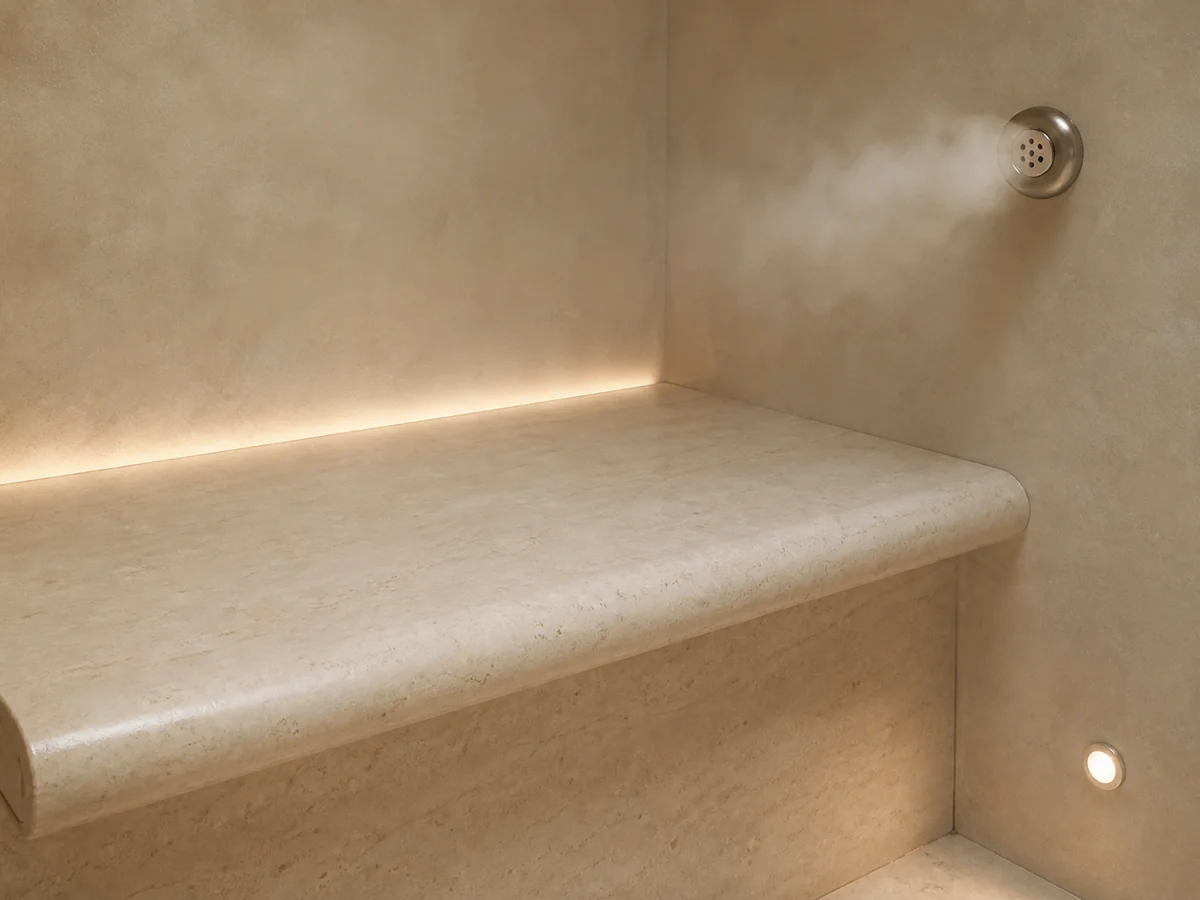 02
02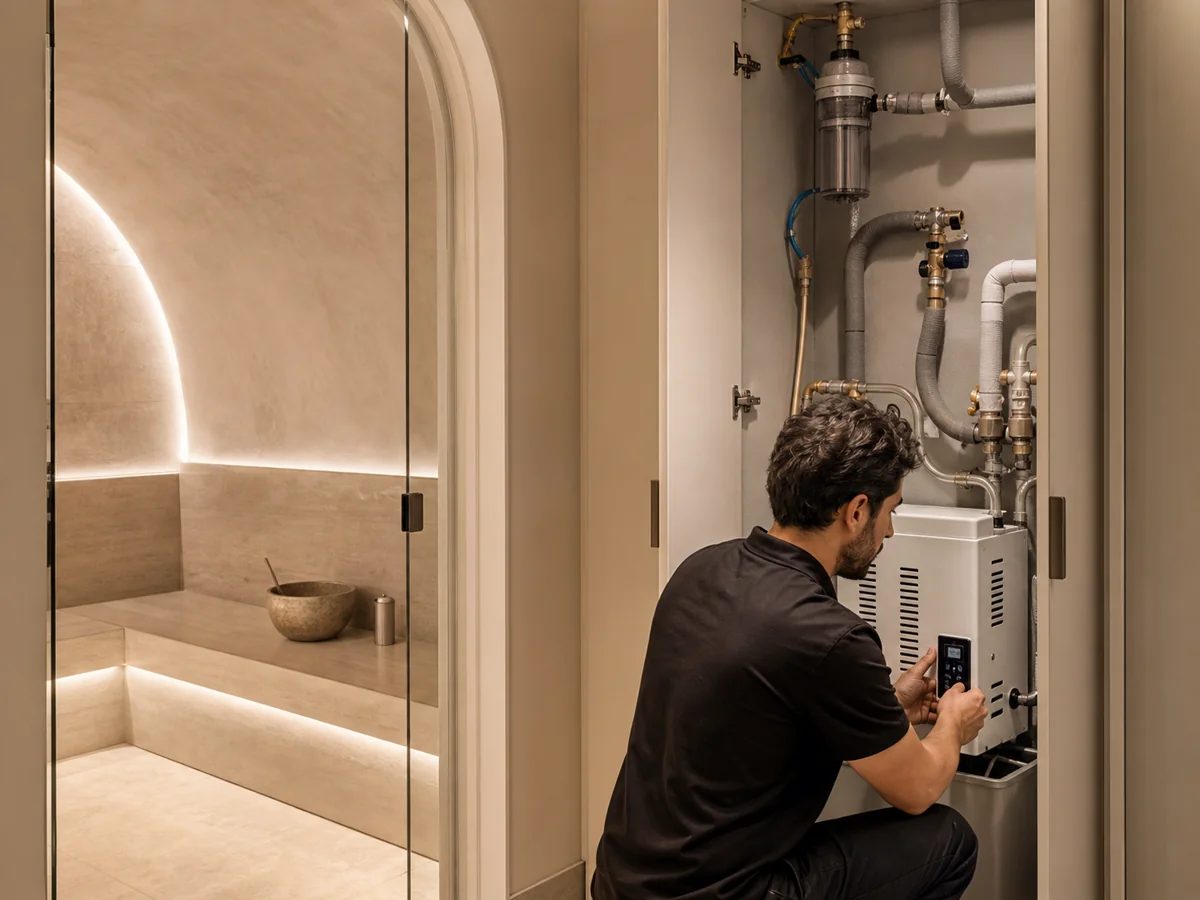 03
03 04
04Company & Contact
To talk about your project, we are one call away.
Legal Name
Çilek Havuz
Founded
1998 · Istanbul
Head Office
Çilek Plaza, Eyüp Sultan Mah. Yakacık Cd. Feshane Cd. No: 2 D:4 D:1, 34885 Sancaktepe / İstanbul
Service Area
All of Türkiye · exports to 14 countries
Related articles
Keep reading.


Sık Sorulan Sorular
Our readers' most asked; with expert answers.
Çilek Havuz Content & Technical Team
Guides & Technical Content
- Response Time
- Same day
- Channels
- Phone · E-mail · WhatsApp
If the answer you are looking for is not here, send your question directly to us and our team will reply as soon as possible.
Book a free site surveyAn undersized generator fails to maintain temperature and produces weak, wet steam; an oversized unit short-cycles and wastes power. Capacity must be calculated factoring in cubic volume and wall material thermal absorption.
Çilek Havuz Content & Technical Team
Specify a generator with automatic auto-drain flushing and install a water softener or scale-inhibiting pre-filter on the incoming water supply line.
Çilek Havuz Content & Technical Team
Vapor leaks show no immediate symptoms for months; after 1 to 2 years, they appear as mold, peeling paint, and rot in adjacent rooms. Continuous multi-layer waterproofing prevents this.
Çilek Havuz Content & Technical Team
Yes, provided pure natural essences designed for steam systems are dosed via an automated injector pump on the steam line. Never pour essential oils directly onto steam nozzles.
Çilek Havuz Content & Technical Team
Specialized silicone gaskets, magnetic door latches, and an aluminum threshold catch condensation and prevent pressurized steam from escaping into adjacent rooms.
Çilek Havuz Content & Technical Team
Daily use requires brief post-session ventilation and routine grout cleaning, alongside regular generator auto-drain cycles. Well-engineered systems handle daily commercial use effortlessly.
Çilek Havuz Content & Technical Team