

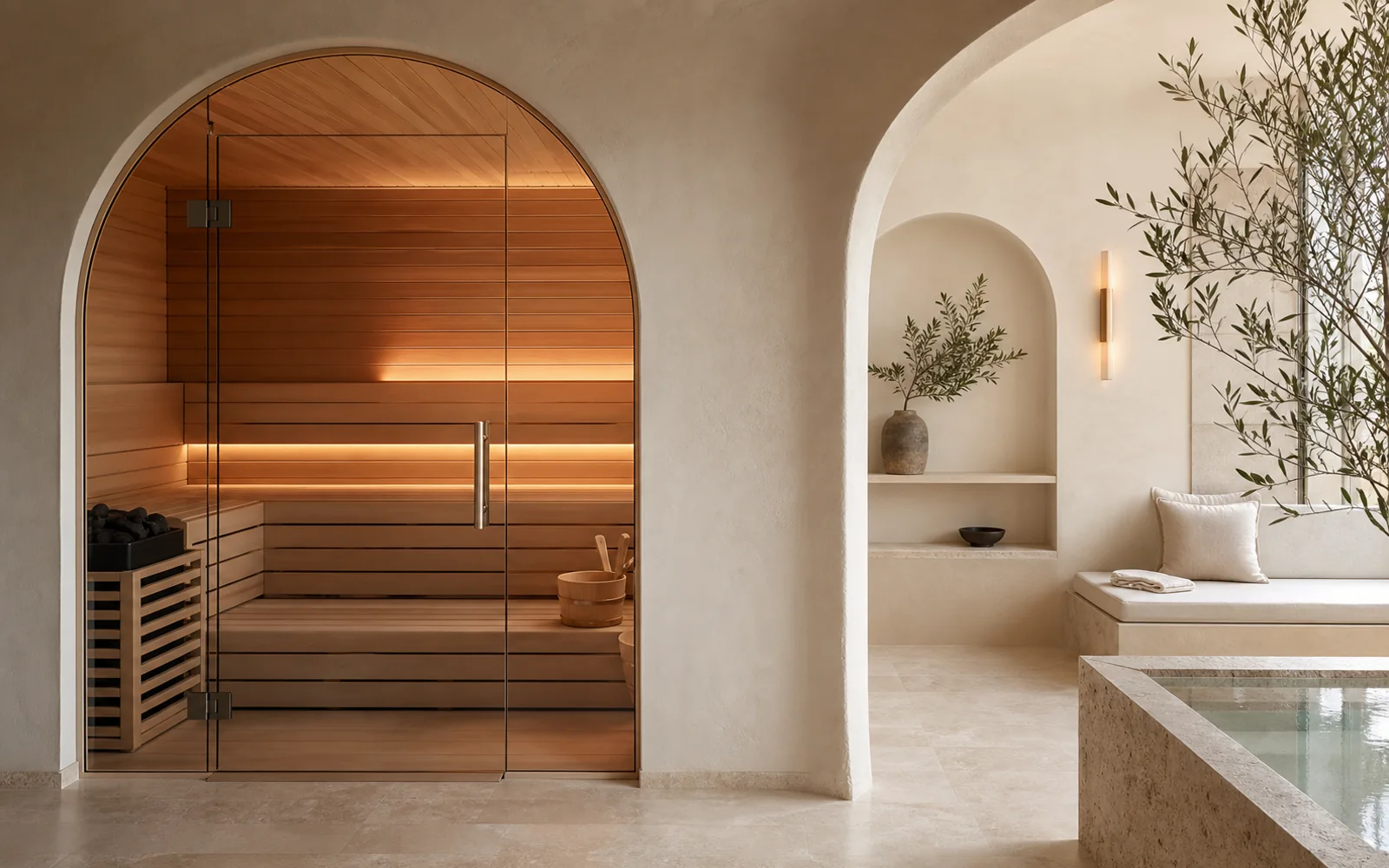
Sauna Installation Guide: Sizing, Materials and Cost Factors (2026)
Everything to know before building a sauna: correct sizing, a comparison of sauna woods, transparent per-cubic-meter pricing logic, and why fixed-price offers deserve caution.
Everything to know before building a sauna: correct sizing, a comparison of sauna woods, transparent per-cubic-meter pricing logic, and why fixed-price offers deserve caution.
The architectural quality of a sauna is determined at the layout and dimensioning phase long before the first timber panel is cut. The most common planning mistake is deciding on a room first and considering user capacity later. The proper sequence is the reverse: how many bathers will use it simultaneously, how frequently, and in what style (sitting or lying down)?
We allocate roughly 60 cm of bench width per seated bather, and a minimum bench length of 190 cm for reclining. A 2-person family sauna fits comfortably on a 2 m² footprint, while a 4–5 person luxury cabin requires 4–6 m². Ceiling height is maintained strictly at 200–210 cm; higher ceilings trap thermal energy above bather heads, increasing initial heater size and operational power bills.
During site discovery, electrical supply capacity and dedicated ventilation duct routing are verified first. A sauna is not a static wooden box; without proper cross-ventilation, timber degrades rapidly.
Sauna timber is an engineering decision, not merely decorative. Interior timber must meet three criteria: low thermal conductivity (comfortable to touch under heat), zero resin bleeding, and dimensional stability against extreme dry-wet cycling.
Nordic Spruce and Thermo-Spruce represent the classic Finnish benchmark: light aesthetic, minimal resin pockets, and excellent value for residential saunas. Alder provides a warm reddish tone and smooth touch, ideal for benches. Canadian Western Red Cedar is the premium tier: rich natural aroma, superior moisture resistance, and low thermal absorption, but commands a higher investment.
Aspen and Thermo-Aspen are completely resin-free and splinter-free, remaining cool to the touch—making them the premier choice for benches and backrests. Resin-heavy woods like pine or untreated fir must never be used on interiors as hot resin burns skin.
When budgeting a sauna, the key metric is heated volume in cubic meters (m³), not simply floor area. Between two saunas with identical floor area, the one with higher ceilings requires a larger heater kW rating and more cladding timber. We quote transparently per m³ so every cost item is clearly justified.
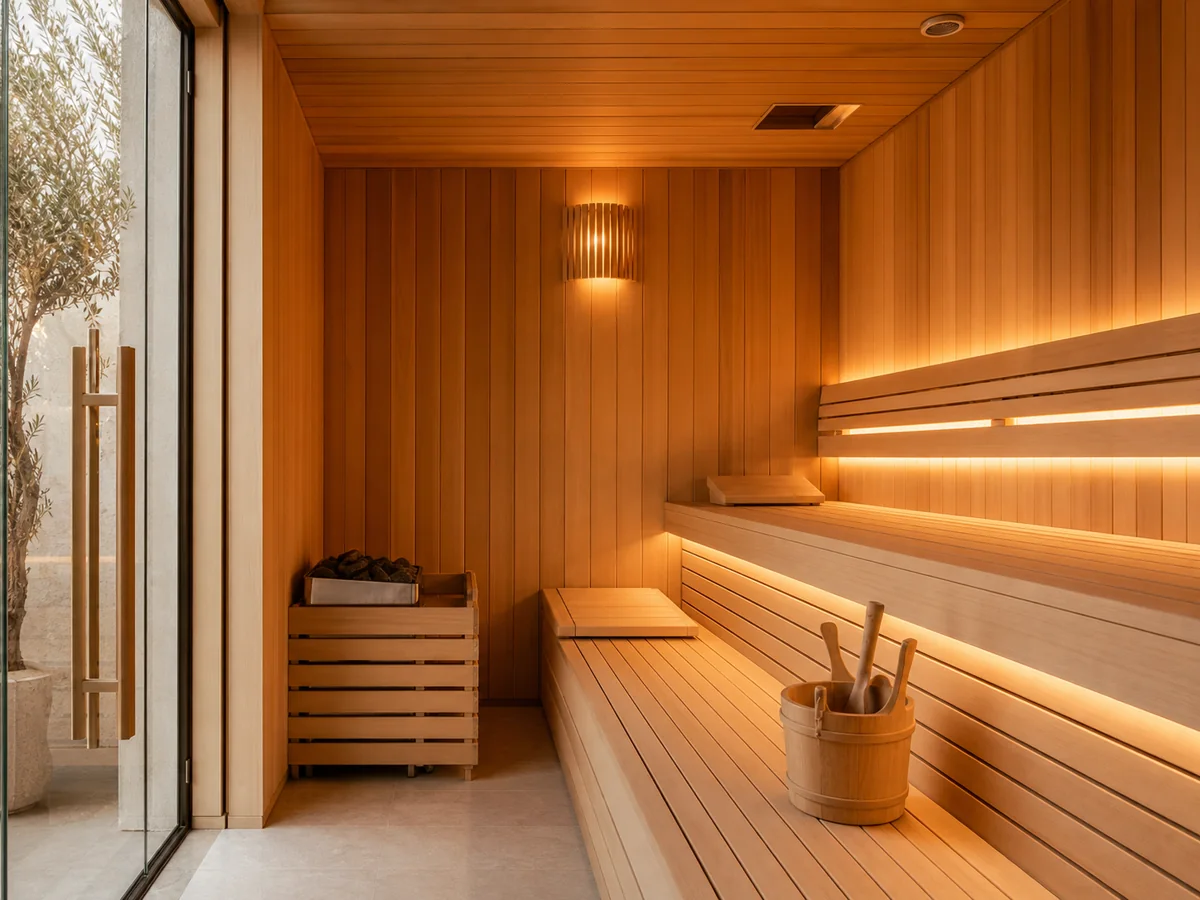
Core line items in a turnkey sauna proposal include: structural timber framing with rockwool insulation and aluminum vapor barrier, interior and exterior cladding paneling, ergonomic multi-tier benches, electric or wood-burning sauna heater with digital controls, tempered glass door, lighting, and ventilation grilles.
Heater sizing follows a standard rule of 1 kW per 1 m³ of cabin volume, adjusted upward for glass doors and uninsulated masonry walls.
Fixed low quotes offered without an on-site survey invariably cut corners on concealed essentials: reducing rockwool insulation density, omitting the aluminum vapor barrier foil, using thin 10mm cladding, or undersizing the heater. In the second or third season, these omissions manifest as darkened, warped timber, wall sweating, and mold.
A transparent proposal itemizes cabin volume, timber species and grade, insulation R-value, and heater capacity. If vapor barriers, ventilation louvers, and warranties are missing from a quote, it is an incomplete and risky installation.
Electric sauna heaters are specified for the vast majority of indoor residential and apartment saunas: fast digital thermostat control, weekly timers, zero chimney requirements, and integrated safety overheat limits.
Wood-burning heaters deliver an authentic rustic Finnish experience with high peak radiant heat and crackling ambiance; they are ideal for standalone outdoor garden saunas but require certified chimney flues, fireproof hearths, and firewood storage.
Regardless of heater type, power-to-volume ratio and safety distance clearances are mandatory engineering rules. We specify commercial-grade heaters from Harvia and AstralPool.
A turnkey residential sauna is typically completed within 2 to 3 weeks from site survey to commissioning. The process follows three distinct milestones: site survey and layout drawings, structural framing with insulation and vapor barrier, and final timber carpentry, bench building, and heater commissioning.
Upon handover, we provide complete operation and maintenance training: initial burn-in procedures, timber oiling guidelines, and ventilation protocols. Properly built and maintained, a quality timber sauna lasts for decades.
Image gallery
04 görsel
 01
01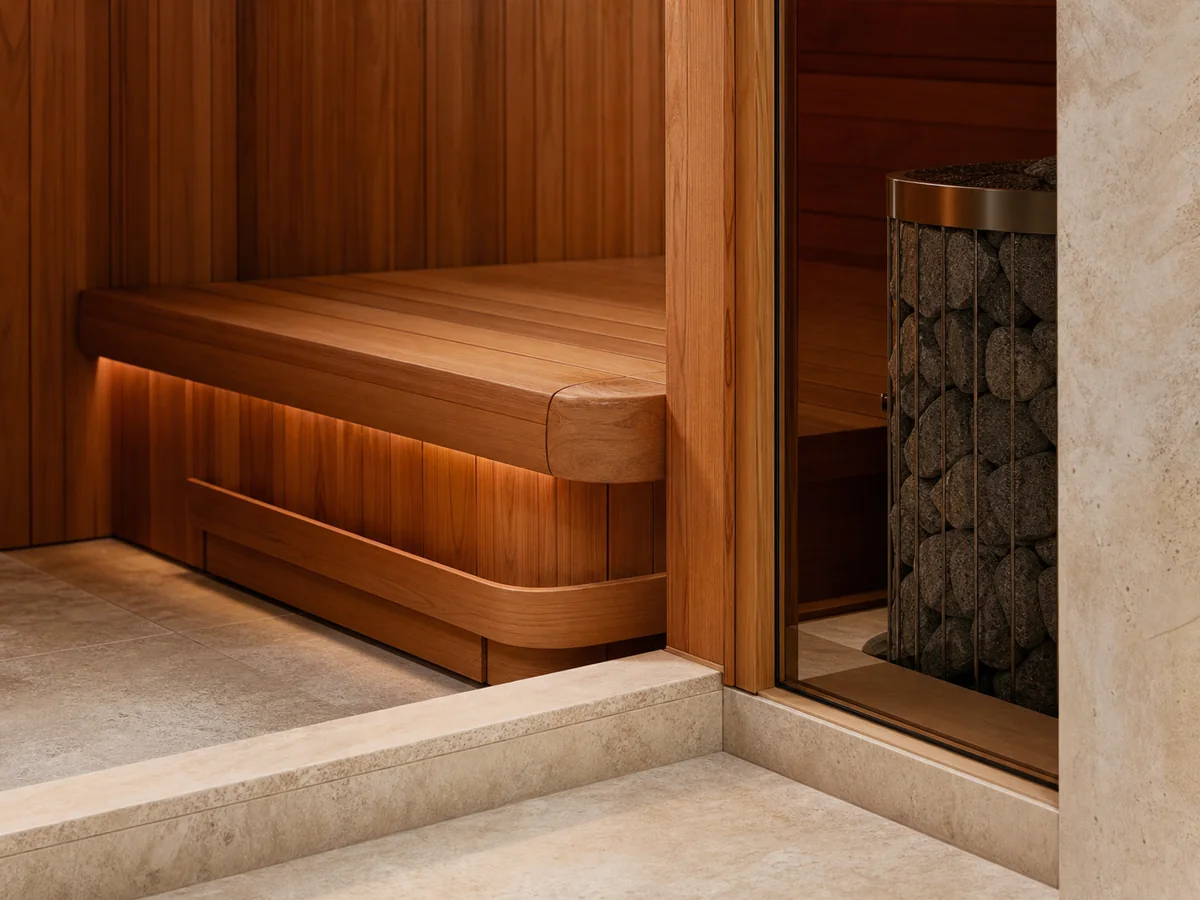 02
02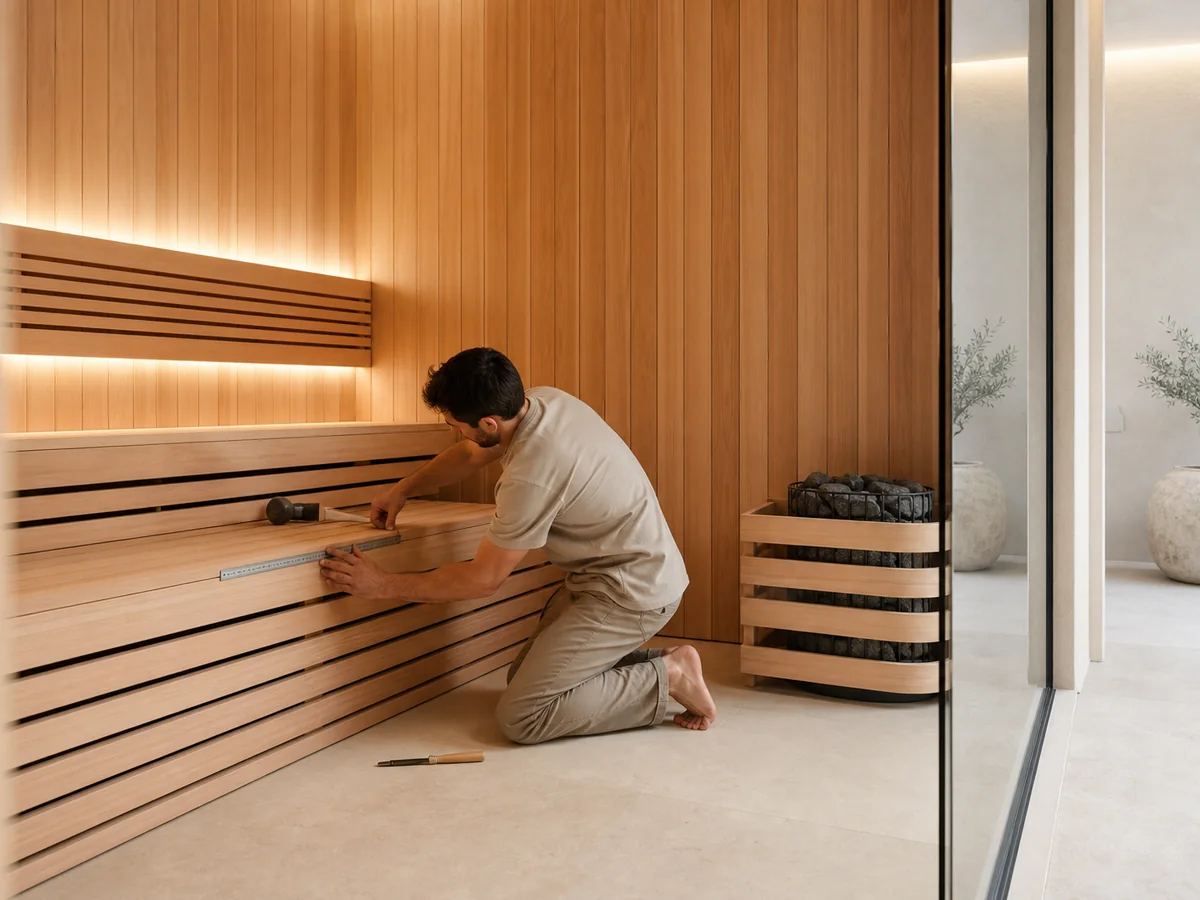 03
03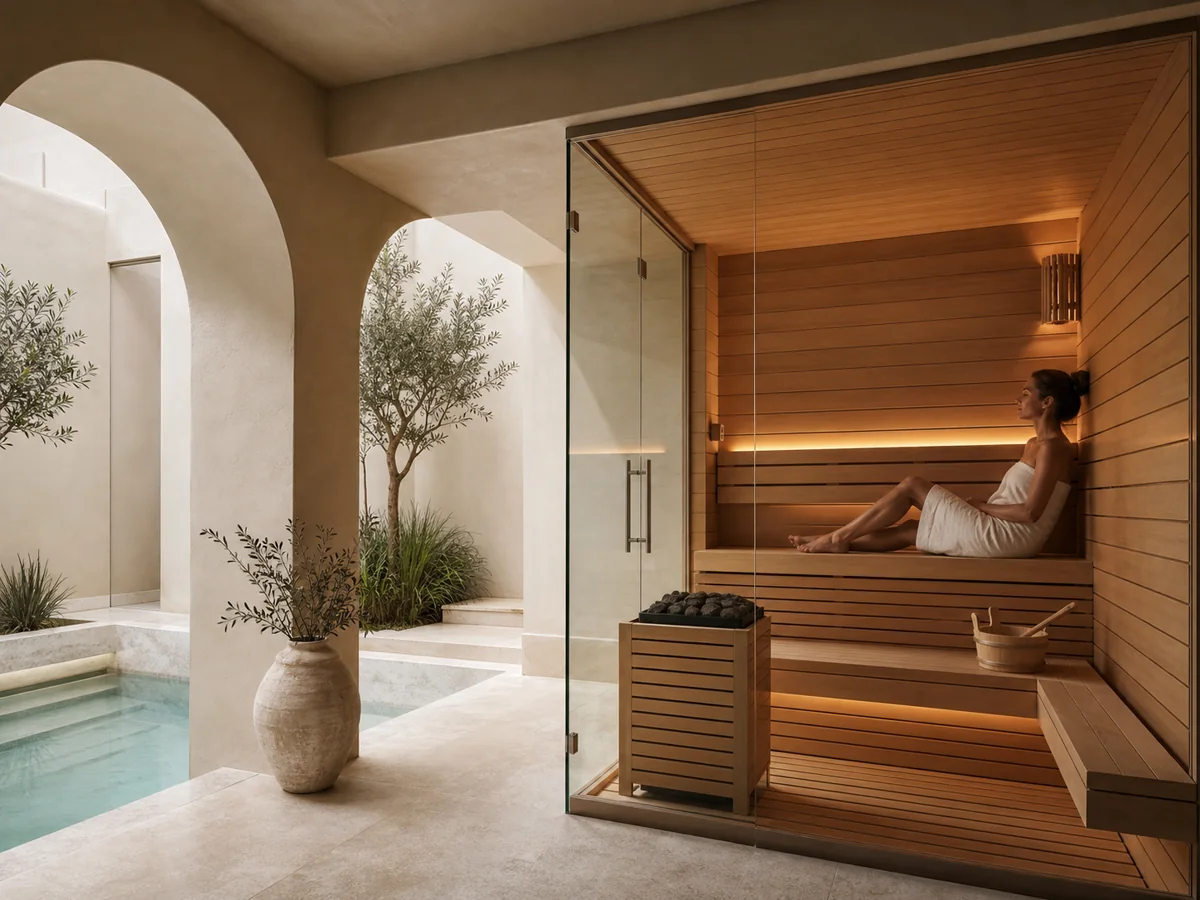 04
04Company & Contact
To talk about your project, we are one call away.
Legal Name
Çilek Havuz
Founded
1998 · Istanbul
Head Office
Çilek Plaza, Eyüp Sultan Mah. Yakacık Cd. Feshane Cd. No: 2 D:4 D:1, 34885 Sancaktepe / İstanbul
Service Area
All of Türkiye · exports to 14 countries
Related articles
Keep reading.
Sık Sorulan Sorular
Our readers' most asked; with expert answers.
Çilek Havuz Content & Technical Team
Guides & Technical Content
- Response Time
- Same day
- Channels
- Phone · E-mail · WhatsApp
If the answer you are looking for is not here, send your question directly to us and our team will reply as soon as possible.
Book a free site surveyThermal modification bakes the timber in oxygen-free kilns, permanently altering cell structure to eliminate moisture absorption, preventing warping and rot while imparting a rich dark tone. For frequently used saunas, the investment pays for itself through multi-decade durability.
Çilek Havuz Content & Technical Team
Compact 2-person saunas (3.0–4.5 kW) can run on a dedicated 230V single-phase circuit, while larger 4–6 person cabins (6.0–9.0+ kW) typically require a 400V 3-phase supply. We inspect electrical panel capacity during our initial site survey.
Çilek Havuz Content & Technical Team
Omitting the aluminum vapor barrier, neglecting gravity cross-ventilation, specifying resin-heavy pine timber, and undersizing heater capacity. These errors lead to rotting framework, mold, and poor heat retention within 2–3 years.
Çilek Havuz Content & Technical Team
Indoor cabins integrate seamlessly into master suites or home gyms with zero chimney requirements; outdoor garden saunas offer a standalone wellness retreat with options for wood-burning stoves and cold plunge tubs. The choice depends on available space and lifestyle preference.
Çilek Havuz Content & Technical Team
Keep the door and ventilation vent open after each session to exhaust humidity. Treat benches periodically with specialized paraffin sauna oil, and never apply standard varnish or polyurethane paints that emit toxic fumes when heated.
Çilek Havuz Content & Technical Team
Exact timber species and panel thickness, rockwool density, aluminum vapor barrier specification, heater model and kW rating, glass door thickness (min. 8mm tempered), and warranty terms.
Çilek Havuz Content & Technical Team