

Salt Room (Halotherapy): Benefits, System and Installation
The heart of a salt room is the halogenerator, and a salt room is not a salt lamp. An honest guide to how the system works, installation criteria, and why health claims call for caution.
The heart of a salt room is the halogenerator, and a salt room is not a salt lamp. An honest guide to how the system works, installation criteria, and why health claims call for caution.
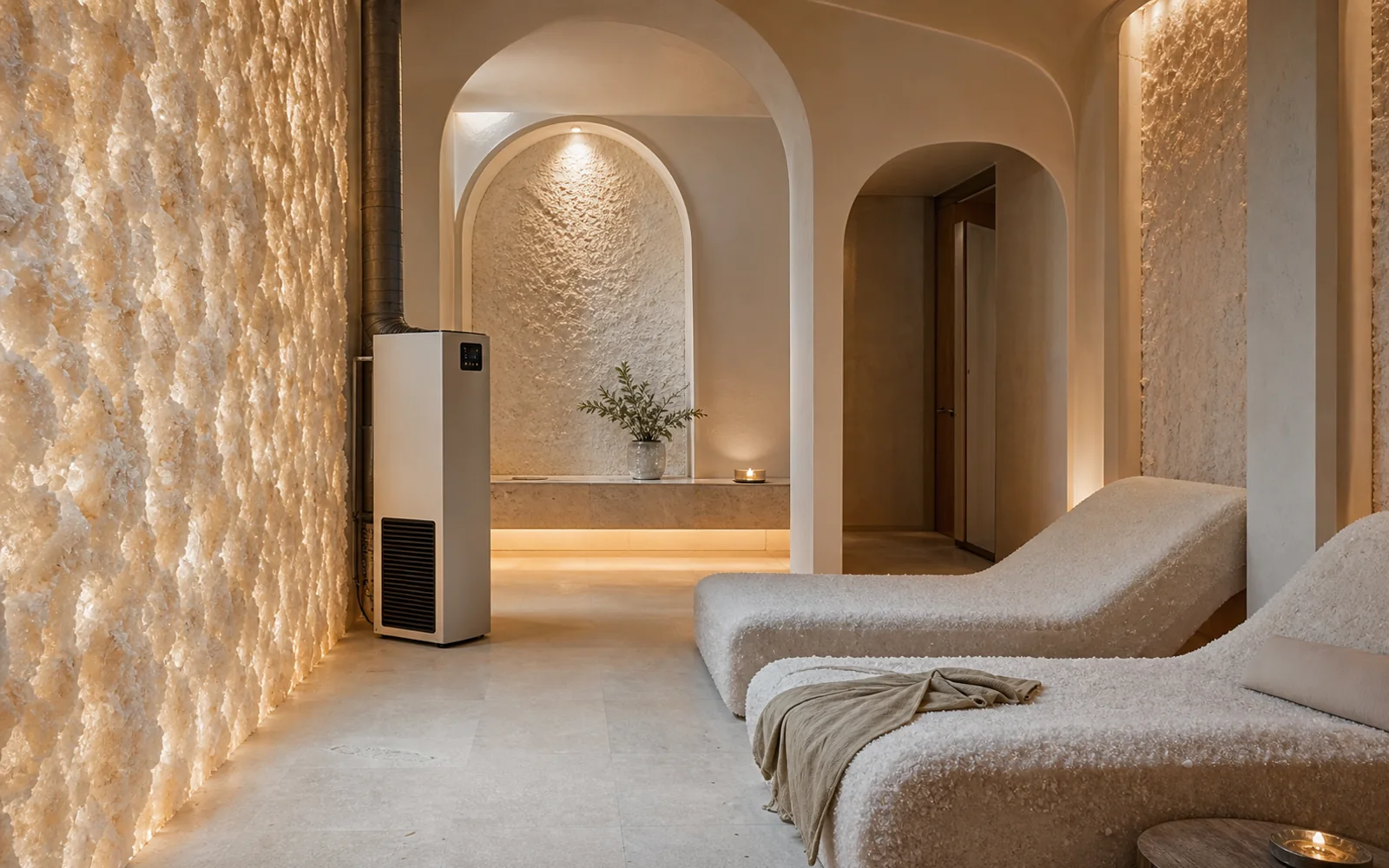
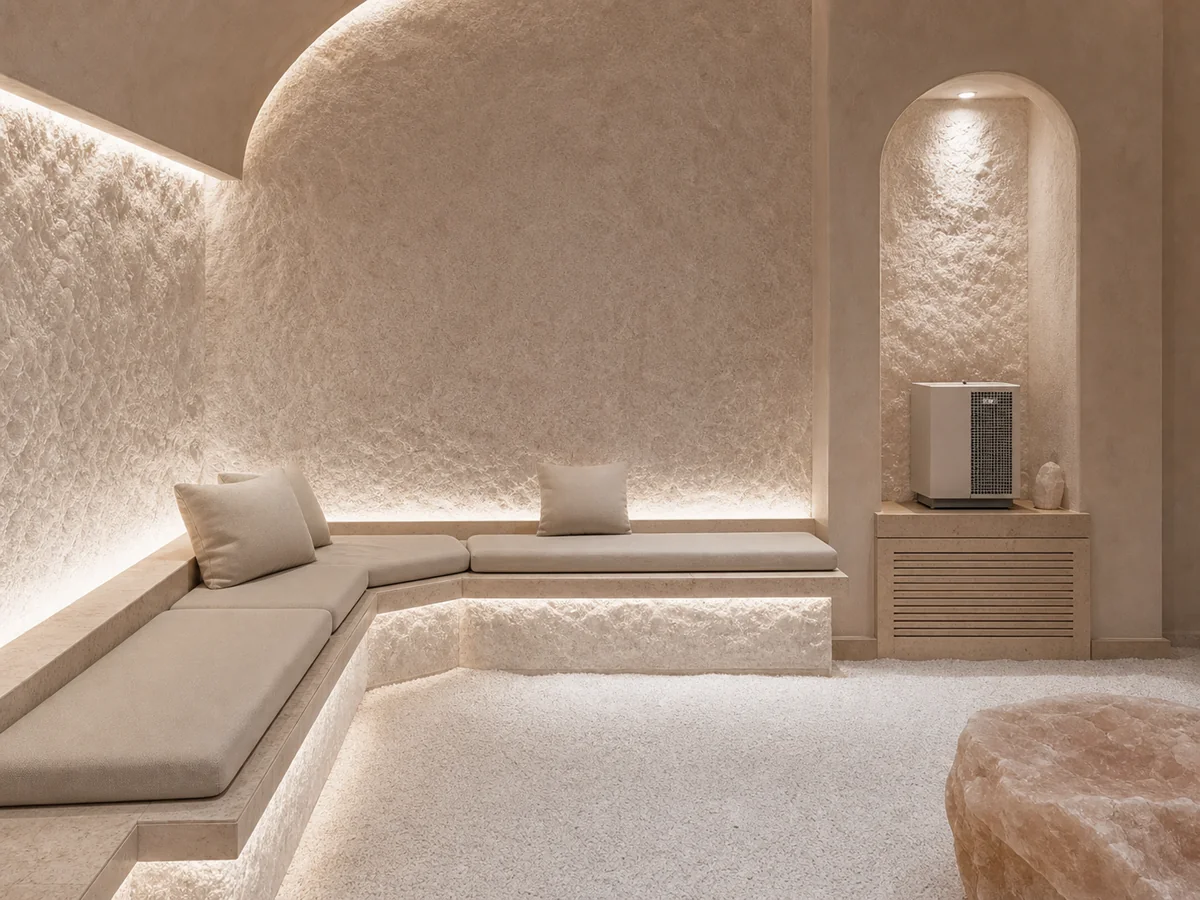
A salt room is a controlled microclimate chamber designed for dry salt wellness sessions, known as halotherapy. Its purpose is dispersing microscopic dry salt aerosol into the room, creating an allergen-free, dry saline atmosphere. Inside, comfortable loungers, gentle lighting, and a serene ambiance provide a restful environment.
Walls and floors are typically clad with natural rock salt blocks, backlit salt bricks, or specialized salt plaster. These surfaces stabilize ambient humidity and create an earthy aesthetic. However, salt blocks alone do not make a therapeutic halotherapy room.
The critical component that transforms a space into an active salt room is the halogenerator, which micronizes pharmaceutical-grade salt into a breathable dry aerosol. Salt-lined walls without a halogenerator constitute merely a decorative salt lounge.
The core mechanical heart of any halotherapy room is the medical halogenerator. It grinds dry sodium chloride into micro-particles (1–5 microns) and blows this dry aerosol into the air stream.
Without an active halogenerator, ambient air never reaches the particulate concentration required for genuine halotherapy. We place this precision medical-grade device at the center of the engineering design.
Integration with room airflow is vital: the aerosol must disperse evenly across all bather seating without draftiness. Regular maintenance and dry salt replenishment ensure consistent aerosol output.
A salt lamp is simply an illuminated block of rock salt that emits a pleasant warm glow but releases no measurable breathable salt aerosol into the room. Cladding a room in salt bricks without a halogenerator produces a decorative space, not active halotherapy.
The difference lies in the machine: a genuine salt room features an active halogenerator micronizing salt into airborne suspension. The therapeutic value is in the aerosolized air you breathe, not the appearance of the walls.
When evaluating proposals, always confirm whether an active medical halogenerator and ventilation exhaust system are included in the scope.
Users report deep mental relaxation, stress relief, and a refreshing sense of respiratory ease within the quiet, dimly lit, dry saline microclimate.
While many bathers report subjective respiratory clearing, scientific clinical evidence remains an evolving wellness field. We present salt rooms as relaxing wellness retreats rather than clinical cures.
Important medical disclaimer: salt rooms do not replace medical treatment for asthma, COPD, or respiratory illnesses. Individuals with chronic medical conditions should consult their physician before starting sessions.
Humidity management is the primary engineering challenge. Halotherapy requires a strictly dry climate; elevated humidity causes salt aerosols to coagulate and salt wall blocks to sweat. Dedicated dehumidification and ventilation are mandatory.
Corrosion resistance is the second critical factor. Airborne salt aerosol accelerates metal corrosion; all light fixtures, electrical wiring, ductwork, and structural fasteners must be non-corrosive and IP65 sealed.
Balanced airflow distribution ensures that salt aerosol reaches all loungers evenly before being purged by the post-session exhaust cycle.
In private villas, a salt room serves as an intimate relaxation sanctuary, ideally positioned alongside a sauna and steam room in a master wellness suite.
In hotels and commercial spas, salt rooms represent a sought-after guest amenity requiring higher-capacity halogenerators, durable seating, and continuous ventilation cycles.
In both settings, installing an active halogenerator ensures a functional halotherapy room rather than a purely decorative space.
Image gallery
04 görsel
 01
01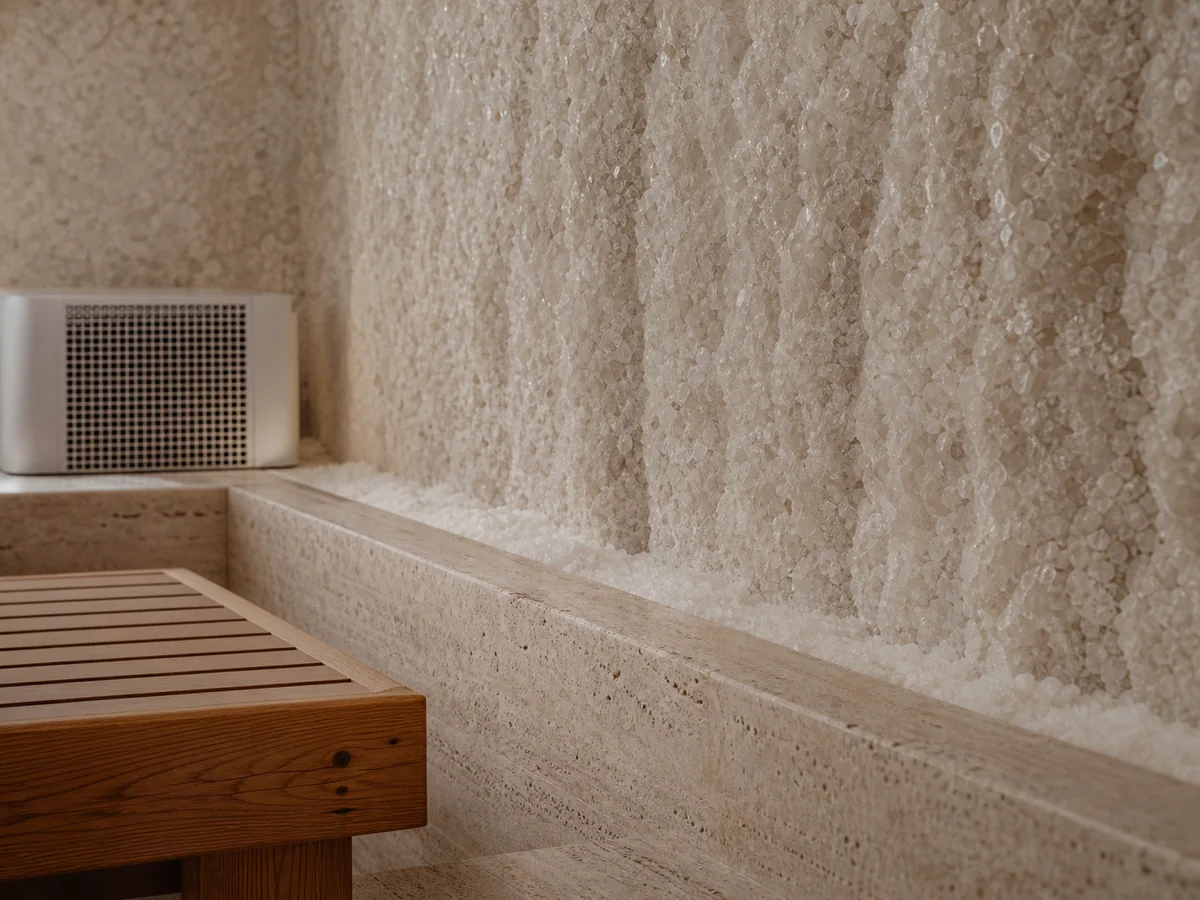 02
02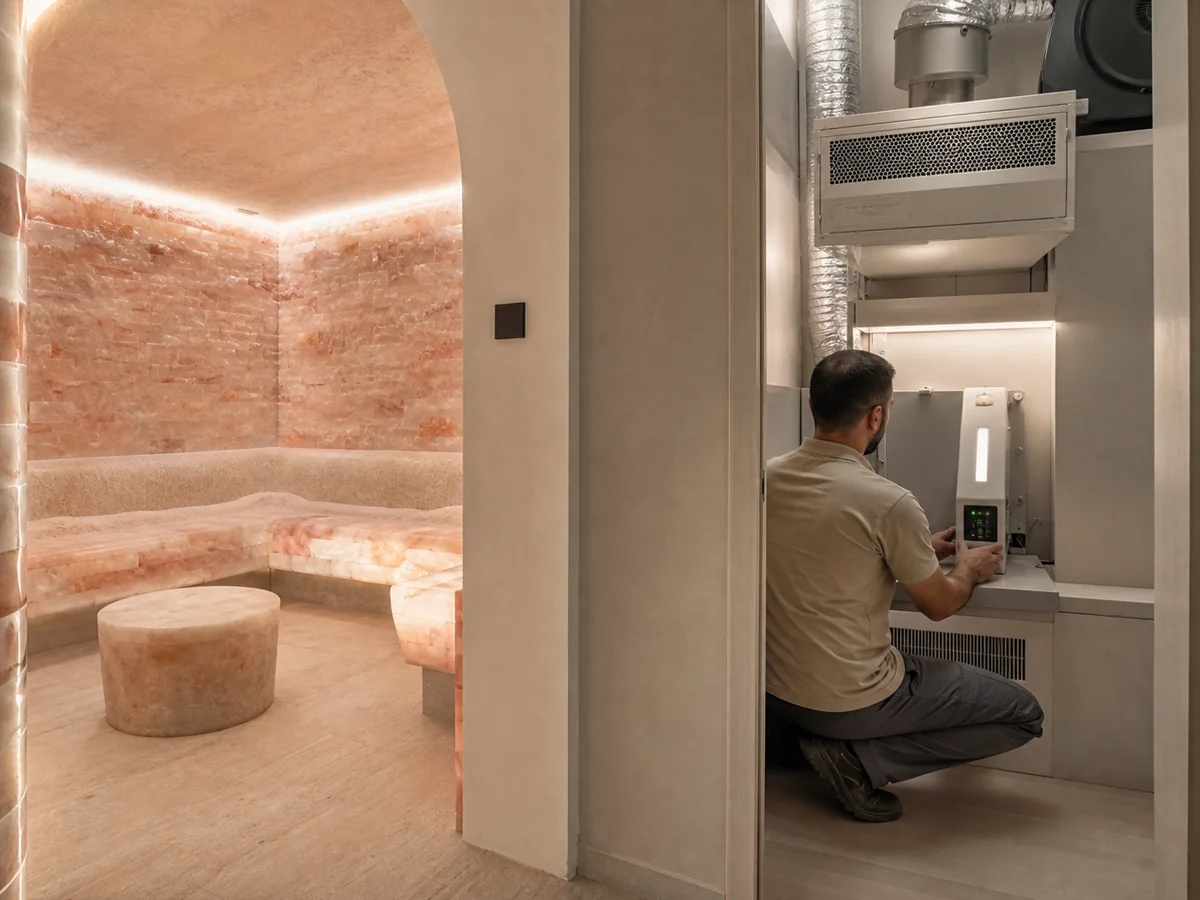 03
03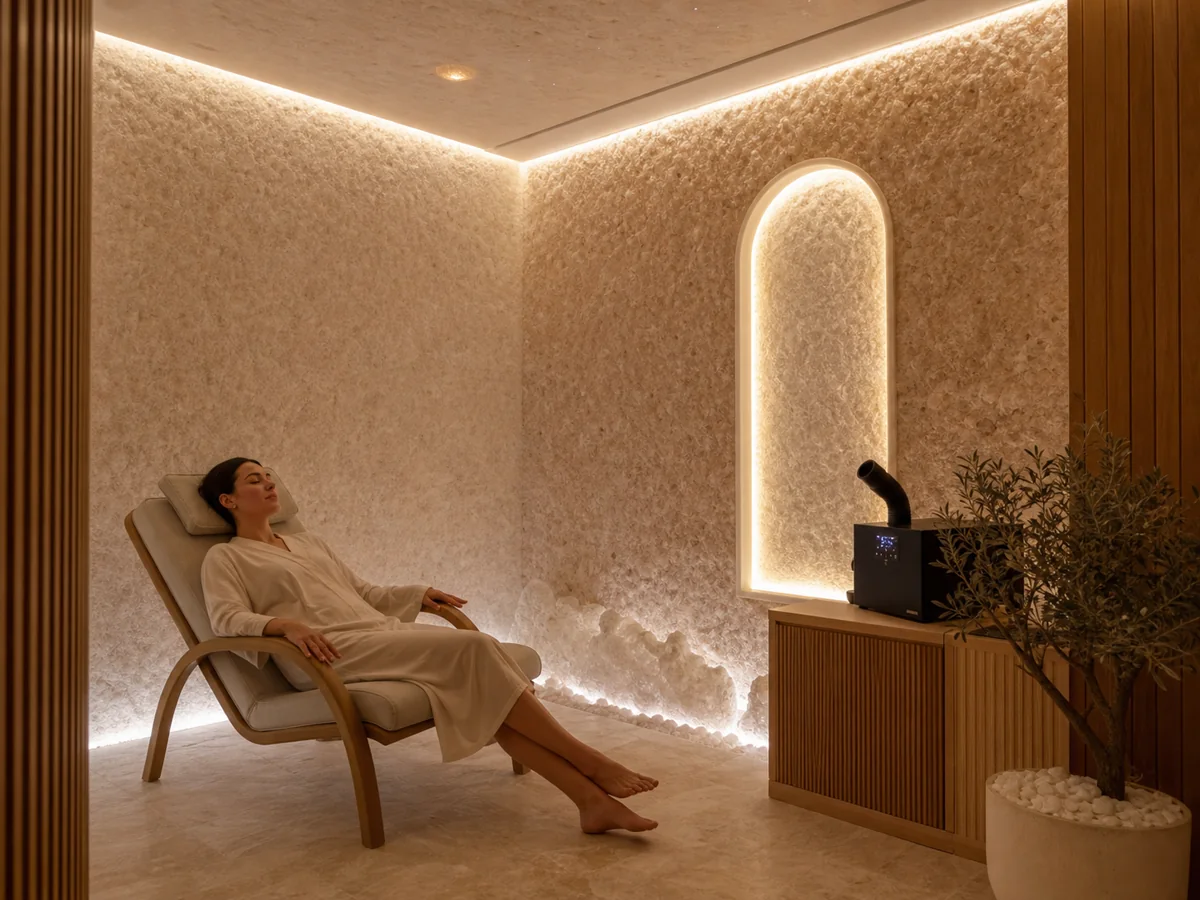 04
04Company & Contact
To talk about your project, we are one call away.
Legal Name
Çilek Havuz
Founded
1998 · Istanbul
Head Office
Çilek Plaza, Eyüp Sultan Mah. Yakacık Cd. Feshane Cd. No: 2 D:4 D:1, 34885 Sancaktepe / İstanbul
Service Area
All of Türkiye · exports to 14 countries
Related articles
Keep reading.
Sık Sorulan Sorular
Our readers' most asked; with expert answers.
Çilek Havuz Content & Technical Team
Guides & Technical Content
- Response Time
- Same day
- Channels
- Phone · E-mail · WhatsApp
If the answer you are looking for is not here, send your question directly to us and our team will reply as soon as possible.
Book a free site surveyA standard halotherapy session lasts 20 to 45 minutes of quiet resting in a comfortable chair. Most wellness enthusiasts enjoy sessions 1 to 3 times weekly as a restorative relaxation ritual. Consult your physician regarding personal health questions.
Çilek Havuz Content & Technical Team
Look for adjustable particle sizing (1–5 microns), programmable aerosol density control, reliable salt feeding, low operating noise, and local spare parts availability.
Çilek Havuz Content & Technical Team
Operating expenses include pharmaceutical-grade dry salt refills, routine halogenerator cleaning, electricity for dehumidification/ventilation, and periodic inspection of corrosion-resistant fittings.
Çilek Havuz Content & Technical Team
Look for a line item specifying an active medical halogenerator with its model and output capacity. A proposal that lists only salt brick cladding describes a decorative room without active aerosol generation.
Çilek Havuz Content & Technical Team
Salt rooms provide a quiet, calm environment enjoyed by all ages; however, parents and seniors with underlying respiratory or cardiovascular conditions should consult their pediatrician or physician prior to use.
Çilek Havuz Content & Technical Team
Yes, but because a salt room requires dry air while a steam room generates 100% humidity, dedicated vapor barriers, isolated ventilation, and sealed transitional doors are required to prevent moisture migration.
Çilek Havuz Content & Technical Team