

Pool Safety: Barriers, Covers and Alarms for Children
A pool is a source of enjoyment, but in homes with children it is also a responsibility that must be taken seriously. Barriers, safety covers, alarms and safe-entry solutions build layered protection where each layer catches what the previous one missed.
A pool is a source of enjoyment, but in homes with children it is also a responsibility that must be taken seriously. Barriers, safety covers, alarms and safe-entry solutions build layered protection where each layer catches what the previous one missed.
The most common and dangerous mistake in pool safety is thinking that a single precaution will be enough. Neither a barrier, nor a cover, nor an alarm alone provides complete protection; Because every measure has its own weak moment and gap. The right security approach is to establish a layered defense that overlaps these measures. When one layer is disabled or skipped, the next layer comes into play.
The basis of this layered approach is a correct understanding of children's behavior and the silent danger of water. For young children, danger occurs in a few seconds that are often overlooked. For this reason, the security system should be designed in a way that it is not dependent on constant surveillance and that it covers the inevitable gaps of human attention with physical and technological barriers. No device or barrier is a substitute for adult supervision; but the right systems secure the gaps in between that oversight.
Since 1993, we have never considered security as an optional add-on in pool projects. Especially in environments where children are present, safety solutions are built into the setup from the design stage of the pool. The barrier route, cover system, alarm locations and safe entry points are both more effective and more aesthetically integrated when planned together with the geometry of the pool.
The first and most basic link of layered security is the barrier that physically prevents the child from accessing water. A well-designed safety barrier should be of a height and geometry that a small child cannot overcome, pass under, or climb on his own. The vertical elements of the barrier are designed at a distance where the child cannot use them as steps and cannot pass through them; These details determine the actual protection value of the barrier.
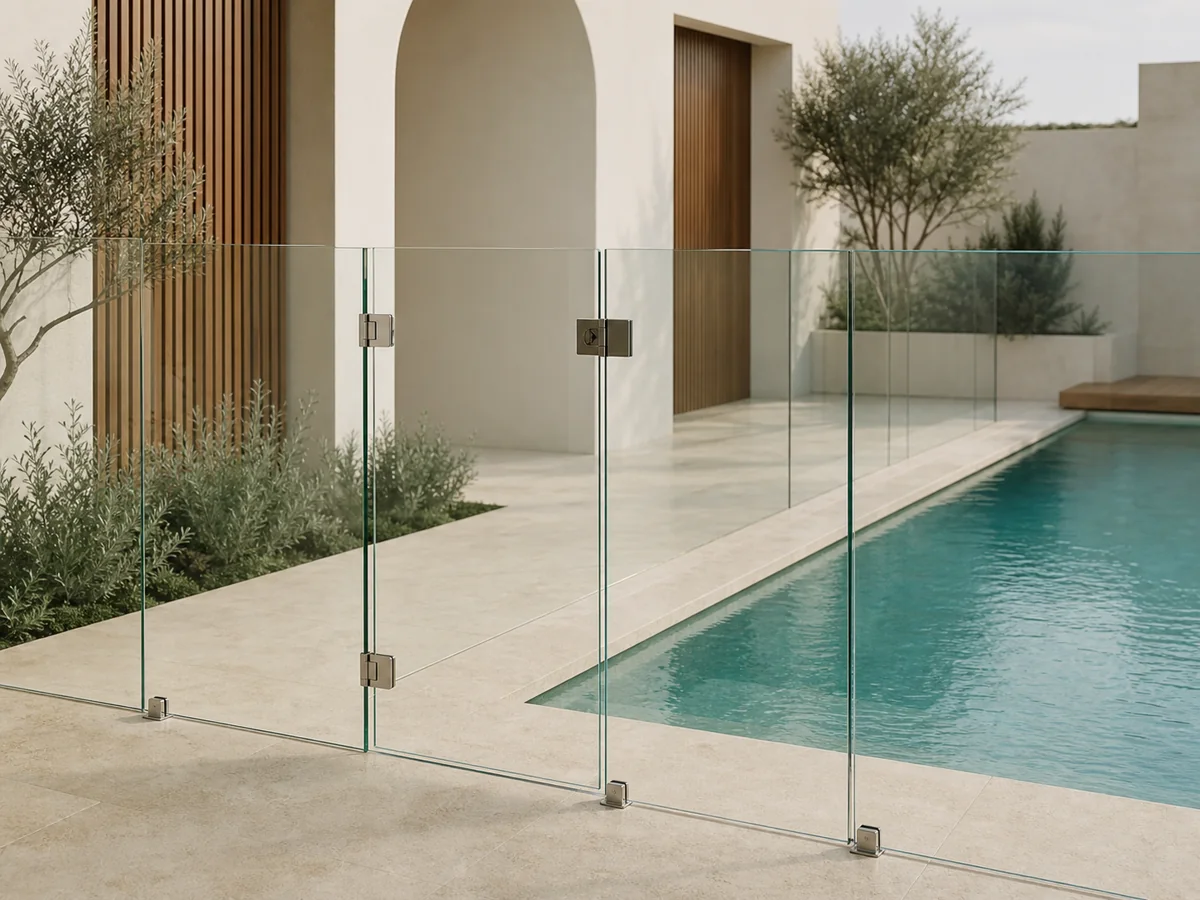
The most critical point of the barrier is its gate. A barrier is only as safe as its gate. Security doors are equipped with self-closing and self-locking mechanisms; Thus, the risk of obvious oblivion is eliminated. The door handle and lock mechanism are positioned at a height and design that the child cannot reach or operate. A security door that does not close on its own makes even the strongest barrier meaningless.
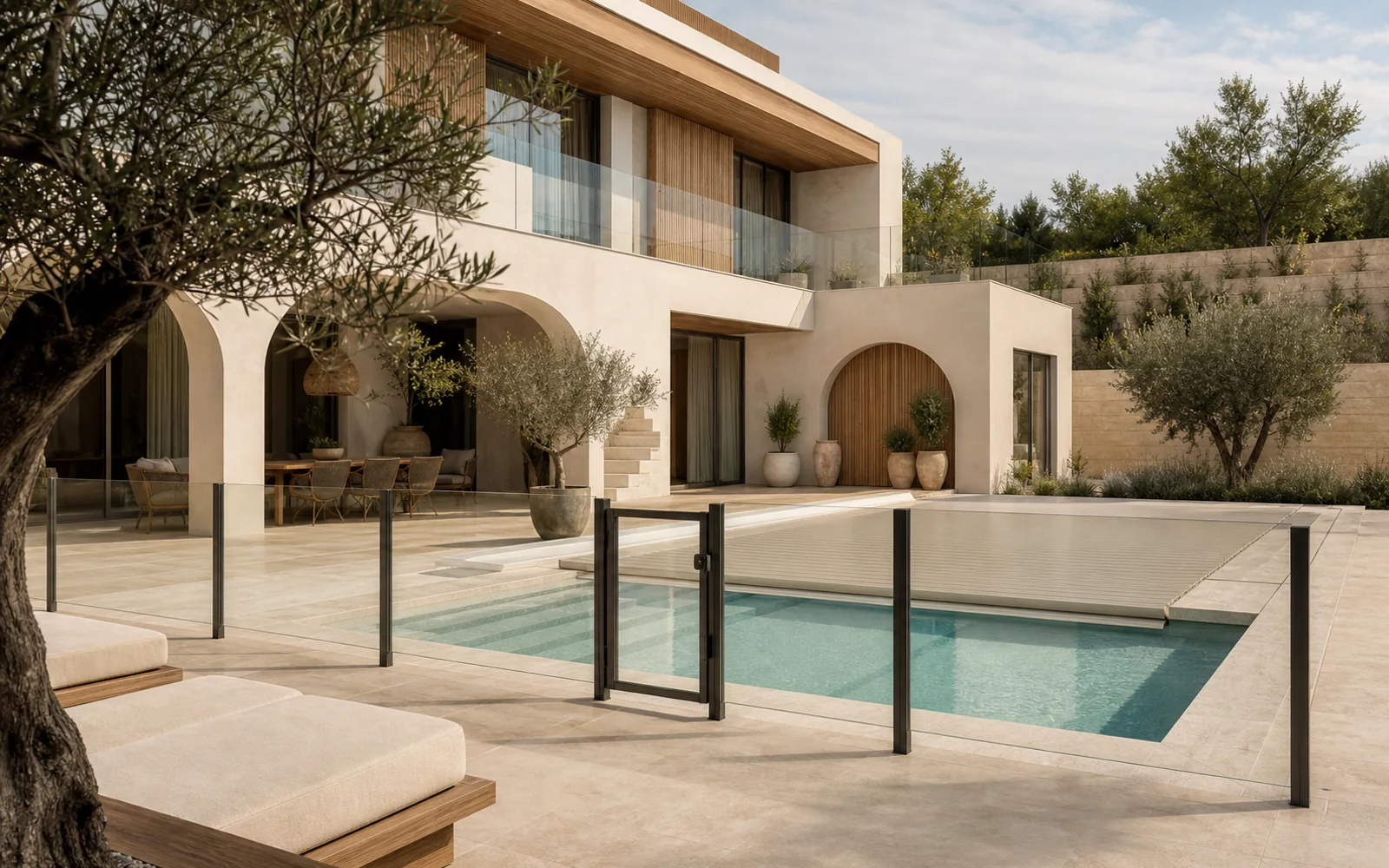
The barrier can be designed to ensure safety while not disrupting the aesthetics of the pool. Glass railings, thin-profile metal systems or solutions integrated with the landscape provide the necessary protection and preserve the line of sight and space integrity. A barrier design that combines safety and aesthetics will both protect your child and support the architectural value of your pool. The barrier is the visible and most reliable face of layered security.
The safety cover is a system that physically covers the water surface of the pool when it is not in use and can bear the weight falling on it. This is where its difference from an ordinary pool cover begins: the safety cover is designed not only to keep the water clean or reduce heat loss, but to prevent a child or pet from falling into the water when it comes on. A properly tensioned safety cover turns the pool surface into an impenetrable barrier.
Security covers can be of different types. Tension type covers are tightly fixed to the anchor points at the pool edge, completely covering the water surface and transferring the load to the edges. Automatic sliding cover systems are opened and closed by pressing a button; It both ensures water safety and offers great convenience in daily use. Automatic systems are especially valuable in frequently used pools as they reduce the possibility of leaving the cover open.
In choosing a security cover, the quality of the anchorage and tensioning system is as decisive as the cover itself. The cover can only carry load if the connection points are solid. Within the scope of our pool cover systems product group, we offer tension type or automatic safety cover solutions depending on the size and usage of the pool. A security cover chosen according to need creates a strong ring of layered security and facilitates daily use by keeping the water clean and the temperature preserved.
Pool alarm is the technological layer of layered security and is the system that gives the final warning when other measures are bypassed. The main function of the alarm is to alert adults to action by giving an instant audible warning when there is an unexpected entry into the water. If a child crosses the barrier or approaches the water when the cover is open, the alarm saves those critical seconds.
Alarm systems work on different principles. Water surface alarms are activated by detecting the ripple caused by an object falling into the water. Barrier and door alarms give a warning if the security door is opened. Some systems work with a wristband carried by the child; The alarm is triggered when this bracelet comes into contact with water. Each system has its own scenario for which it is suitable, and often the best solution is to use more than one alarm type together.
The effectiveness of the alarm depends on its correct positioning and constant operation. A disabled alarm or a dead battery is equivalent to no alarm at all. Therefore, alarm systems should be designed in a way that is easy to control regularly and is unlikely to be disabled. It is necessary to consider the alarm together with other rings of layered security; The alarm itself is not a barrier, but it is a vital layer of alert that captures a moment missed by the barrier and cover.
Pool safety is not just about preventing access to the water, but also about making the entry into the water itself safe. Pool entry points, stairs and shallow areas are areas where safety is directly experienced, especially for children and the elderly. An entrance with wide, non-slip steps and grip makes the descent into and out of the water both safe and comfortable.
In staircase design, the non-slip nature of the step surface, the step width and the location of the grab bars are decisive. Non-slip on these surfaces used with wet feet is the most basic element of accident prevention. Beach type entry solutions, which enable a wide and gradual entry into the water, offer both a safe starting area and a controlled water experience, especially for young children. Clear definition of shallow areas and clear depth transitions allow the user to know where they stand at all times.
Safe entrance design is considered together with the depth structure of the water. The transition between shallow and deep areas should be clear and predictable, and sudden depth changes should be avoided. Visually marking depth changes through color and texture differences of the pool floor helps users move consciously while in the water. The secure entrance and staircase design is layered security brought into the pool; It is a design approach that maintains safety in the water, as well as layers that prevent access to water.
The final link in layered safety is lifesaving equipment and emergency preparedness, which enable rapid response in the event of an accident. Even if all preventive layers are installed correctly, basic rescue equipment needs to be located at the edge of every pool and kept ready for use. Basic equipment such as life buoys and extension hooks are vital in an emergency when seconds are decisive.
Availability of rescue equipment is as important as its accessibility. Equipment should be kept in a visible and easily accessible spot by the pool, unlocked and unobstructed. Having to search for equipment in an emergency wastes valuable time. Therefore, correct positioning of rescue points around the pool is considered as part of the design.
Emergency preparedness is a matter of awareness beyond equipment. Parts of preparation include ensuring that adults using the pool have basic rescue and response knowledge, keeping emergency contact information accessible, and clearly marking depth information. When planning pool safety as a whole, adding intervention preparation to the preventive layers completes the responsibility. When a layered security system is installed correctly, your pool turns into a space where your family and children can enjoy with peace of mind.
Image gallery
04 görsel
 01
01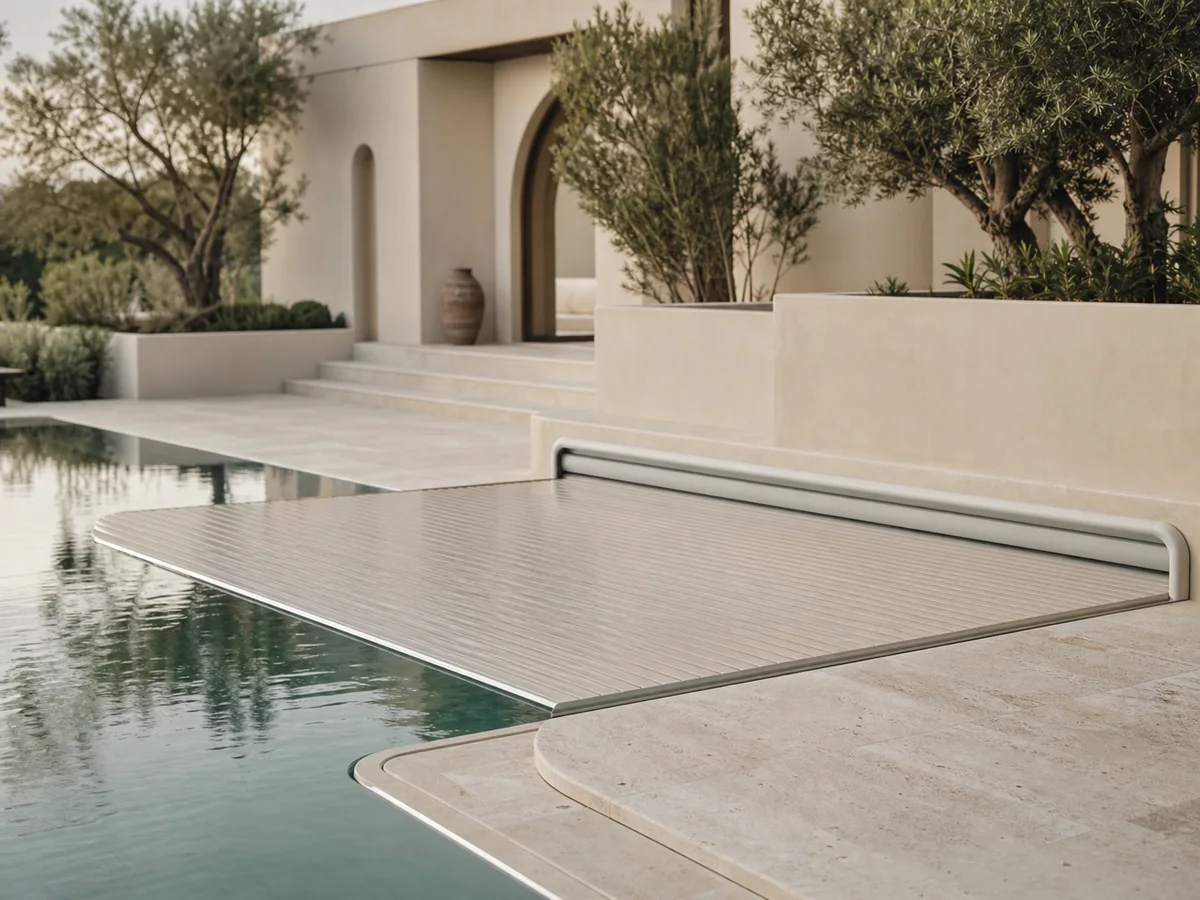 02
02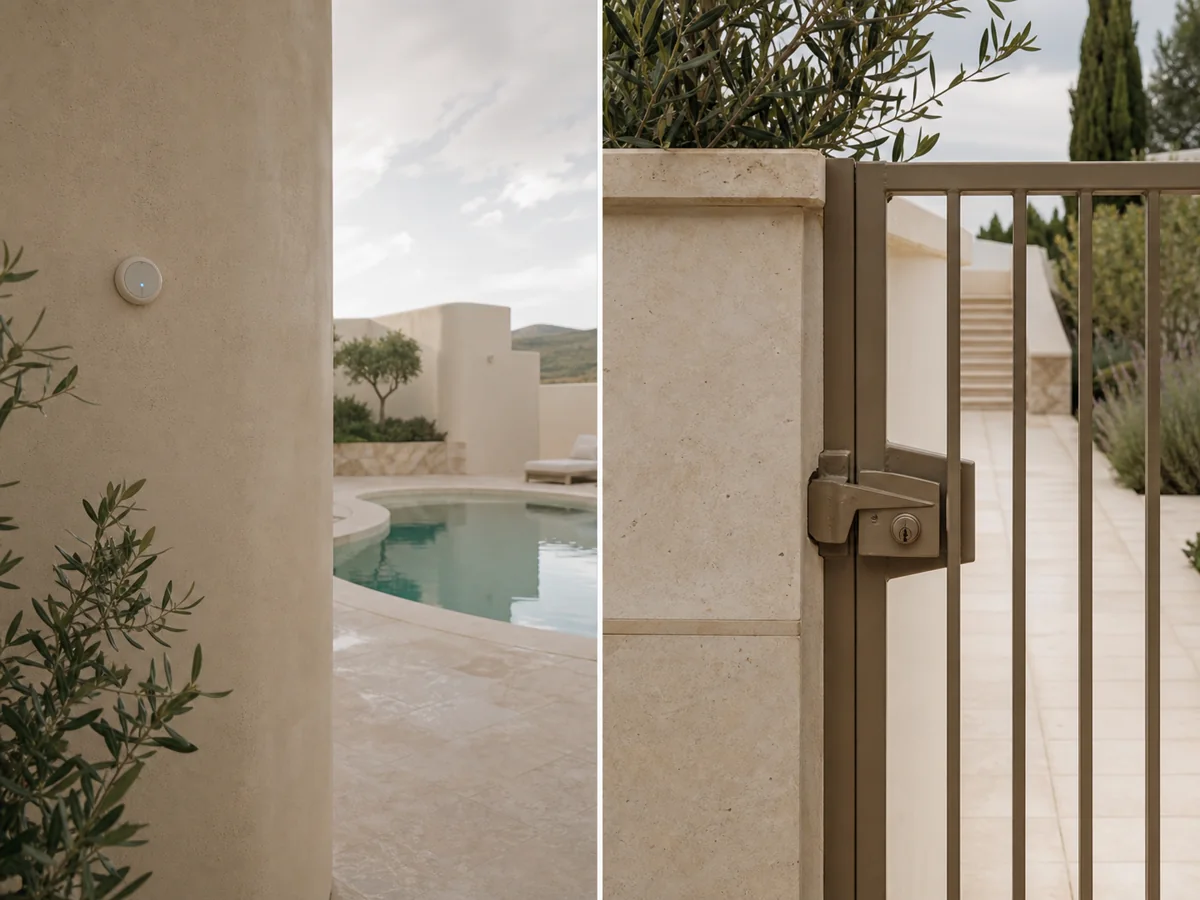 03
03 04
04Company & Contact
To talk about your project, we are one call away.
Legal Name
Çilek Havuz
Founded
1998 · Istanbul
Head Office
Çilek Plaza, Eyüp Sultan Mah. Yakacık Cd. Feshane Cd. No: 2 D:4 D:1, 34885 Sancaktepe / İstanbul
Service Area
All of Türkiye · exports to 14 countries
Related articles
Keep reading.

Sık Sorulan Sorular
Our readers' most asked; with expert answers.
Çilek Havuz Content & Technical Team
Guides & Technical Content
- Response Time
- Same day
- Channels
- Phone · E-mail · WhatsApp
If the answer you are looking for is not here, send your question directly to us and our team will reply as soon as possible.
Book a free site surveyNo device or barrier is a substitute for adult supervision; security equipment is designed solely to cover the inevitable gaps in human attention. Layered safeguards secure critical seconds between surveillance. Therefore, even the most powerful system must be accompanied by constant surveillance.
Çilek Havuz Content & Technical Team
Layered safety designed for young children also provides great protection for pets; The load-bearing safety cover and barrier also prevent animals from falling into the water. It may also be helpful to have a safe ladder or ramp for the animals to get in and out of the water. We recommend sharing these needs at the design stage.
Çilek Havuz Content & Technical Team
Wind, rain or surface movement may cause false alerts for some types of alarms; Frequent false alarms run the risk of the system not being taken seriously. Choosing the correct alarm type according to the pool condition and adjusting the sensitivity setting appropriately will reduce this problem. Using multiple alarm types together increases reliability.
Çilek Havuz Content & Technical Team
As much as physical precautions, the child's water awareness is also a part of safety; However, swimming training and water habits never replace barriers and supervision. We recommend consulting a professional for training needs and appropriate age. Even a conscious child must be protected with layered physical precautions.
Çilek Havuz Content & Technical Team
In public pools with large numbers of users, safety is supported by visible warning signs, clear depth indicators and accessible rescue equipment, as individual supervision becomes difficult. Access control and surveillance are also part of the setup. Layered security in these pools should be planned together with operating rules.
Çilek Havuz Content & Technical Team
A disabled or dead battery alarm, a door left open, or a loose cover anchor will render even the best system useless. For this reason, barrier door mechanisms, alarm batteries and cover tensioning systems should be checked regularly. A simple periodic check routine ensures continued layered security.
Çilek Havuz Content & Technical Team