

Pool Filter Types: Comparing Sand, Glass and Zeolite Media
The filter media inside the tank directly determines your pool's water clarity. We compare sand, glass and zeolite media across filtration fineness, lifespan, backwash needs and cost from an engineering perspective.
The filter media inside the tank directly determines your pool's water clarity. We compare sand, glass and zeolite media across filtration fineness, lifespan, backwash needs and cost from an engineering perspective.
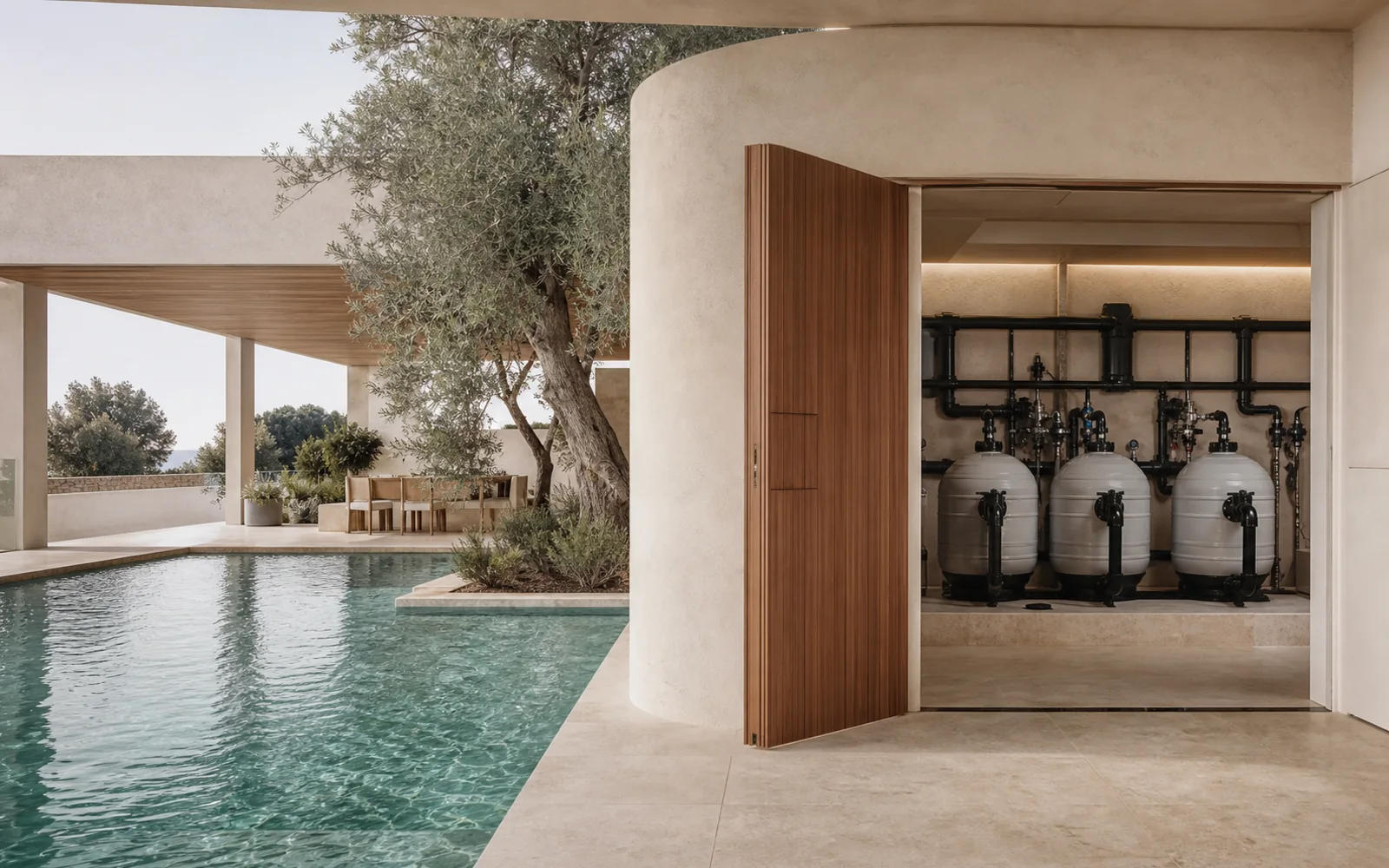
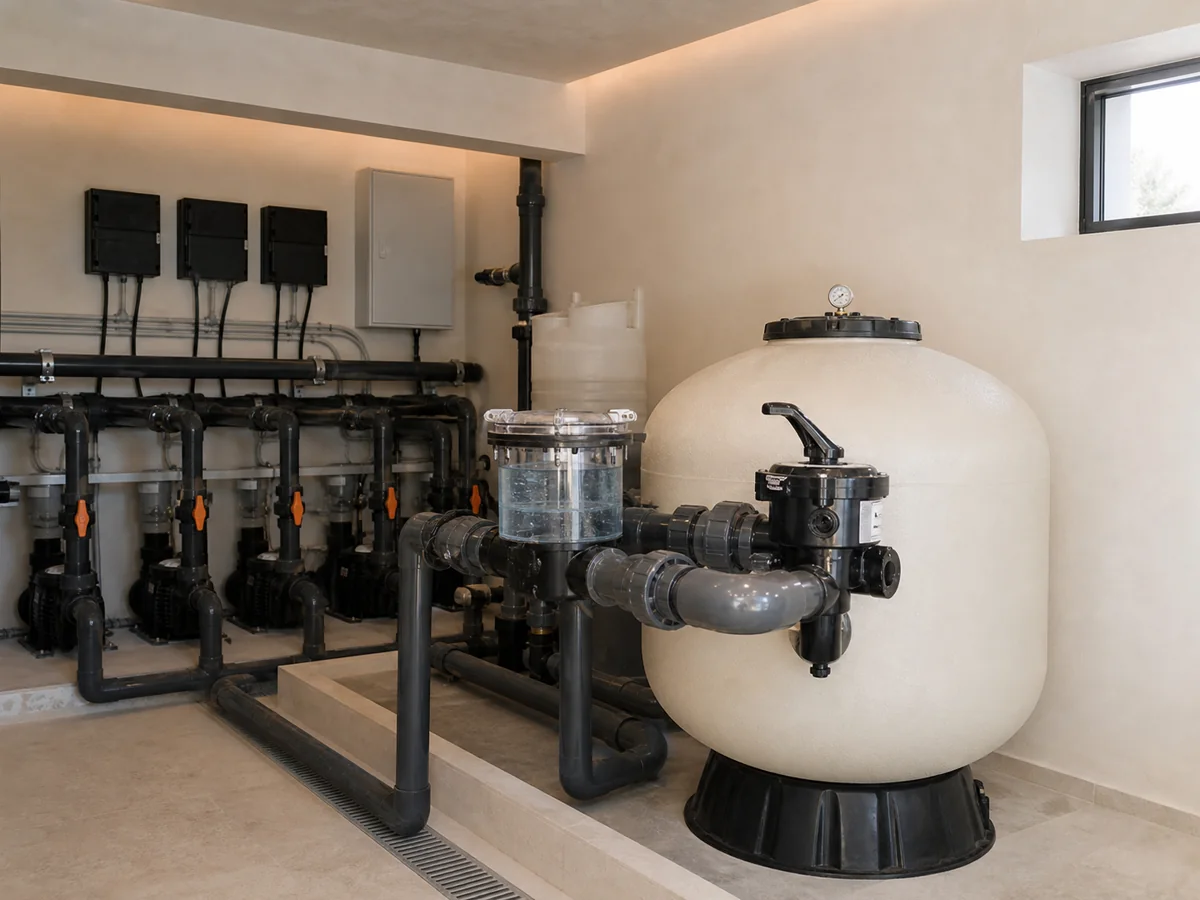
In pool filtration, the media in the tank is as decisive as, or even more than, the tank itself. While the water pumped by the pump passes through this media bed, the suspended particles are mechanically retained and clarity is provided to the water. Grain size, surface structure and electrostatic properties of the media; It directly determines what size particles it can capture. Therefore, choosing the right media leaves a lasting impact on the visual quality and chemical consumption of your pool.
The basic truth we have observed in the systems we have installed since 1993 is this: insufficient filtering fineness returns to you as blurriness and dull appearance, no matter how well you adjust the dosage. Filtering fineness is expressed in microns; As the value decreases, finer particles are retained. In this article, we discuss sand, cullet and zeolite media in terms of this fineness as well as life, backwashing behavior and total cost.
Quartz sand has been the pool industry's standard media for decades and remains the most common solution. Quartz sand graded to the correct granulometry (usually 0.4-0.8 mm) can retain particles at the level of approximately 20-40 microns. Its main strengths are its widespread availability, low initial cost and mature technology.
The boundary of the sand is that over time, the corners of the grains wear out and become rounded, and channeling occurs in the bed; This reduces filtering efficiency. For this reason, it is recommended to renew the sand media every 3-5 years on average. Sand consumes relatively more water during backwashing because it is a heavy bed and requires adequate flow for expansion. If your budget is a priority and your filtration fineness expectation is moderate, sand is still a logical choice.
Recycled glass-based, specially processed glass media has emerged as a strong alternative to sand in recent years. The surface of glass grains is smoother and sharper than sand; It also tends to trap fine particles electrostatically, thanks to its slightly negative surface charge. These two features together provide a filtering fineness typically in the range of 9-15 microns; i.e. water noticeably clearer than sand.
Glass media channels less and wears slower than sand; Therefore, its lifespan is generally longer and in some applications it can serve 5-7 years or more. Thanks to its surface structure, it is easier to clean during backwashing, which means saving water and time. The initial cost of glass media is slightly higher than sand; However, long life and low water consumption compensate for this difference over time.
Zeolite is a naturally porous aluminosilicate mineral, and its outstanding feature in filtration is its very high surface area. This porous structure enables the zeolite to retain particles of approximately 3-5 microns; This is the finest filtering performance among the three media. Zeolite makes a significant difference in projects with the highest clarity expectations.
The second prominent feature of zeolite is that it can partially adsorb ammonium and some organic compounds in water through ion exchange; This can contribute to the reduction of chloramines and thus the problems of burning eyes and pungent odors. On the other hand, zeolite is the highest cost media per unit and requires regular and sufficient backwashing to prevent its pores from filling. In heavily used, crowded or high clarity pools, the cost of zeolite justifies itself.
Choosing the right media is not based on a single criterion, but on a balance of several factors. The first criterion is filtering fineness: while sand may be sufficient for a standard residential pool, glass or zeolite comes to the fore in pools that require high clarity or where there are users with skin sensitivities. The second criterion is life and renewal frequency; Glass is advantageous for users who want less media replacement in the long run.
The third criterion is water consumption and backwash behavior; In regions where water saving is a priority, cleaning glass and zeolite more efficiently becomes important. The fourth criterion is the total cost of ownership: sand with a low initial price can make up the difference in the long run with frequent renewal and high water consumption. Our company evaluates the pool volume, usage intensity and regional water conditions in each project and recommends the most suitable media for you.
In most cases, your existing sand filter tank can be preserved and only the media inside can be replaced with glass or zeolite; This is an economical improvement compared to replacing the entire filter assembly. However, the right amount and correct layering are critical when changing media; The support gravel at the bottom of the tank, the fine media ratio at the top, and the total fill level must comply with the manufacturer's tank specification.
The point to be considered when passing media is to fill media of different densities in the correct volume, not exactly the same weight; For example, since glass is lighter than sand, less weight is required for the same volume. Our pool mechanical materials product line and engineering team support you to project this type of upgrade and source the right media. We recommend that this process be carried out under expert supervision, as incorrect media selection or incorrect filling may disrupt the filter pressure and flow balance.
Image gallery
04 görsel
 01
01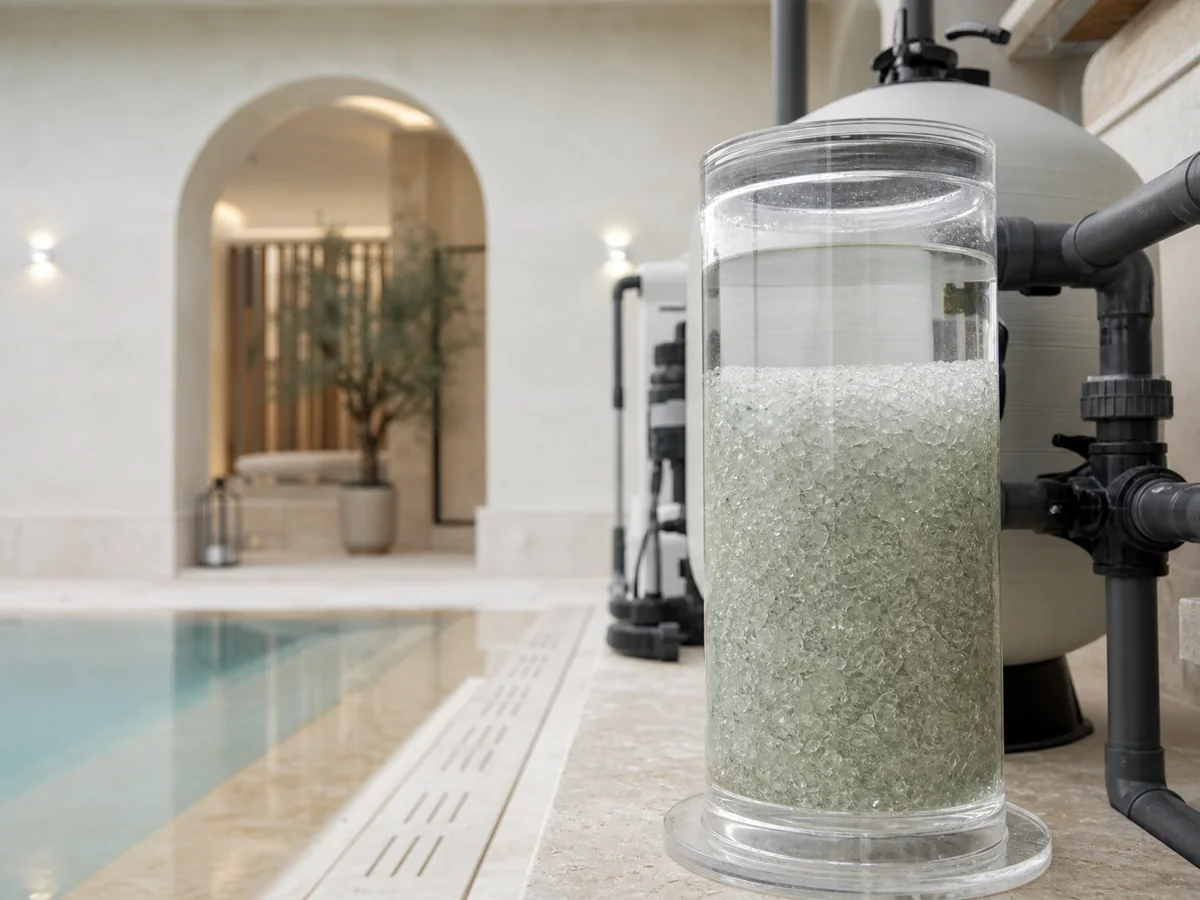 02
02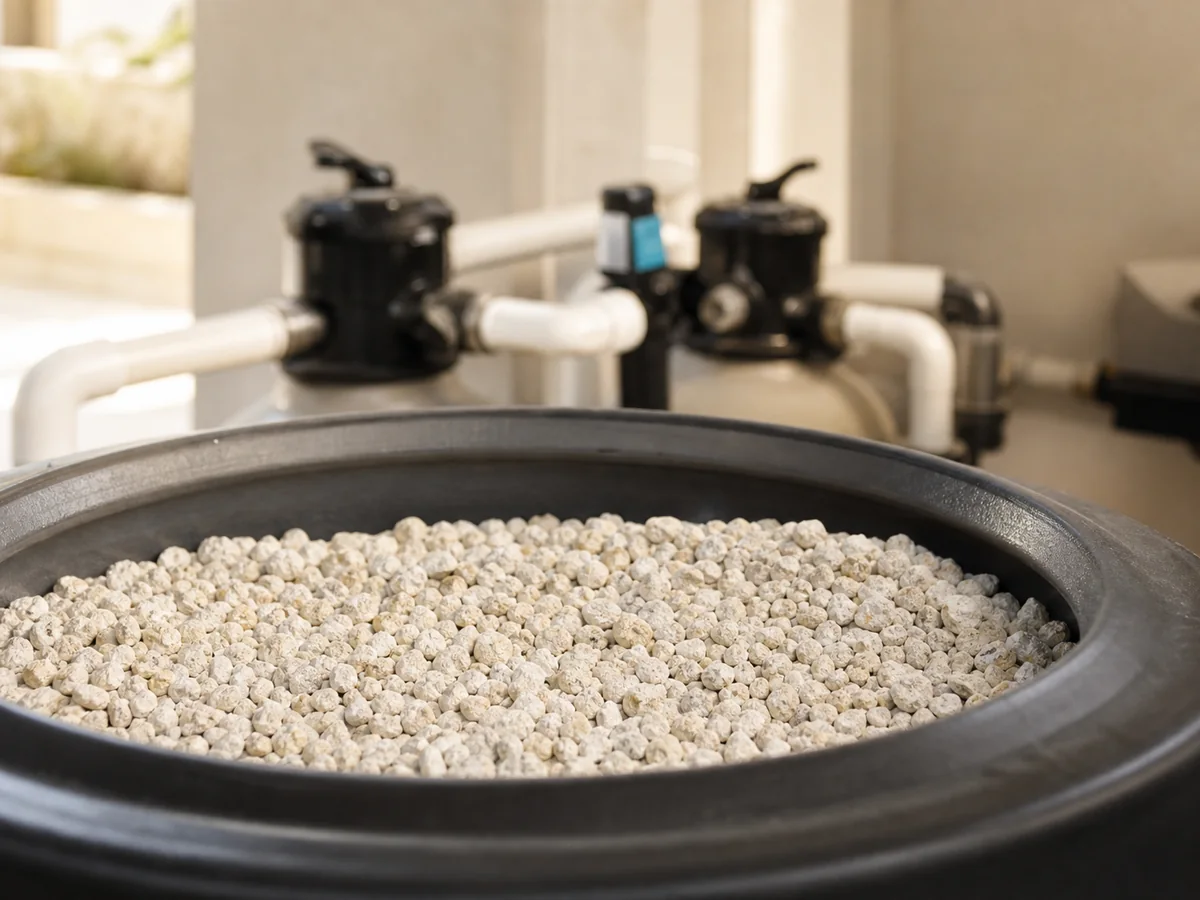 03
03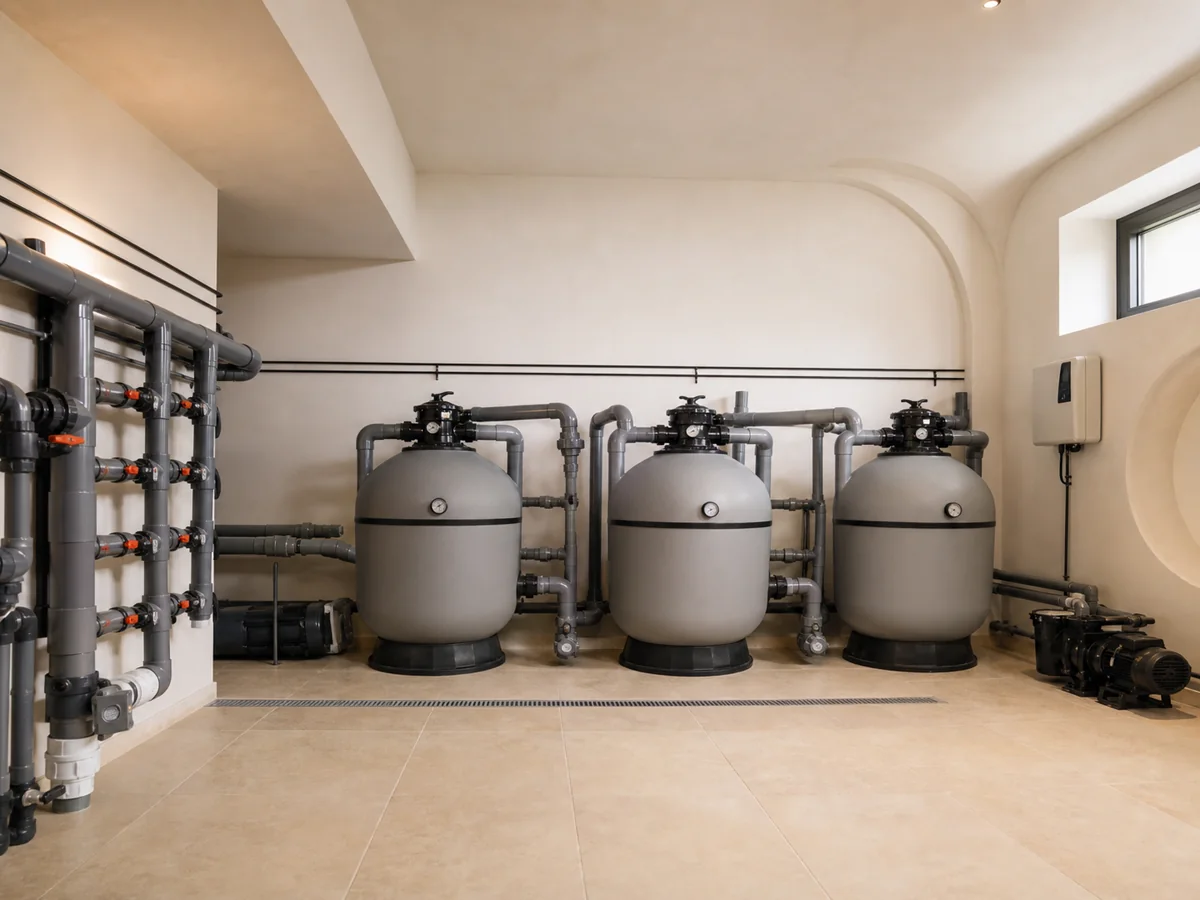 04
04Company & Contact
To talk about your project, we are one call away.
Legal Name
Çilek Havuz
Founded
1998 · Istanbul
Head Office
Çilek Plaza, Eyüp Sultan Mah. Yakacık Cd. Feshane Cd. No: 2 D:4 D:1, 34885 Sancaktepe / İstanbul
Service Area
All of Türkiye · exports to 14 countries
Related articles
Keep reading.
Sık Sorulan Sorular
Our readers' most asked; with expert answers.
Çilek Havuz Content & Technical Team
Guides & Technical Content
- Response Time
- Same day
- Channels
- Phone · E-mail · WhatsApp
If the answer you are looking for is not here, send your question directly to us and our team will reply as soon as possible.
Book a free site surveyThe best time to change media is usually before the season opener or at the close when the pool is not in use; thus, the renewal does not disrupt the active usage period. Checking the tank and internal distributors before replacement also coincides with this period. The exact timing is planned based on the pool's usage schedule.
Çilek Havuz Content & Technical Team
When the pressure on the filter rises above normal, it often indicates that the media is dirty and it is time to backwash. If the pressure does not drop despite backwashing, the media may be clumped or at the end of its life. Monitoring the pressure gauge regularly is the most practical way to catch the correct maintenance time of the filter.
Çilek Havuz Content & Technical Team
Glass and zeolite media work well with common disinfection methods, including salt electrolysis pools. The ion exchange property of zeolite can also persist in salt systems; However, backwashing regularly and at sufficient flow rate is important to maintain the performance of the media. It would be helpful if we jointly evaluate media selection for the specific conditions of your system.
Çilek Havuz Content & Technical Team
Random mixing of media can reduce filtration efficiency by disrupting stratification due to different densities and grain sizes. Some manufacturers recommend planned layering between the support gravel and the parent media; This is different from arbitrary mixing. For correct filling, it is recommended to follow the manufacturer's tank specification and carry out the process under expert supervision.
Çilek Havuz Content & Technical Team
The capacity of zeolite to adsorb ammonium and organic compounds may become saturated over time; In this case, a saline refresh or media change may be necessary. Backwashing regularly and with sufficient flow rate delays the filling of the pores and preserves this capacity for a longer time. This monitoring is especially important in heavily used pools.
Çilek Havuz Content & Technical Team
In most cases, only the media can be replaced, preserving the existing tank and pump; This is an economic improvement. However, since different media have different density and backwash flow requirements, the compatibility of the upgrade with the existing pump and tank must be verified. We can check this compatibility together by evaluating your pool volume and installation.
Çilek Havuz Content & Technical Team