


Pool Filter Backwashing: A Step-by-Step Multiport Valve Guide
Backwashing cleans your sand filter's lungs, but done wrong it drains and damages the filter instead. Learn every position of the 6-way valve, when to read the pressure gauge, why the often-skipped RINSE step is vital, and exactly when to backwash, all with engineering clarity.
Backwashing cleans your sand filter's lungs, but done wrong it drains and damages the filter instead. Learn every position of the 6-way valve, when to read the pressure gauge, why the often-skipped RINSE step is vital, and exactly when to backwash, all with engineering clarity.
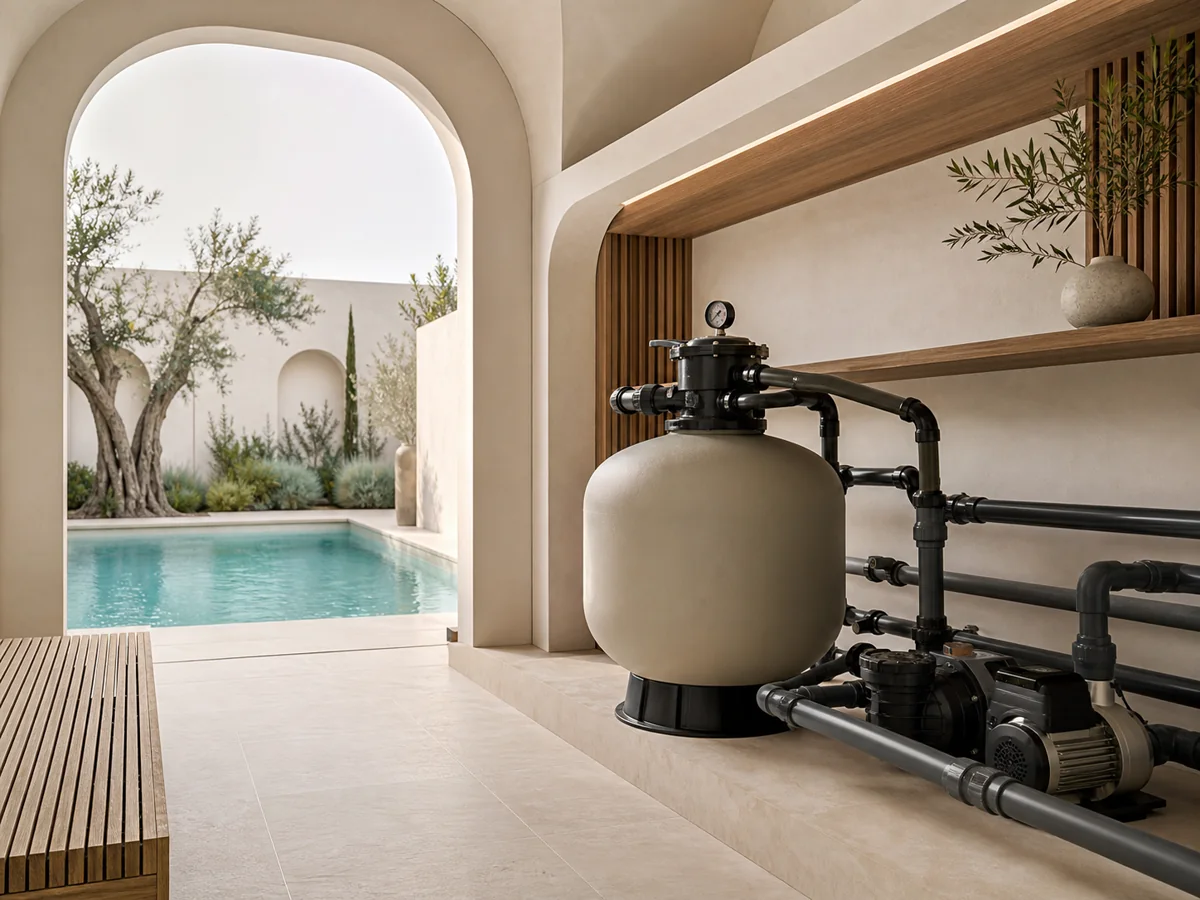
Your sand filter is the lungs of your swimming pool. As water passes down through the bed of silica or active glass media, suspended debris, dust, and micro-particles are trapped between the grains; purified water returns to the pool. Over time, the media bed fills with accumulated dirt and becomes clogged. Backwashing reverses the flow of water through the filter to dislodge this trapped debris and flush it out through the waste drain line.
As the name implies: during normal filtration, water enters the top of the tank and flows downward. During a backwash, flow is reversed; water is pumped from the bottom upward, lifting and expanding the sand bed, releasing trapped silt, and sending the contaminated water directly out to waste. This dirty water never returns to the pool.
Backwashing is one of the most routine yet frequently mishandled pool maintenance procedures. Executed properly, it extends filter media lifespan and keeps water sparkling clear. Done incorrectly, it either fails to clean the bed or expels sand into the pool.
The multiport valve (typically 6-position) atop or alongside the filter tank is the hydraulic brain of the system. FILTER (Filtration): normal operating position where water passes through media and returns cleaned to the pool. BACKWASH: reverses internal flow, lifting the bed and flushing trapped debris out to waste.
RINSE: re-settles and compacts the agitated sand bed after backwashing and flushes residual cloudy water out to waste; this step is vital and detailed below. WASTE / DRAIN: discharges pool water directly to drain, bypassing the filter entirely; used when vacuuming heavy algae to waste or draining the pool.
RECIRCULATE: circulates water from pump to pool without passing through filter media; used during emergency chlorination or when the filter is offline. CLOSED: completely closes all ports; used during plant room servicing and NEVER run with the pump turned on. Always shut off the pump before turning the valve handle to avoid tearing internal spider gaskets.
The pressure gauge on the filter tank tells you precisely when backwashing is required. When the filter is freshly cleaned, the baseline gauge reading represents your 'clean starting pressure'; record this number as your baseline reference.
As debris accumulates in the sand bed, hydraulic resistance increases and pressure climbs. The rule of thumb: when the gauge rises 0.3–0.5 bar (approx. 5–8 psi) above your clean baseline, it is time to backwash. If your clean pressure is 1.0 bar, backwash when the gauge reaches 1.3–1.5 bar.
Manage backwashing by pressure, not by arbitrary calendar dates. Heavily used pools may require backwashing weekly, while lightly used pools may go two weeks. Monitoring pressure prevents premature backwashing that wastes water, as well as overdue backwashing that strains the pump.
Step 1: Turn off the pool pump. Never rotate the multiport valve handle while the pump is running.
Step 2: Check the waste drain line. Open waste line valves or unroll the backwash hose.
Step 3: Press down on the valve handle and rotate to BACKWASH.
Step 4: Turn the pump on. Observe the water rushing through the sight glass; it will initially appear turbid and discolored. Continue backwashing until the water runs completely clear (typically 1.5 to 3 minutes).
Step 5: Turn off the pump. Do not return directly to FILTER yet; proceed immediately to the mandatory RINSE step. Top up pool water afterwards to compensate for discharged volume.
Skipping the RINSE cycle is the single most common and frustrating mistake. During backwashing, the sand bed is fluidized and loosened. If you switch directly back to FILTER, unsettled sand and remaining suspended debris are blasted straight through the return jets into the pool.
The RINSE step prevents this. After backwashing, shut off the pump, set the valve to RINSE, and run the pump for 30–60 seconds. This brief downward flow re-settles and compacts the sand bed, flushing the last cloudy residue out through the waste line.
After rinsing, turn off the pump, switch to FILTER, and resume normal filtration. Check the pressure gauge; it will have returned to your clean starting baseline.
Backwash frequency depends on bather load, windblown dust, and season. Use the pressure gauge as your guide: backwash whenever pressure rises 0.3–0.5 bar above clean baseline. In summer, this is typically weekly; in off-peak months, bi-weekly.
Heavy dust storms, heavy bather parties, or vacuuming dead algae after a shock treatment rapidly foul the media bed and warrant immediate backwashing.
Avoid over-backwashing. A slightly 'seasoned' sand bed actually filters smaller micro-particles better than sterile, freshly backwashed sand. Adhering to the pressure gauge threshold maintains the optimal balance between water savings and crystal clarity.
Image gallery
04 görsel
 01
01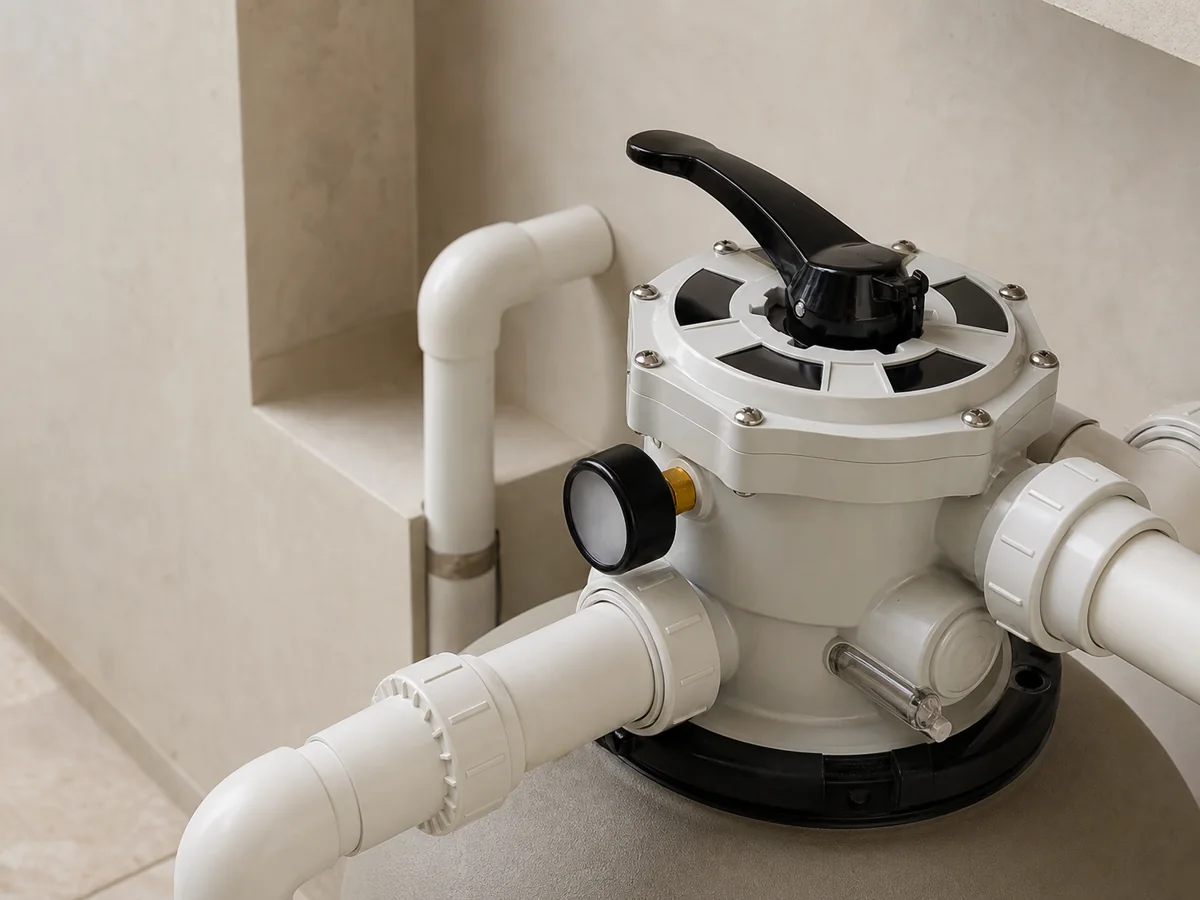 02
02 03
03 04
04Company & Contact
To talk about your project, we are one call away.
Legal Name
Çilek Havuz
Founded
1998 · Istanbul
Head Office
Çilek Plaza, Eyüp Sultan Mah. Yakacık Cd. Feshane Cd. No: 2 D:4 D:1, 34885 Sancaktepe / İstanbul
Service Area
All of Türkiye · exports to 14 countries
Related articles
Keep reading.



Sık Sorulan Sorular
Our readers' most asked; with expert answers.
Çilek Havuz Content & Technical Team
Guides & Technical Content
- Response Time
- Same day
- Channels
- Phone · E-mail · WhatsApp
If the answer you are looking for is not here, send your question directly to us and our team will reply as soon as possible.
Book a free site surveyA standard backwash and rinse cycle typically discharges 200–500 liters of water depending on pump flow rate. You must top up the pool with fresh water afterwards and check pH and free chlorine levels. Relying on the pressure gauge rather than an arbitrary schedule prevents wasteful over-backwashing.
Çilek Havuz Content & Technical Team
Over 3–5 years of friction, sand grains erode from rough angular particles into smooth, rounded spheres, losing their mechanical particle-trapping edges. If your clean baseline pressure stays high and water remains hazy despite backwashing, the sand needs replacement. Upgrading to active glass media extends lifespan up to 10+ years.
Çilek Havuz Content & Technical Team
The most common culprit is skipping the 30–60 second RINSE cycle. If the issue persists despite thorough rinsing, an internal lateral distributor arm inside the filter may be cracked, allowing sand to escape into the return piping.
Çilek Havuz Content & Technical Team
Not necessarily; a pressure gauge that stays flat can indicate a clogged pump strainer basket, closed suction valve, broken gauge, or air leak before the pump. If return flow feels weak, inspect the suction line.
Çilek Havuz Content & Technical Team
Run the backwash for roughly 2 minutes, or visually observe the discharge point of the waste hose until water turns clear. Avoid running excessively long backwashes that waste water without cleaning further.
Çilek Havuz Content & Technical Team
No; cartridge filters do not have multiport valves and cannot be backwashed. Cartridge elements are removed and rinsed manually with a hose, eliminating backwash water waste.
Çilek Havuz Content & Technical Team