


Pool Cleaning: Choosing the Right Equipment and Building a Routine
Clear water is chemistry's job; a clean pool is mechanics'. Setting chemicals aside, we focus on the physical side of cleaning: which vacuum, brush and skimmer net you need, how to clean the surface-body-floor trio, and how to build a sustainable weekly mechanical routine, with engineering discipline.
Clear water is chemistry's job; a clean pool is mechanics'. Setting chemicals aside, we focus on the physical side of cleaning: which vacuum, brush and skimmer net you need, how to clean the surface-body-floor trio, and how to build a sustainable weekly mechanical routine, with engineering discipline.
Swimming pool maintenance rests on two pillars: water chemistry and physical mechanical cleaning. Chemistry protects water against invisible microorganisms—bacteria and algae. Physical cleaning extracts visible organic debris, leaves, dust, and pollen. Neither replaces the other; no amount of chlorine will dissolve sunken leaves on the pool floor.
These two pillars are interdependent: decomposing organic matter on the pool floor rapidly consumes free chlorine, driving up chemical costs. A mechanically clean pool maintains chemical balance with significantly less chemical consumption.
In this guide, we focus entirely on physical cleaning: selecting essential tools, mastering proper techniques, and establishing a sustainable weekly routine.
Every pool owner needs four core tools attached to a sturdy telescoping pole: first, a leaf skimmer net with fine mesh to skim leaves, insects, and floating debris off the surface before they sink.
Second, a pool brush: curved nylon bristles for PVC liner and fiberglass pools, or stainless steel wire bristles for concrete and plaster pools. Brushing physically disrupts microscopic algae biofilms on walls, steps, and corners.
Third, a manual vacuum head and vacuum hose connected to the skimmer or dedicated suction point. Fourth, a heavy-duty leaf rake with a deep bag for scooping heavy debris off the pool floor. These four tools form the foundation of manual pool care.
Think of the pool in three distinct zones: surface, water column, and floor. On the surface, skim floating leaves daily before they waterlog and sink. Skimmer baskets continually collect surface debris.
The water column is cleaned by circulation and filtration. Suspended particles cannot be scooped manually; they are trapped as water circulates through the filter media. Maintaining adequate daily pump runtime is the invisible key to a crystal-clear water column.
The pool floor requires vacuuming. Vacuum methodically in overlapping parallel passes, starting from the shallow end towards the main drain. If heavy silt or dead algae blankets the floor, vacuum directly to WASTE to protect the filter from clogging.
Automatic pool cleaners save significant labor. Pressure-side cleaners use dedicated booster pumps and catch debris in onboard filter bags. Suction-side cleaners attach to skimmers and use pool pump suction.
Robotic pool cleaners represent the pinnacle of automation: operating independently from pool hydraulics with low-voltage internal electric motors and micro-filter canisters. They scrub floors, climb walls, clean the waterline, and filter down to 3 microns without loading the main filter.
While a robot does not eliminate manual surface skimming or basket emptying, it automates the most labor-intensive chore of floor vacuuming.
Skimmer baskets catch coarse floating debris, while the pump strainer basket catches finer matter before it reaches the impeller. When baskets fill with leaves, water flow is restricted, straining the pump and dropping circulation turnover.
A clogged basket starves the pump of water, causing cavitation, reduced filtration efficiency, and uneven chemical distribution. Empty skimmer baskets weekly, and daily during autumn leaf fall.
Always turn off the pump before opening the pump strainer pot. Inspecting baskets also provides an early warning indicator of abnormal debris or sand.
The waterline is where sunscreen oils, body lotions, pollen, and airborne dust accumulate, forming a dark, greasy bathtub ring. If neglected, this line bakes in the sun and stains tiles or PVC liners permanently.
Wipe the waterline weekly with a soft microfiber sponge and specialized non-foaming pool tile cleaner. Shading oils with oil-absorbing foam sponges in skimmers prevents scum lines from forming.
Encouraging bathers to shower before swimming significantly reduces the introduction of oils and organic cosmetics.
A sustainable routine involves small, regular actions: Daily (2–3 minutes): skim surface leaves and glance at skimmer baskets.
Weekly (20–30 minutes): brush walls and steps, vacuum the floor (or launch your robot), empty all skimmer and pump baskets, and wipe down the waterline.
Monthly: inspect filter pressure, backwash as needed, and check cleaning brushes and vacuum hoses for wear. Regular small maintenance prevents massive cleanup emergencies.
Image gallery
04 görsel
 01
01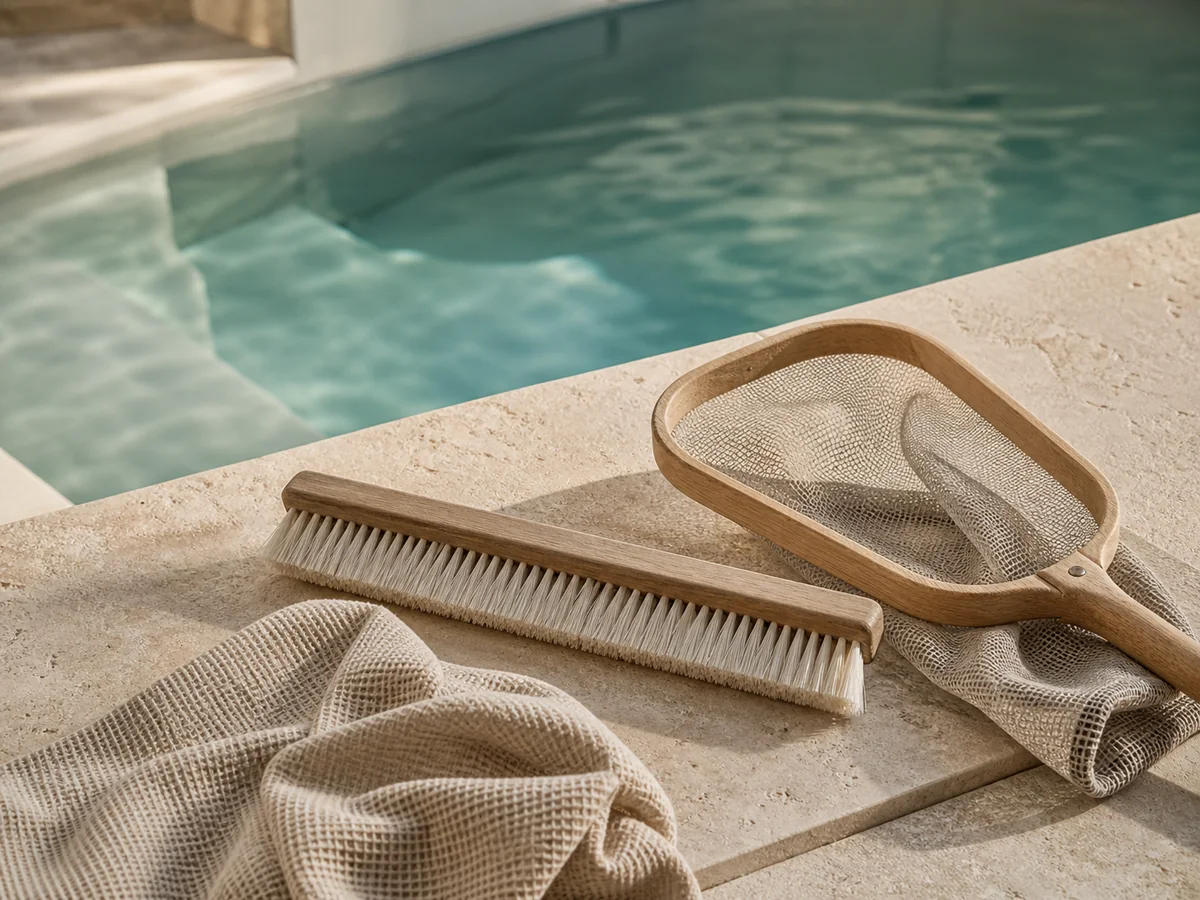 02
02 03
03 04
04Company & Contact
To talk about your project, we are one call away.
Legal Name
Çilek Havuz
Founded
1998 · Istanbul
Head Office
Çilek Plaza, Eyüp Sultan Mah. Yakacık Cd. Feshane Cd. No: 2 D:4 D:1, 34885 Sancaktepe / İstanbul
Service Area
All of Türkiye · exports to 14 countries
Related articles
Keep reading.



Sık Sorulan Sorular
Our readers' most asked; with expert answers.
Çilek Havuz Content & Technical Team
Guides & Technical Content
- Response Time
- Same day
- Channels
- Phone · E-mail · WhatsApp
If the answer you are looking for is not here, send your question directly to us and our team will reply as soon as possible.
Book a free site surveyNo; plaster and tiled pools can handle stiff wire/nylon brushes, whereas vinyl liner and fiberglass pools require soft nylon bristles to prevent scratching the lining. Always match brush bristle stiffness to your pool surface material.
Çilek Havuz Content & Technical Team
Robotic cleaners are the most energy-efficient and independent, cleaning floors, walls, and waterlines without loading your pool filter. Suction cleaners are economical for fine sand, while pressure cleaners excel at large leaves. Robotic cleaners offer the highest convenience for private villas.
Çilek Havuz Content & Technical Team
For light routine dirt, vacuum through the filter on normal FILTER mode. If the pool floor has heavy sediment, flocculant sludge, or dead algae post-shock, vacuum on WASTE directly to the drain to avoid blinding your filter media.
Çilek Havuz Content & Technical Team
Always brush walls and steps first to suspend algae biofilms into the water column, allow particles to settle to the floor for an hour, and then vacuum.
Çilek Havuz Content & Technical Team
Yes; a telescoping pole, surface skimmer net, and corner brush remain necessary for quick spot cleaning, skimming floating leaves, and brushing tight steps where robots cannot reach.
Çilek Havuz Content & Technical Team
Replace brush heads when bristles become splayed or brittle, and replace vacuum hoses if cracked, as air leaks in hoses cause pump cavitation and loss of suction.
Çilek Havuz Content & Technical Team