


Cloudy Pool Water: Color-Based Diagnosis Chart and a 48-Hour Fix
Cloudy pool water is not one problem but the shared symptom of several different faults. Learn to diagnose the true cause by the water's color, decide between flocculant and shock, and clear your pool with a precise 48-hour action plan built on an engineering approach.
Cloudy pool water is not one problem but the shared symptom of several different faults. Learn to diagnose the true cause by the water's color, decide between flocculant and shock, and clear your pool with a precise 48-hour action plan built on an engineering approach.
Cloudy pool water is not a standalone disease; it is an umbrella symptom. Like a fever in the human body, the root cause could be early algae growth, chemical disequilibrium, or filtration failure. Dosing extra chlorine blindly often fails because it treats the wrong underlying cause.
Turbidity occurs when microscopic suspended particles scatter light. These particles may be dead algae, precipitated mineral carbonates, or environmental dust too fine for the filter media to capture. Without accurate diagnosis, chemical interventions waste money and time.
Our engineering approach is always diagnosis first, treatment second. Water coloration provides the most immediate clue to reading the underlying cause, allowing targeted intervention on the first attempt.
Milky white or cloudy water typically indicates chemical imbalance and microscopic precipitated mineral particles. The most common causes are elevated pH (>7.8), high calcium hardness (>400 ppm), or excessive total alkalinity. Water can no longer keep dissolved minerals in solution, precipitating microscopic crystals that scatter light.
The second common cause is insufficient filtration. A clogged filter, calcified sand bed, or inadequate daily pump runtime allows fine particulate to bypass filtration and accumulate in the water column.
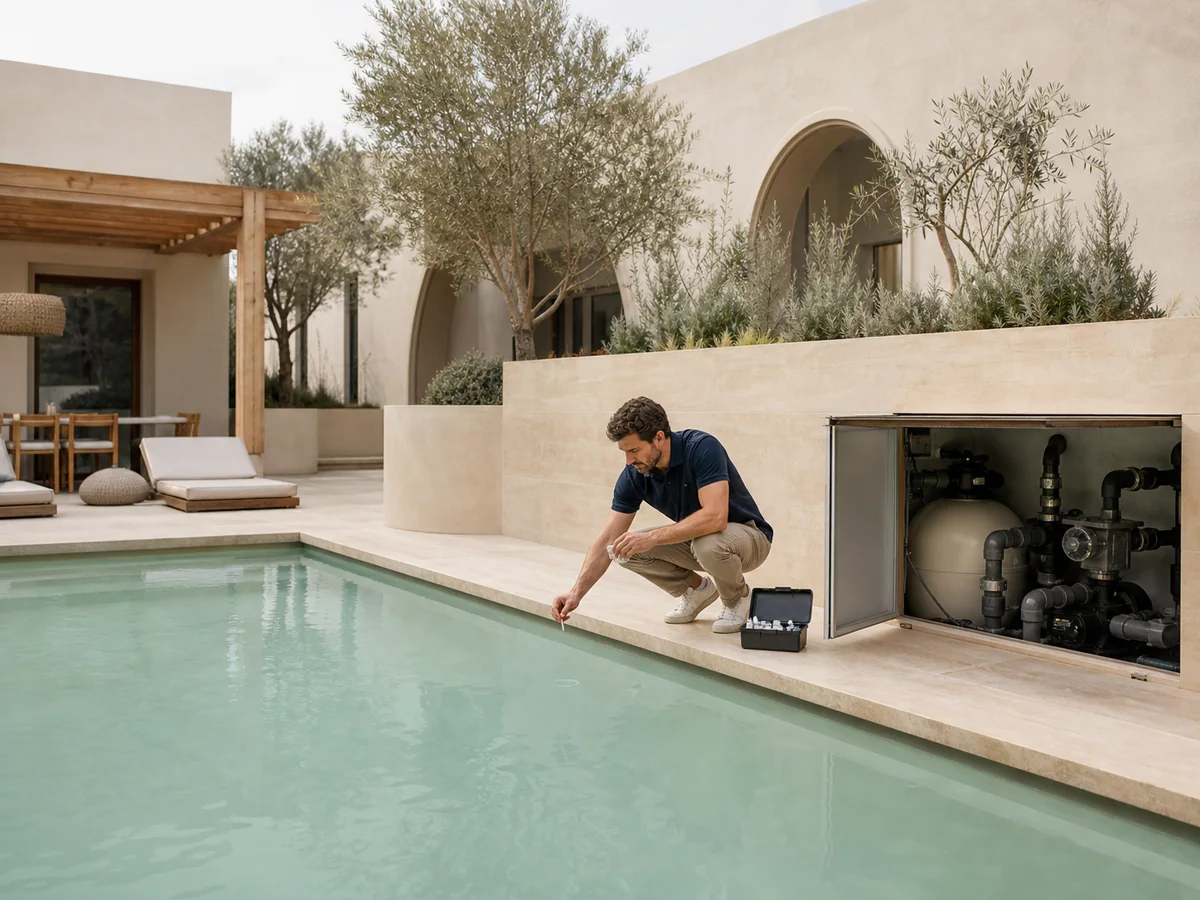
The first step for milky water is comprehensive testing: adjust pH to 7.2–7.6, alkalinity to 80–120 ppm, and verify calcium hardness. Increase daily filtration runtime, and deploy pool clarifier to coagulate micro-particles.
Green water indicates active algae colonization. Shade of green reveals severity: light green reflects early bloom, dark green indicates established infestation, and black-green denotes entrenched mustard/black algae. Green water is definitive proof of depleted free chlorine.
The solution is shock chlorination following a 48-hour protocol: lower pH to ~7.2 (acidic water accelerates chlorine algaecidal efficacy), then apply high-dose shock chlorine (15–20 g/m³ rapid dichlor) at dusk. Run filtration continuously overnight.
On day two, brush walls and floor vigorously to break algae biofilms. Dead algae will turn the water cloudy grey—a positive sign of cell destruction. Flocculant or clarifier is then dosed to drop dead algae to the floor for vacuuming to waste. With proper execution, green water clears within 48 hours.
Grey water usually represents suspended dead algae following shock treatment or extremely fine mineral dust. If you recently shock-chlorinated, grey water is good news: algae is dead and merely needs settling and vacuuming.
Brown, reddish or tea-colored water typically signals dissolved oxidized metals (iron or manganese), common when filling pools with well water. When chlorine oxidizes dissolved iron, water turns rust-brown. Metal sequestrant products are required to chelate and filter out dissolved metals.
The common strategy for grey and brown water is binding micro-particles into larger flocs using clarifiers or heavy flocculants so they can be filtered or vacuumed out.
These products perform completely different functions. Shock is chemical sanitization that kills algae and bacteria. Clarifier coagulates tiny particles into medium clusters that existing sand filters can trap during routine circulation. Flocculant is heavy coagulant that drops all suspended solids to the pool floor as a blanket of sediment.
Decision logic: if water is green or foul-smelling (biological problem), shock first. If water is chemically balanced but dull/hazy (physical particulate), use clarifier. If water is severely turbid post-shock, use flocculant.
Clarifiers allow continuous filtration without manual vacuuming to waste. Flocculants require vacuuming the settled sediment directly to WASTE (drain), bypassing the filter tank to prevent clogging.
Day 1 Morning: Test water chemistry and backwash the filter. Adjust pH to 7.2. If algae is present, apply shock chlorine at sunset and run the pump continuously.
Day 2 Morning: Brush all walls and floor steps. If water is cloudy grey, add liquid flocculant as directed, run the pump for 2 hours on recirculation mode to mix, then shut off the pump completely for 12–16 hours to let sediment settle on the floor.
Day 3 Morning: Set multiport valve to WASTE (bypass filter) and vacuum settled sediment slowly off the floor directly to drain. Refill discharged water, rebalance pH to 7.2–7.6, and establish free chlorine at 1.5–2.0 ppm. AstralPool water care formulations deliver reliable results throughout this protocol.
Once water is clarified, resolving root causes prevents recurrence. Inspect filter media: replace silica sand every 3–5 years or upgrade to active glass media. Ensure filtration runs at least 8–10 hours daily during summer.
Maintain a consistent testing routine: measure pH and free chlorine twice weekly, dose preventative algaecide weekly, and shock-dose bi-weekly. Regular maintenance catches chemical drift before turbidity develops.
Ensure routine skimming and prompt cleaning of skimmer and pump pre-filter baskets. Sunscreen oils and organic loads challenge filtration; automated enzymes and clarifiers maintain sparkling water effortlessly.
Image gallery
04 görsel
 01
01 02
02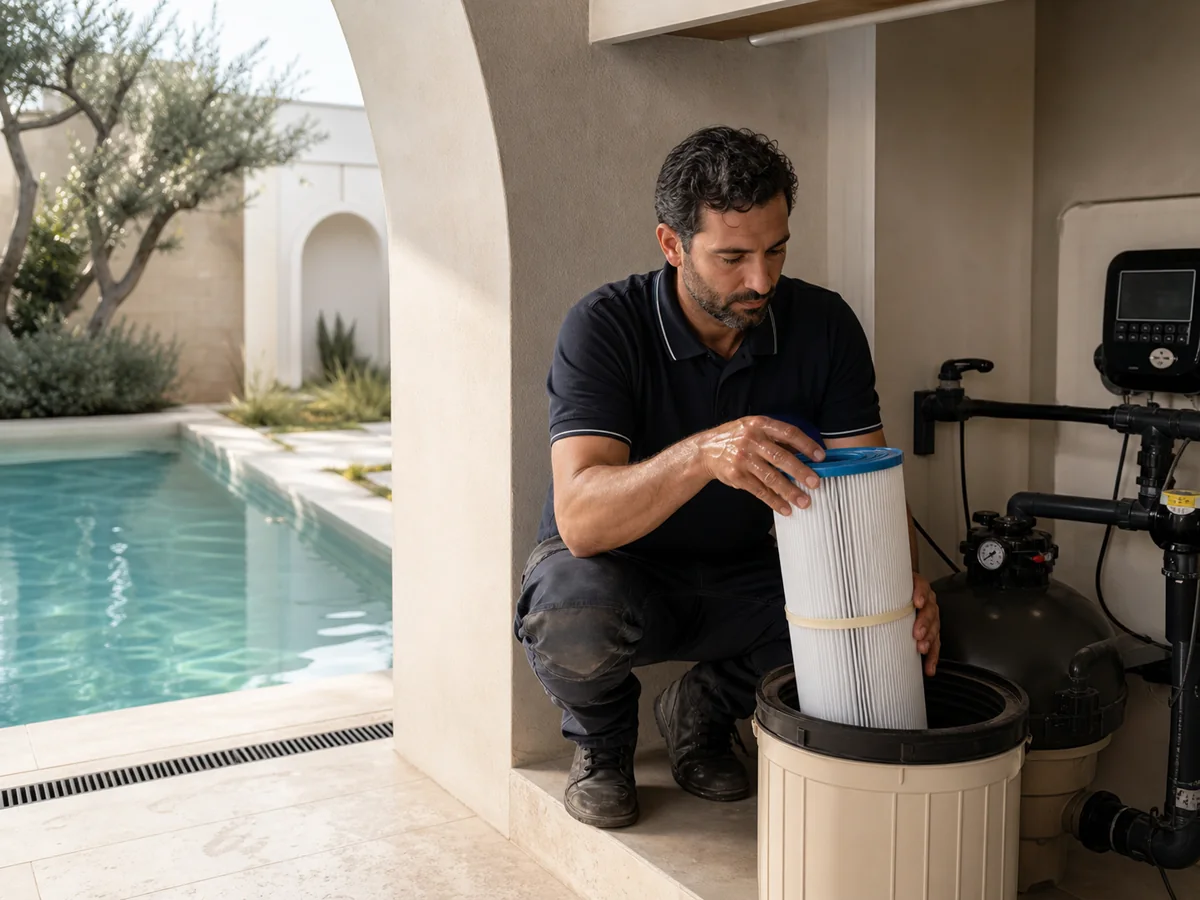 03
03 04
04Company & Contact
To talk about your project, we are one call away.
Legal Name
Çilek Havuz
Founded
1998 · Istanbul
Head Office
Çilek Plaza, Eyüp Sultan Mah. Yakacık Cd. Feshane Cd. No: 2 D:4 D:1, 34885 Sancaktepe / İstanbul
Service Area
All of Türkiye · exports to 14 countries
Related articles
Keep reading.


Sık Sorulan Sorular
Our readers' most asked; with expert answers.
Çilek Havuz Content & Technical Team
Guides & Technical Content
- Response Time
- Same day
- Channels
- Phone · E-mail · WhatsApp
If the answer you are looking for is not here, send your question directly to us and our team will reply as soon as possible.
Book a free site surveyHigh calcium hardness precipitates microscopic carbonate crystals in high-pH water. Balance pH to 7.2–7.4, dose calcium sequestrant, and partially dilute with fresh soft water if hardness exceeds 400 ppm. Run filtration continuously.
Çilek Havuz Content & Technical Team
Grey haziness post-shock is suspended dead algae cells. Dose a pool clarifier or liquid flocculant to aggregate dead cells, then vacuum settled debris directly to WASTE.
Çilek Havuz Content & Technical Team
Well water often contains dissolved iron and manganese that oxidize and turn brown upon chlorine addition. Dose a metal sequestrant before adding chlorine, and filter continuously through fine cartridge or glass media.
Çilek Havuz Content & Technical Team
Using heavy flocculant in mild haze creates unnecessary heavy sediment that must be vacuumed to waste, wasting water. Using mild clarifier in severe turbidity takes too long. Match chemical strength to turbidity severity.
Çilek Havuz Content & Technical Team
Recurring cloudiness indicates unresolved mechanical or chemical root causes: calcified filter sand, inadequate pump runtime, or excessive cyanuric acid. Address filtration efficiency to achieve permanent clarity.
Çilek Havuz Content & Technical Team
Flocculant binds particulate into sticky, gelatinous sediment that quickly blinds filter sand or cartridges. Vacuuming directly to WASTE discharges the sludge safely without fouling filter media.
Çilek Havuz Content & Technical Team