

Turkish Bath Architecture: From Tradition to Modern
From the heated navel stone to dome skylights, marble craft to heat distribution — uniting classic hamam architecture with modern engineering.
From the heated navel stone to dome skylights, marble craft to heat distribution — uniting classic hamam architecture with modern engineering.
Turkish bath construction begins with discovery and architectural layout. Available space, bather capacity, heated central platform (göbek taşı) placement, and kurna basins are established; heating circuits, plumbing, steam generators, and ventilation are engineered holistically. Omitting this integrated planning leads to chronic humidity and heating issues.
Following the structural shell, multi-layer waterproofing, marble and natural stone cladding, under-platform heating coils, and steam equipment are installed in sequence. Traditional oriental aesthetics and modern engineering converge: timeless stone craftsmanship on the outside, precision climate control behind the walls.
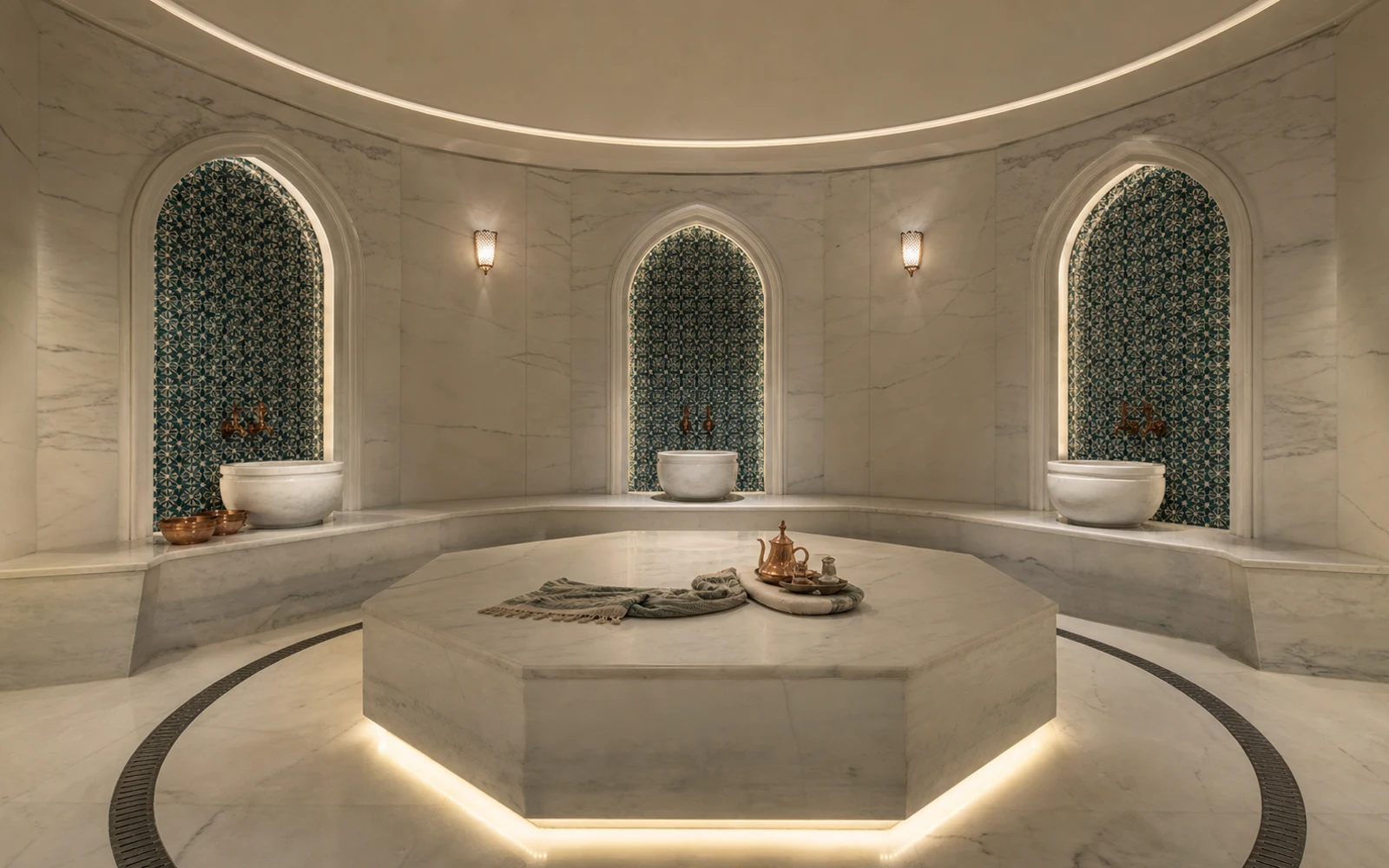
Classical hammam architecture relies on three distinct thermal zones: the soğukluk (cool entrance and relaxation lounge), ılıklık (warm intermediate acclimation room), and sıcaklık (hot main bathing chamber). This graduated transition is essential for comfort and safe cardiovascular adaptation to heat.
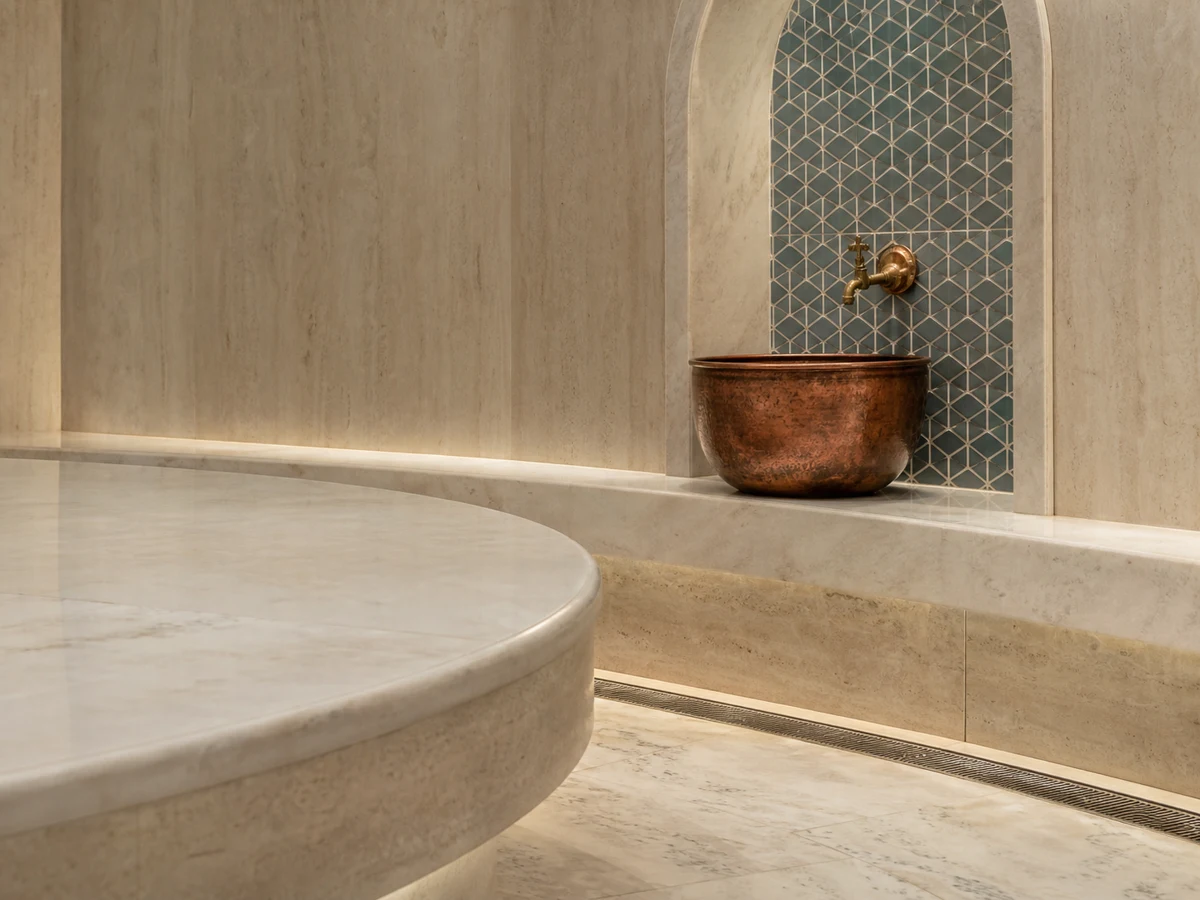
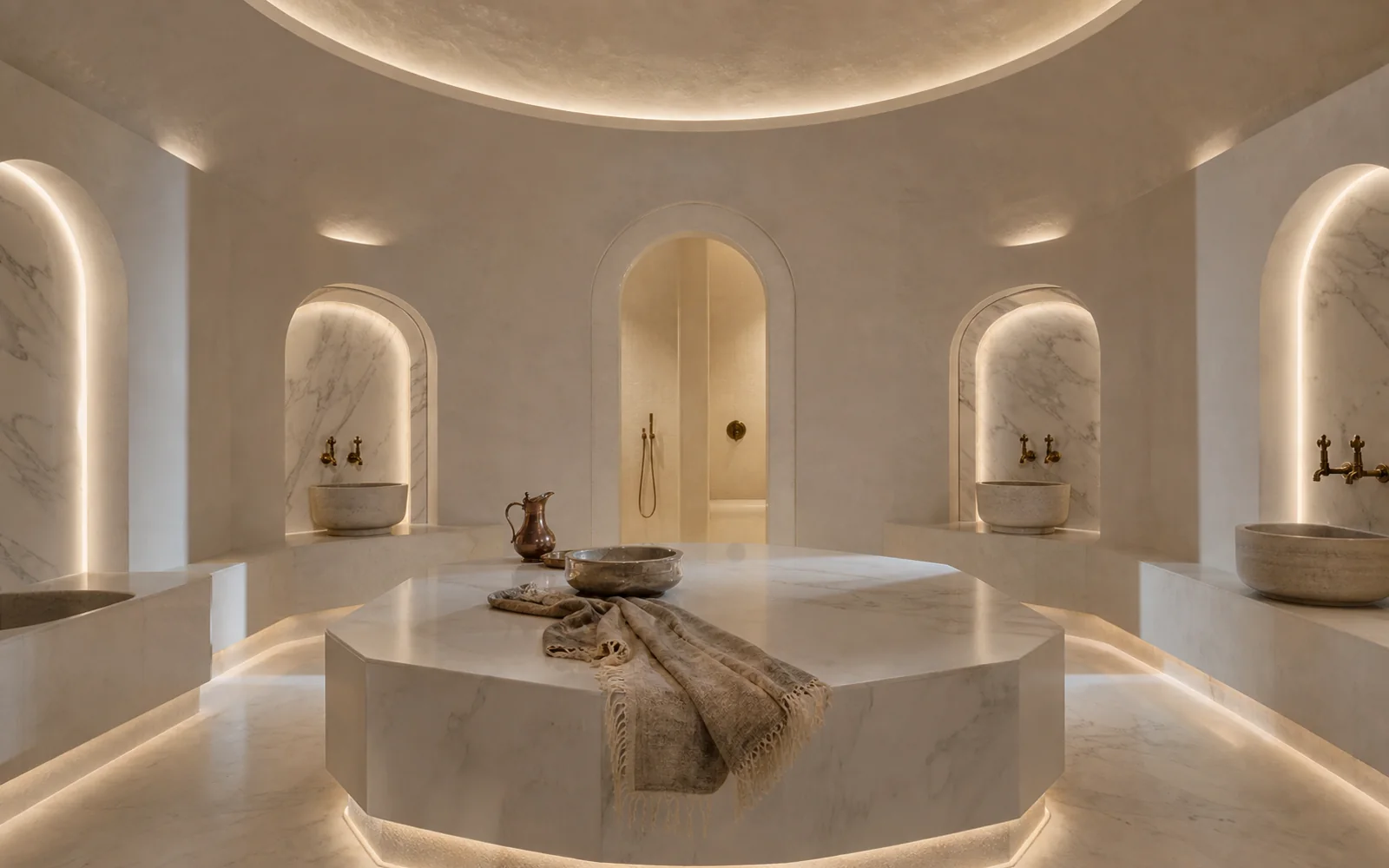
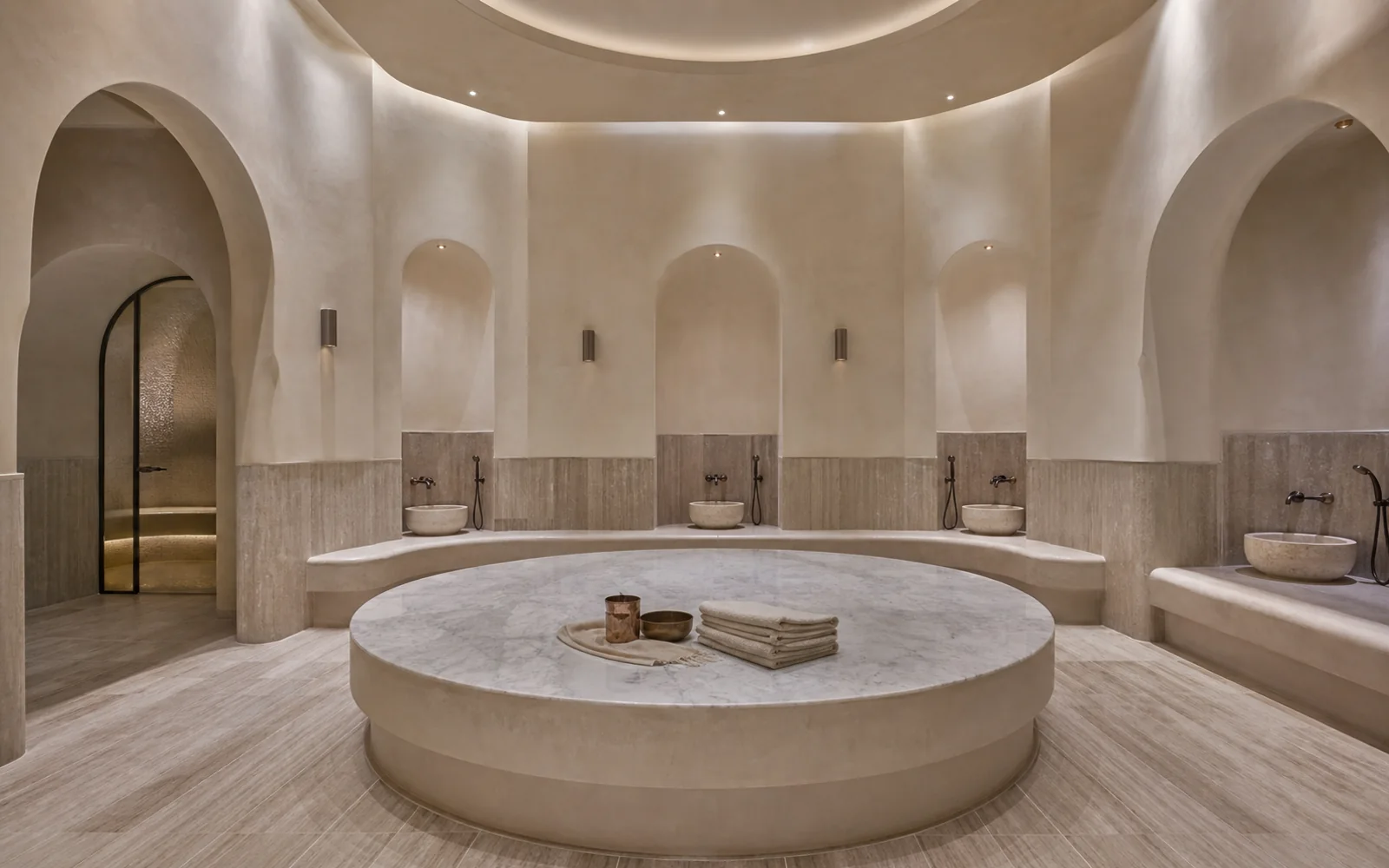
At the center of the sıcaklık rests the heated marble massage platform, surrounded by perimeter kurna basins and private alcoves (halvet). In private villa hammams, this layout is adapted to available square footage, yet the thermal zoning and controlled heat transition are preserved through engineering.
The göbek taşı is not merely a seating surface; it is the primary thermal radiator of the Turkish bath. The heating system beneath raises the marble's temperature, and the stone radiates this heat gently and evenly into the chamber. Homogeneous warmth depends entirely on properly spaced heating pipe or cable layouts beneath the slab.
In historical hammams, this heat was delivered by flue gases circulating through hypocaust tunnels beneath the floor. Today, closed-loop hydronic or electric underfloor heating systems achieve the identical radiant effect with far greater energy efficiency and precision digital control.
A Turkish bath is a high-humidity wet space operating under continuous water flow and elevated vapor pressure; waterproofing is its most critical and frequently compromised layer. Inadequate waterproofing causes moisture migration into adjacent walls and lower floors, leading to structural rot and mold.
Proper application is multi-layered: elastomeric waterproofing membranes, vapor barriers, and specialized stone adhesives work together. Unless corner joints, drainage gullies, and wall-to-floor junctions are detailed with engineering precision, even the finest marble cannot hide moisture leaks.
Material selection in a hammam is a performance engineering decision as much as an aesthetic one. Marble and natural stones are evaluated for porosity, thermal storage capacity, and vein density. Low-porosity stones absorb less moisture and offer superior stain resistance over time.
High-thermal-mass marble is specified for the heated platform to retain and radiate heat evenly, while honed, slip-resistant surfaces are selected for flooring. Proper stone selection preserves both the pristine look and structural longevity of the hammam over decades of use.
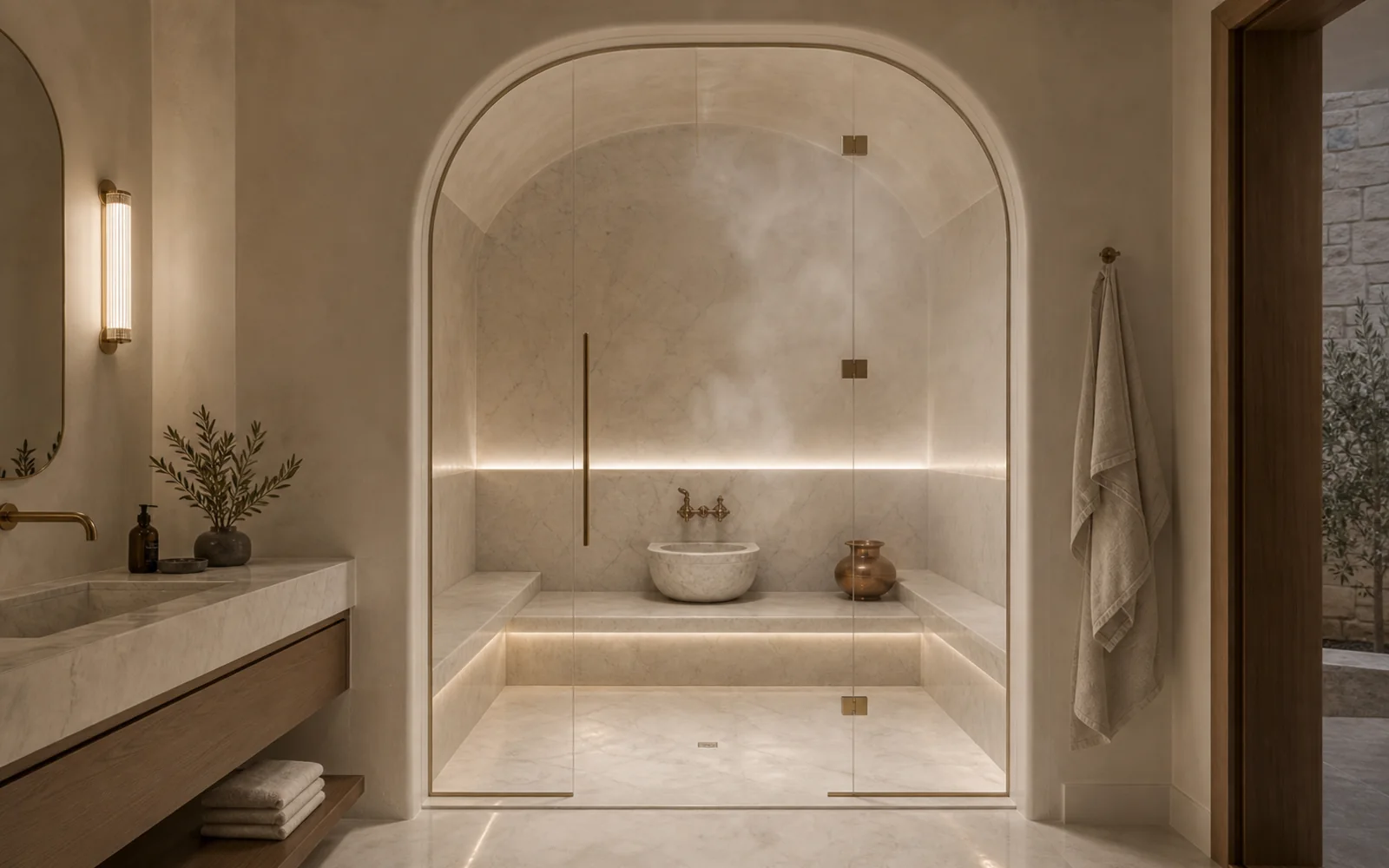
In contemporary hammams, traditional wood-fired furnaces are replaced by underfloor heating loops and dedicated commercial steam generators. If the steam generator is incorrectly sized, the chamber either fails to reach adequate temperature or becomes suffocatingly over-humid. Heat and humidity must be calibrated in precise equilibrium.
Ventilation is often overlooked in amateur installations, yet it is decisive in preventing mold and ensuring fresh air circulation: an exhaust system with moisture extraction preserves building integrity and user comfort. Çilek Havuz designs hammams as integrated systems where thermal dynamics, humidity, and airflow are calculated together.
Image gallery
04 görsel
 01
01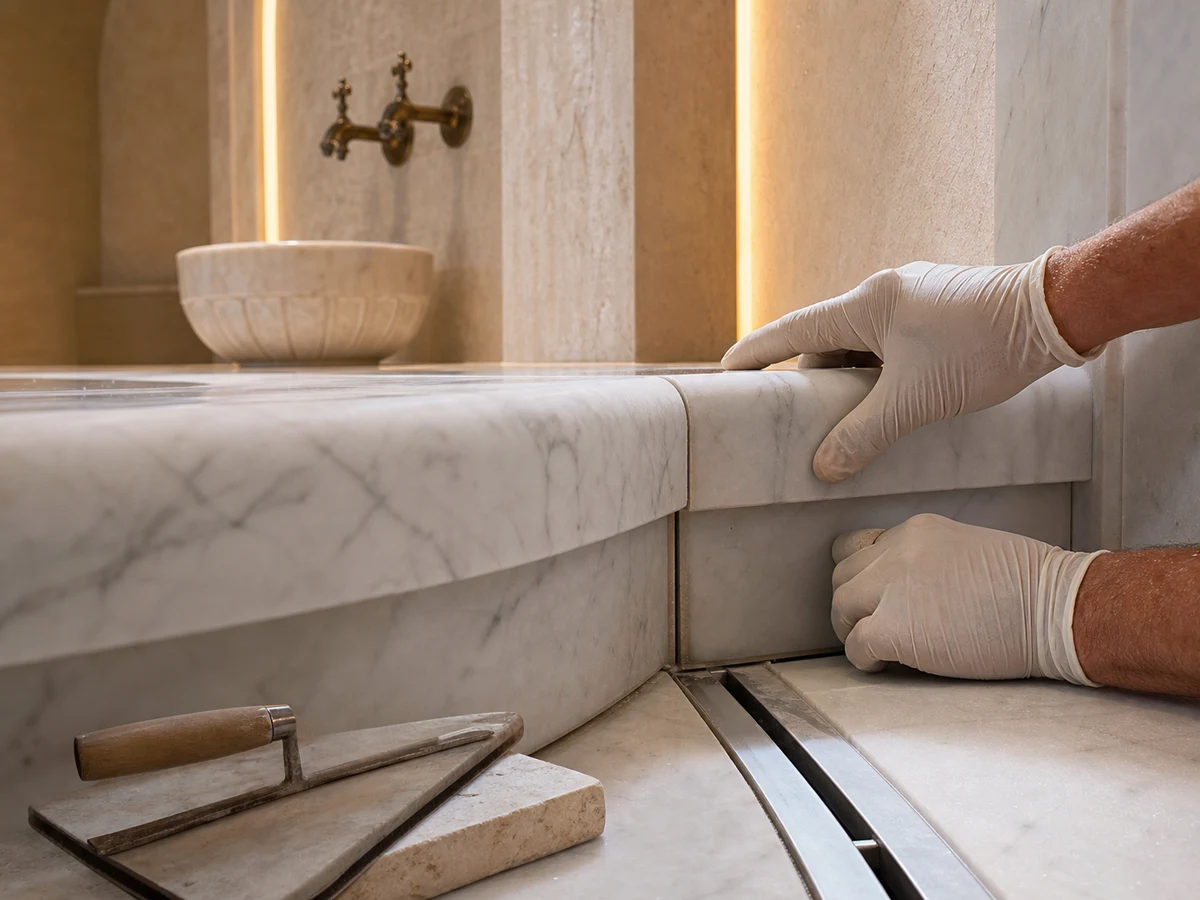 02
02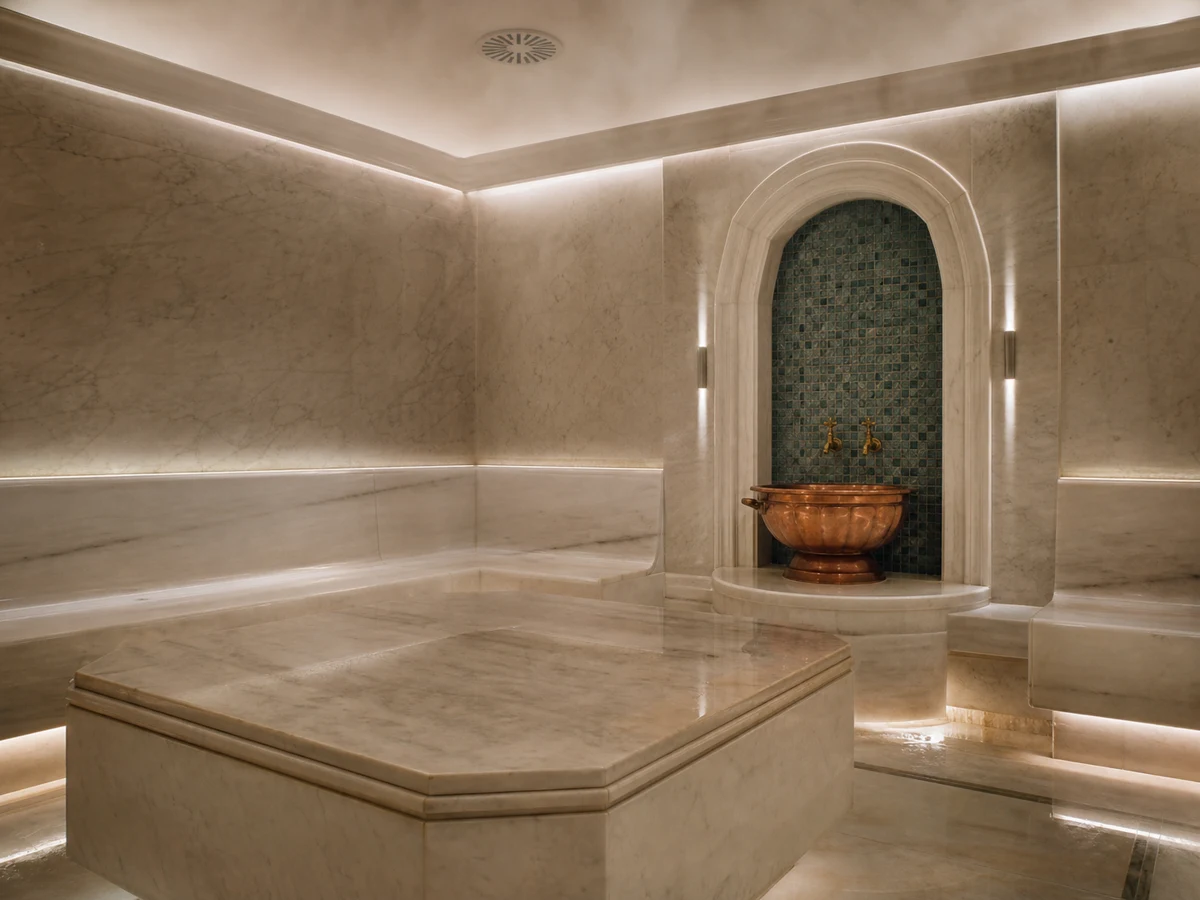 03
03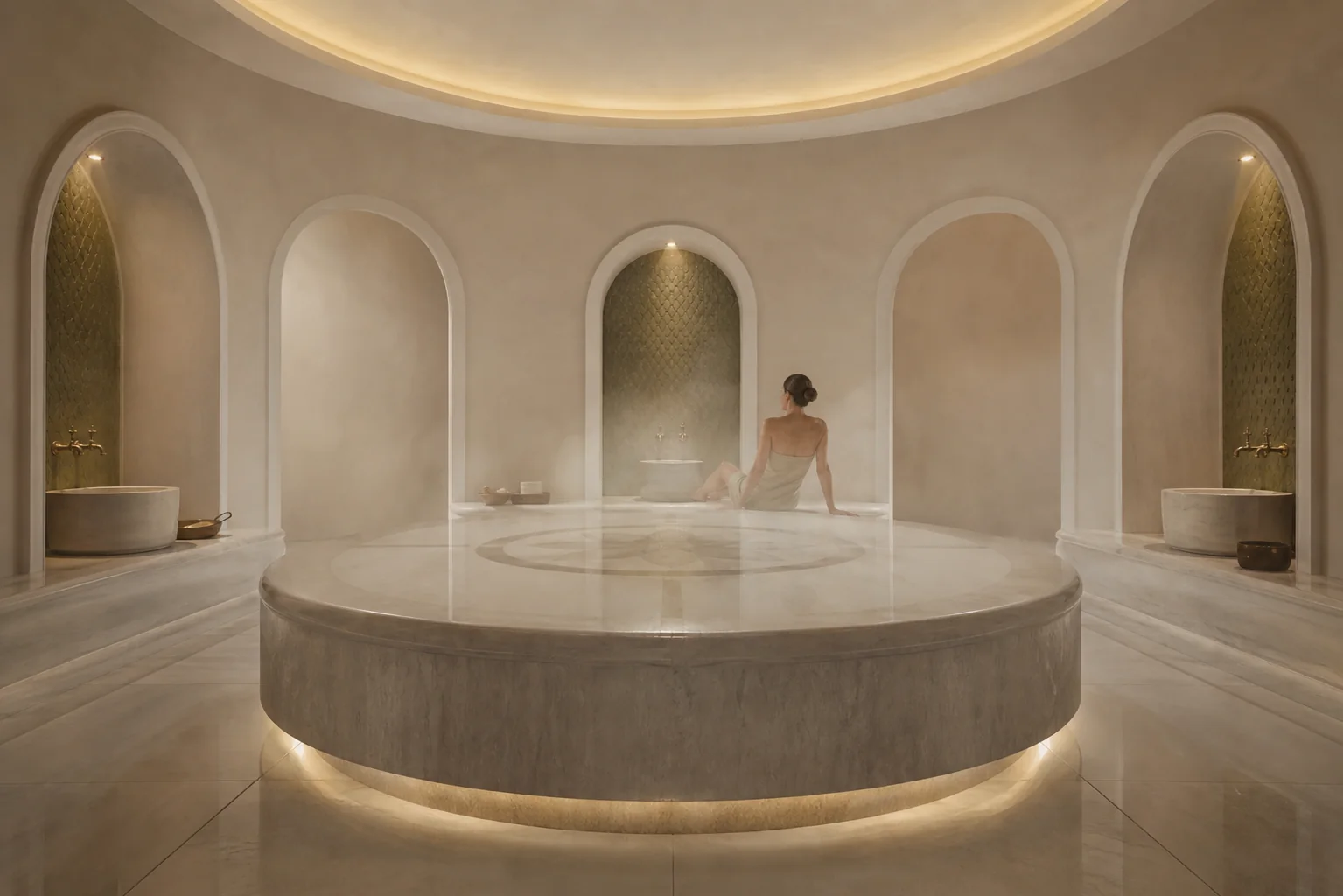 04
04Company & Contact
To talk about your project, we are one call away.
Legal Name
Çilek Havuz
Founded
1998 · Istanbul
Head Office
Çilek Plaza, Eyüp Sultan Mah. Yakacık Cd. Feshane Cd. No: 2 D:4 D:1, 34885 Sancaktepe / İstanbul
Service Area
All of Türkiye · exports to 14 countries
Related articles
Keep reading.
Sık Sorulan Sorular
Our readers' most asked; with expert answers.
Çilek Havuz Content & Technical Team
Guides & Technical Content
- Response Time
- Same day
- Channels
- Phone · E-mail · WhatsApp
If the answer you are looking for is not here, send your question directly to us and our team will reply as soon as possible.
Book a free site surveyOperating costs depend on frequency of use and heating efficiency; an occasional-use residential hammam with high-grade thermal insulation consumes modest energy. Preheating the marble platform requires advance time and energy, making fast-response heating design essential. Proper insulation and correctly sized steam generators lower operating costs significantly.
Çilek Havuz Content & Technical Team
The hammam must be ventilated after every use to exhaust stagnant humidity, which is the primary cause of mold. Routine cleaning of marble surfaces and grout joints with pH-neutral stone cleaners prevents staining. A well-engineered ventilation system manages most of this automatically, making mold prevention fundamentally a design success.
Çilek Havuz Content & Technical Team
A residential or villa hammam typically requires several weeks, encompassing discovery, engineering design, structural preparation, multi-layer waterproofing, marble stone masonry, and mechanical commissioning. Timelines vary with room dimensions, stone selection and equipment scope. We share a realistic milestone schedule prior to starting.
Çilek Havuz Content & Technical Team
Yes, provided there is adequate floor area and suitable wet space plumbing access; critical factors include waterproofing integrity, drainage slope, electrical capacity, and dedicated ventilation routing. Protecting adjacent walls and subfloors against vapor migration is essential. We assess site feasibility during discovery.
Çilek Havuz Content & Technical Team
A hammam provides a warm, 100% humid wet bathing ritual, while a sauna delivers dry, high-temperature heat; the choice depends on your personal heat preference. Hammams involve extensive marble masonry and waterproofing, requiring a more detailed construction process. We provide an objective comparison tailored to your space.
Çilek Havuz Content & Technical Team
Hydronic heating (connected to a boiler or heat pump) is economical to run for larger, frequently used hammams, while electric heating cables offer easier installation and faster response times in compact residential hammams. The optimal choice depends on your usage patterns and existing heating infrastructure.
Çilek Havuz Content & Technical Team