

The Craft of Infinity Pool Design
From overflow-channel details to balance-tank sizing, the design principles behind that flawless mirror of water that merges with the view.
From overflow-channel details to balance-tank sizing, the design principles behind that flawless mirror of water that merges with the view.
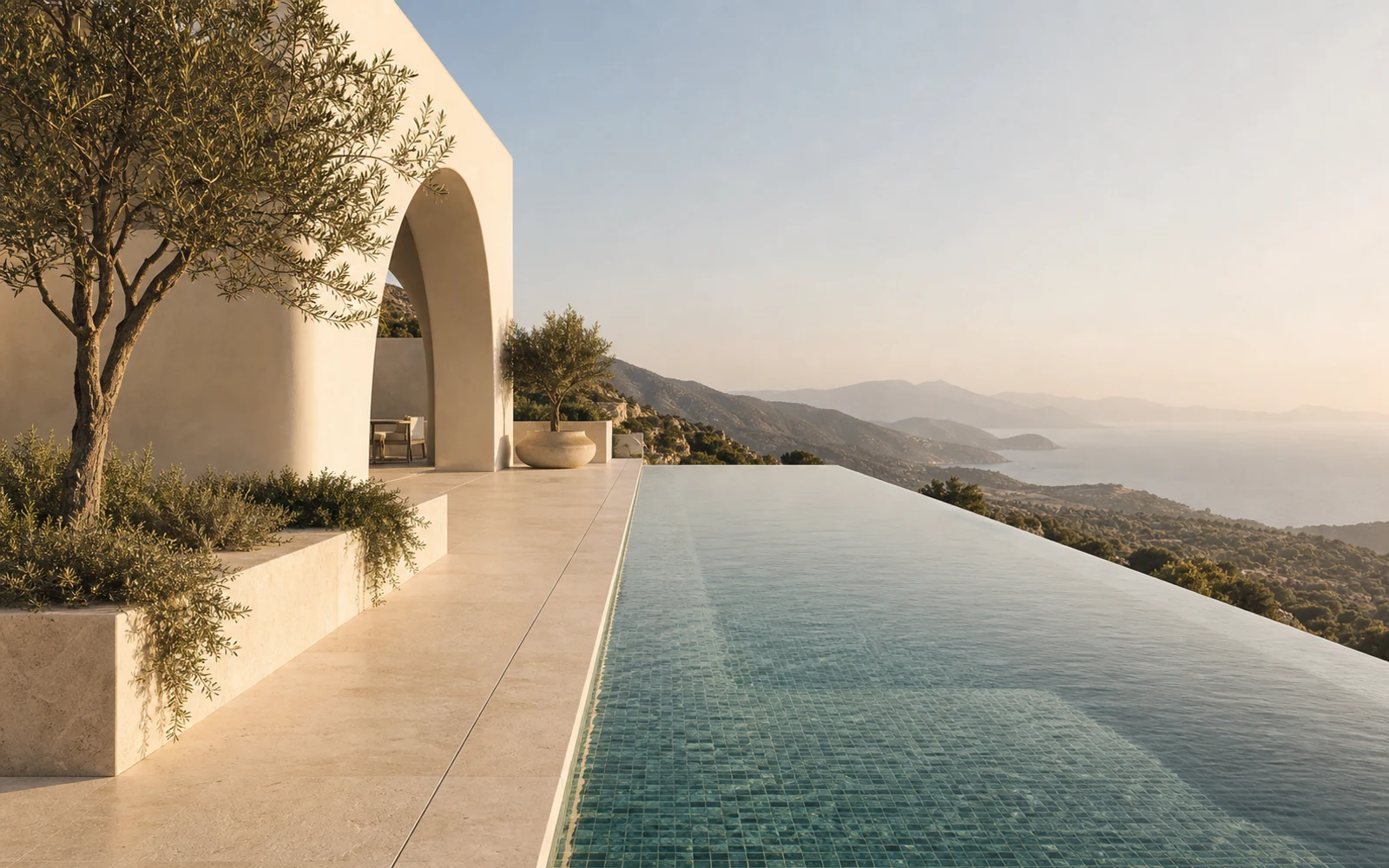
An infinity pool is a swimming pool where water flows over one or more edges, producing a visual effect of water extending to the horizon without a visible boundary. The edge facing the view terminates precisely at water level, creating the illusion of merging with the sea, sky or landscape. This striking aesthetic is an engineered optical illusion powered by a continuous hydraulic recirculation loop.
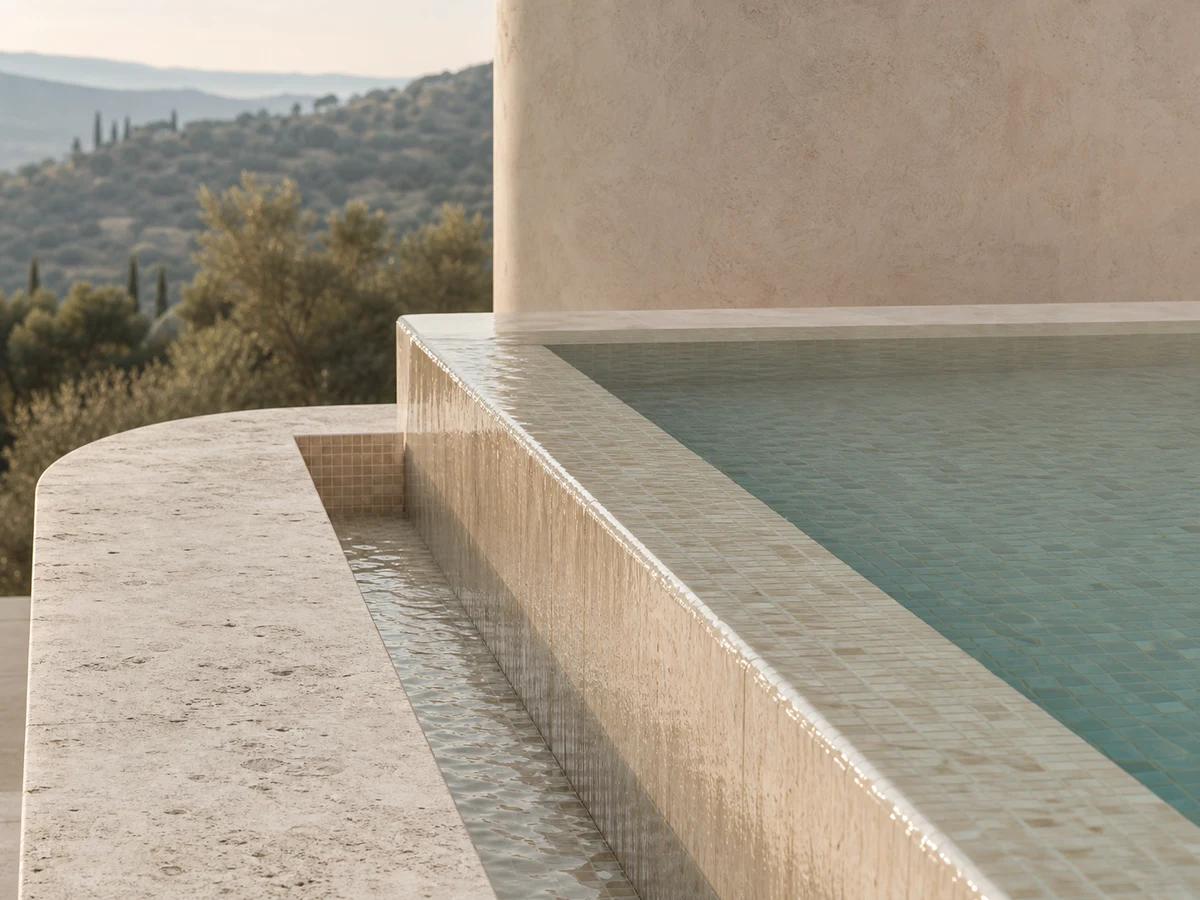
Overflow water does not go to waste: it cascades into a lower catch basin (trough), flows into a balance compensation tank, and is pumped back into the main pool through filtration. An infinity pool operates as a continuous closed-loop hydraulic system where seamless aesthetics depend on precise water balance.
For the vanishing edge to appear flawless, the overflow weir must be leveled with millimeter precision; even a minor deviation causes water to overflow unevenly, breaking the visual horizon. Precision leveling and concrete craftsmanship on the weir wall represent the most demanding phase of infinity pool construction.
The catch basin beneath the weir is calculated to handle the maximum design overflow rate, while the balance tank is sized to absorb the surge volume displaced when bathers enter the pool. The circulation pump capacity must continuously feed this overflow cycle. These elements are interconnected; an error in one disrupts the entire effect.
Infinity pools achieve their full architectural impact on sloping sites facing panoramic vistas: hillsides, coastal cliffs, lakefronts or valley views merge seamlessly with the vanishing edge. On flat, enclosed plots without an open horizon, the visual illusion is largely lost.
Site topography also dictates the structural placement of the catch trough and subterranean balance tank. Discovery and topographic analysis are essential before committing to an infinity design; the land's suitability must be verified first.
Structural engineering and waterproofing are paramount: because the vanishing edge typically cantilevers over a slope or void, additional hydrostatic loads and overturning moments must be calculated rigorously. Waterproofing flaws at the weir wall result in structural water loss and unsightly mineral efflorescence on exposed exterior surfaces.
Equally critical are the balance tank and automated water-level controls. As bather counts fluctuate, overflow volume changes; unless automated compensation controls are installed, water levels drop and the horizon effect disappears. In infinity pool engineering, contractor experience dictates the outcome.
An infinity pool requires all components of a standard pool plus a reinforced concrete catch trough, a balance tank, higher-capacity pumps, dual-circuit plumbing, and significantly more meticulous structural craftsmanship. Millimeter-precision leveling and specialized waterproofing increase both material and labor costs.
This additional investment is not an arbitrary luxury markup, but the necessary cost of engineering a sustainable, permanent hydraulic illusion. Exact pricing varies by pool dimensions, slope grade, finish materials and soil conditions; our approach is to outline all cost items transparently from the start.
When designed properly, infinity pools are completely safe; structural barriers, safety catch ledges, glass balustrades and subtle underwater lighting are integrated at the overflow edge to prevent fall risks. For families with young children, these safety details are incorporated into the architectural design from day one.
Maintenance is largely similar to standard pools, with the addition of regular cleaning and inspection of the balance tank and catch trough. Permitting follows the same municipal building codes as standard swimming pools. During initial discovery, we clarify both site feasibility and municipal permitting requirements.
Image gallery
04 görsel
 01
01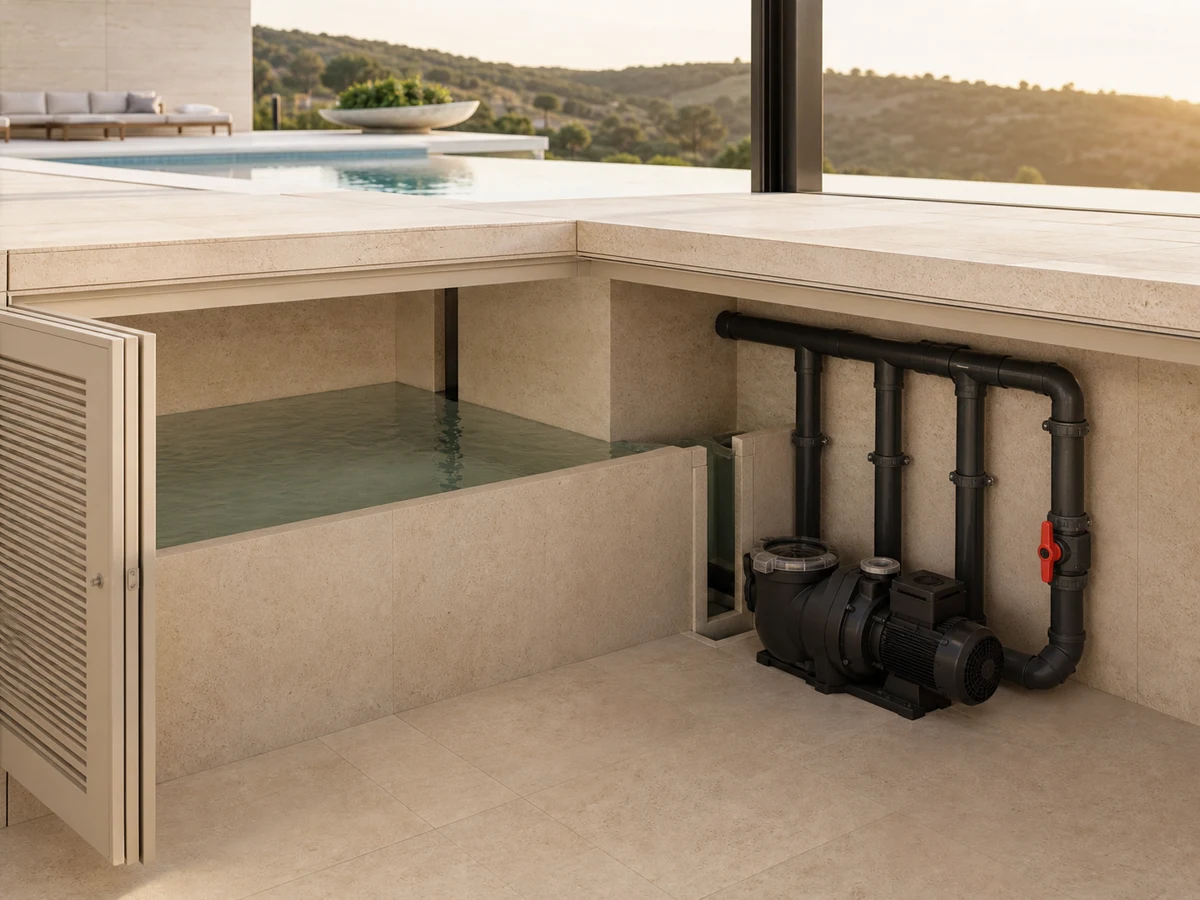 02
02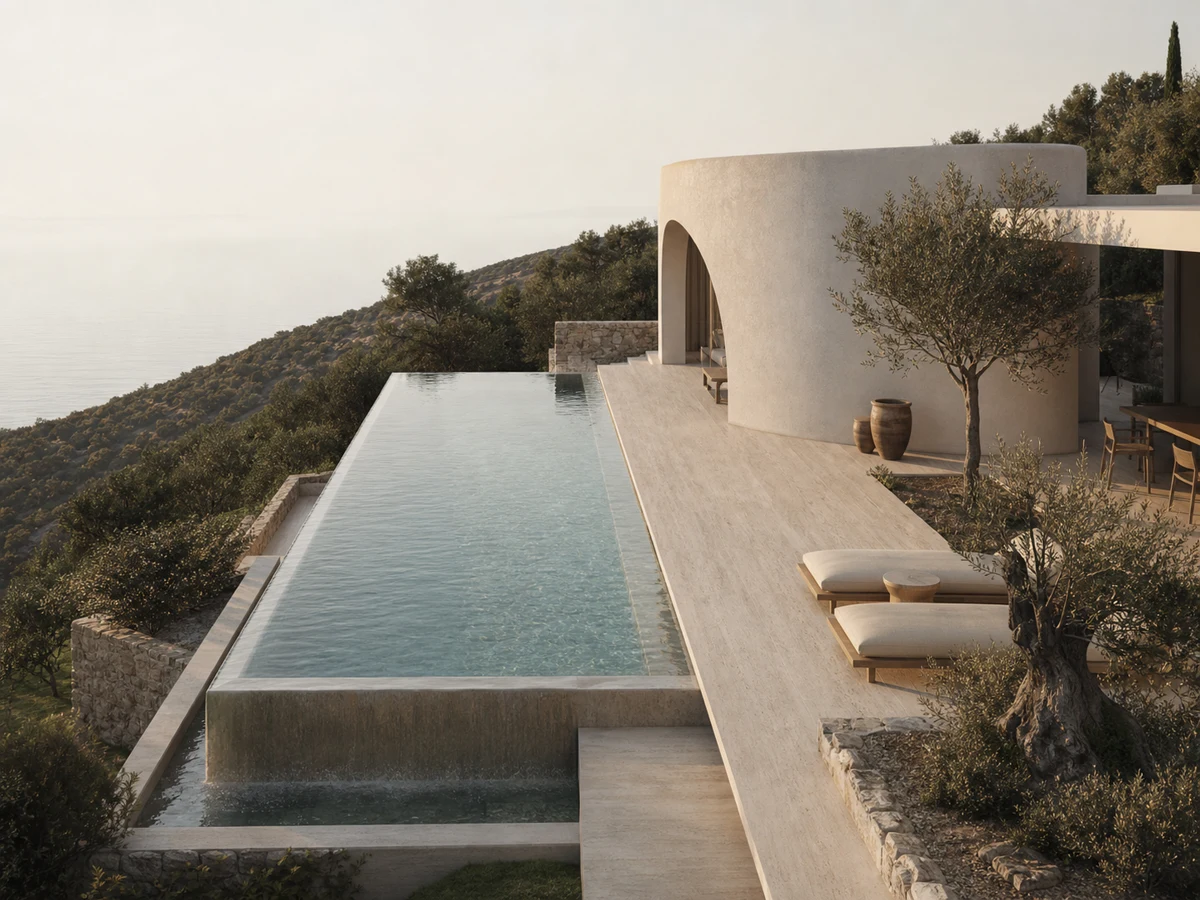 03
03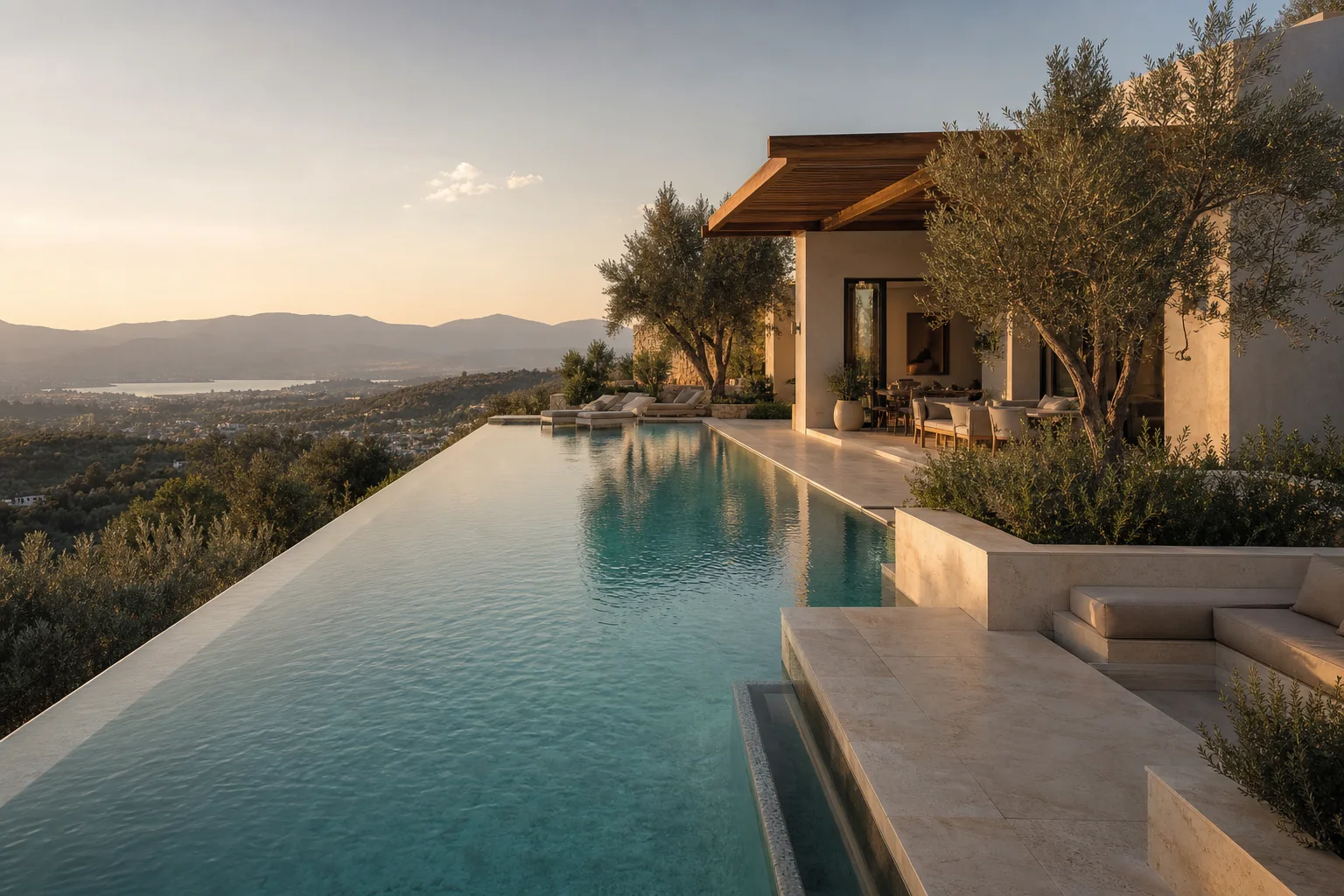 04
04Company & Contact
To talk about your project, we are one call away.
Legal Name
Çilek Havuz
Founded
1998 · Istanbul
Head Office
Çilek Plaza, Eyüp Sultan Mah. Yakacık Cd. Feshane Cd. No: 2 D:4 D:1, 34885 Sancaktepe / İstanbul
Service Area
All of Türkiye · exports to 14 countries
Related articles
Keep reading.

Sık Sorulan Sorular
Our readers' most asked; with expert answers.
Çilek Havuz Content & Technical Team
Guides & Technical Content
- Response Time
- Same day
- Channels
- Phone · E-mail · WhatsApp
If the answer you are looking for is not here, send your question directly to us and our team will reply as soon as possible.
Book a free site surveyThe gentle sound of water cascading into the catch basin is regarded by most owners as a soothing, ambient background feature. Sound volume can be modulated by adjusting trough depth, overflow weir geometry, and pump flow rates during the design stage if silence is preferred.
Çilek Havuz Content & Technical Team
A single vanishing edge is the most common and cost-effective solution for properties focused on a specific panoramic view. Multi-edge overflow delivers 360-degree architectural impact but requires larger balance tanks, higher pump capacities, and more complex structural formwork. The choice depends on your site orientation and budget.
Çilek Havuz Content & Technical Team
The balance tank is typically installed below ground adjacent to the catch trough on the lower elevation, concealed beneath decking or landscaping; its volume is calculated from pool surface area and expected bather surge. Sizing and placement are planned during site discovery to ensure an unobtrusive solution.
Çilek Havuz Content & Technical Team
When power cuts, circulation pumps stop and the overflow cascade pauses naturally; water stabilizes at the weir crest with excess volume safely retained in the balance tank without flooding. When power returns, automated systems resume the overflow cycle seamlessly. Critical installations can incorporate backup generators.
Çilek Havuz Content & Technical Team
Because the vanishing edge overlooks a lower elevation or drop-off, design features such as a wide safety catch shelf beneath the weir, laminated glass balustrades, and edge marker lighting are specified. Resolving safety details without compromising aesthetic purity is the hallmark of experienced pool design.
Çilek Havuz Content & Technical Team
While theoretically feasible, converting an existing pool is structurally complex; the vanishing weir, catch trough, balance tank, and specialized hydraulic lines must be integrated into the foundation and topography. Modifying an existing concrete shell requires major structural restructuring. We evaluate feasibility during an on-site engineering survey.
Çilek Havuz Content & Technical Team