

Choosing a Sauna Heater: Electric or Wood-Burning, How Many kW?
The heater is the heart of your sauna. We explain the differences between electric and wood-burning heaters, how to size the right power for your cabin volume, and the control and safety details, drawn from our experience building saunas since 1993.
The heater is the heart of your sauna. We explain the differences between electric and wood-burning heaters, how to size the right power for your cabin volume, and the control and safety details, drawn from our experience building saunas since 1993.
The comfort, heating time and energy costs of a sauna are largely determined by the stove. No matter how beautifully furnished the cabin is, a stove that is not selected appropriately for the volume will either not be able to raise the cabin to the desired temperature or will constantly be forced, consuming energy and shortening its life.
The stove's job is not just to heat the air; It creates a heat mass by heating the stones on it and creates the classic Finnish sauna experience with the steam (löyly) that emerges when water is poured onto these stones. Therefore, the choice of stove directly affects steam comfort as well as temperature.
Choosing the right stove requires considering the cabinet volume, insulation, glass and stone surfaces, and your usage habits. In this article, we clarify the decision step by step.
Electric stoves are the most common choice in home and business saunas today. It operates with a button or a timer, maintains a constant temperature, does not require a chimney and fits easily indoors. It is possible to precisely adjust the temperature and duration with the control panel and have the sauna ready at a certain time. It has a wide range of uses, from apartment to hotel spa.
Wood-burning stoves offer the atmosphere of a traditional Finnish sauna and the unique warmth of a wood fire. Since it is not dependent on electrical infrastructure, it is advantageous in rural areas, by lakes or in places where electricity is limited. On the other hand, the chimney system requires additional planning in terms of regular wood supply and fire safety; For this reason, it is mostly preferred in detached buildings or garden saunas.
When making your decision, ask yourself: do you want to use the sauna quickly and conveniently, or are you looking for a more traditional experience where the ritual of lighting a fire is part of it? Electric for interior, practicality and most home uses; Wood is generally more suitable for detached, traditional and areas where chimneys can be installed.
As a practical starting rule, approximately 1 kW of power is envisaged for each cubic meter of the sauna cabin. For example, for a cabin with an internal volume of 6 m³, a stove around 6 kW is generally the starting point. This is an approximate reference; The final selection depends on the characteristics of the cabin.
There are factors that affect this basic calculation: large glass surfaces, uninsulated or stone/tiled walls and cold surfaces facing the external wall increase heat loss and require higher power. A well-insulated, wood-clad classic cabin stays close to the basic bill.
Although choosing the power as small as possible may seem like energy saving, a stove that is insufficient for its volume can never raise the cabinet to the ideal temperature and will wear out by constantly operating at full load. An overly large stove consumes unnecessary energy. Therefore, we recommend that you make the right power selection along with the cabinet dimensions, without relying on guesswork. In our projects, we clarify the power according to the cabin drawing and insulation details.
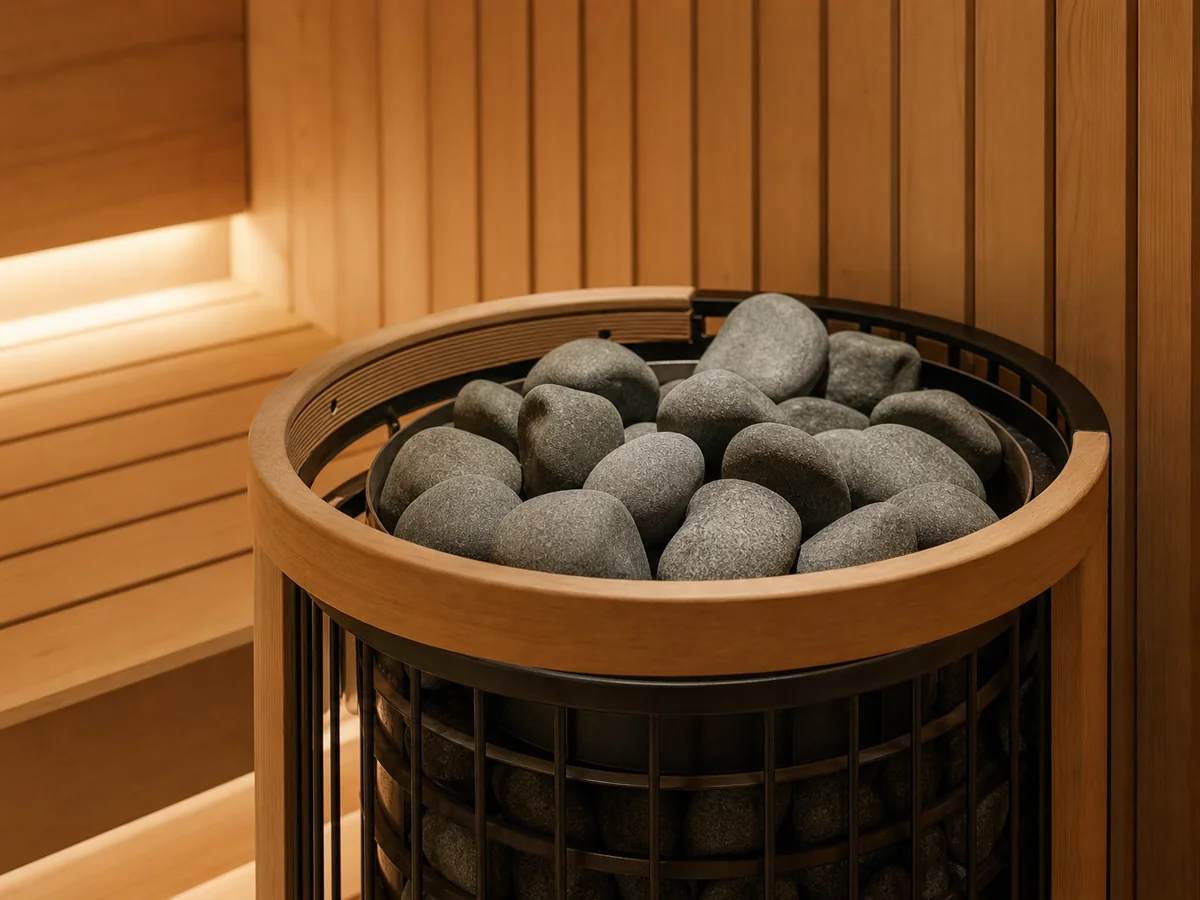
Stoves are also differentiated according to their stone capacity. Models holding more stones accumulate a higher heat mass; This means softer, longer-lasting steam and a more even temperature feeling when the water is poured. Compact models with fewer stones heat up quickly, but their steam comfort lasts for a shorter period of time.
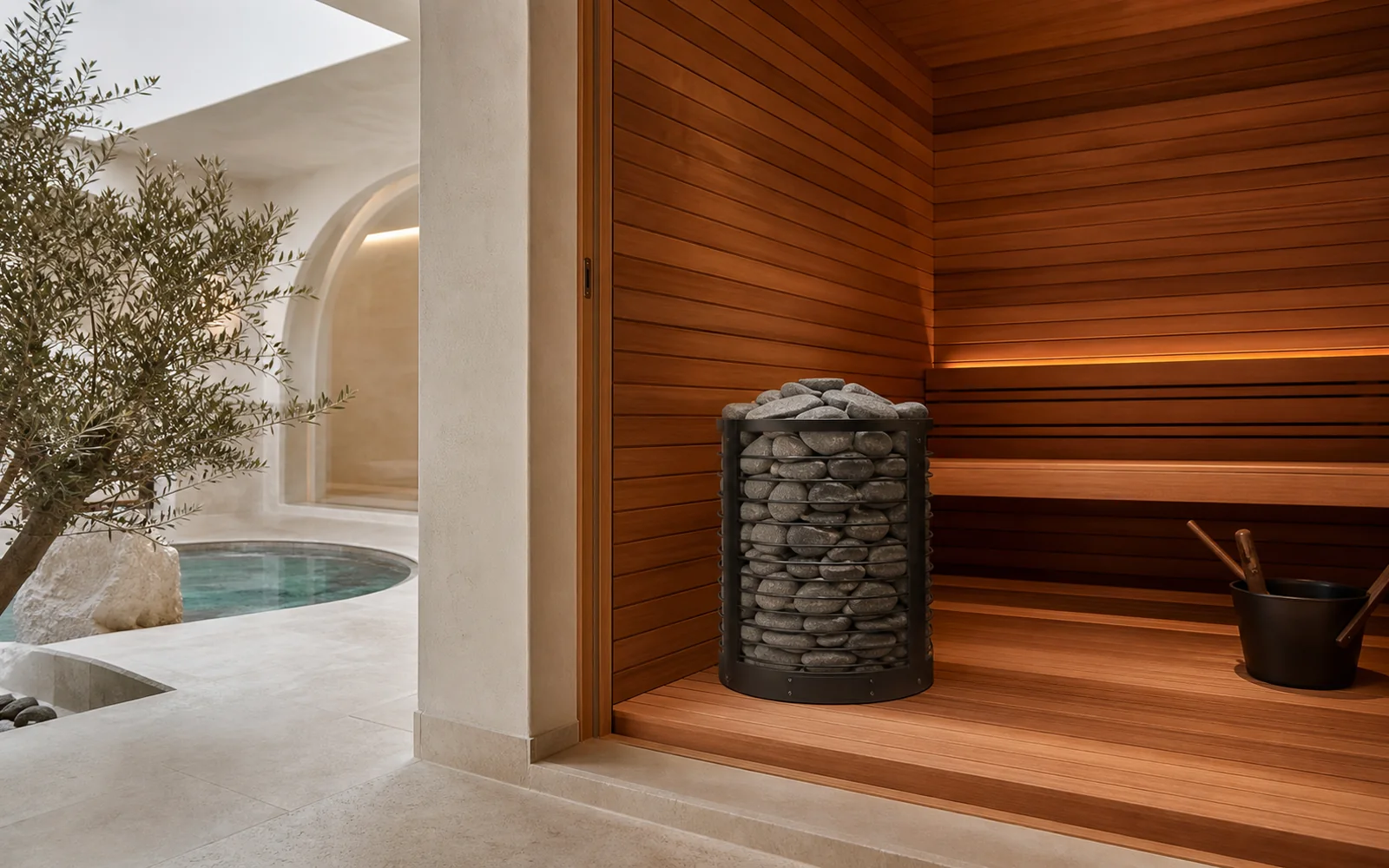
Wall-mounted compact stoves save space in small cabinets. Cylinder or tower type stoves that sit on the floor are preferred in large cabins and intensive use due to their higher stone capacity. In some models, the stove can be hidden under the bench to provide aesthetic integrity.
Sauna stones are also a consumable material; Over time, they crack with the heat cycle and their efficiency decreases. Periodically checking the stones and renewing them when necessary preserves the air flow and steam quality of the stove.
Electric stoves are controlled in two ways: an integrated remote control on the stove or a separate control panel. The separate panel offers the ability to adjust temperature and time from outside the cabin, delayed start, and remote/app operation on some models.
Delayed start and time setting features allow you to have the sauna ready before the customer arrives home or at the business; so you don't have to wait for it to warm up. Thanks to the thermostat, the temperature is kept constant at the specified value.
It is important to choose the remote control according to your usage scenario. In home use, a practical panel is often sufficient; Time scheduling and central control features greatly facilitate operation in hotels, spas and heavily used businesses.
Sauna stove is a device that operates at high temperatures; Therefore, installation, electrical connection and safety distances must be done professionally. The minimum distances specified by the manufacturer should be maintained between the stove and wooden surfaces, benches and the ceiling, and a protective fence should be considered around it.
Electric stoves must be connected with cables of appropriate cross-section, correct fuse and grounding; Since it is a wet environment, leakage current protection should not be neglected. Models with safety functions such as overheating protection and automatic shutdown should be preferred. In wood stoves, chimney draft, fireproof floor and safe wood feeding are critical.
The air vents of the stove should not be closed, and towels or flammable objects should not be left on it. We plan the safety details of the saunas we have installed since 1993 at the project stage, and we select the stove together according to the cabin volume and usage type. You can consult us to choose the stove and power suitable for your cabin.
Image gallery
04 görsel
 01
01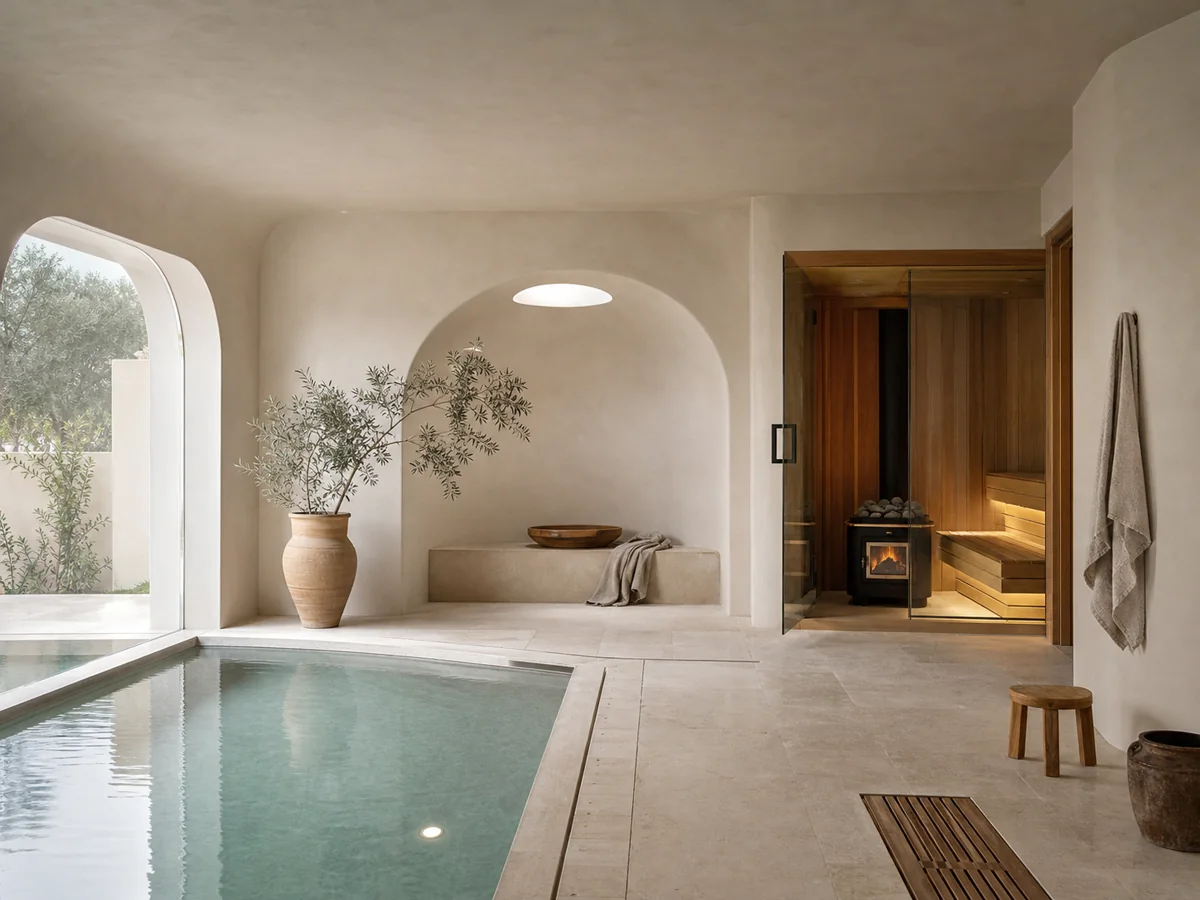 02
02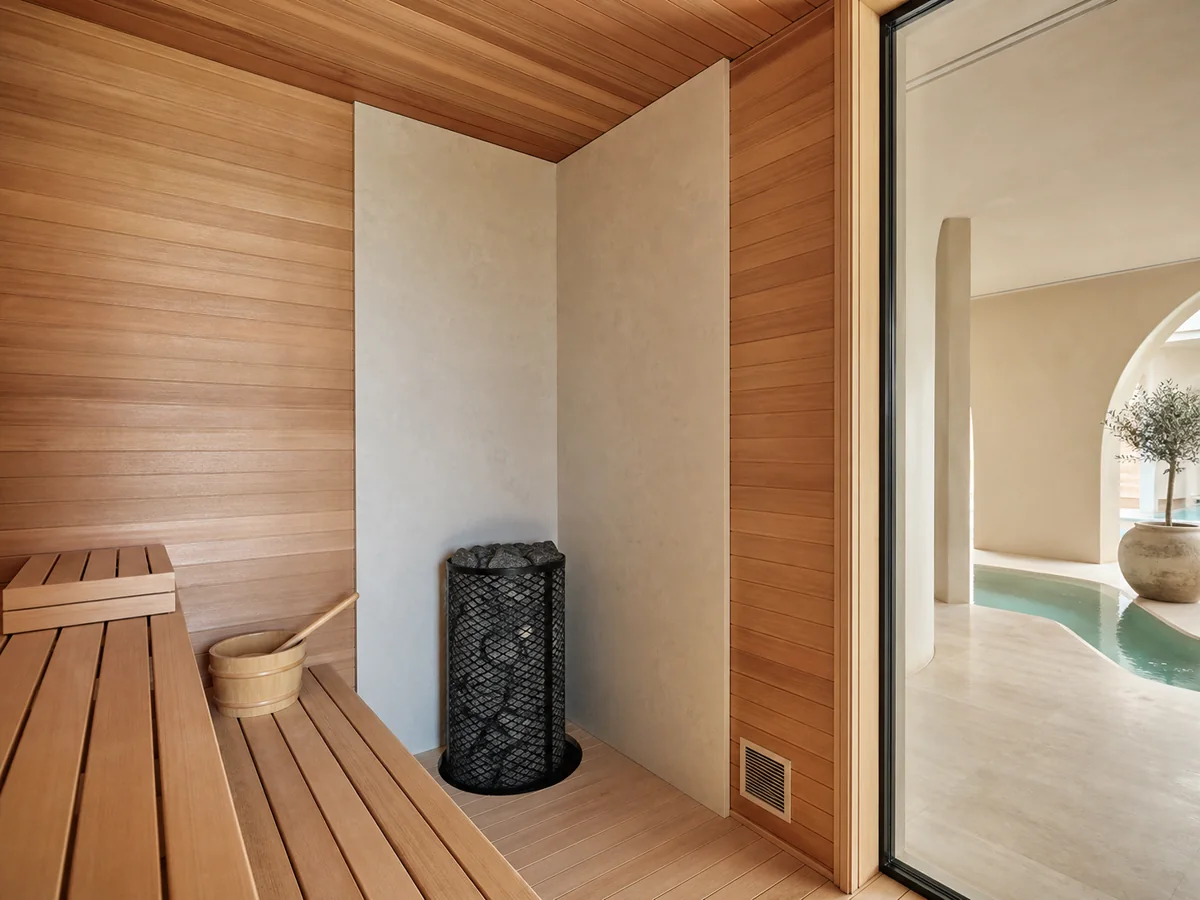 03
03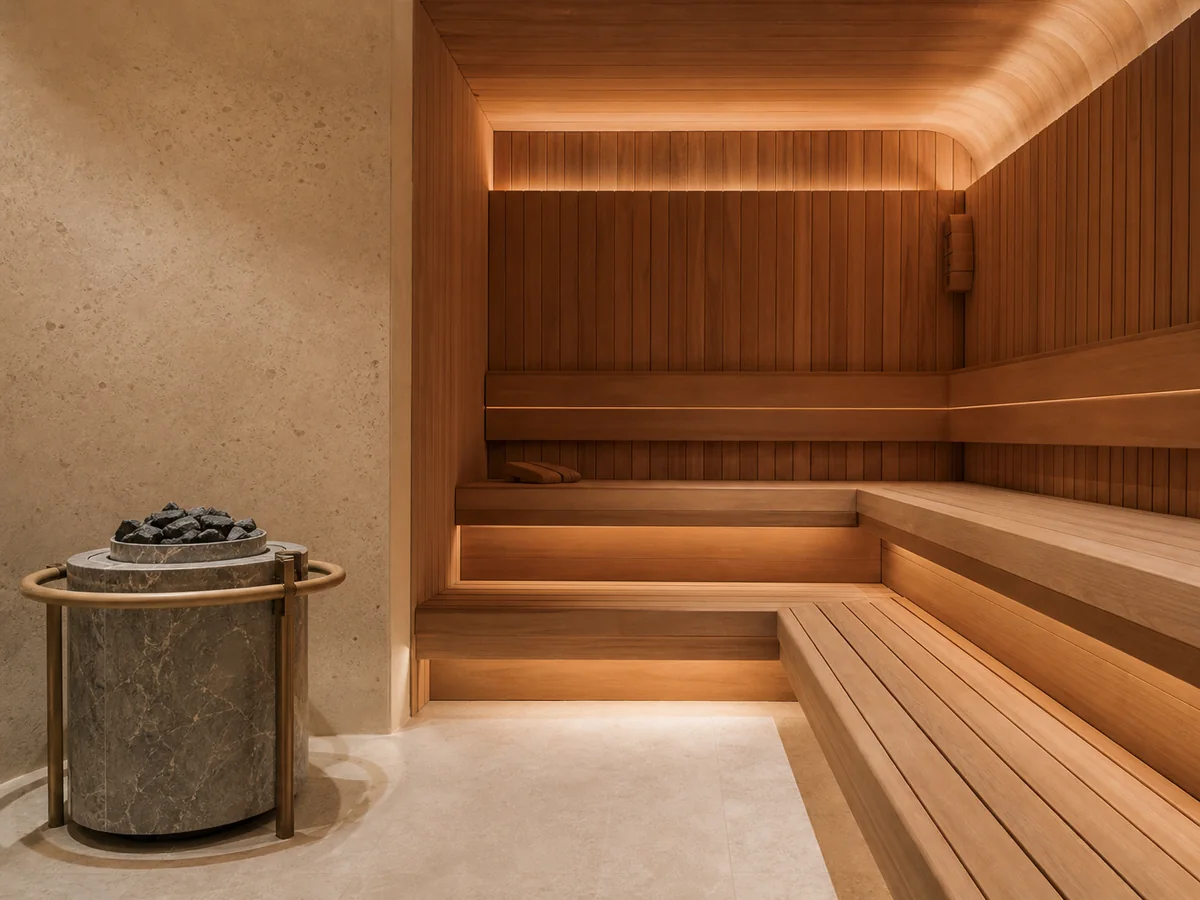 04
04Company & Contact
To talk about your project, we are one call away.
Legal Name
Çilek Havuz
Founded
1998 · Istanbul
Head Office
Çilek Plaza, Eyüp Sultan Mah. Yakacık Cd. Feshane Cd. No: 2 D:4 D:1, 34885 Sancaktepe / İstanbul
Service Area
All of Türkiye · exports to 14 countries
Related articles
Keep reading.
Sık Sorulan Sorular
Our readers' most asked; with expert answers.
Çilek Havuz Content & Technical Team
Guides & Technical Content
- Response Time
- Same day
- Channels
- Phone · E-mail · WhatsApp
If the answer you are looking for is not here, send your question directly to us and our team will reply as soon as possible.
Book a free site surveySauna stoves above a certain power generally require a three-phase electrical connection and a separate line of appropriate cross-section; Small compact models can work more than once. It should be checked before installation whether your existing panel and fuse infrastructure can meet the power of the stove you have chosen. We recommend that you make this evaluation together with an electrical expert and plan the cable and fuse requirements in the project from the beginning.
Çilek Havuz Content & Technical Team
Heating time depends on the volume of the cabin, the quality of insulation and whether the stove is selected according to the volume; A correctly sized system will be ready in a reasonable amount of time. A stove that is inadequately selected for its volume may not reach the desired temperature at all or may reach it too late. Controls with delayed start feature prepare the sauna in advance so that you do not have to wait for the warm-up period.
Çilek Havuz Content & Technical Team
Sauna stones are consumables that crack and crumble over time with the heat cycle; With heavy use, it requires more frequent inspection and crumbling ones must be renewed. When arranging stones, it is important to place them loosely to allow air flow; Stones arranged tightly can prevent air circulation and cause the resistors to overheat. We recommend that you use only heat-resistant stones made for sauna.
Çilek Havuz Content & Technical Team
A wood-burning stove requires a properly diameter chimney that provides proper draft, fireproof flooring, and a safe distance from surrounding flammable surfaces. Insufficient chimney draft both reduces efficiency and poses a safety risk. For this reason, wood-burning systems should be installed mostly in detached buildings or garden saunas, by planning the chimney route from the beginning; We recommend that you clarify the layout before installation.
Çilek Havuz Content & Technical Team
The softness and duration of the steam created by the water poured on the stone are related to the stone mass of the stove and whether the stones are sufficiently heated. Stoves with higher stone capacity give more balanced and long-lasting steam when water is poured. In compact models with fewer stones, the steam may have a shorter life. If the classic löyly experience is important to you, choosing a model with a high stone capacity will increase comfort.
Çilek Havuz Content & Technical Team
In facilities that operate continuously all day long, such as hotels and spas, the stove must be durable enough to withstand continuous use and suitable for central control; A household stove wears out quickly at this intensity. Time scheduling, recovery capacity for consecutive sessions and ease of service come to the fore in commercial selection. For your heavy use profile, we recommend sizing the stove together based on cabinet volume and operating hours.
Çilek Havuz Content & Technical Team