

Olympic Pool Construction: Sizes and Standards
An Olympic pool is 50 meters long and a semi-Olympic pool 25 meters, built to FINA standards. This article details standards such as lanes, depth, overflow systems and timing.
An Olympic pool is 50 meters long and a semi-Olympic pool 25 meters, built to FINA standards. This article details standards such as lanes, depth, overflow systems and timing.
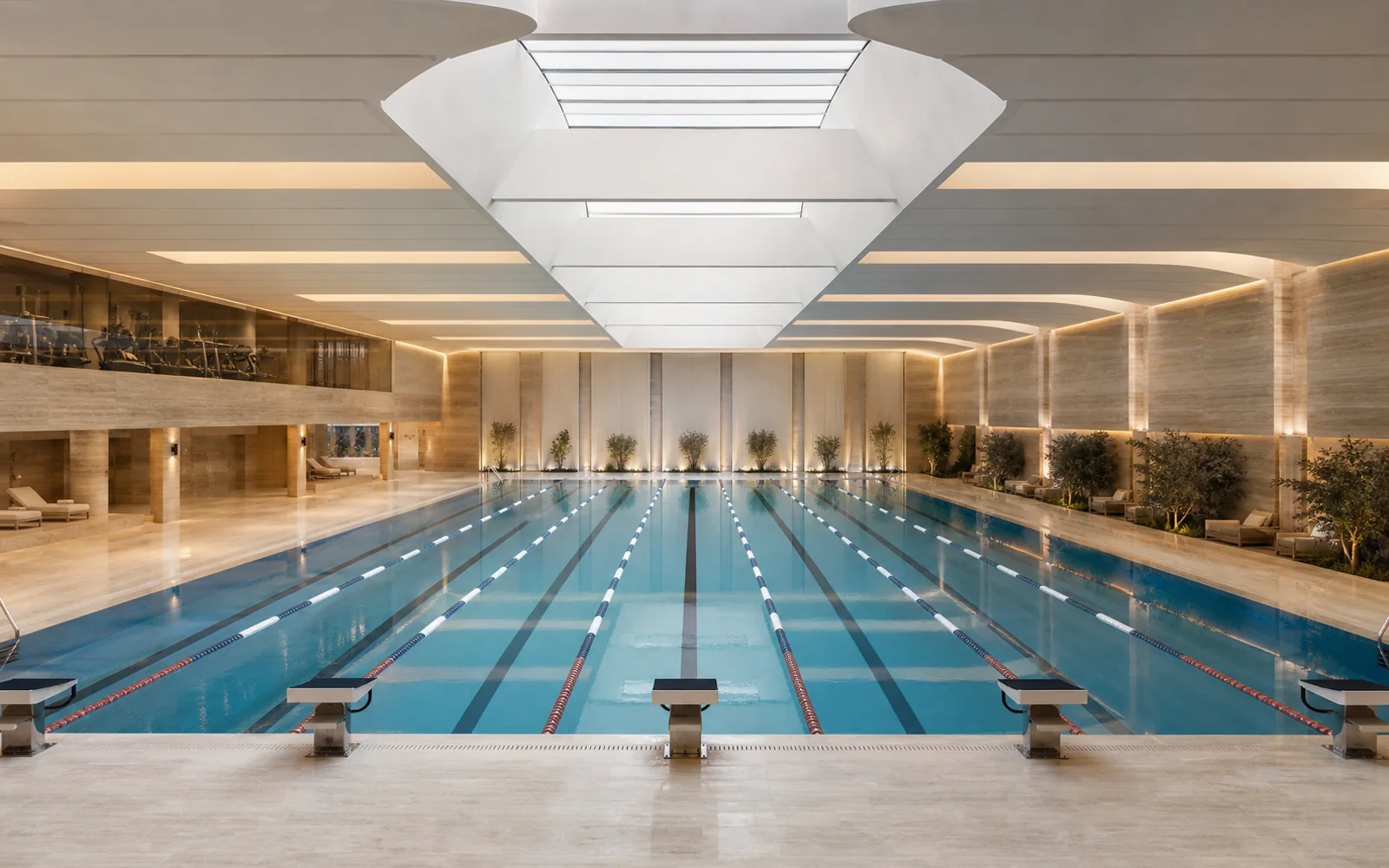
According to the international swimming federation FINA standards, the Olympic pool is 50 meters long; The short course pool, which is called semi-Olympic, is 25 meters. These two measurements form the basic length standards for official competitions.
Millimetric precision of the length measurement is important because it is calculated by including the thickness of the timing equipment and touch panels in this measurement. That's why Olympic pool construction is carried out with precision engineering tolerance from start to finish.
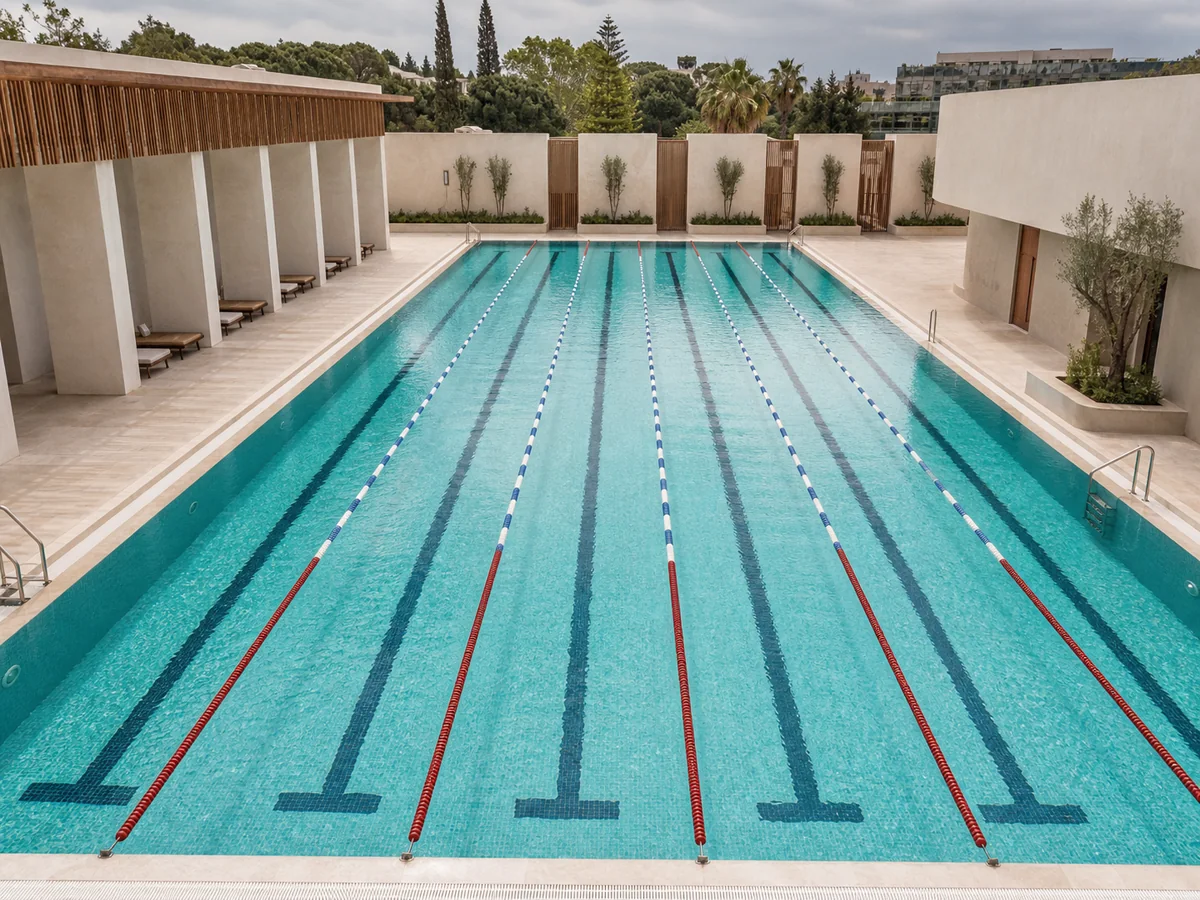
Olympic pools are typically designed to have eight or ten lanes, with each lane having a standard width. The distance between the lanes and the arrangement of the side lanes are planned to reduce the wave effect.
Lane lines and buoys not only determine direction, but also ensure fair conditions by dampening the wave created by racers. These details ensure that the pool meets not only the size but also the performance standard.
Depth is decisive for both swimmer safety and water fluidity. Sufficient depth reduces wave reflection between the bottom and the surface, creating a calmer and faster water environment.
In official competition pools, depth standards are defined to take into account jumping and starting safety. The correct depth is one of the key parameters that provide the hydraulic conditions required for competitive performance.
In Olympic and semi-Olympic pools, the overflow system is preferred; Water constantly flows out of the overflow channels at the edge of the pool. This system quickly absorbs surface waves and keeps the water stagnant.
Overflow channels both remove pollution from the water surface and prevent the wave created by racers from hitting the edge and returning. Thus, an equal and calm racing surface is created in all lanes; This is one of the most critical details of a high-performance pool.
In official races, times are measured via touch timing panels placed at the lane heads. Starting platforms, reversing indicators and electronic timing system work as a whole.
This equipment must be fully compatible with the pool geometry; Every detail, from panel thickness to starting platform location, is placed according to standards. In our Olympic pool equipment product group, you can find the timing and starting solutions required by your competition pool.
The Olympic pool is not just a big pool; It is an engineering structure where precise measurement, accurate hydraulic balance and high capacity filtration work together. Water circulation time, temperature stability and overflow balance must be calculated accurately from the beginning.
In the projects we have carried out since 1993, we have developed water structures with high technical requirements, including the deepest pool we have built for the Ministry of National Defense. We recommend that you seek engineering support at an early stage to plan your competition pool in accordance with FINA standards.
Image gallery
04 görsel
 01
01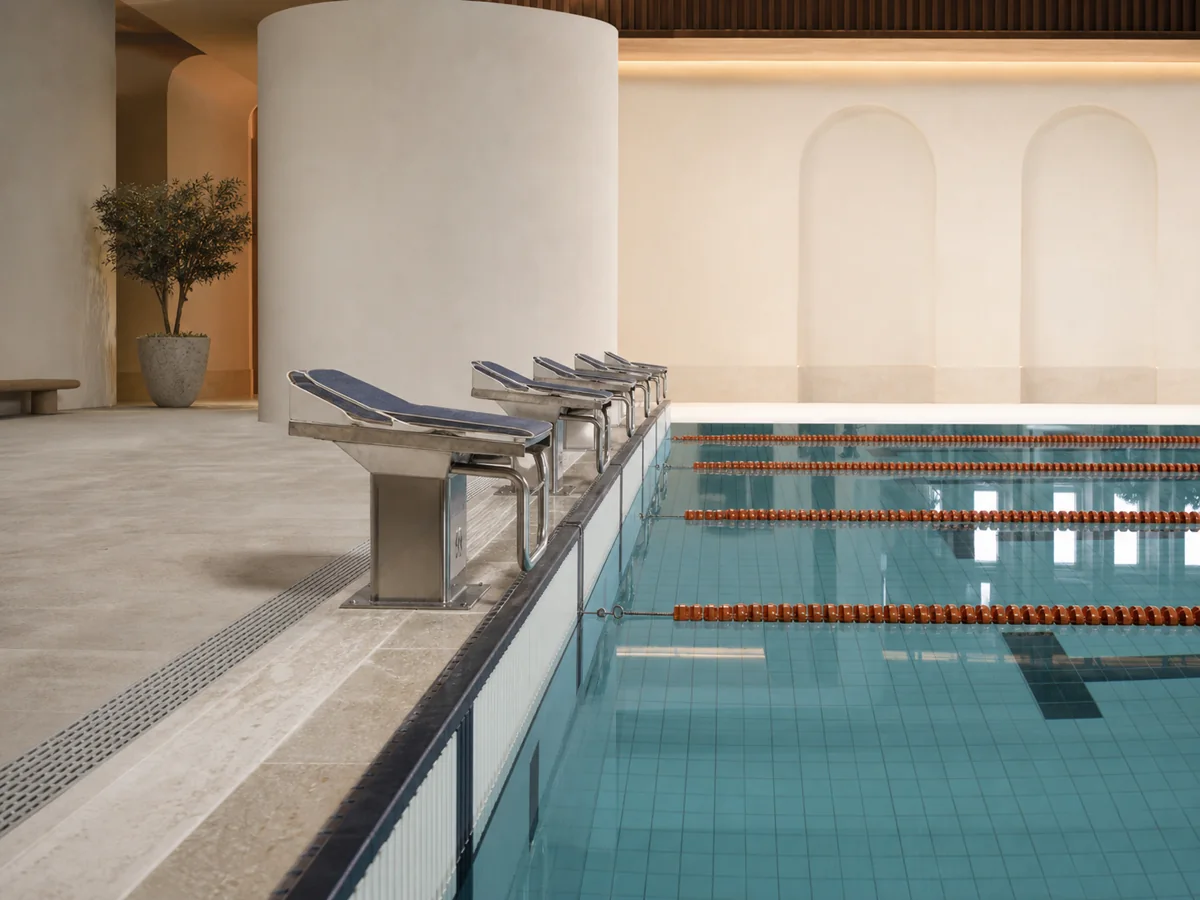 02
02 03
03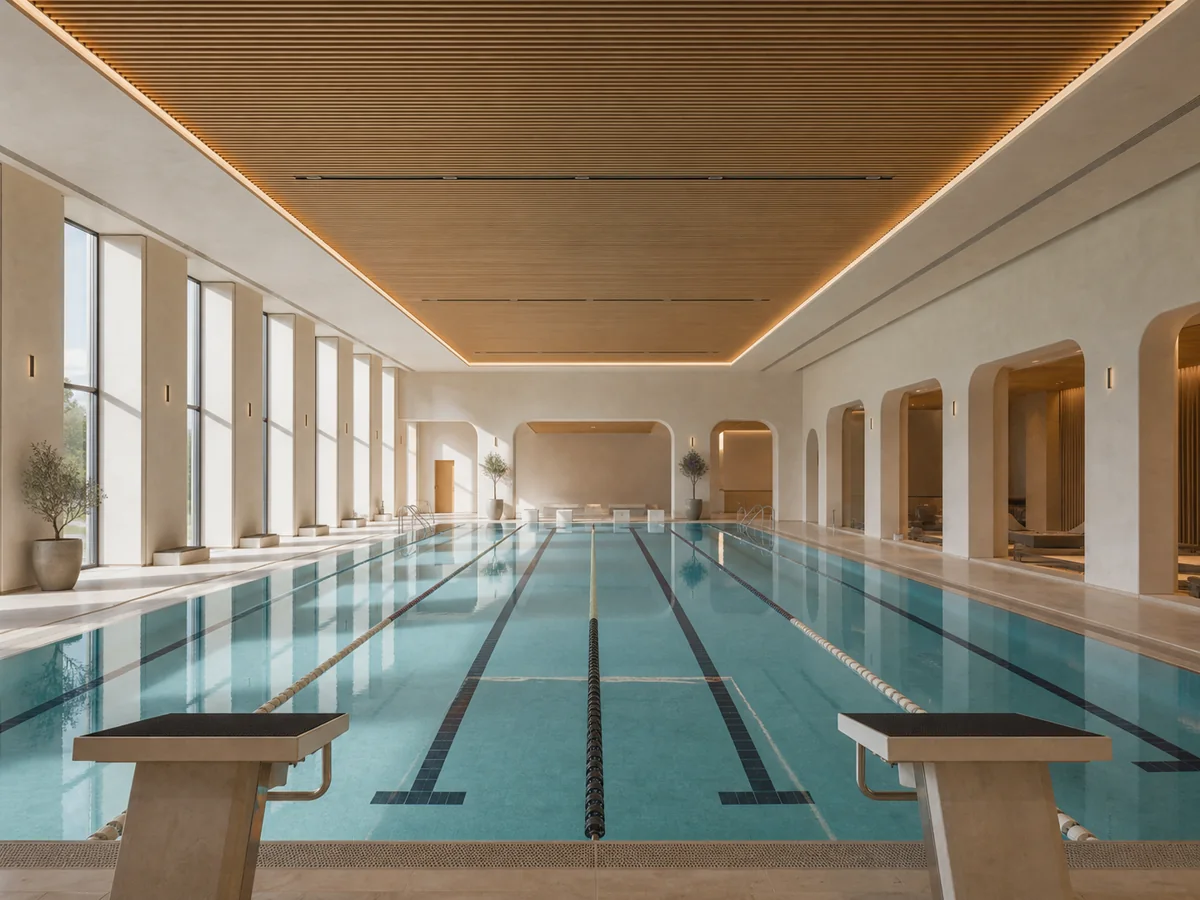 04
04Company & Contact
To talk about your project, we are one call away.
Legal Name
Çilek Havuz
Founded
1998 · Istanbul
Head Office
Çilek Plaza, Eyüp Sultan Mah. Yakacık Cd. Feshane Cd. No: 2 D:4 D:1, 34885 Sancaktepe / İstanbul
Service Area
All of Türkiye · exports to 14 countries
Related articles
Keep reading.
Sık Sorulan Sorular
Our readers' most asked; with expert answers.
Çilek Havuz Content & Technical Team
Guides & Technical Content
- Response Time
- Same day
- Channels
- Phone · E-mail · WhatsApp
If the answer you are looking for is not here, send your question directly to us and our team will reply as soon as possible.
Book a free site surveyIn competitive swimming pools, water temperature is kept constant within a certain range, taking into account athlete performance and comfort; This value is defined by official standards. Temperature stability is achieved by high capacity heating and correct water circulation design. Since the exact target values vary depending on the type of competition, they should be clarified at an early stage in the project.
Çilek Havuz Content & Technical Team
Due to high user density, the water turnover time in competition pools is kept much shorter than in residential pools, which requires high capacity filtration. The filter, pump and overflow balance are sized together according to the large volume of the pool. Making these calculations correctly from the beginning is critical for water clarity and hygiene continuity.
Çilek Havuz Content & Technical Team
Although official Olympic competitions require 50 meters, 25-meter short course pools are a common and functional choice for club and school training. Available land, budget and intended use are the main factors that determine the appropriate length. If you share your goal, we can create the balance of scale and standards together.
Çilek Havuz Content & Technical Team
Yes, starting blocks and touch timing panels are concentrated at one particular end; The depth and equipment placement at this end are designed to ensure starting safety. Even the panel thickness is calculated by including it in the 50-meter measurement. Therefore, the two ends are planned separately in terms of geometry and equipment.
Çilek Havuz Content & Technical Team
In competitive pools, compliance with FINA or relevant federation standards is decisive for organizing official competitions; Additionally, building permits and facility approvals are required. Approval requirements vary depending on the pool's intended use and the institution. Planning this process at the very beginning of the project prevents costly changes later.
Çilek Havuz Content & Technical Team
The operating load of competition pools is significant due to the large water volume, high filtration capacity and temperature stability; this load is managed with efficient equipment and good insulation. Variable speed pumps, heat recovery systems and water surface cover are the main solutions that reduce operating costs. Making these decisions at the project stage provides long-term savings.
Çilek Havuz Content & Technical Team