


When to Change Pool Water: Water Saving Tips
Fully draining your pool is often needless waste. We explain TDS, the difference between partial and full water changes, when and why to change water, and how to save water from an engineering perspective.
Fully draining your pool is often needless waste. We explain TDS, the difference between partial and full water changes, when and why to change water, and how to save water from an engineering perspective.
As pool water is used for a long time in a closed cycle, substances are constantly added from outside, but these substances are not easily separated from the water. Every chemical added, every drop evaporated, and therefore the minerals left behind, accumulate in the water. Over time, the dissolved substance content of the water becomes so high that chemicals have difficulty showing the expected effect; Chlorine works harder, the water becomes opaque and it becomes increasingly difficult to keep the balance.
This 'fatigue' often progresses slowly and unnoticed. As the water begins to become cloudy, the user adds more chemicals, which paradoxically accelerates accumulation. At this point, the solution is not to use more chemicals, but to throw out the accumulated substance along with some of the water. However, this does not mean draining the entire pool; Water change with the right timing and the right method is both effective and economical.
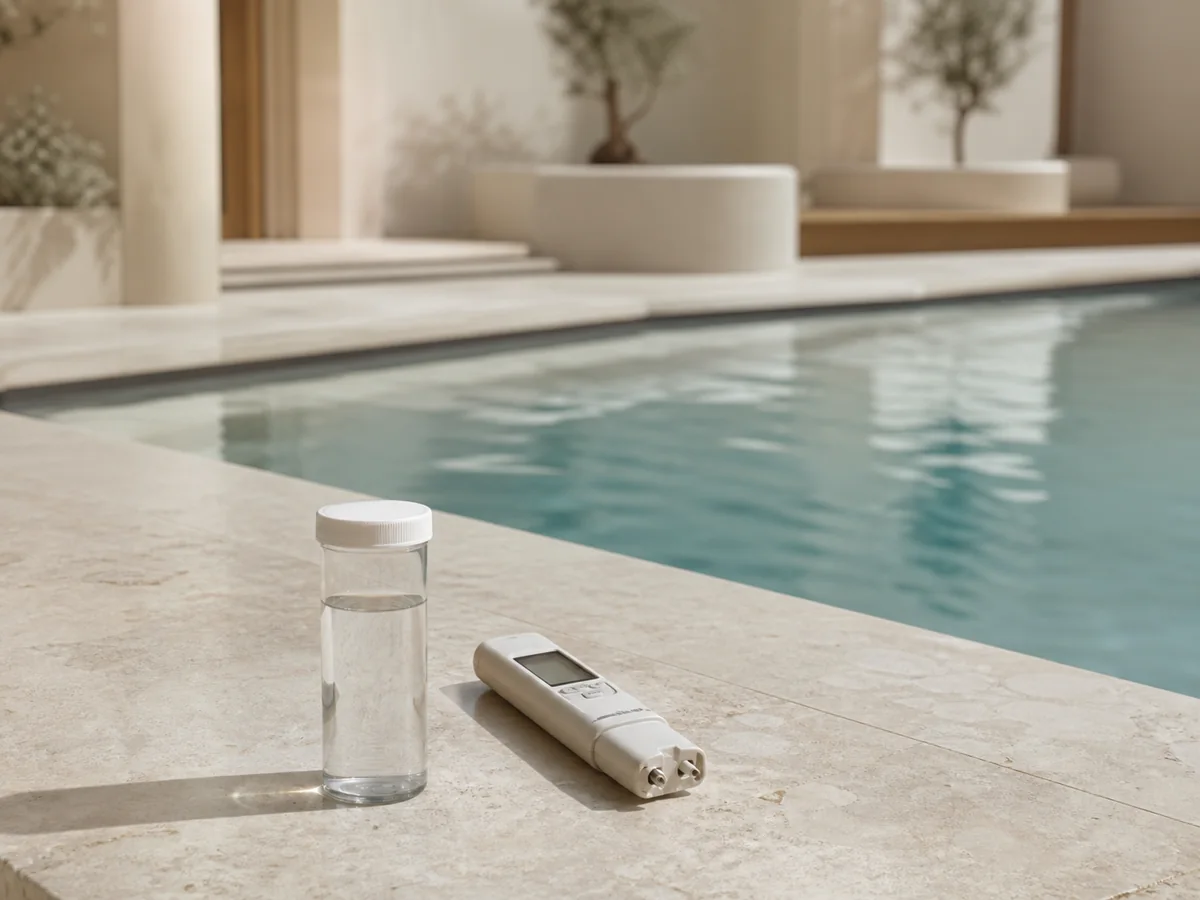
TDS stands for 'Total Dissolved Solids' and refers to the total amount of all minerals, salts and chemical residues dissolved in water. Every chemical you add to the pool, minerals coming with the filling water and content condensing with evaporation increases the TDS value. This value can be thought of as a fatigue indicator that shows how 'filled' the water is.
TDS does not cause problems up to a certain level; However, when it gets too high, the effectiveness of the chemicals decreases, the water becomes dull, a salty feeling may occur and it becomes difficult to keep the balance. As a general practice, a significant increase in TDS compared to the filling water (e.g. several thousand ppm) indicates that some of the water needs to be replenished. Since salt is also included in TDS in pools using salt chlorine generators, TDS is naturally higher in these pools and the evaluation should be made accordingly. The correct reference is always the difference between the TDS of the filling water used and the TDS of the pool water.
A common mistake is to completely drain and refill the pool when problems occur. However, in most cases, complete replacement is unnecessary and a serious waste of water. Partial water change, that is, removing some of the water and replacing it with fresh water (dilution), is a much more economical and effective way to reduce accumulated TDS and calcium. The proportion of fresh water is calculated based on the difference between the current TDS and the target.
A full water change is only required in certain circumstances: if TDS and calcium have become too high to reasonably be reduced by partial dilution, if there is serious and persistent water degradation, permanent stain or uncontrollable fouling, or if a technical intervention such as surface repair requires draining the pond. Apart from this, small partial changes at regular intervals save both water and heated water energy compared to a large one-time drain.
The timing of a water change depends on the water condition rather than the calendar. The main trigger is the significant increase in TDS relative to the filling water and, accordingly, the chemicals no longer easily maintain the expected balance. The second trigger is when the calcium hardness becomes too high to be reduced except by partial dilution. Third, stabilizers such as cyanuric acid accumulate excessively and begin to suppress chlorine effectiveness.
The practical approach is to keep water in balance 'before it goes bad, not when it goes bad'. Monitoring TDS and calcium trends with regular water tests allows you to foresee when partial replacement is required. The beginning and end of the season are natural checkpoints; In busy months, intermediate measurements are valuable. Water exchange is integral to good water chemistry management; In a pool that keeps the daily pH and chlorine balance correct, water tires much more slowly and the need for changes becomes less frequent.
The first step to saving water is to reduce evaporation loss. Using a pool cover (tarpaulin) significantly reduces evaporation, especially in hot and windy climates; This saves both water, heated water and chemicals. The second step is not to unnecessarily increase the frequency of backwashing; Washing the filter only when the pressure gauge requires it reduces the amount of water expelled with each wash. Filter media that consume less water, such as glass or zeolite, also provide an advantage at this point.
The third step is to opt for partial dilution rather than complete decantation; Small calculated changes use much less water than large one-time drains. The fourth step is to proactively manage water chemistry; Getting the balance right from the start reduces the need for excessive chemical additions and the resulting premature water replenishment. Leak control is also important; An unnoticed leak silently leads to massive water loss. These cost-saving practices are a natural part of regular pool maintenance and provide both environmental and economic benefits in the long term.
After a partial or full water change, the pool's chemical balance must be re-established because fresh water comes with a different initial chemistry. First of all, the TDS, hardness and pH values of the filling water should be taken into account; The pool water should then be tested and pH, alkalinity, calcium hardness and chlorine should be adjusted to target ranges. Especially if soft filling water is used, it should be ensured that the calcium hardness does not fall below the ideal range.
When establishing the balance after a water change, it is important to add chemicals gradually and distribute them under good circulation; It is necessary to verify the values by repeating the measurement after a while. It may take some time for the water to become clear and stabilize again. This process is actually part of regular water chemistry management; Water change should not be seen as a solution on its own, but as a complementary step of the correct maintenance routine. Our company helps you save water and achieve permanent balance by making your water change plan according to your pool volume and local water conditions.
Image gallery
04 görsel
 01
01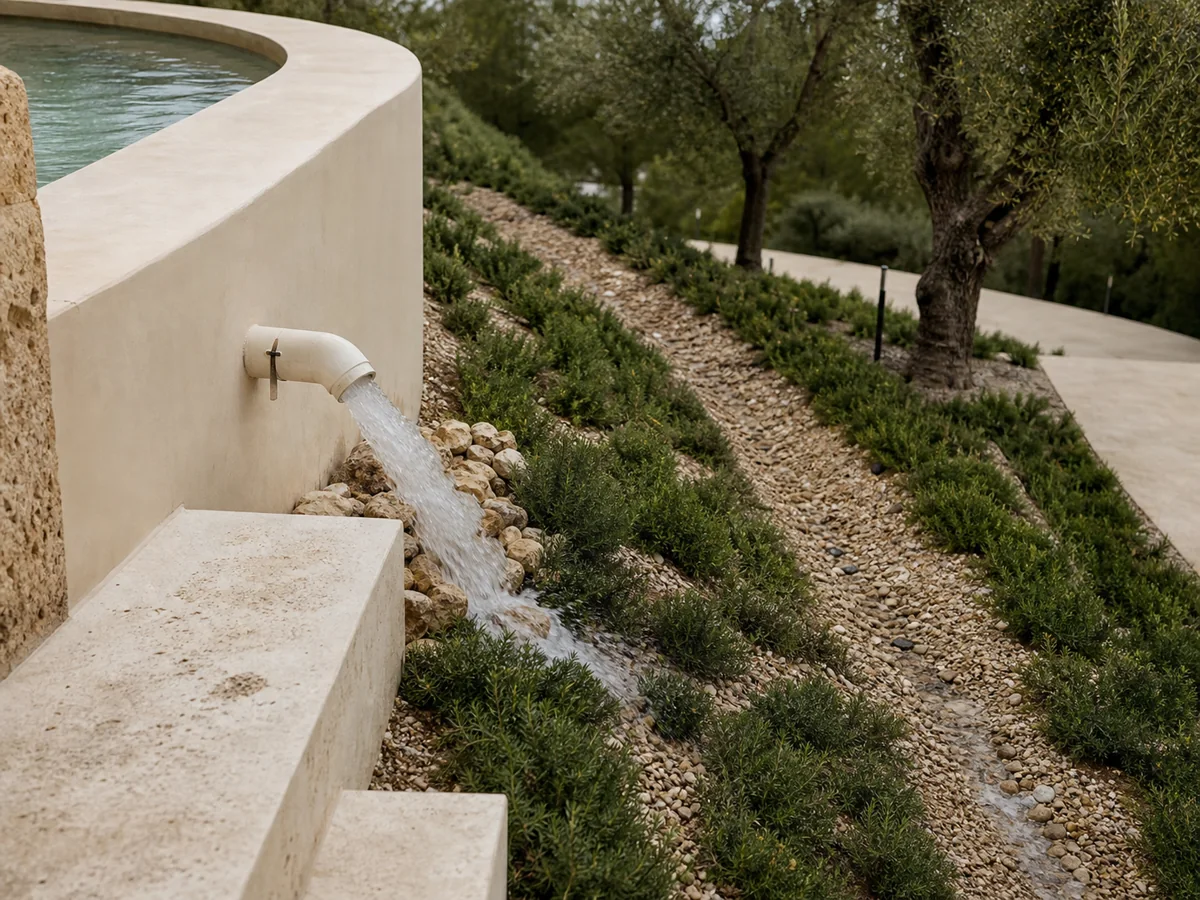 02
02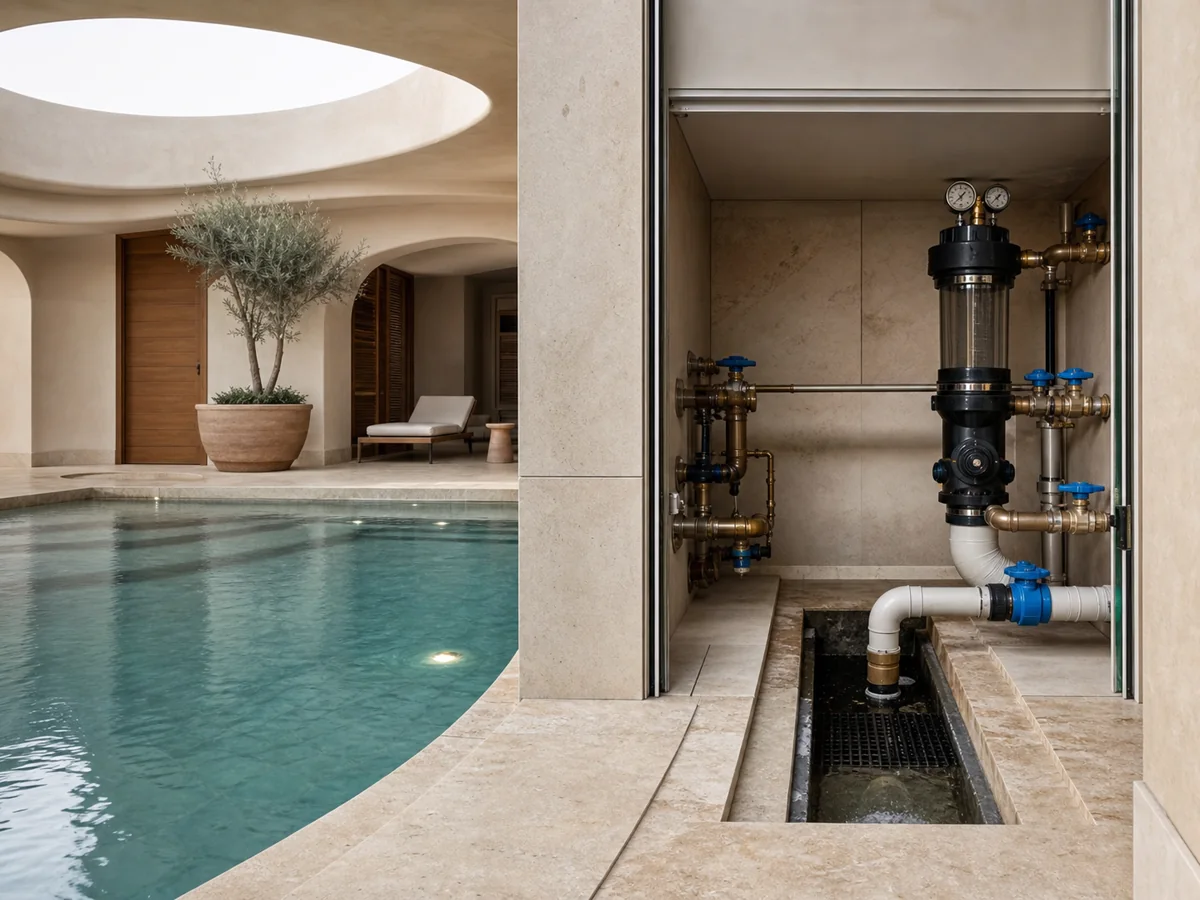 03
03 04
04Company & Contact
To talk about your project, we are one call away.
Legal Name
Çilek Havuz
Founded
1998 · Istanbul
Head Office
Çilek Plaza, Eyüp Sultan Mah. Yakacık Cd. Feshane Cd. No: 2 D:4 D:1, 34885 Sancaktepe / İstanbul
Service Area
All of Türkiye · exports to 14 countries
Related articles
Keep reading.



Sık Sorulan Sorular
Our readers' most asked; with expert answers.
Çilek Havuz Content & Technical Team
Guides & Technical Content
- Response Time
- Same day
- Channels
- Phone · E-mail · WhatsApp
If the answer you are looking for is not here, send your question directly to us and our team will reply as soon as possible.
Book a free site surveyYes, this is a real risk; A pool that is completely drained, especially in areas with high ground water, may be damaged by being pushed upwards by the water pressure on the ground. For this reason, complete evacuation should not be done arbitrarily; if necessary, it should be done by evaluating the ground water and hydrostatic relief valve condition. One reason to prefer partial water change is that it eliminates this risk.
Çilek Havuz Content & Technical Team
Because pool water contains chlorine, salt and other chemicals, it can harm plants and the environment; Therefore, uncontrolled discharge directly into the garden or nature is not appropriate. In many areas, pool water discharge is subject to local regulations and controlled discharge into the sewer line is generally expected. We recommend checking your local rules and lowering the chlorine level before evacuating.
Çilek Havuz Content & Technical Team
The rate to be released depends on the difference between the current TDS or calcium value and the target you want to achieve; The lower the target, the higher the rate of water to be replaced. Roughly speaking, if you want to halve the value you need to replace a significant portion of the water. We can calculate the correct ratio together based on your pool volume and measurement values.
Çilek Havuz Content & Technical Team
Cyanuric acid is very stable in water and does not deplete over time like chlorine; It does not decrease with evaporation, so it accumulates slowly when constantly stabilized chlorine is used. Practically the most reliable way to reduce it is to dilute some of it with fresh water. This is one of the important reasons for triggering a water change, as excess stabilizer suppresses the effectiveness of chlorine.
Çilek Havuz Content & Technical Team
In a saltwater pool, the salt itself is included in the TDS, so TDS is naturally high in these pools, and high TDS alone does not necessarily mean trouble. What is important here is the accumulation of dissolved substances other than salt. It would be more accurate to make the evaluation by considering the salt level separately and looking at the difference between it and the filling water.
Çilek Havuz Content & Technical Team
Prolonged exposure of the pool surface to direct strong sun and high temperatures during emptying can create a risk of stress and damage to some types of coatings. Therefore, if complete emptying is required, it is safer to avoid the hottest hours of the day and long periods of emptying. In partial changes, this risk is significantly reduced because the pool remains filled with water.
Çilek Havuz Content & Technical Team