

Pool Waterproofing: Materials, Layers and Testing Guide
How is pool waterproofing done? We explain which material suits which pool, the correct layer sequence and how to run a water-holding test from an engineer's view.
How is pool waterproofing done? We explain which material suits which pool, the correct layer sequence and how to run a water-holding test from an engineer's view.
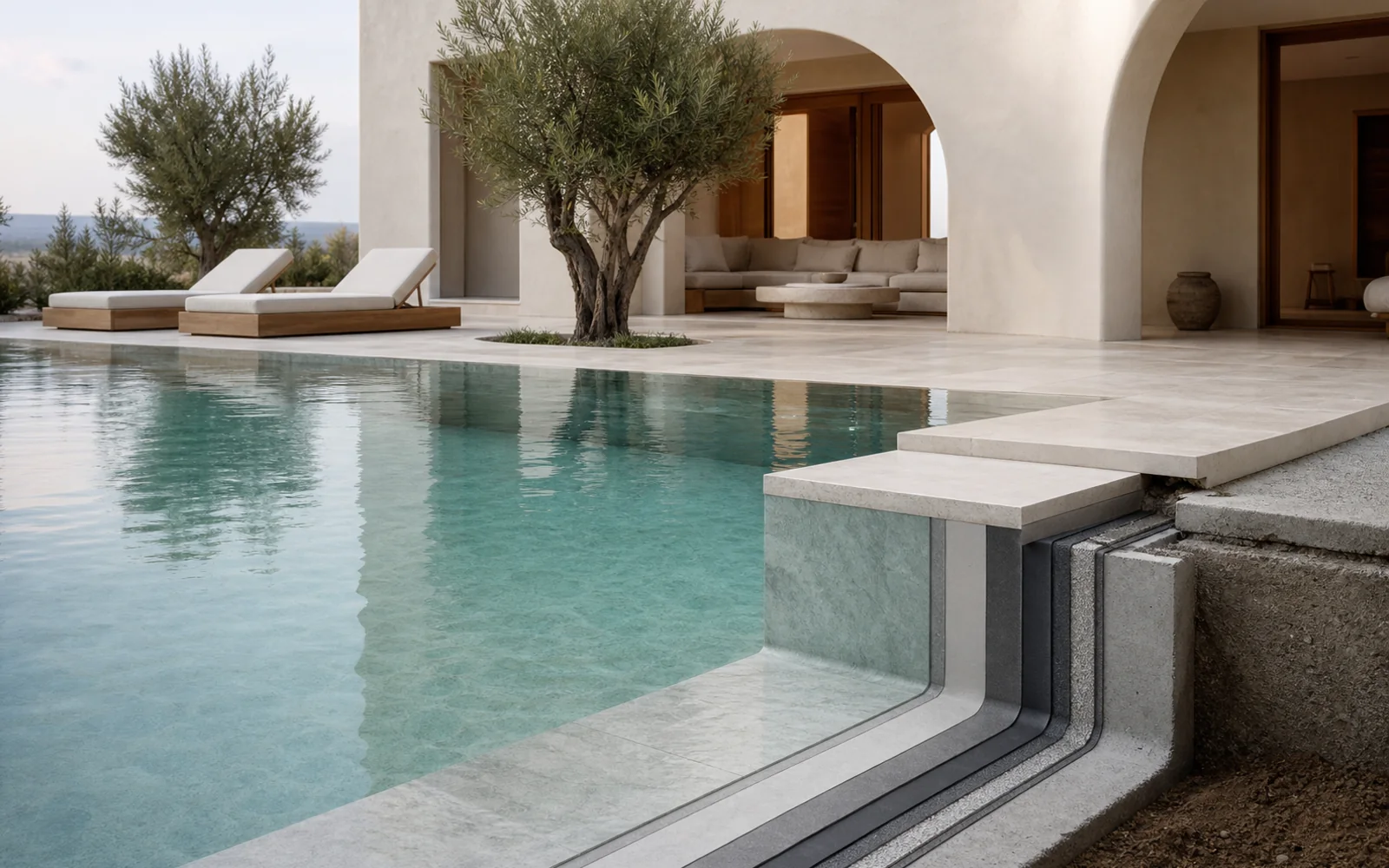
Waterproofing is the single most decisive layer determining the service life of a swimming pool. Regardless of concrete strength, without an impermeable hydraulic barrier, moisture gradually penetrates the concrete matrix, corroding steel rebar and causing catastrophic structural degradation.
This represents the invisible yet foundational craft of pool engineering. A properly engineered waterproofing system beneath the lining prevents expensive structural remediation decades down the line.
Waterproofing materials are selected based on structural typology and site stress conditions. Cementitious two-component flexible polymer membranes represent a proven standard for reinforced concrete shells. Liquid-applied polyurethane membranes provide seamless detailing around complex fixtures, while heavy-duty PVC/TPO sheet membranes offer rapid, continuous barrier coverage over large expanses.
The ideal specification is not an arbitrary 'single best product,' but an engineered system matched to project conditions. Ground movement, water table hydrostatic pressure, and seasonal thermal fluctuations directly dictate material selection.
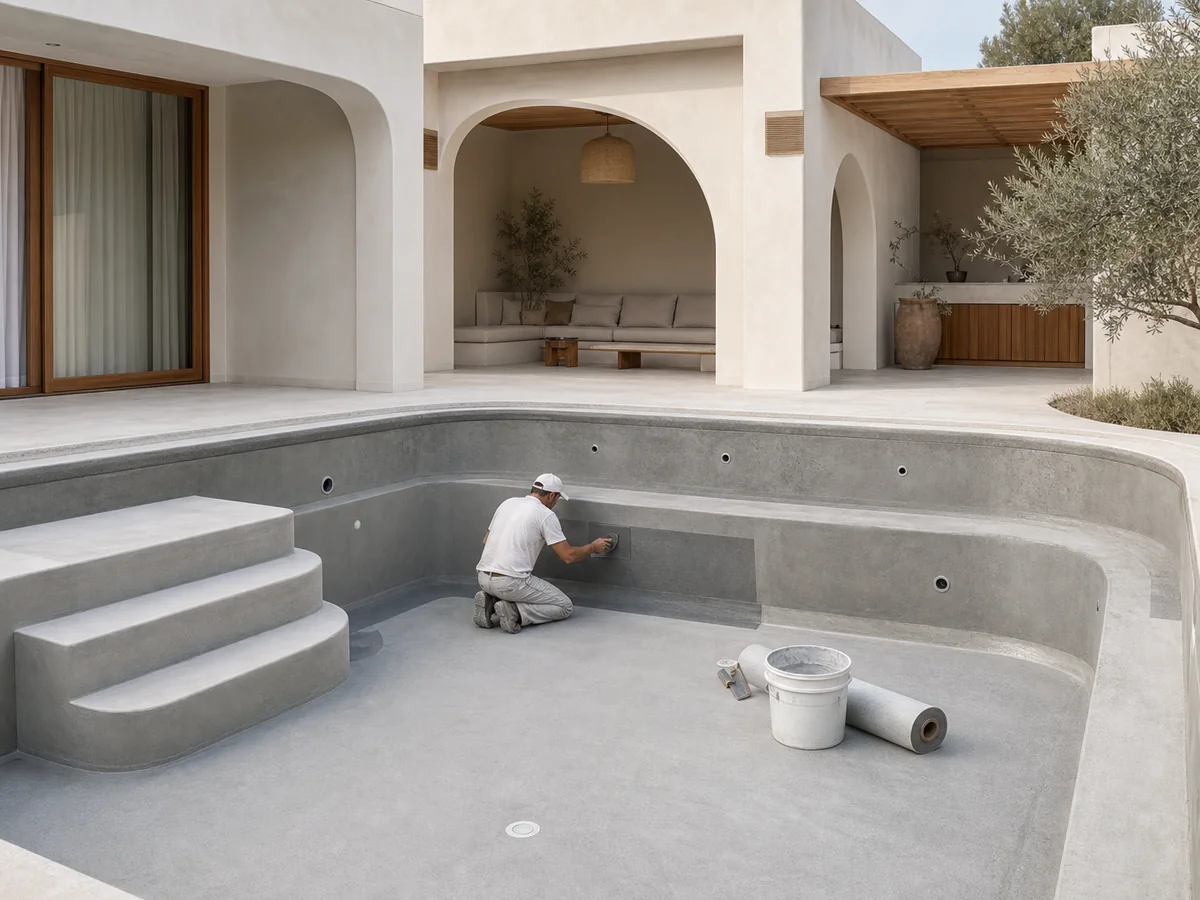
A reliable application follows a rigorous sequence: surface grinding and defect patching, penetrating primer application, reinforcing corners and pipe penetrations with fiberglass mesh and elastomeric sealing tapes, followed by multi-coat membrane application and final protection. Each coat is applied strictly after the previous layer achieves full cure.
The most prevalent failure point is neglecting transition details (floor drains, lighting niches, return inlets, and wall-to-floor cove joints). Over 90% of water leakages originate not from broad wall expanses, but from these improperly detailed transitions.
Upon completion of waterproofing, the pool is filled to capacity and monitored over a 7-to-14-day observation window. Factoring in evaporation and precipitation via control vessels, any measurable water loss is detected. This test empirically verifies that the membrane is 100% watertight prior to finish installation.
Skipping the hydrostatic retention test is one of the costliest construction errors; once tiles or mosaic finishes are laid, identifying and repairing leaks requires complete demolition of the finishes. We mandate hydrostatic testing as a standard quality gate.
Waterproofing cannot be designed in isolation; plumbing penetrations, skimmer throats, main drains, and lighting niches must be engineered with compatible compression flanges and hydrostatic hydrophilic gaskets. These fittings ensure that joints never become the weak link.
Hydraulic circulation quality also indirectly preserves waterproofing by keeping chemical balance stable. AstralPool commercial fittings and leak-proof flanges ensure complete structural integration.
Pool waterproofing is not about purchasing premium materials off the shelf, but executing the correct multi-layer system in exact sequence while adhering strictly to joint detailing. While appearing straightforward, it has the absolute lowest tolerance for error in civil engineering.
Our field experience since 1993 enables us to foresee critical stress details and specify the ideal membrane for every structural context. Flawless waterproofing is the invisible success story you never notice precisely because it performs perfectly.
Image gallery
04 görsel
 01
01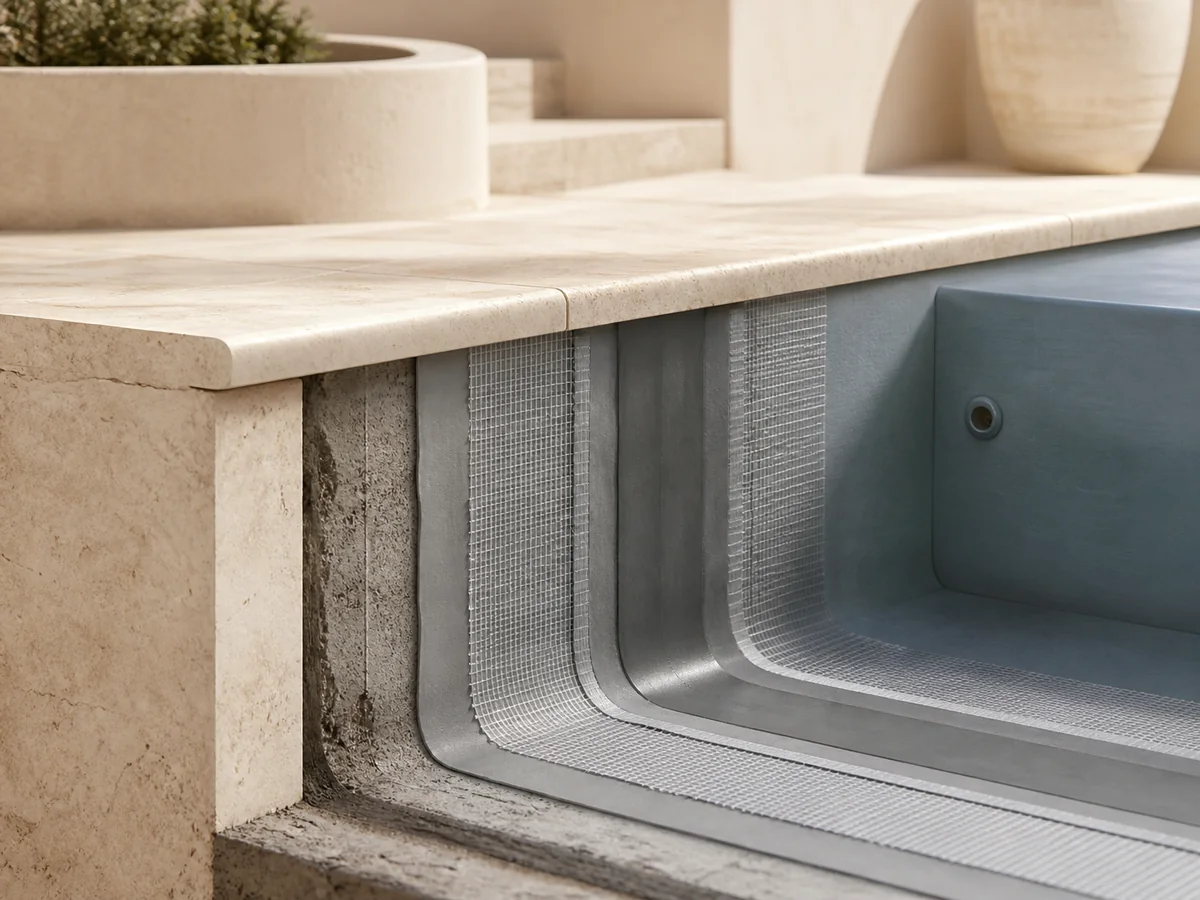 02
02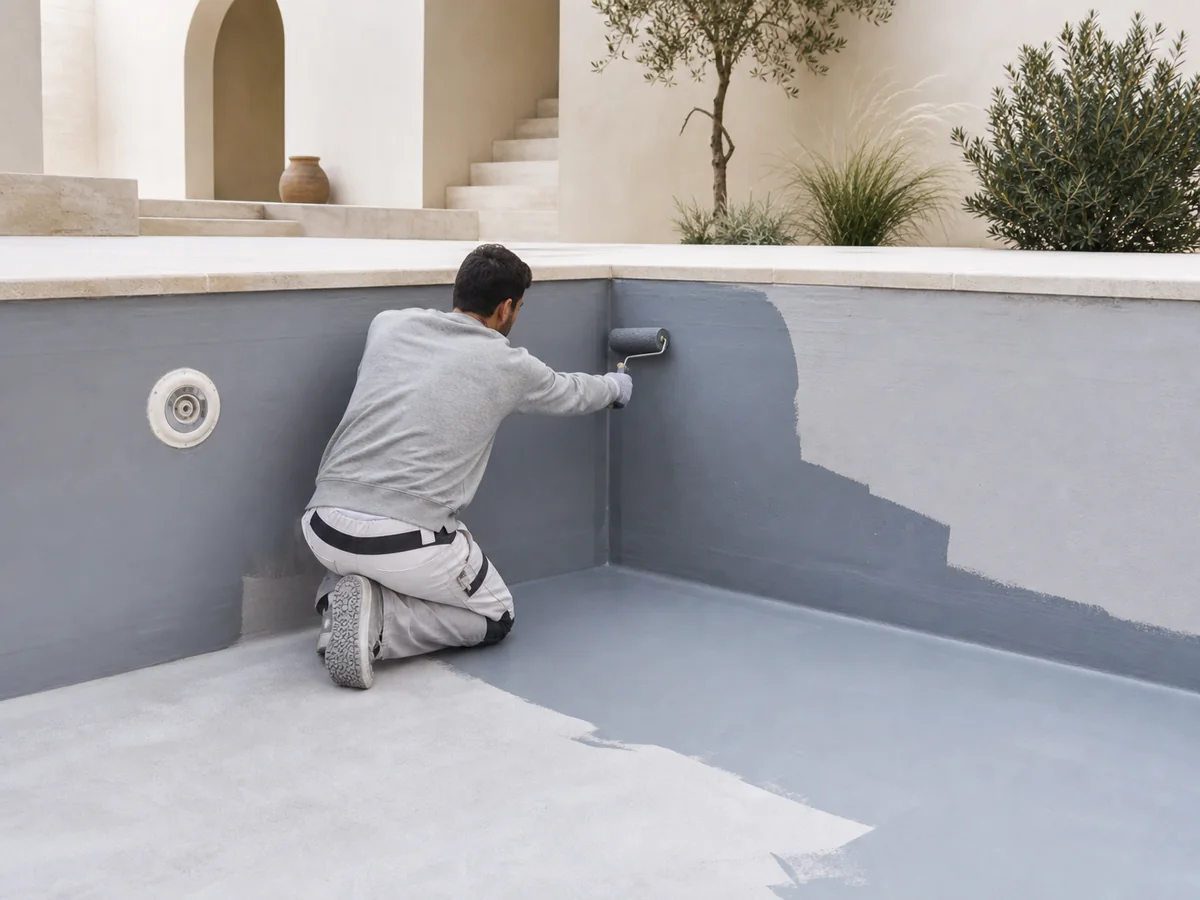 03
03 04
04Company & Contact
To talk about your project, we are one call away.
Legal Name
Çilek Havuz
Founded
1998 · Istanbul
Head Office
Çilek Plaza, Eyüp Sultan Mah. Yakacık Cd. Feshane Cd. No: 2 D:4 D:1, 34885 Sancaktepe / İstanbul
Service Area
All of Türkiye · exports to 14 countries
Related articles
Keep reading.

Sık Sorulan Sorular
Our readers' most asked; with expert answers.
Çilek Havuz Content & Technical Team
Guides & Technical Content
- Response Time
- Same day
- Channels
- Phone · E-mail · WhatsApp
If the answer you are looking for is not here, send your question directly to us and our team will reply as soon as possible.
Book a free site surveyDuration depends on pool surface area, selected membrane system, and penetration count. Substrate preparation, primer, multi-coat application, and inter-coat curing intervals require time, followed by the mandatory hydrostatic water retention test period. We provide a firm schedule following on-site inspection.
Çilek Havuz Content & Technical Team
This is an engineering decision based on soil stability, groundwater hydrostatic pressure, temperature extremes, and structural geometry. Two-component cementitious systems excel for mosaic/tiled concrete pools, while reinforced PVC sheet membranes provide combined waterproofing and finished aesthetic in one. We advise after an on-site survey.
Çilek Havuz Content & Technical Team
Tiling must only proceed after the membrane has fully cured and successfully passed the multi-day hydrostatic water retention test. Tiling over an untested membrane obscures potential leaks, resulting in expensive demolition if issues arise later.
Çilek Havuz Content & Technical Team
If water loss exceeds the evaporation control baseline, specialized acoustic and pressure diagnostics identify the leak source—predominantly around pipe penetrations or cold joints. These areas are reinforced, resealed, and the test is repeated until 100% watertightness is verified.
Çilek Havuz Content & Technical Team
Yes, warranties cover material integrity and application watertightness according to the specified system tier. The true warranty lies in adhering strictly to multi-coat application standards and certified testing. Warranty terms are detailed clearly in our contract.
Çilek Havuz Content & Technical Team
Polymer-modified cementitious and liquid membrane systems require specific temperature (5–30°C) and relative humidity windows to cure without blistering or micro-cracking. Applying membranes under adverse weather is the primary hidden cause of premature delamination.
Çilek Havuz Content & Technical Team