

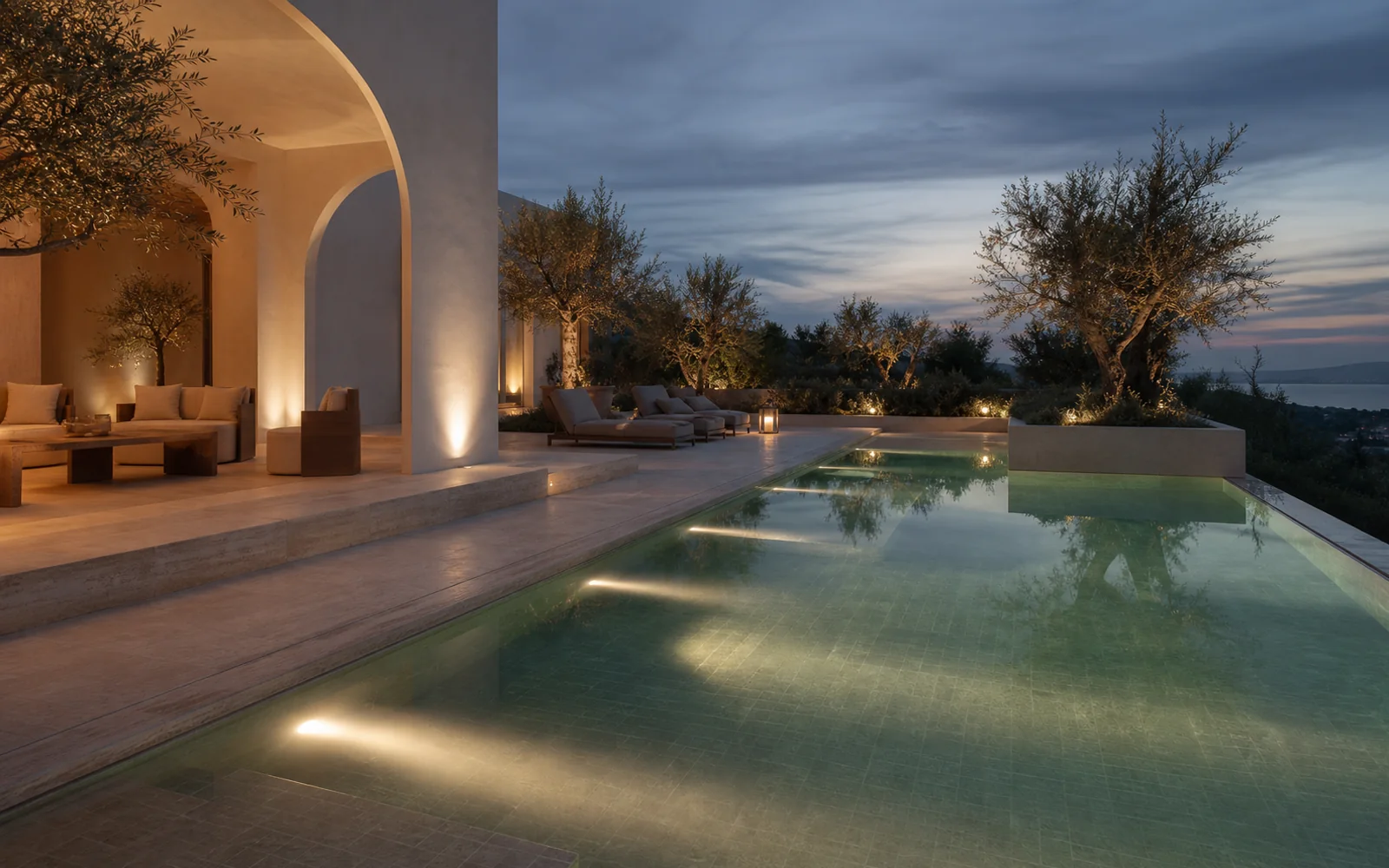
Pool Lighting: LED Selection, Safety and Placement
How to choose pool LED lighting? We explain underwater fixture safety, IP rating, low-voltage transformers and correct placement from an engineer's perspective.
How to choose pool LED lighting? We explain underwater fixture safety, IP rating, low-voltage transformers and correct placement from an engineer's perspective.
Wherever water and electricity coexist, life safety is the paramount priority. Pool lighting is first and foremost an electrical life-safety engineering discipline before it is an aesthetic amenity. Incorrectly specified or improperly wired luminaires present severe electrical hazards.
For this reason, pool lighting must be planned as a core MEP engineering sub-system from the outset. When properly designed, it provides complete electrical safety while transforming your pool into a striking nighttime architectural showcase.
The foundational rule of underwater lighting is operating strictly under Safety Extra-Low Voltage (SELV, 12V AC/DC); mains line voltage (230V) is never brought near the pool shell. A certified toroidal safety isolation transformer provides galvanic isolation, serving as the electrical heart of the safety system.
The second critical pillar is residual current device (RCD) protection (30mA / 10mA high-sensitivity breakers) that immediately trips power upon the slightest fault detection. These two measures form the non-negotiable safety baseline for pool lighting.
Luminaires installed underwater require a certified IP68 ingress protection rating, certifying that the fixture is hermetically sealed against continuous permanent submersion under water pressure. Poolside and landscape fixtures utilize IP65/IP67 ratings.
Installing an inferior IP rating leads to water ingress, luminaire failure, and electrical tripping. IP certification is the first technical benchmark to check before considering decorative styling.
LED luminaires are the modern standard in pool illumination, offering up to 85% energy savings, exceptional lifespan (up to 50,000 hours), and minimal heat dissipation. Full-color RGB/RGBW systems create vibrant nighttime ambiances and integrate seamlessly into home automation.
Their low operating temperature enhances longevity and underwater reliability. Integrated with automated control panels, LED solutions enable complete pool lighting management via smartphone apps.
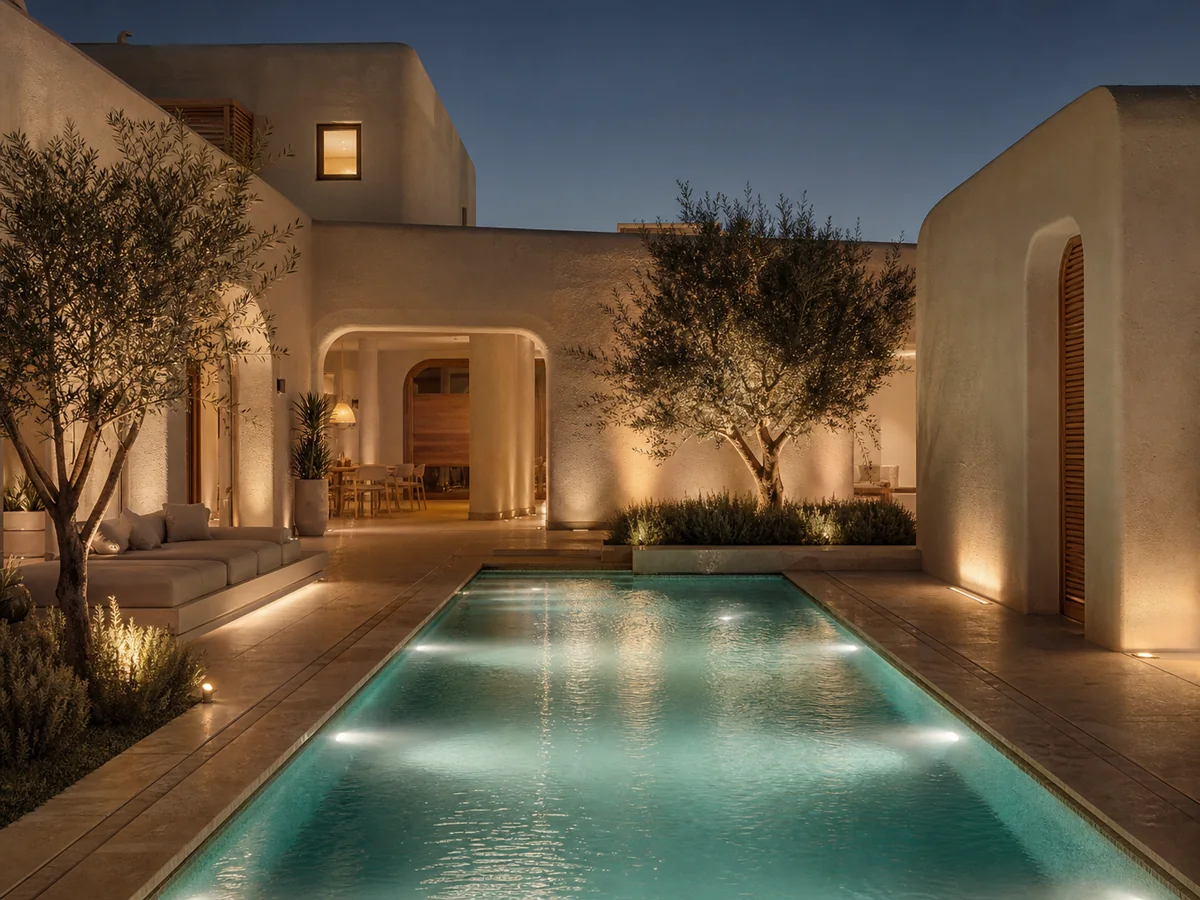
The objective of proper positioning is spreading uniform illumination through the water without blinding bathers or terrace seating. Luminaires are positioned facing away from main living areas and primary house viewpoints to prevent direct glare.
Fixture count and spacing are determined by pool length, depth, and interior finish reflectivity (dark mosaic finishes absorb light and require higher lumen density). This layout must be engineered prior to formwork and waterproofing.
Niches, cable conduits, and junction box routes must be embedded during structural concrete and waterproofing phases. Attempting to retrofit lighting later compromises waterproofing integrity and aesthetic clean lines.
We advise integrating lighting from day one. At Çilek Havuz, we engineer electrical, automation, and underwater illumination concurrently with hydraulics and waterproofing, ensuring safe and unified execution.
Image gallery
04 görsel
 01
01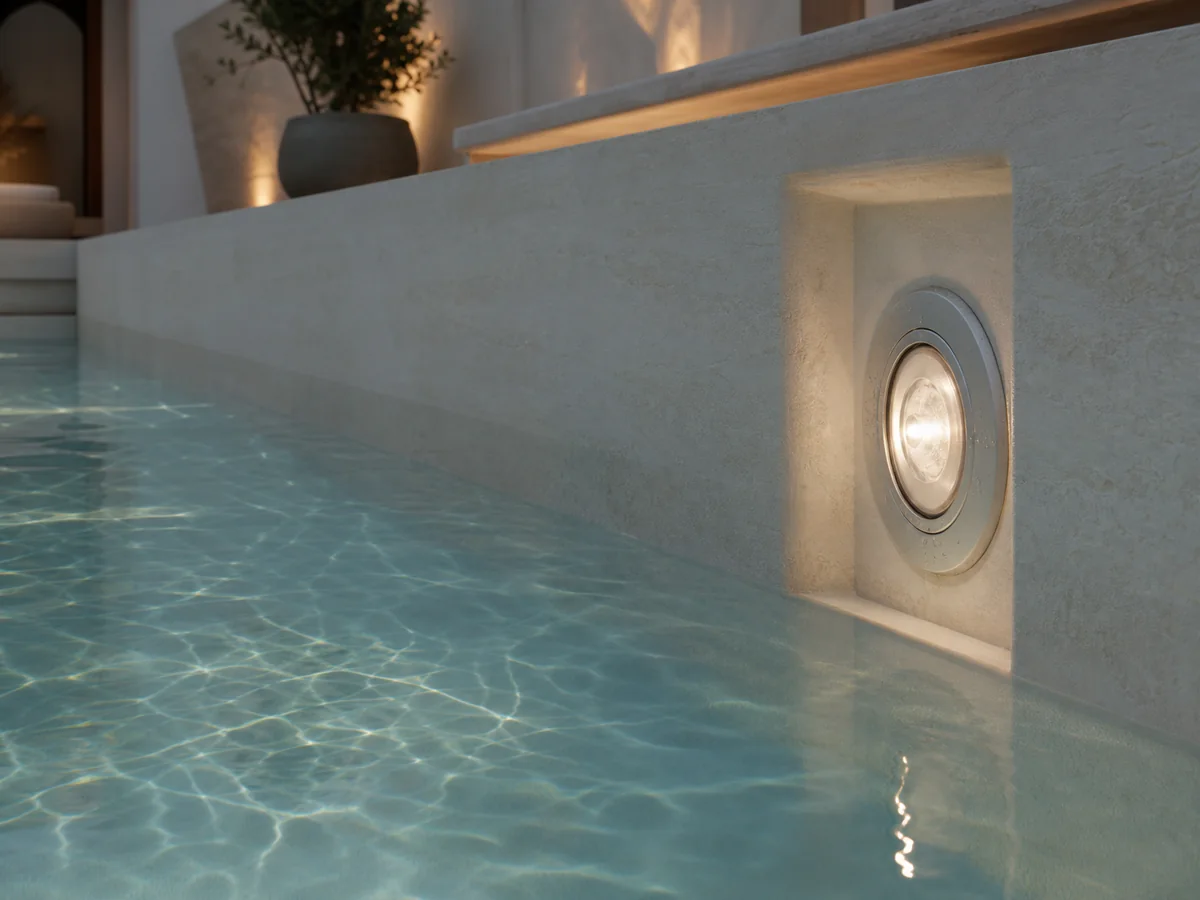 02
02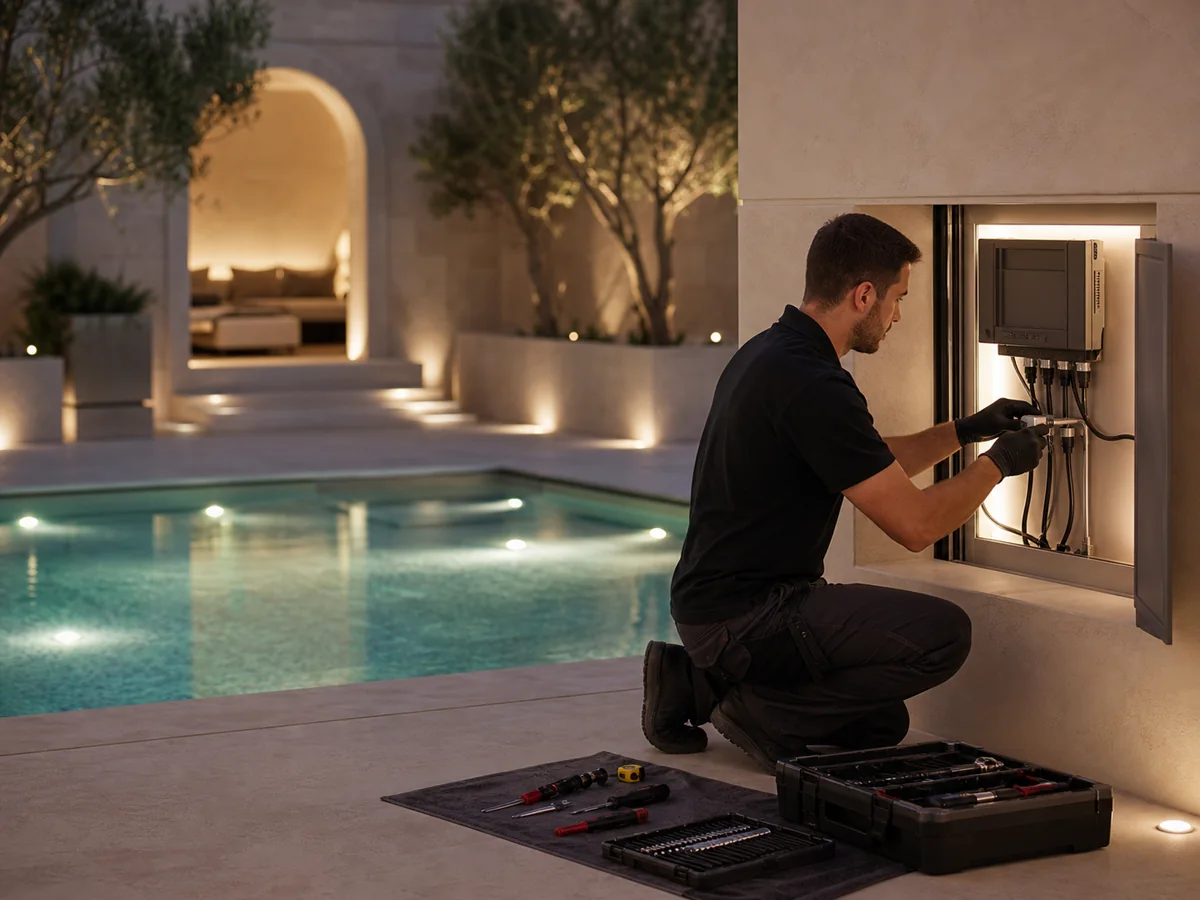 03
03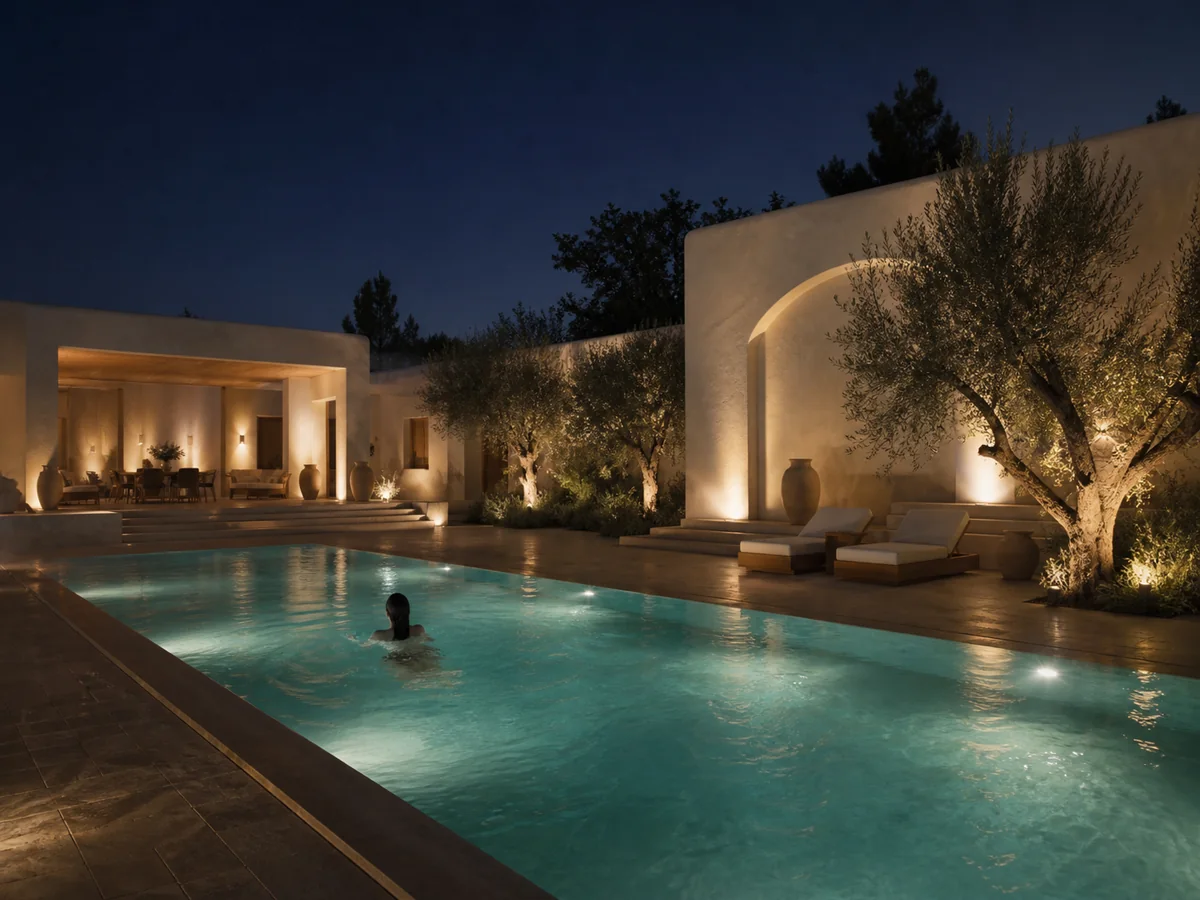 04
04Company & Contact
To talk about your project, we are one call away.
Legal Name
Çilek Havuz
Founded
1998 · Istanbul
Head Office
Çilek Plaza, Eyüp Sultan Mah. Yakacık Cd. Feshane Cd. No: 2 D:4 D:1, 34885 Sancaktepe / İstanbul
Service Area
All of Türkiye · exports to 14 countries
Related articles
Keep reading.
Sık Sorulan Sorular
Our readers' most asked; with expert answers.
Çilek Havuz Content & Technical Team
Guides & Technical Content
- Response Time
- Same day
- Channels
- Phone · E-mail · WhatsApp
If the answer you are looking for is not here, send your question directly to us and our team will reply as soon as possible.
Book a free site surveyYes, existing PAR56 halogen niches can be upgraded directly with retrofit LED lamps without draining the pool. If the pool lacks existing niches, surface-mount flat LED fixtures can be installed during liner or mosaic renovation.
Çilek Havuz Content & Technical Team
RGB systems require a modest initial premium due to multi-color diodes, controllers, and automation receivers. However, they allow complete atmospheric customization; evaluating your automation expectations helps determine the ideal choice.
Çilek Havuz Content & Technical Team
Fixture count depends on pool surface area, depth, interior finish color, and desired lumen output. As a rule of thumb, one high-output LED projector per 20–25 m² of water surface provides balanced illumination in light-colored pools.
Çilek Havuz Content & Technical Team
In properly installed systems, the luminaire unclips from its niche and can be lifted above the water surface for lamp replacement without lowering pool water levels, thanks to service cable coiled inside the niche.
Çilek Havuz Content & Technical Team
Testing RCD breaker test buttons monthly is good practice, alongside an annual electrical safety inspection by an authorized technician prior to the swimming season.
Çilek Havuz Content & Technical Team
Integrating lighting with automation allows you to synchronize color scenes, operating schedules, filtration cycles, and heating via a single smartphone app, eliminating cluttered manual switches.
Çilek Havuz Content & Technical Team