

Choosing a Pool Cleaner: Pressure, Suction and Robotic
Automatic pool cleaners fall into three technologies: pressure, suction and electric robotic. We explain how each works, their strengths and weaknesses, and the right choice for your pool type from an engineering perspective.
Automatic pool cleaners fall into three technologies: pressure, suction and electric robotic. We explain how each works, their strengths and weaknesses, and the right choice for your pool type from an engineering perspective.
Leaves, sand, dust and biofilm accumulated on the pool floor and walls; It is not only a visual problem, but also a factor that increases chemical consumption and increases the filter load. Although hand sweeping is effective, it is time-consuming and difficult to do regularly. Automatic cleaners do this job consistently and repeatably, protecting water quality and reducing your workload.
Choosing the right cleaner depends on your pool's geometry, surface finish, type of contamination, and your existing plumbing infrastructure. An incorrectly selected device may not clean some areas at all or may negatively affect the system flow rate. In this article, we compare three basic technologies to clarify which type is suitable for which pool. As a note, this post focuses on device selection; How to establish a daily and weekly cleaning routine is a separate issue.
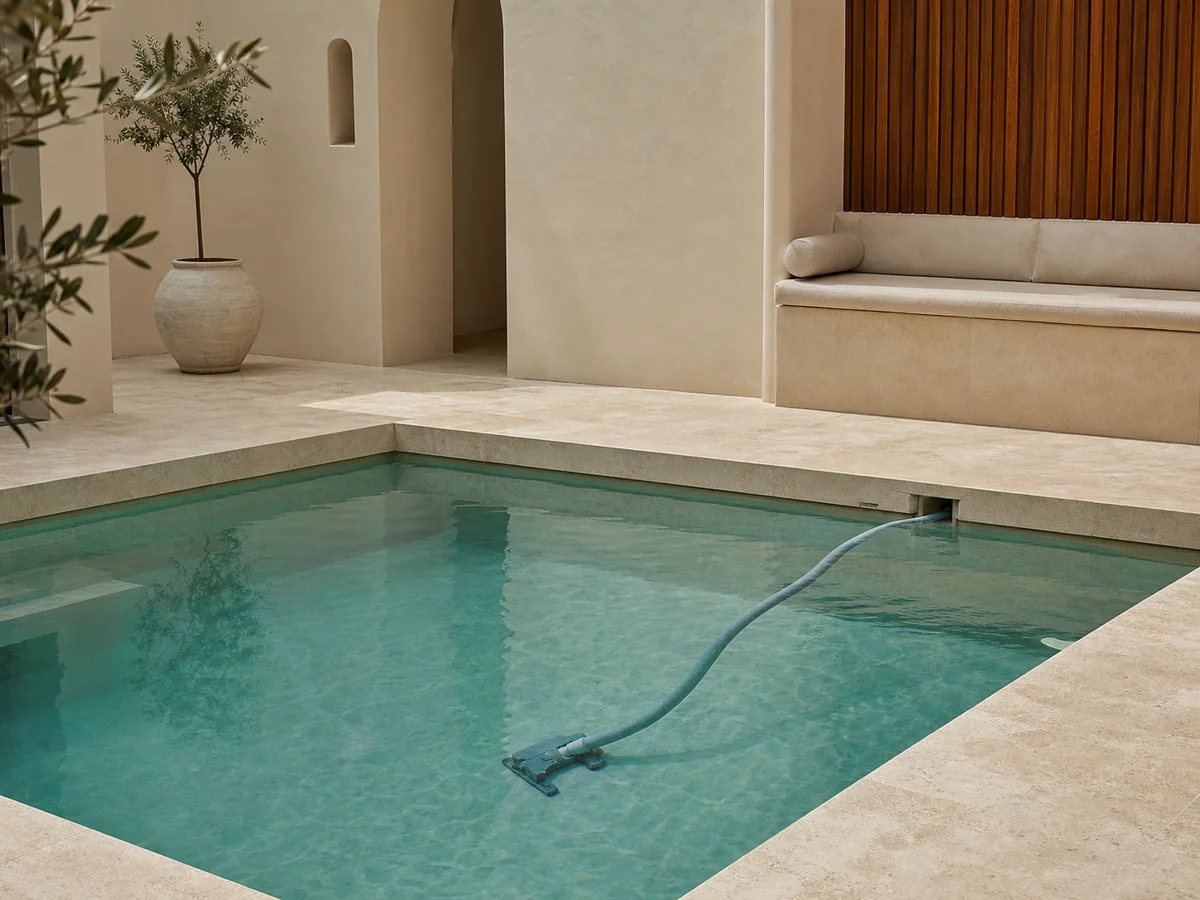
Suction cleaners use the suction power of your pool's existing circulation system. The device is connected to the skimmer mouth or special vacuum inlet with a hose; The suction created by the pump moves the device on the pool bottom and carries the dirt it collects directly to the pool filter. Since it does not have a separate engine, it has the lowest purchasing cost and its mechanical structure is simple.
The advantage of this type is its economical and less malfunctioning structure. Its disadvantage is that it sends all the dirt it collects to the pool filter; this requires more frequent backwashing of the filter and is dependent on pump operation. Additionally, while it collects fine dust well, its larger leaves may struggle due to clogging. Suction cleaners are a logical economical solution for pools with moderate contamination and a strong circulation system.
Pressure cleaners work with the pressure of water pumped into the pool, as opposed to suction. They are usually fed from a separate booster pump and fill the dirt they collect into a collection bag on the device itself, not into the pool filter. This means dirt is kept free of the filter system and the pool filter is less burdened.
The main strength of this type is its capacity to collect large pieces, leaves and coarse debris; Since it has its own bag, it does not clog the pool filter. Particularly suitable for ponds under trees or with heavy defoliation. The disadvantage is that most models require a separate booster pump, which incurs additional installation and energy costs. In very fine dust, it may not provide as sharp results as suction or robotic solutions.
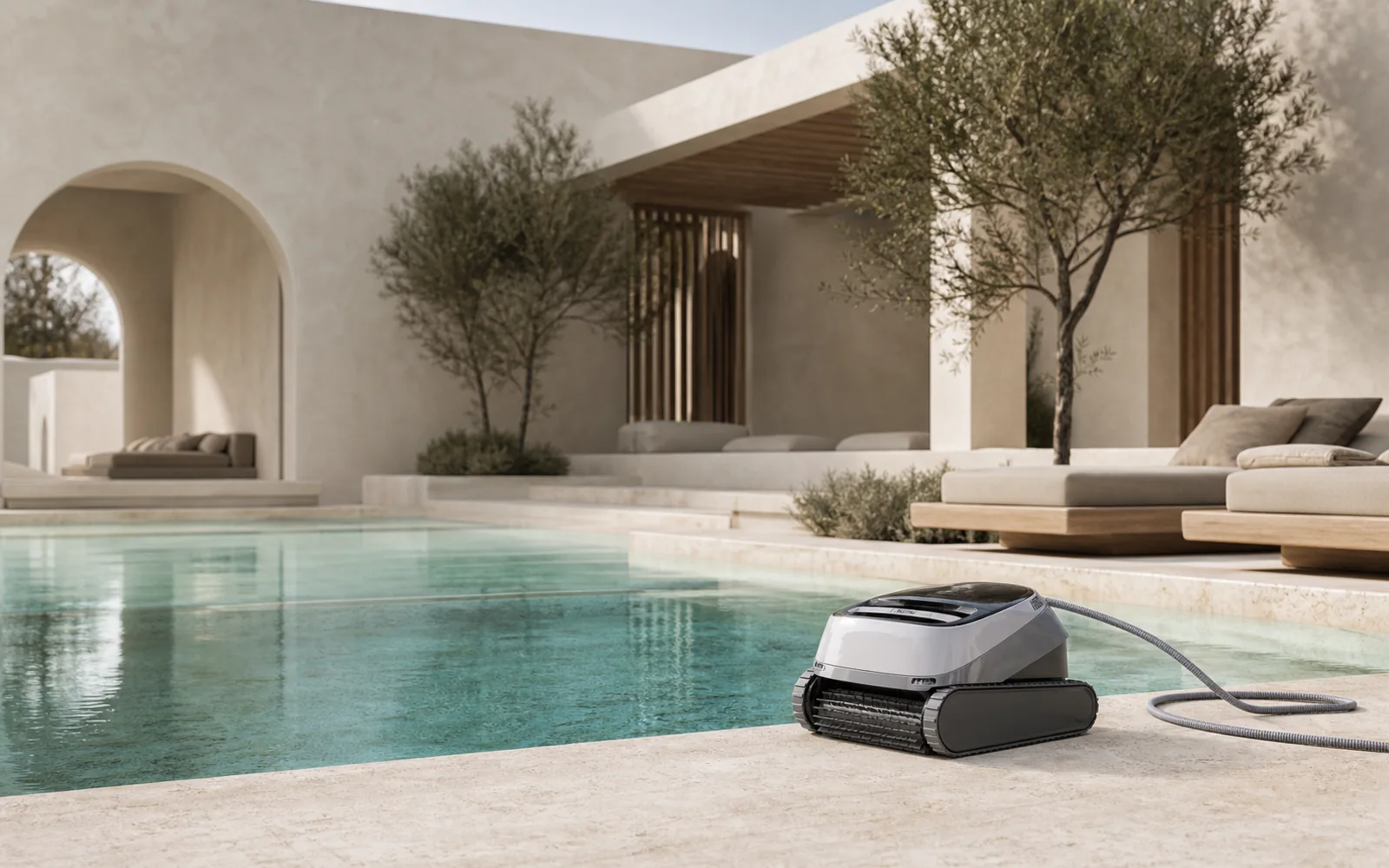
Electric robotic cleaners are autonomous devices that are completely independent of the pool installation and have their own low-voltage motor and internal filter. It is fed through a power source, dropped into the pool, and with its built-in motors, it scans the bottom, walls, and in most models, the waterline with its own programs. Since they accumulate the dirt they collect in their inner baskets, they do not tire either the pool filter or the pump.
Its biggest advantages are the highest cleaning performance and energy efficiency; Since they work independently of the pool pump, they can clean without starting the main pump and generally consume very low power. Advanced models offer smart navigation, programmable loops and wall climbing. The disadvantages are the highest purchase cost and the need for maintenance due to electronic components. It is the most powerful solution for users with high cleanliness expectations and comfort priority.
The first determinant of the choice is the size and geometry of the pool. All three types can work in small and medium-sized, flat-bottomed pools; However, robotic devices with smart navigation work on stairs, benches and complex geometry pools without leaving blind spots. In large pools, scanning efficiency and cycle time become important, which again brings advanced robotic models to the fore.
The second determinant is the type of pollution: in garden ponds with heavy defoliation, pressure devices with collection bags are comfortable with coarse dirt, while robotic and suction solutions are more successful in pollution with a predominance of fine dust and algae. The third determinant is the budget and plumbing infrastructure; If you have a strong existing circulation, it offers an economical start with suction. Robotics is the right address for those who want the best result independent of the installation. Our company evaluates the geometry, coating and usage profile of your pool project and recommends the most suitable device type for you.
No matter what type, the performance of the cleaner depends on regular maintenance. In suction and pressure devices, the tightness of hose connections and the wear of moving parts and brushes should be checked periodically. In pressurized devices, the collection bag should be emptied after each use to prevent clogging. In robotic devices, the internal filter basket should be cleaned regularly and brush and palette wear should be monitored.
Electronic and motor components of robotic devices should be stored outside the pool, in the shade and in a dry environment when not in use; Constantly leaving it in chemically charged water and under the sun shortens its life. It is important for safety that the power supply is positioned so that it does not get water. A properly cared for cleaner will provide years of efficient service, regardless of its technology; For this reason, we recommend that you pay attention to maintenance discipline as much as device selection.
Image gallery
04 görsel
 01
01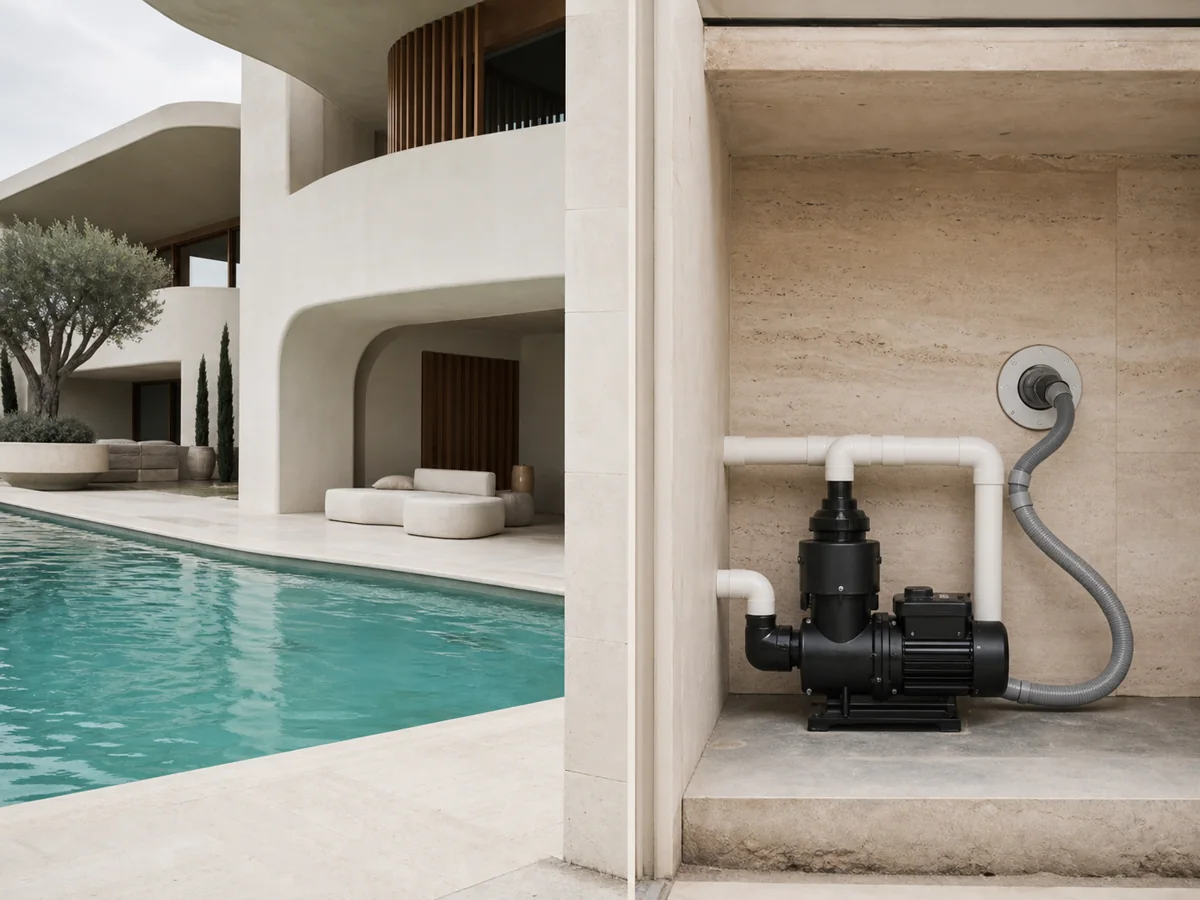 02
02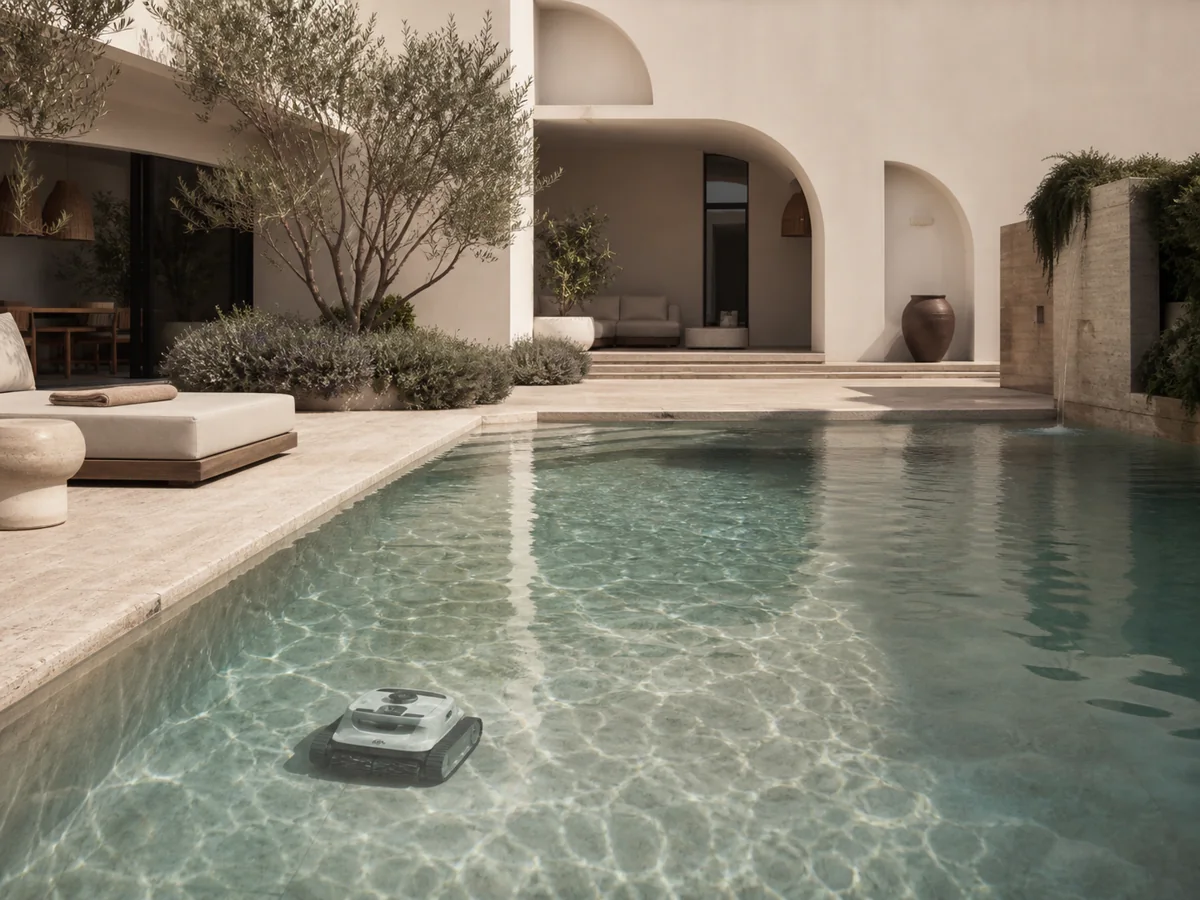 03
03 04
04Company & Contact
To talk about your project, we are one call away.
Legal Name
Çilek Havuz
Founded
1998 · Istanbul
Head Office
Çilek Plaza, Eyüp Sultan Mah. Yakacık Cd. Feshane Cd. No: 2 D:4 D:1, 34885 Sancaktepe / İstanbul
Service Area
All of Türkiye · exports to 14 countries
Related articles
Keep reading.



Sık Sorulan Sorular
Our readers' most asked; with expert answers.
Çilek Havuz Content & Technical Team
Guides & Technical Content
- Response Time
- Same day
- Channels
- Phone · E-mail · WhatsApp
If the answer you are looking for is not here, send your question directly to us and our team will reply as soon as possible.
Book a free site surveyThis depends on the class of model you choose. While basic models mostly only scan the bottom, advanced robotic devices come with wall-climbing and waterline cleaning capability. If oil and biofilm accumulation on the water line is a problem in your pool, we recommend that you confirm the wall and water line capacity of the device before purchasing.
Çilek Havuz Content & Technical Team
Cycle time varies depending on pool size, geometry and device navigation algorithm. Smart mapping models often shorten time by taking more efficient routes, while simple devices that move randomly can take longer to cover the same area. Choosing a device with a cycle capacity appropriate to the size of your pool is important for efficient results.
Çilek Havuz Content & Technical Team
Brush and palette type should be chosen compatible with your surface coating; Hard tile surfaces and softer membrane or vinyl coverings may require different brush structures. In addition, not every device may work efficiently in pools with very small volumes or non-standard geometry. When you share your pool's coating type with us, we determine the appropriate device that will not damage your surface.
Çilek Havuz Content & Technical Team
As we mentioned in the article, the lifespan of electronic and motor components of electric robotic devices is shortened when they are constantly left in chemically charged water and under the sun. Therefore, after the cleaning cycle is completed, it is better to remove the device from the water and store it in the shade in a dry environment. Although leaving it in water all the time may seem like a comfort, it increases the maintenance cost in the long run.
Çilek Havuz Content & Technical Team
A well-chosen robot will provide neat footing and most surfaces, but some areas, such as corners, under narrow steps and stubborn algae patches, may occasionally require manual intervention. It's more realistic to think of the robot as an assistant that greatly reduces your workload. Keeping the water chemistry balanced is your responsibility, regardless of the robot's task.
Çilek Havuz Content & Technical Team
Robotic devices contain components that wear out over time, such as brushes, paddles, filter baskets, and motors; The easy availability of these parts is decisive for the long life of the device. A device without spare parts support may become unusable even in the event of a minor malfunction. Therefore, we recommend that you look not only at the price but also at brand support and service availability when making the purchasing decision.
Çilek Havuz Content & Technical Team