


Saltwater Pool: How Does a Salt Chlorine Generator Work?
Saltwater pools are not chlorine-free; the system produces chlorine itself. We explain the electrolysis principle of the salt chlorine generator, ideal salt levels, pros and cons, and maintenance needs from an engineering view.
Saltwater pools are not chlorine-free; the system produces chlorine itself. We explain the electrolysis principle of the salt chlorine generator, ideal salt levels, pros and cons, and maintenance needs from an engineering view.
A common misconception is that saltwater pools are chlorine-free. In fact, these systems constantly produce chlorine from the salt added to the water, instead of adding it externally in the form of a canister. In other words, the substance that provides disinfection is again chlorine; The difference is in the method of obtaining chlorine. Therefore, 'salt water pool' should actually be understood as 'a pool that produces chlorine from salt'.
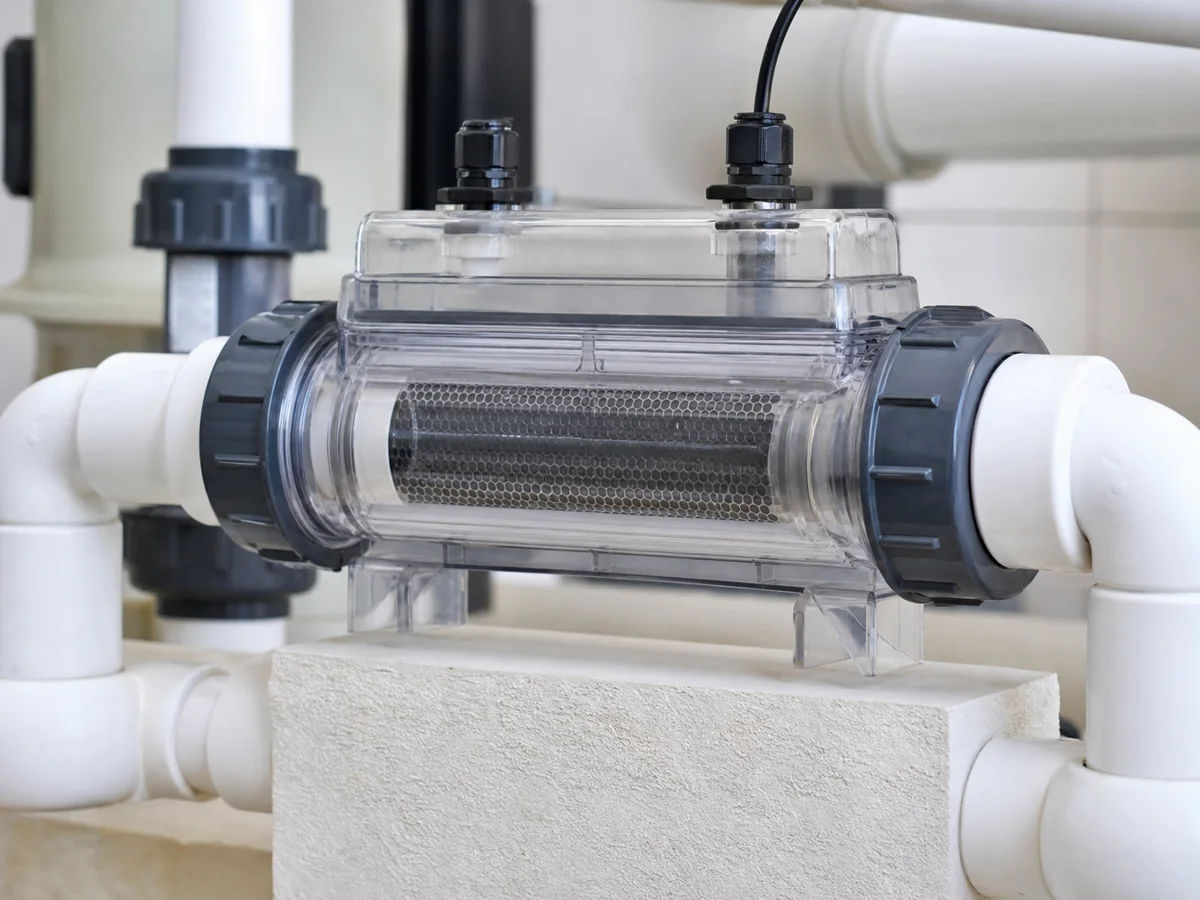
At the center of the system is the salt chlorine generator (cell). While the salt dissolved in water passes through this cell placed in the plumbing line, it is subjected to the electrolysis process and free chlorine is released. This chlorine disinfects the water just like manually added chlorine; After its work is done, it largely turns into salt again and the cycle continues. This self-renewing cycle is the main appeal of saltwater systems.
The heart of the salt chlorine generator is the coated titanium plates inside the cell. When low voltage direct current is applied to these plates, the salt water passing through them undergoes an electrolysis reaction. Sodium chloride (salt) molecules break down with water and free chlorine (disinfectant in the form of hypochlorous acid) is formed in the cell. This is chemically the same active disinfectant as manually added chlorine.
The produced chlorine mixes with the pool water, neutralizes organic dirt and microorganisms, and then largely turns back into salt ions. Thus, salt is not constantly consumed, but essentially remains cycled in the system; Losses occur only through water escaping by splashing, backwashing, overflow and evaporation. The generator's chlorine production rate can be adjusted on most devices; A balanced free chlorine level is aimed by increasing or decreasing production according to pool load and temperature.
Salt chlorine generators require a certain concentration of salt in the water to operate efficiently. The target range for most systems is generally around 2.7 to 3.5 grams per liter (approximately 2700-3500 ppm); However, the exact value must be determined according to the device manufacturer's instructions. This concentration is much lower than in seawater; Therefore, salt water pool water does not taste salty and does not feel like the sea on the skin.
If the salt level is too low, the generator cannot produce enough chlorine and disinfection is weakened; If it is too high, a salty taste will appear and the risk of corrosion on metal parts and cells increases. It is therefore important to measure the salt level periodically and adjust it if necessary. Salt does not decrease in water by evaporation; The main loss occurs through water change, backwash and overflow. For this reason, it is necessary to check and top up the salt level in each new season and after large water losses.
The most obvious advantage is the balance of comfort and durability. Because chlorine is produced continuously and in a metered manner, a more stable free chlorine level is achieved instead of the sudden rises and falls common with manual chlorine addition. This stability is described by many users as making the water feel softer and gentler on the skin; Additionally, eye and skin irritation tends to decrease with unbalanced chlorine.
The second advantage is ease of operation. The need to carry, store and manually dosing heavy chlorine containers is largely eliminated; The system provides chlorine itself at the set production rate. This creates comfort, especially for users who have limited time for regular maintenance. Since salt is relatively cheap in the long run, operating costs are more predictable and stable in many cases compared to purchasing permanent chlorine canisters.
The first disadvantage is the initial investment; The purchase and installation cost of the generator and cell is high compared to traditional manual chlorination. The second issue is cell life: electrolysis plates are consumable components that wear out over time and usually need to be replaced every few years, depending on the intensity of use; this is a periodic cost that must be planned for. The third issue is the effect of salt on ingredients; The risk of corrosion in metal parts, stone coatings and some equipment for which the appropriate material is not selected should be taken into consideration.
Additionally, salt chlorine generators tend to increase the pH balance of the water; The electrolysis process can push water towards the basic side, so the pH needs to be monitored regularly and lowered when necessary. The system is not 'set it and forget it'; Salt level, pH, cell cleansing and calcium calcification should be checked periodically. Most of these risks can be managed with the right choice of materials, correct installation and regular maintenance; For this reason, our company carefully evaluates material compatibility in salt water system project design.
The most critical element of care is the cleanliness of the cell. Over time, calcium lime accumulation forms on the electrode plates; This accumulation reduces chlorine production efficiency and shortens cell life if precautions are not taken. For this reason, the cell should be checked periodically and descaled using the method recommended by the manufacturer. Many modern generators have automatic polarity switching to reduce buildup, but visual inspection should not be neglected.
The second leg of maintenance is monitoring water chemistry. Salt level, pH and calcium hardness should be measured regularly; The tendency for pH to rise must be kept in balance. Since disinfection in this system depends entirely on the generator, it is necessary to ensure that the generator is working and the free chlorine value remains within the appropriate range. As an important note, switching to a brine system does not completely eliminate manual chemical balance management; The method of obtaining chlorine varies, but the principles of pH and hardness management remain valid as in manual chlorination.
Image gallery
04 görsel
 01
01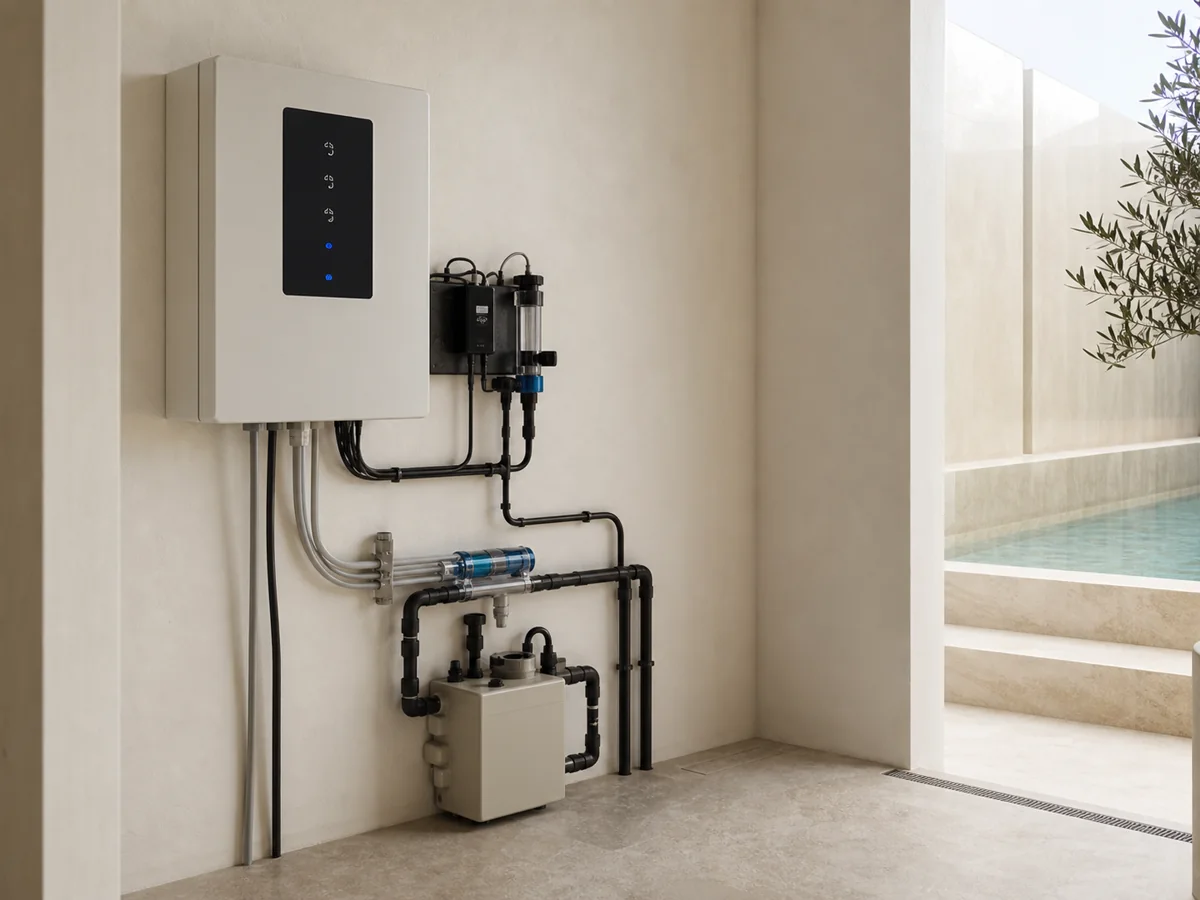 02
02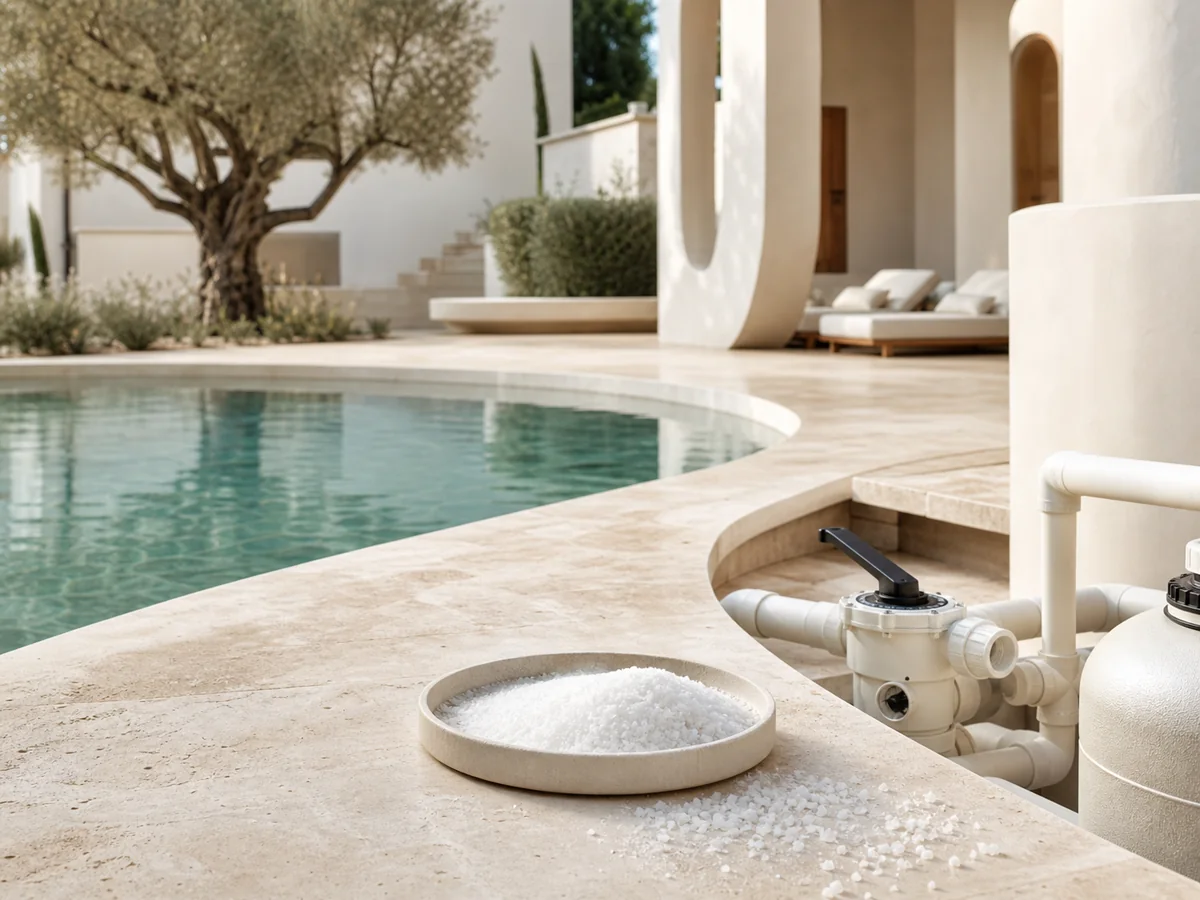 03
03 04
04Company & Contact
To talk about your project, we are one call away.
Legal Name
Çilek Havuz
Founded
1998 · Istanbul
Head Office
Çilek Plaza, Eyüp Sultan Mah. Yakacık Cd. Feshane Cd. No: 2 D:4 D:1, 34885 Sancaktepe / İstanbul
Service Area
All of Türkiye · exports to 14 countries
Related articles
Keep reading.



Sık Sorulan Sorular
Our readers' most asked; with expert answers.
Çilek Havuz Content & Technical Team
Guides & Technical Content
- Response Time
- Same day
- Channels
- Phone · E-mail · WhatsApp
If the answer you are looking for is not here, send your question directly to us and our team will reply as soon as possible.
Book a free site surveyYes, many existing pools can be retrofitted with a salt chlorine generator; The generator cell is placed in the installation line, usually after the filter and heater. However, before conversion, the suitability of the pool's metal parts and coating against salt should be evaluated. Inspecting your system with us is a good start for proper material control and correct cell sizing.
Çilek Havuz Content & Technical Team
The chlorine production capacity of the cell must be compatible with the pool's water volume; A generator chosen small compared to its volume will wear out and its life will be shortened by constantly working at full load to produce sufficient chlorine. A general approach is to choose a generator based on a capacity slightly higher than the volume of your pool. This provides both a more comfortable operating margin and longer cell life.
Çilek Havuz Content & Technical Team
Most generators cannot produce chlorine efficiently when the water temperature drops below a certain threshold; Many devices automatically stop production at low temperatures for this reason. During the winter preparation period, removing the cell from the installation, cleaning it and storing it in a dry environment protects against freezing and lime damage. Since the winterization procedure varies depending on the device model, we recommend that you follow the manufacturer's instructions.
Çilek Havuz Content & Technical Team
In these systems, high purity and additive-free salt produced specifically for the pool should be used. Table salt and rock or road salt containing iodine, anti-slip additives or anti-humidifiers may contain impurities that can damage cells and water. Incorrect salt use disrupts water clarity and can negatively affect cell life.
Çilek Havuz Content & Technical Team
Chlorine produced outdoors in saltwater pools exposed to the sun is also degraded by sunlight; Therefore, it is generally recommended to have an appropriate level of stabilizer to maintain chlorine. However, excess stabilizer can suppress the effectiveness of chlorine, so the value should be kept in balance. The appropriate level of stabilizer should be determined according to your device manufacturer's recommendation.
Çilek Havuz Content & Technical Team
Many users describe the water as softer and gentler on the skin due to the stable and metered production of chlorine; Since sudden chlorine spikes are less common, irritation tends to decrease. However, since there is active chlorine in the water, the system is not completely ineffective, despite the much lower salinity than in the sea. If you have skin sensitivity, keeping the water balance regular is important for your comfort.
Çilek Havuz Content & Technical Team