

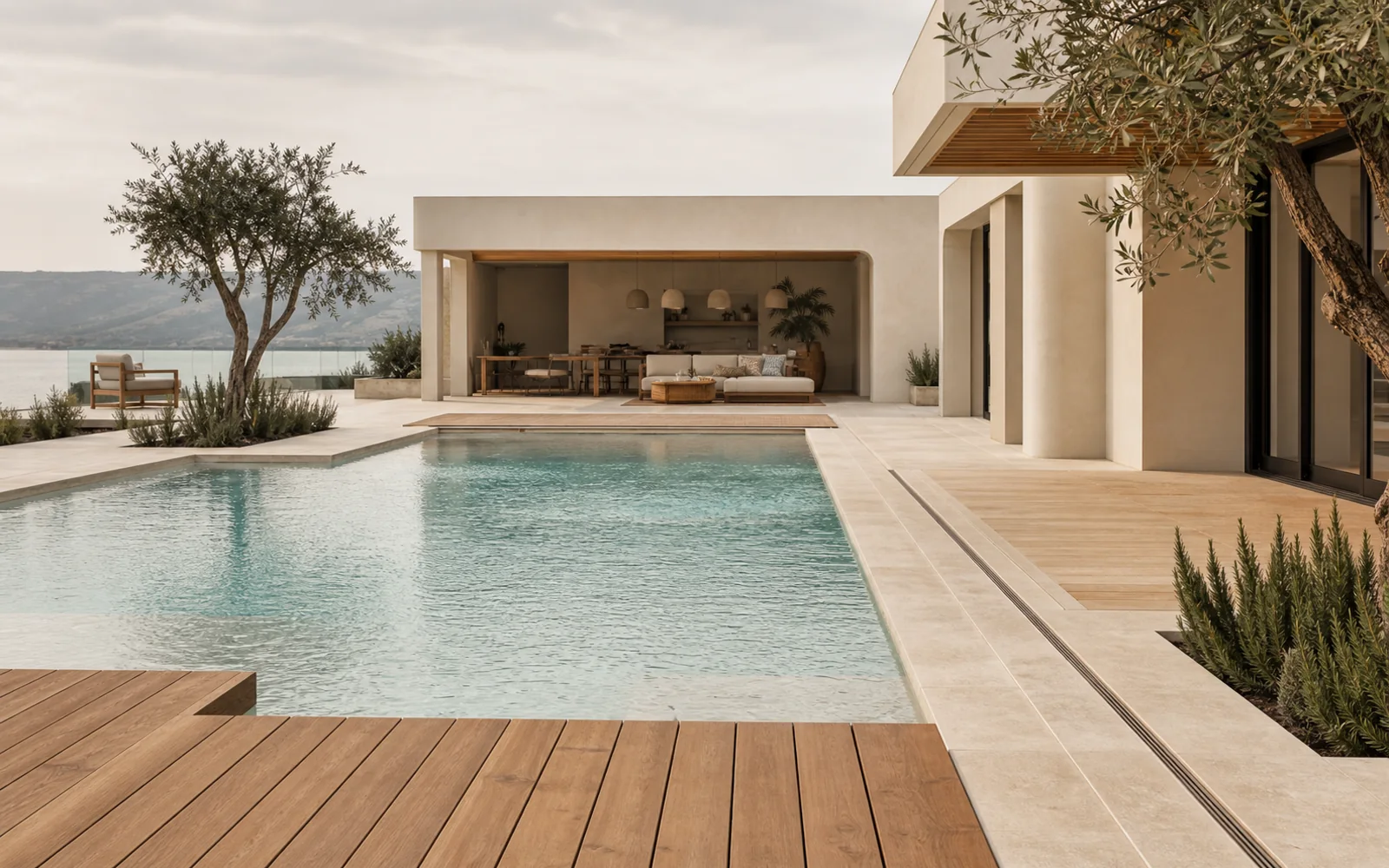
Pool Surroundings and Decking: Slip-Resistant Surfaces, Wood, Landscaping
A pool's value is measured not only by its body of water but by the surfaces, decking and landscaping that surround it. From slip-resistant flooring to proper drainage, from the texture of wood to the integration of plants, the pool surround is an engineering field where safety and aesthetics are designed together.
A pool's value is measured not only by its body of water but by the surfaces, decking and landscaping that surround it. From slip-resistant flooring to proper drainage, from the texture of wood to the integration of plants, the pool surround is an engineering field where safety and aesthetics are designed together.
The water surface is often the center of attention in a pool project, but it is its surroundings that make that pool truly usable and enjoyable in daily life. The ground you step on when entering the pool, the deck you walk on with wet feet, the area you lie on while sunbathing, the surrounding green texture and the drainage system that holds them all together; It forms the invisible but decisive part of the pool experience. A well-designed pool surround turns water into a space, a living space.
The pool area is also the area where security is tested most intensely. At every point where water and ground meet, there is a risk of wetness, slipperiness and falling. Therefore, environmental design is not just an aesthetic choice, but a direct security engineering issue. The friction properties of the surface material, ground slopes, water discharge and solution of transition points are invisible details that prevent accidents.
In the projects we have carried out since 1993, we have never considered the pool environment separately from the pool. The ground level, drainage line, deck borders and landscape bands are designed as a single whole, together with the pool itself. This holistic approach eliminates level differences, water accumulation and aesthetic gaps created by later solutions.
The most important safety decision around the pool is the non-slip feature of the floor material. The risk of slipping on these surfaces, which are most commonly used with wet and bare feet, is directly related to the surface texture of the material to be chosen. No matter how stylish shiny, smooth and water-repellent surfaces may seem, they are dangerous when wet. Therefore, surface materials around the pool are selected taking into account their slip resistance classes.
Anti-slip is evaluated by the behavior of the material in both dry and wet conditions. Surface treatments such as sandblasting or brushing on natural stones, and special textured and matte surface productions on ceramic and porcelain tiles provide the necessary friction on wet surfaces. Barefoot comfort is also part of this equation; The surface should be non-slip and have a texture that does not overheat in the sun and does not tire the feet.
The point that is often overlooked in non-slip flooring is the changing behavior of the material over time. Algae, limescale and dirt buildup can make an initially safe surface slippery over time. Therefore, as much as the choice of surface, the cleanability and ease of maintenance of that surface is also a part of the design decision. A floor that is supported by correct drainage and does not accumulate water is both safer and longer-lasting.
The deck is the surface that establishes the transition between the pool and its surroundings and defines the area where most time is spent. There are two main ways to choose decking material: natural wood and composite material. Both have their own advantages and maintenance requirements; The right choice depends on your expectations and usage style.
Natural wooden deck offers a unique aesthetic with its texture and warmth; It is soft on the feet, heats up less in the sun than composite, and the patina it gains over time is valuable for many users. However, natural wood requires regular maintenance in the face of constant humidity, splashing water and sun around the pool. Selecting appropriate hardness, water and rot resistant wood species and periodic lubrication-protection application significantly extends its life.
Composite decking combines the appearance of wood with a much lower maintenance requirement. It is resistant to moisture, rot and discoloration, does not require regular lubrication and has less maintenance burden in the long term. On the other hand, it can get hotter in the sun and does not give the lively texture of natural wood. When evaluated together with anti-slip performance, bottom ventilation and correct drainage, both materials provide long-lasting and safe results around the pool. Which one is right for you is determined by the balance between your aesthetic priority and the time you can spare for maintenance.
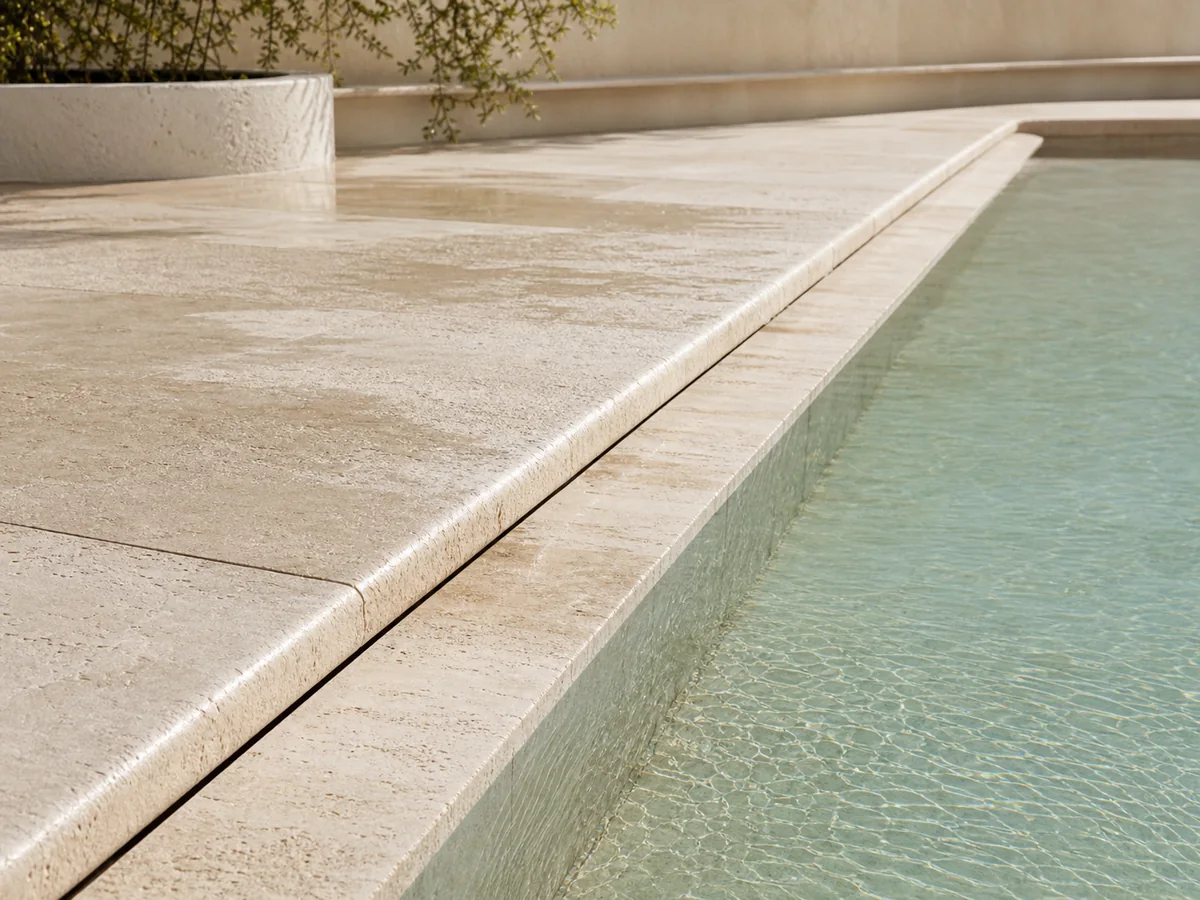
Natural stone is a strong choice around the pool in terms of both aesthetics and durability. Travertine, andesite and similar stones provide a water-compatible appearance with their warm texture and offer high slip resistance when processed correctly. The porous structure of natural stone provides the advantage of not retaining water on the surface and keeping it cool when standing bare; however, this porosity makes it necessary to treat the stone with appropriate preservatives.
Climatic conditions are decisive in choosing stone. In regions where the freeze-thaw cycle occurs, choosing stones that absorb little water and are frost-resistant prevents the surface from cracking and flaking over the years. The profile of the curbs and edging stones used by the pool is important for both safety and water management; Rounded edges reduce the risk of injury, while correctly profiled stone channels direct water to the drain rather than to the pool.
In hard floor solutions, the detail determines the success of the whole. Joint widths, stone thicknesses, infrastructure preparation and ground slopes determine both the aesthetic and functional life of the surface. Even the best quality stone laid on an inadequately prepared infrastructure will settle over time, lose elevation and begin to accumulate water. That's why, in natural stone applications, we approach the preparation underneath with the same care as the visible surface.
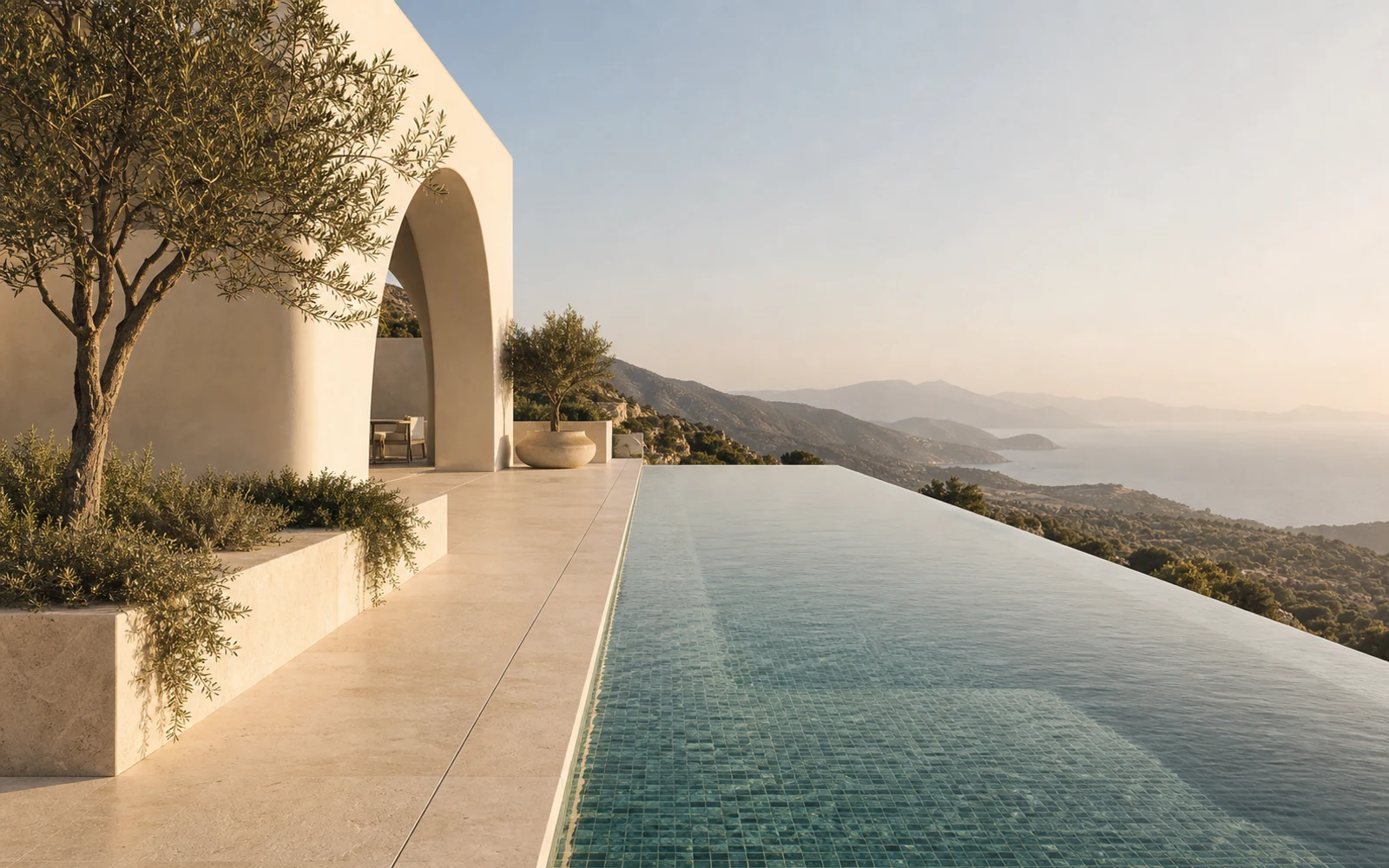
The pool gains its true character when it meets the surrounding green texture. Landscaping is not just an addition that beautifies the pool, it is a functional layer that defines the space, provides privacy, and creates shade and coolness. When the landscape is designed correctly, the geometry created by hard ground and water softens; The pool is placed within a natural whole.
The selection of plants around the pool is made for practical as well as aesthetic concerns. Species that shed excessive leaves, leave fruit or resin, and have aggressive root structure create a maintenance burden and infrastructure risk at the poolside. Instead, species that produce less debris, have controlled roots, and are somewhat resistant to salt and chlorine are preferred. The location of the plants is planned according to goals such as shade need, windbreak function and privacy.
Irrigation and drainage form the technical backbone of landscape integration. Irrigation of plant areas should be designed in a way that does not affect hard ground and pool water; Rain and irrigation water should be ensured to flow into the drainage system, not into the pool. Within the scope of our landscape architecture service, we construct the pool area with a holistic design that considers plants, hard ground, lighting and water management together; Thus, your pool turns into a manageable and safe living space that matures over the years.
The most invisible but most decisive system around the pool is drainage. An environment that manages water correctly remains safe, clean and long-lasting; An environment with neglected water management will soon encounter slippery surfaces, puddles, algae and infrastructure damage. That's why water management always forms the backbone of pool environment design.
Drainage design starts with ground slopes. All hard surfaces around the pool are planned with gentle slopes that will direct water away from the pool and towards the collection lines. These slopes are so subtle that they are not noticeable to the naked eye, but they completely determine where rain and splash water will go. Stone drains at the poolside collect and filter the splashing water and recycle or drain it; This is critical for both water conservation and environmental dryness.
Water management also includes subsurface drainage layers. Especially under the deck and under natural stone applications, permeable layers are created through which accumulated water can be discharged. These invisible layers prevent the surface from being damaged in the freeze-thaw cycle, the substructure from settling, and moisture from tiring the materials. When planning the pool area project, these invisible waterways are resolved with as much care as the visible surfaces; because the lifespan of the pool surround is often determined below ground.
Image gallery
04 görsel
 01
01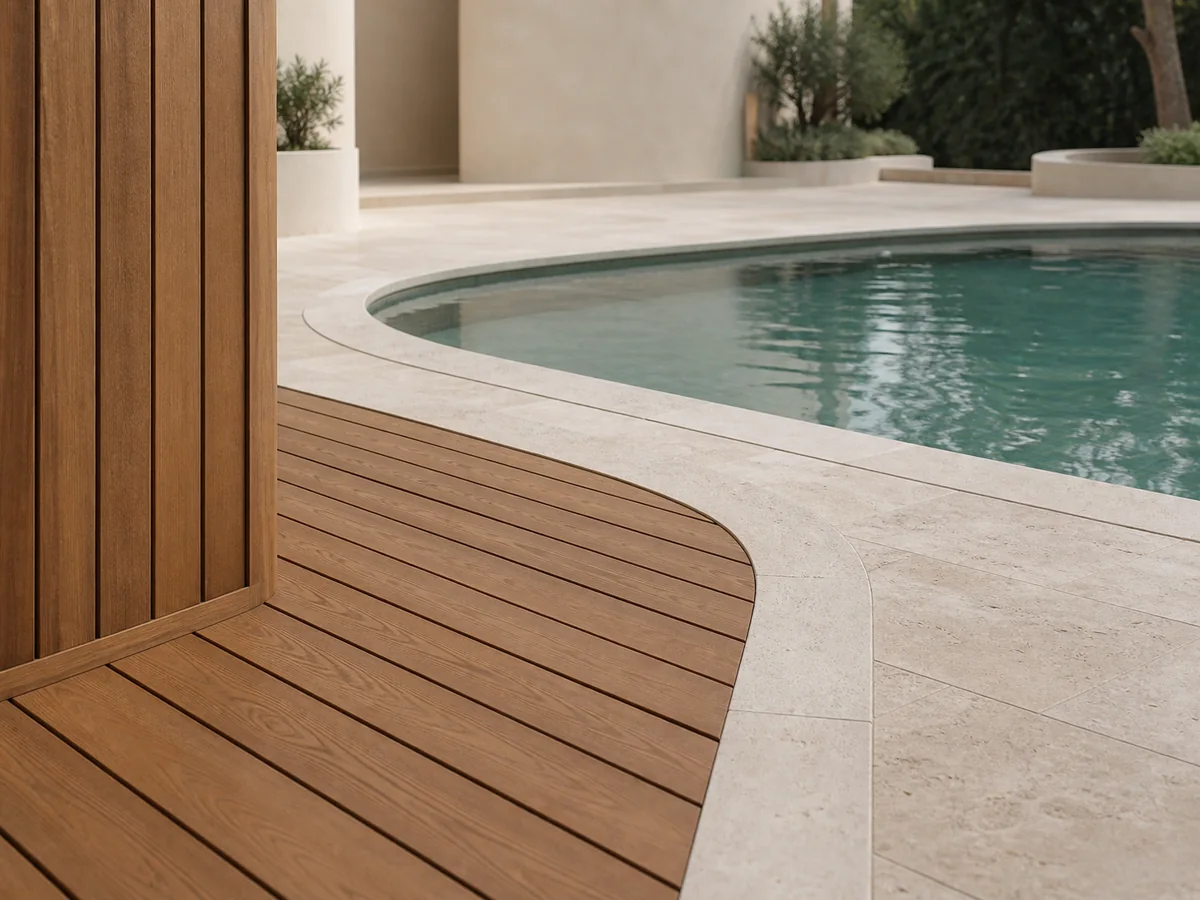 02
02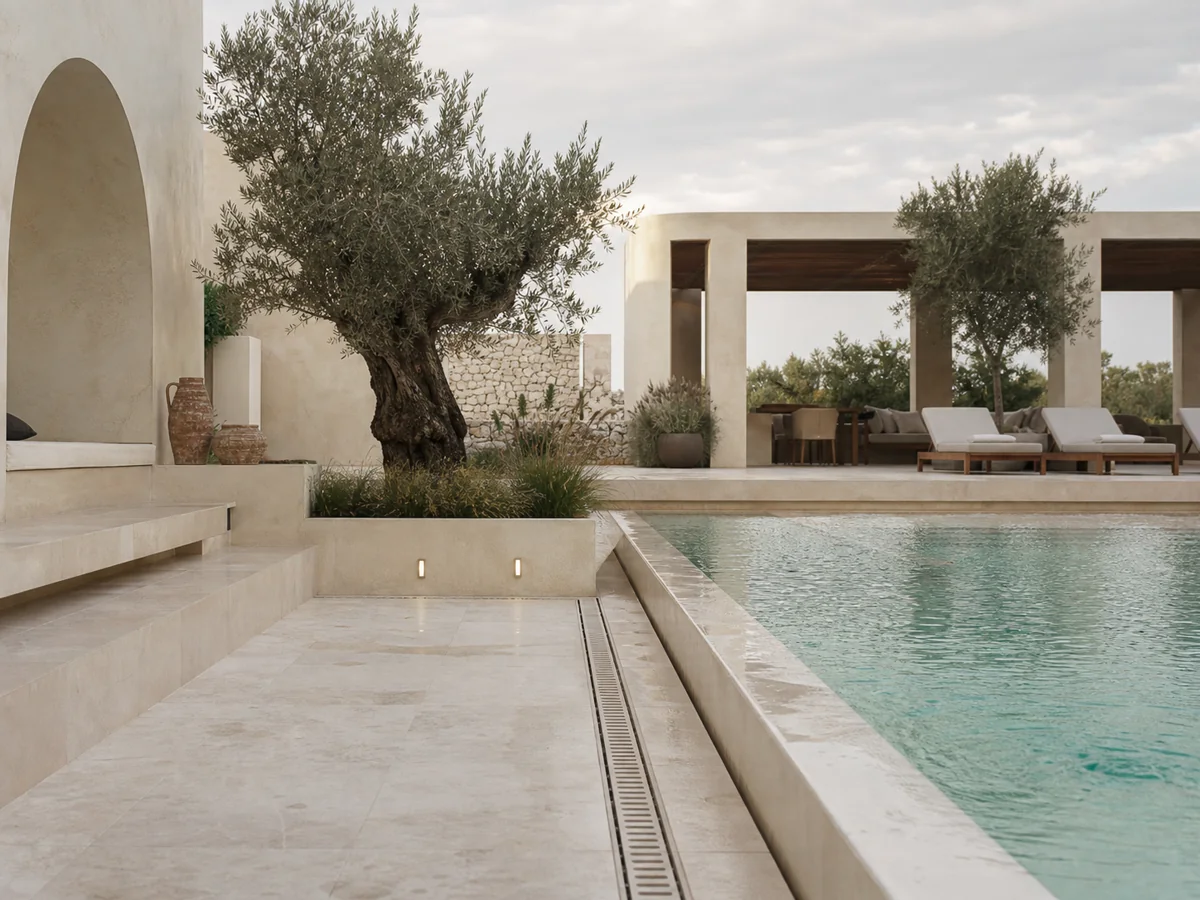 03
03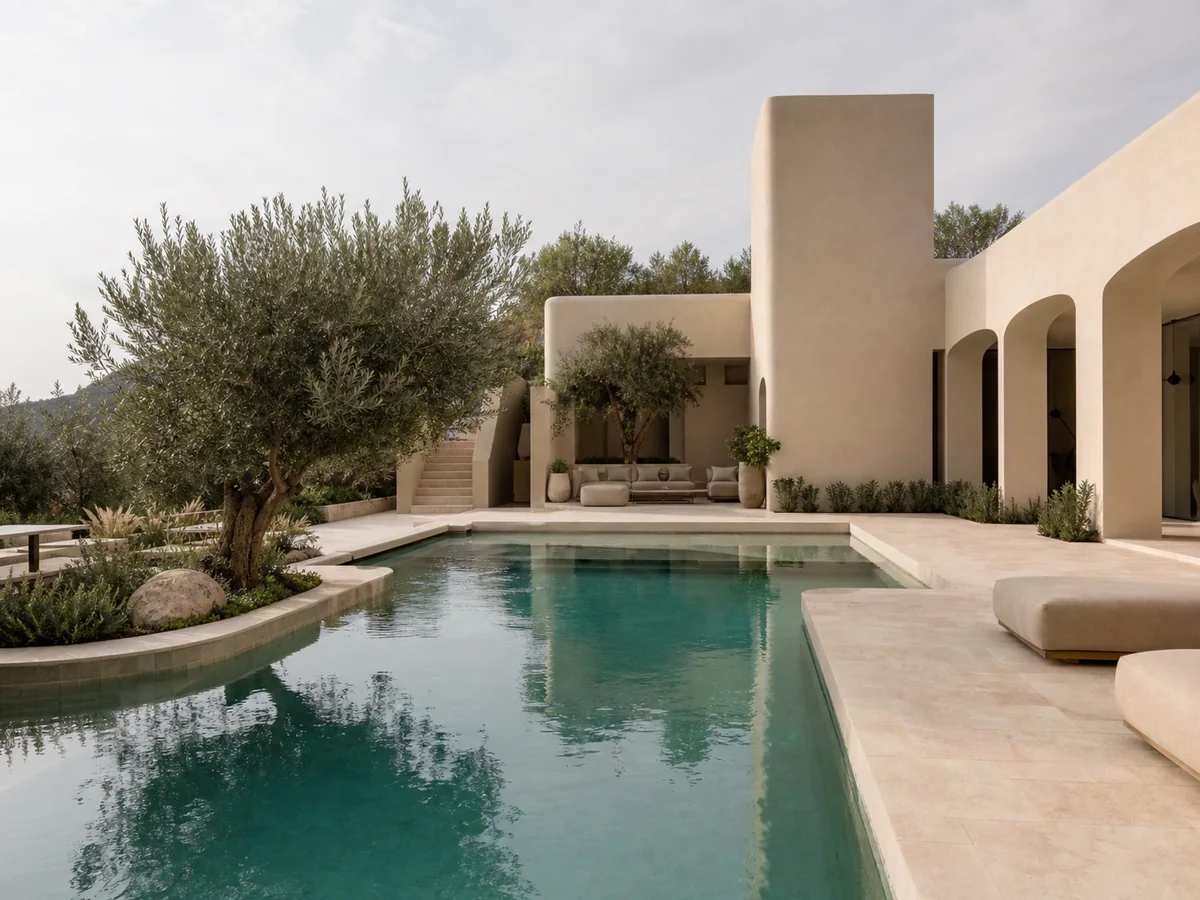 04
04Company & Contact
To talk about your project, we are one call away.
Legal Name
Çilek Havuz
Founded
1998 · Istanbul
Head Office
Çilek Plaza, Eyüp Sultan Mah. Yakacık Cd. Feshane Cd. No: 2 D:4 D:1, 34885 Sancaktepe / İstanbul
Service Area
All of Türkiye · exports to 14 countries
Related articles
Keep reading.
Sık Sorulan Sorular
Our readers' most asked; with expert answers.
Çilek Havuz Content & Technical Team
Guides & Technical Content
- Response Time
- Same day
- Channels
- Phone · E-mail · WhatsApp
If the answer you are looking for is not here, send your question directly to us and our team will reply as soon as possible.
Book a free site surveySurface temperature directly affects comfort around the pool when used barefoot; Light colored materials heat up less than dark tones and do not tire the feet. Wood and composite decking and some natural stones can stay cooler than ceramics. Landscaping and pergola solutions that provide shade also contribute to managing surface temperature.
Çilek Havuz Content & Technical Team
Splashing pool water can damage flimsy metal connections and some natural stones over time, especially in salt electrolyzed systems. For this reason, stones processed with corrosion-resistant fasteners and appropriate protectors are preferred in the environment. Directing splashes down the drain also reduces the chemical load on materials.
Çilek Havuz Content & Technical Team
Constant humidity and splashing around the pool puts a strain on natural wood; If water and rot resistant wood types are not selected, the wood will lose color and wear out over time. Bottom ventilation and proper drainage prolongs the life of the wood by allowing it to dry. Periodic lubrication and protection application is regularly required for this breed.
Çilek Havuz Content & Technical Team
Electrical elements such as lighting and sockets around the pool where wet surfaces are located should be selected in the appropriate protection class for water and moisture and should be installed with appropriate leakage current protection. The cables of the deck and landscape lighting are planned so that they do not interfere with the drainage and ground layers. Electrical safety is a topic that should not be compromised in environmental design.
Çilek Havuz Content & Technical Team
If the expansion that occurs due to temperature changes in hard floor applications is not met with appropriate joint spacing and expansion joints, cracking and swelling may occur on the surface. Joint widths, stone thicknesses and infrastructure preparation determine the success of the whole. These details must be resolved with as much care as the visible surface.
Çilek Havuz Content & Technical Team
In limited areas, decks, sunbathing areas and landscaping bands can be designed in a multifunctional way to get the highest efficiency from a narrow area. Integrating poolside seating and shade solutions makes the space both aesthetic and useful. The ground level and drainage line must be planned even more carefully in a compact area.
Çilek Havuz Content & Technical Team