

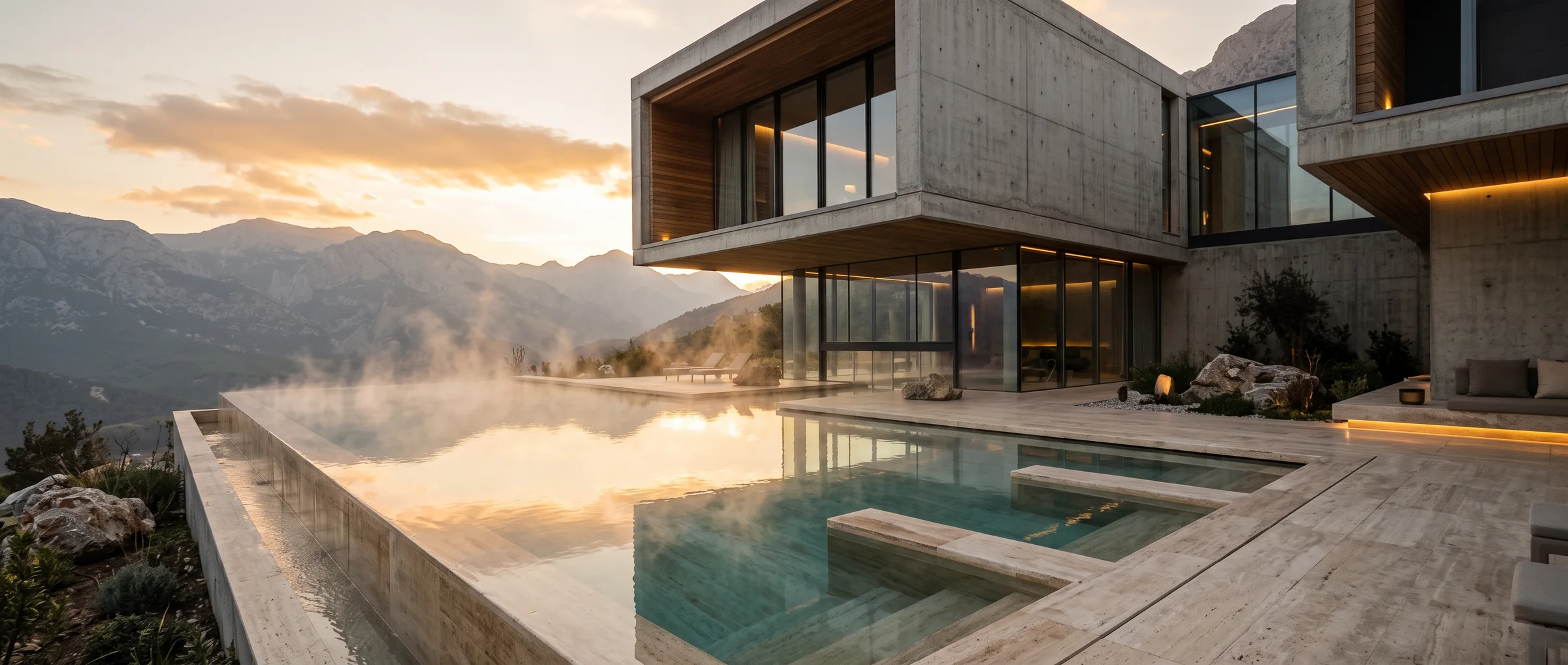
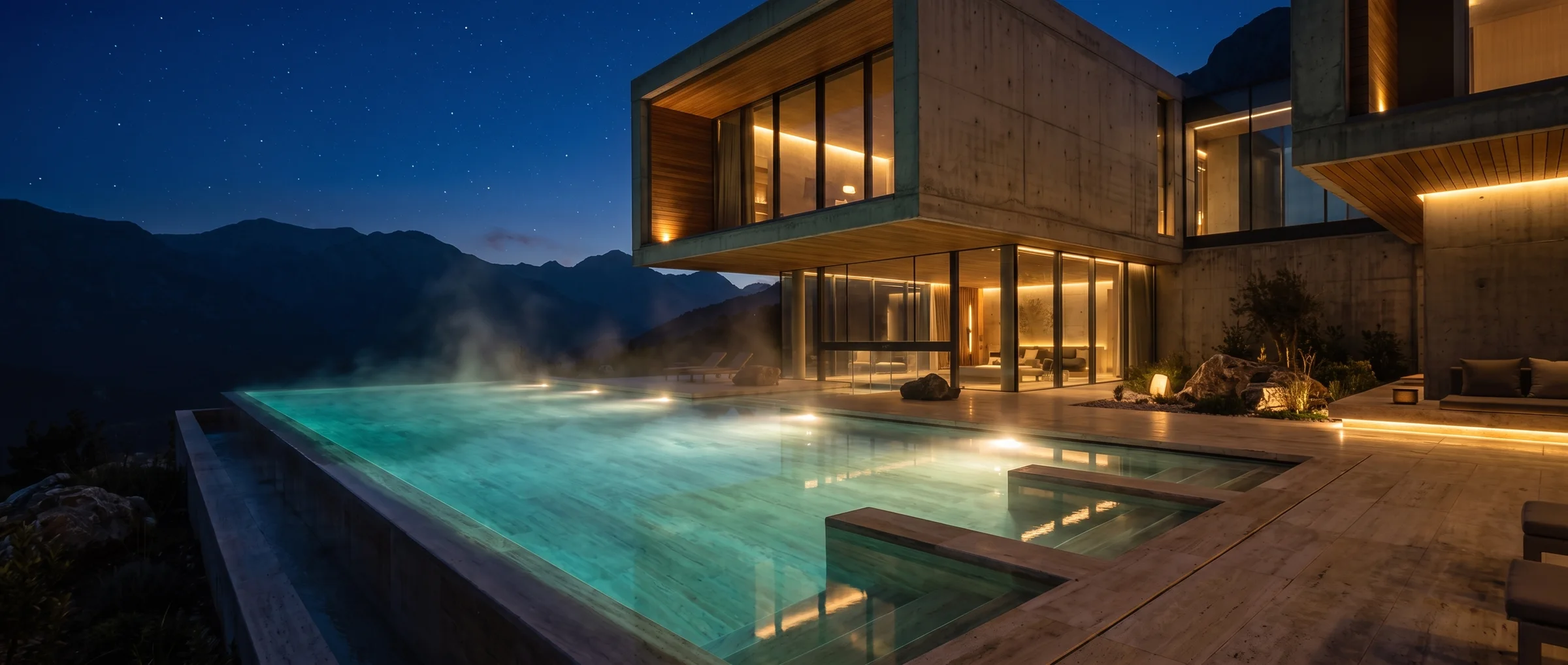
Thermal Pools
Durable pool systems built for thermal water.
Çilek Havuz in Numbers
We turn the earth's hot water into comfort, with engineering built to withstand it.
- 33+
- Years
- 14
- Export
- 500+
- Projects
Thermal Pools — Frames from Our Projects
Frames from Our Projects
06 media
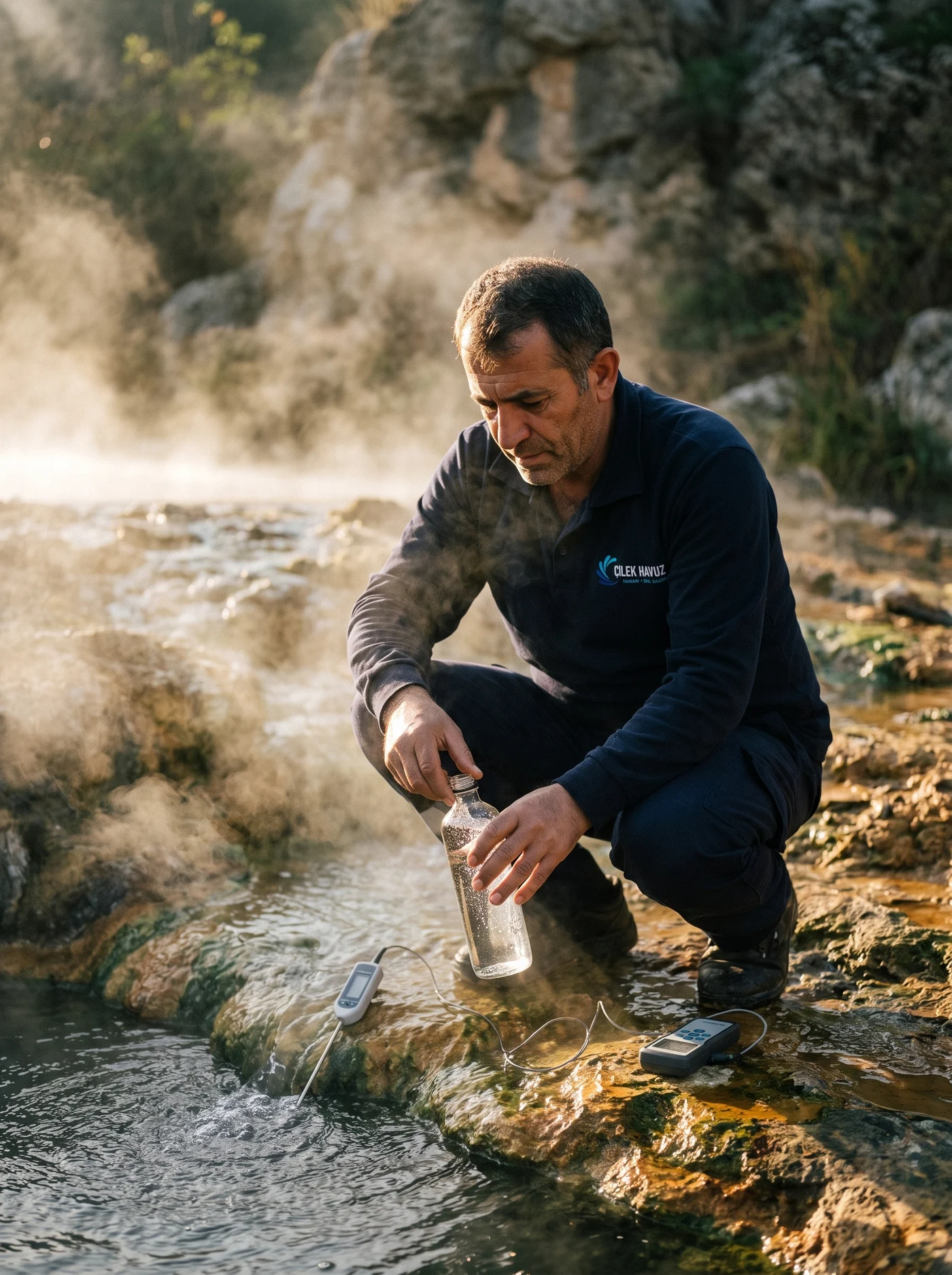
Every thermal source has its own chemical fingerprint: limescale dominates in one, sulphate or sulphur compounds in another. That is why we begin a project not with drawings but with a laboratory analysis of the spring water.
At the survey the temperature and flow rate of the source are measured, the existing installation is examined and the intended use is settled. Every decision, from materials to the heat exchanger, rests on that report.
- Laboratory water analysis
- Source temperature and flow rate
- Mineral profile (limescale, sulphate, chloride)
- Sulphur content check
- Survey of the existing installation
- Intended use (hotel / thermal spa / residential)
- Indoor / outdoor decision
- Preliminary budget frame
There is no thermal project without an analysis
A material that works without trouble for years at one source can fail within a few seasons at another. All material and equipment decisions have to rest on the real profile of the water.
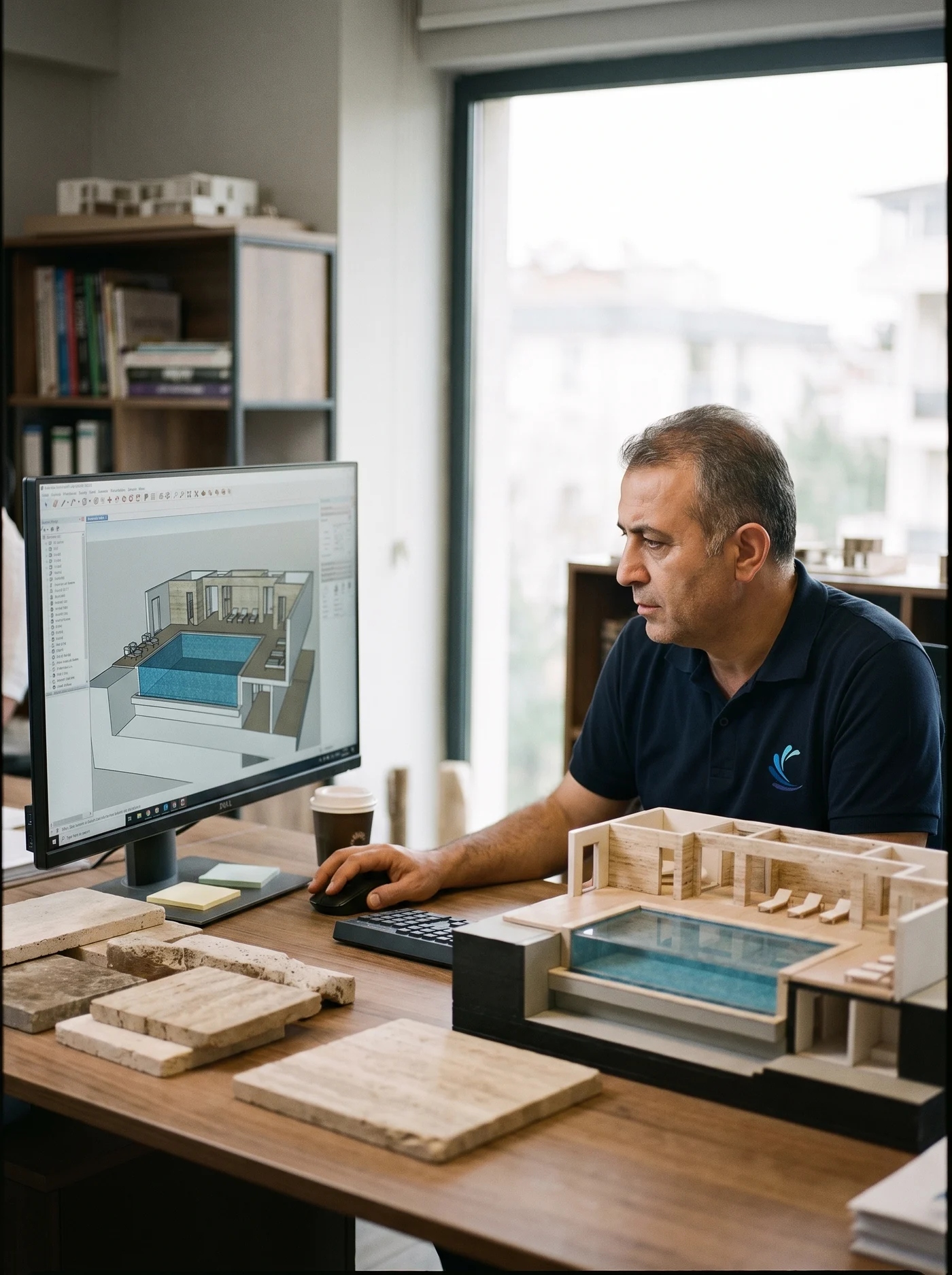
What makes a thermal experience comfortable is a design that leaves the user a choice: seating ledges, sections at different temperatures and a sequence that flows from relaxing to cooling down are all drawn into the project.
Accessibility sits at the heart of the design; entry ramps, handrails and non-slip surfaces are standard for every user. Indoors, ventilation and odour management are planned at the same stage.
- Seating ledge and depth composition
- Temperature staging plan
- Entry ramp and handrails
- Non-slip surface selection
- Indoor ventilation
- Odour management (sulphurous waters)
- 3D visualisation
- Construction design approval
Comfort is built in stages
A single large volume at a single temperature leaves the user no choice. A design that stages the relaxing and cooling zones makes the thermal experience long and enjoyable.
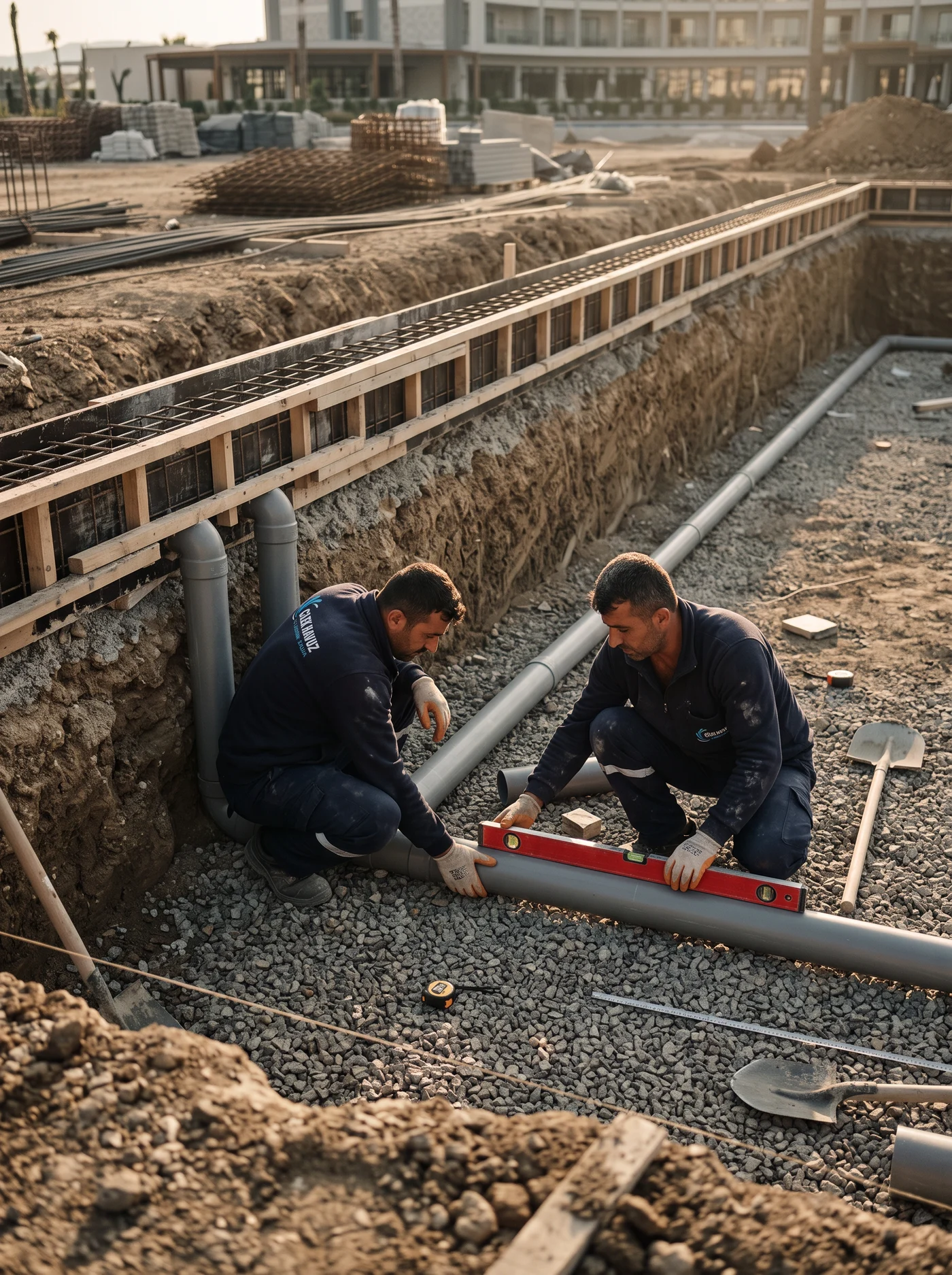
Overflow channels and the balance tank set up the first line of hygiene by renewing the surface water continuously. Because mineral-laden water is drained and renewed more often than in a standard pool, the drainage line is sized for high capacity.
Pipe routes are laid with pipe grades suited to thermal expansion and with maintenance access left at every critical point.
- Overflow channel and balance tank
- Rapid-drainage line
- Pipe route plan
- Maintenance access points
- Pipe selection suited to expansion
- Steam and condensate discharge
- Electrical infrastructure and protection
- Infrastructure testing and record
A thermal pool is drained often
Mineral-laden water is renewed more often than in a standard pool; a facility whose drainage is not sized accordingly loses hours with every emptying. The infrastructure is the operation's invisible gain in speed.
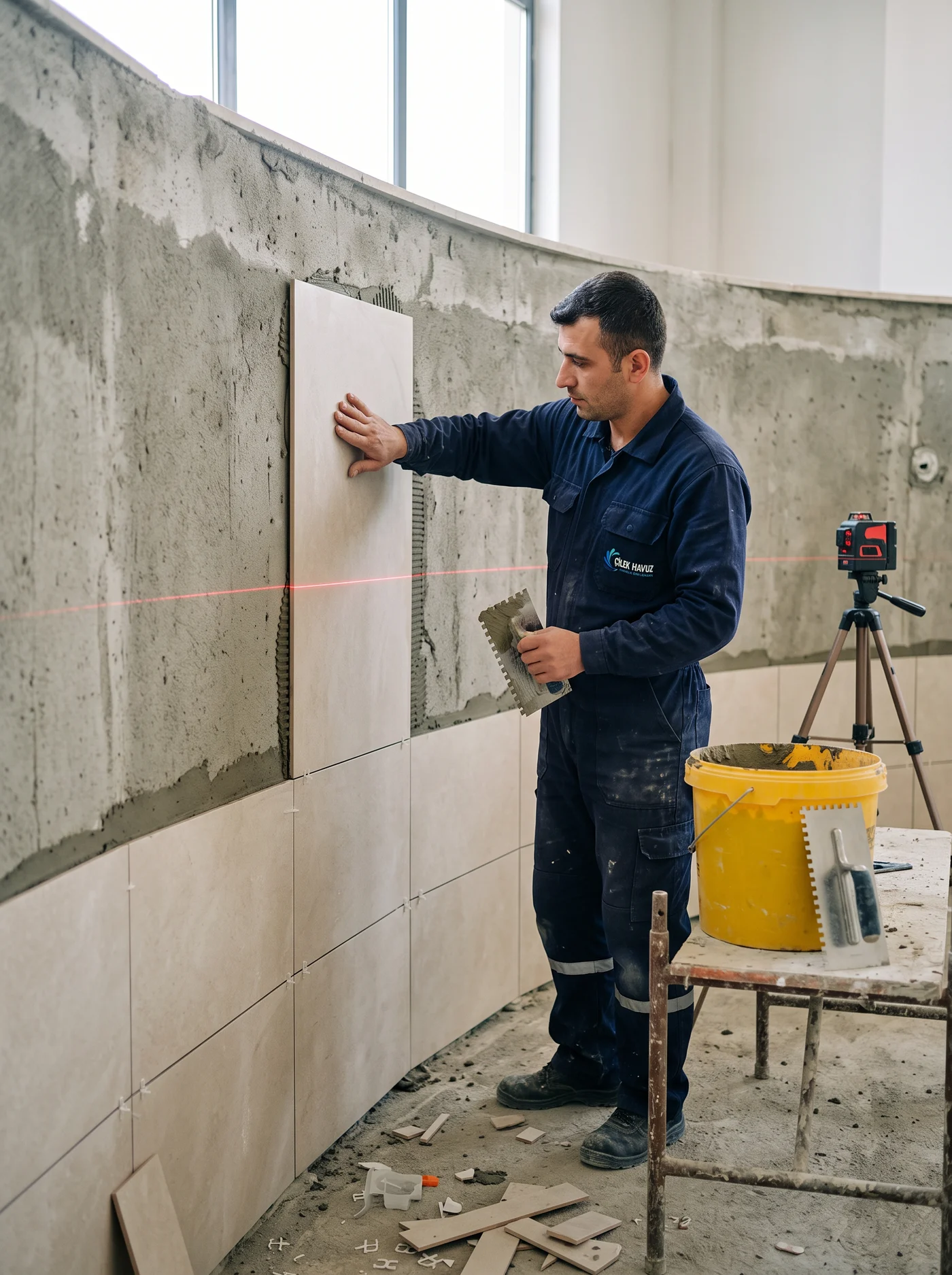
Every metal to be used in the wet areas is selected according to the analysis report: high-alloy stainless steel is sufficient at most sources, while aggressive waters call for equipment with titanium bodies. Seals are specified to hold their flexibility in hot water.
For the finish, chemically stable ceramic-based surfaces that stand up to temperature and mineral load are preferred; the grade of grout and adhesive is chosen with the same care.
- Metal selection according to the analysis
- Stainless / titanium equipment decision
- Heat-resistant seals
- Chemically stable finish
- Grout and adhesive grade
- Anchors and fixings
- Sample and approval process
- Material ordering plan
Standard materials, accelerated ageing
Wear that spreads over years in a standard pool can fit into a few seasons in thermal water. Economising on materials is the most expensive decision in a thermal project.
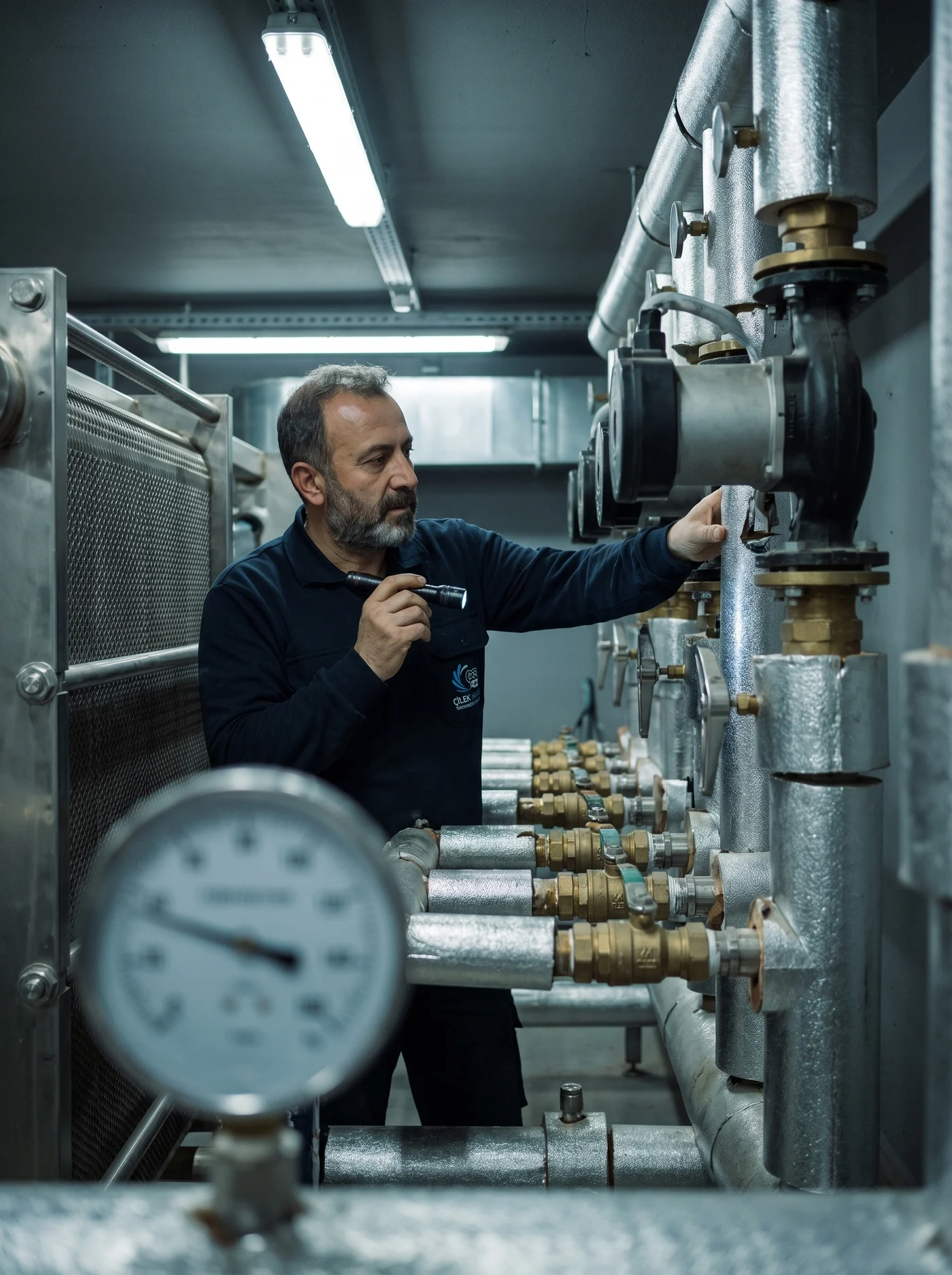
Spring water usually arrives above the safe temperature for use; a plate heat exchanger transfers that heat under control and holds the pool water at the target temperature. The exchanger material is likewise selected according to the water analysis.
Recovering heat from the hot water being discharged, together with insulation of the pipework and the tank, brings the operating cost down noticeably. Temperature is held steady through the day by sensors and automation.
- Heat load calculation
- Plate heat exchanger selection
- Exchanger material (per the analysis)
- Mixing and temperature control
- Heat recovery from the discharge
- Pipe and tank insulation
- Temperature sensors and automation
- Heat circuit test
Heat is thermal's ready capital
A facility that manages the heat the source brings with an exchanger never pays the greater part of the heating bill. Recovery from the discharge water is the second half of that calculation, and the half most often overlooked.
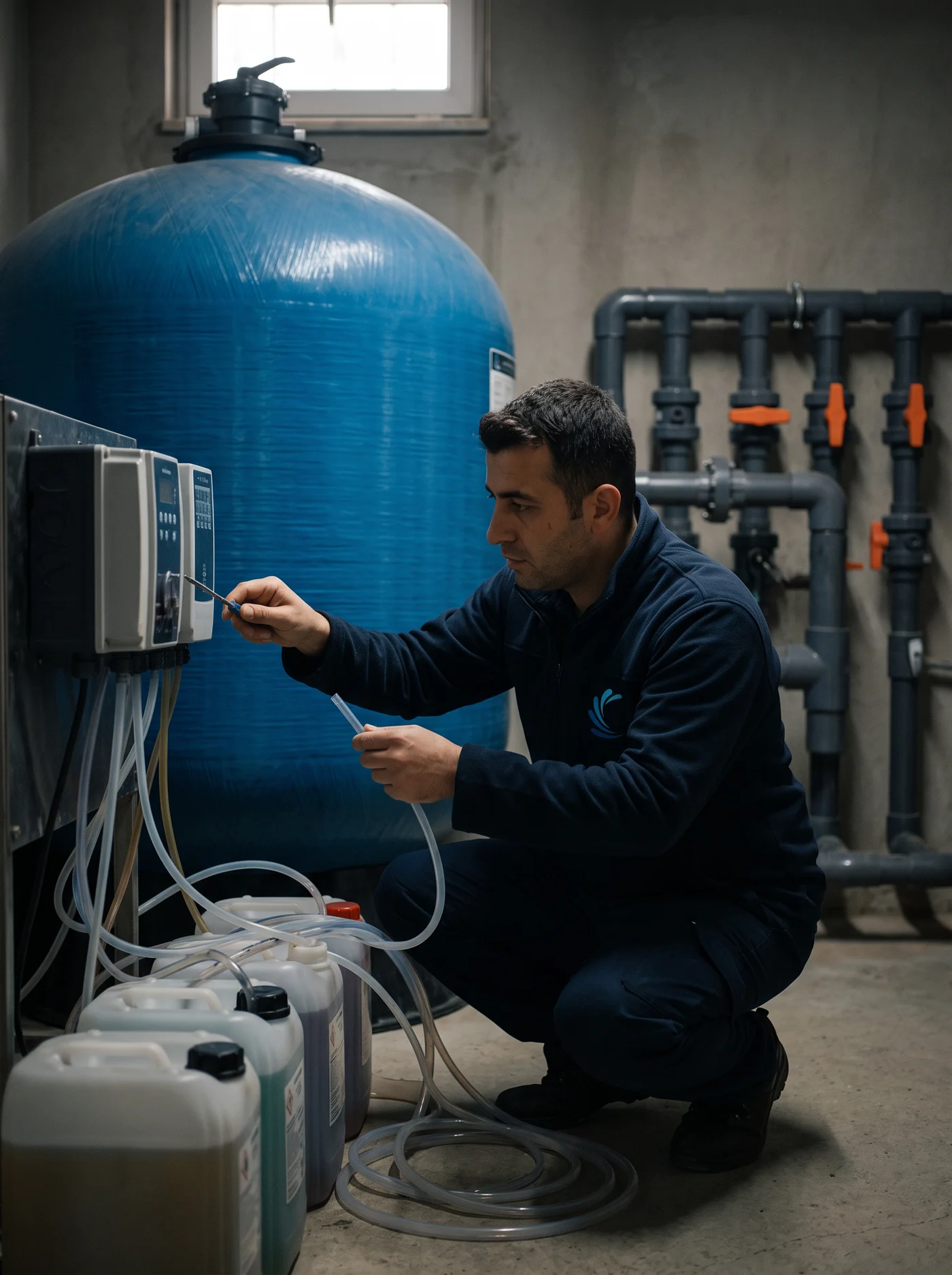
Filter type and capacity are sized to the mineral load of the water; where the tendency to precipitate is high, an arrangement suited to frequent backwashing and easy maintenance is put in place. The water-renewal rate is an inseparable part of hygiene.
Automatic dosing and continuous measurement hold the water in the balanced band between the extremes of corrosion and scaling, keeping human error to a minimum in continuously operated facilities.
- Filter selection for the mineral load
- Backwashing arrangement
- Automatic dosing system
- Continuous measurement sensors
- Water-renewal rate plan
- Limescale and corrosion monitoring
- Equipment layout with maintenance access
- System integration test
A fine line between two extremes
Thermal water produces a crust of limescale when the balance shifts one way and corrosion when it shifts the other. Automatic monitoring is the most reliable way to hold that fine line through the day without human error.
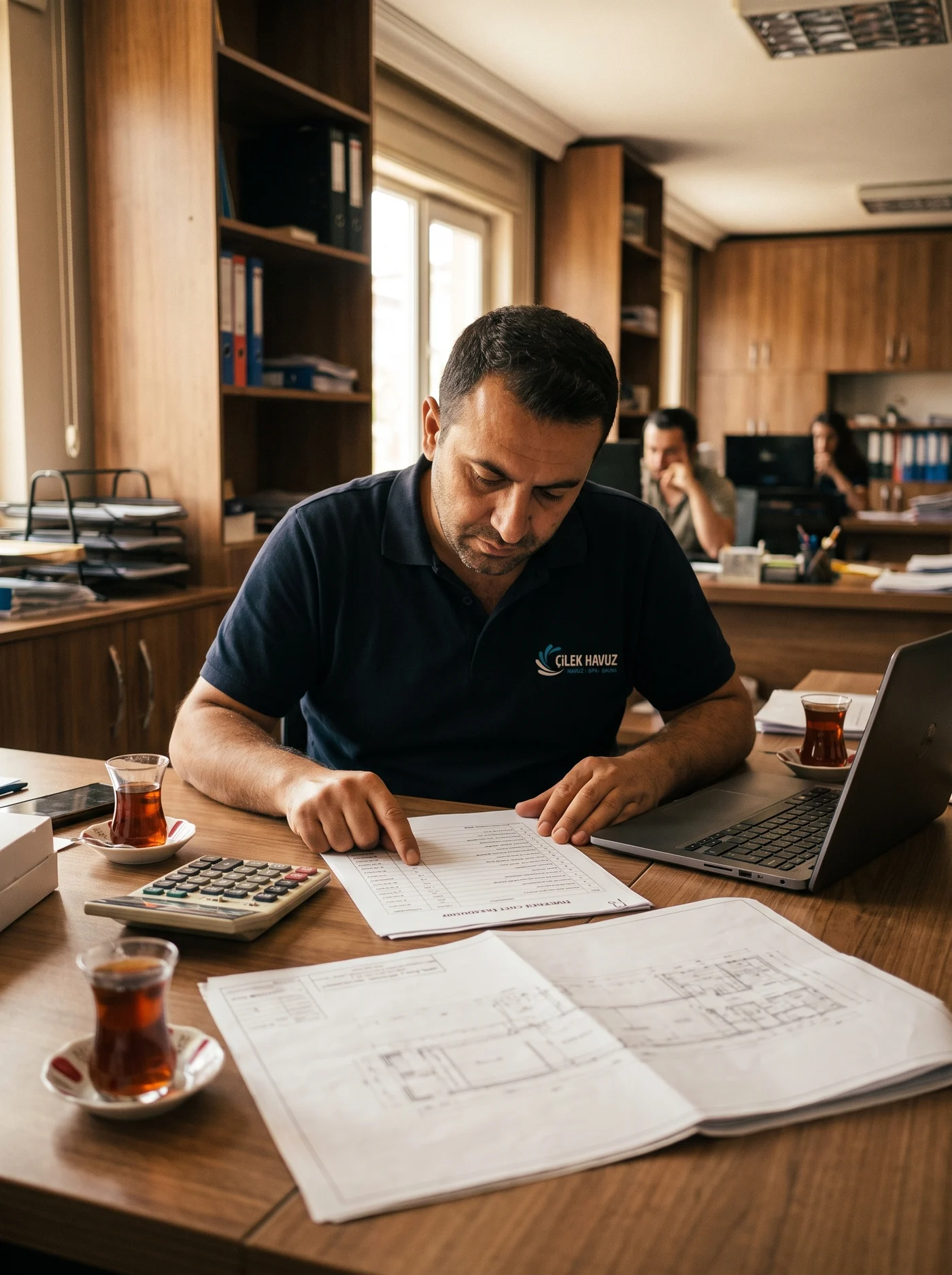
A thermal pool budget is set by the size of the pool, the material grade (stainless or titanium), the exchanger capacity, the level of dosing and automation and, indoors, the ventilation. Because maintenance is more frequent than in a standard pool, an operating projection is included in the quotation.
When the heat of the source is managed correctly, the heating cost largely disappears; we present a quotation that lets you read the initial investment and the operating life in the same table.
- Pool size and construction
- Material grade items
- Heat exchanger and heating system
- Dosing and automation
- Finish and comfort details
- Ventilation (indoors)
- Operating and maintenance projection
- Itemised written quotation
Not the first price, but the ten-year calculation
In a thermal project, a cheap material quote conceals the replacement cost of a few seasons later. The right comparison is to read the initial investment and the operating life in the same table.
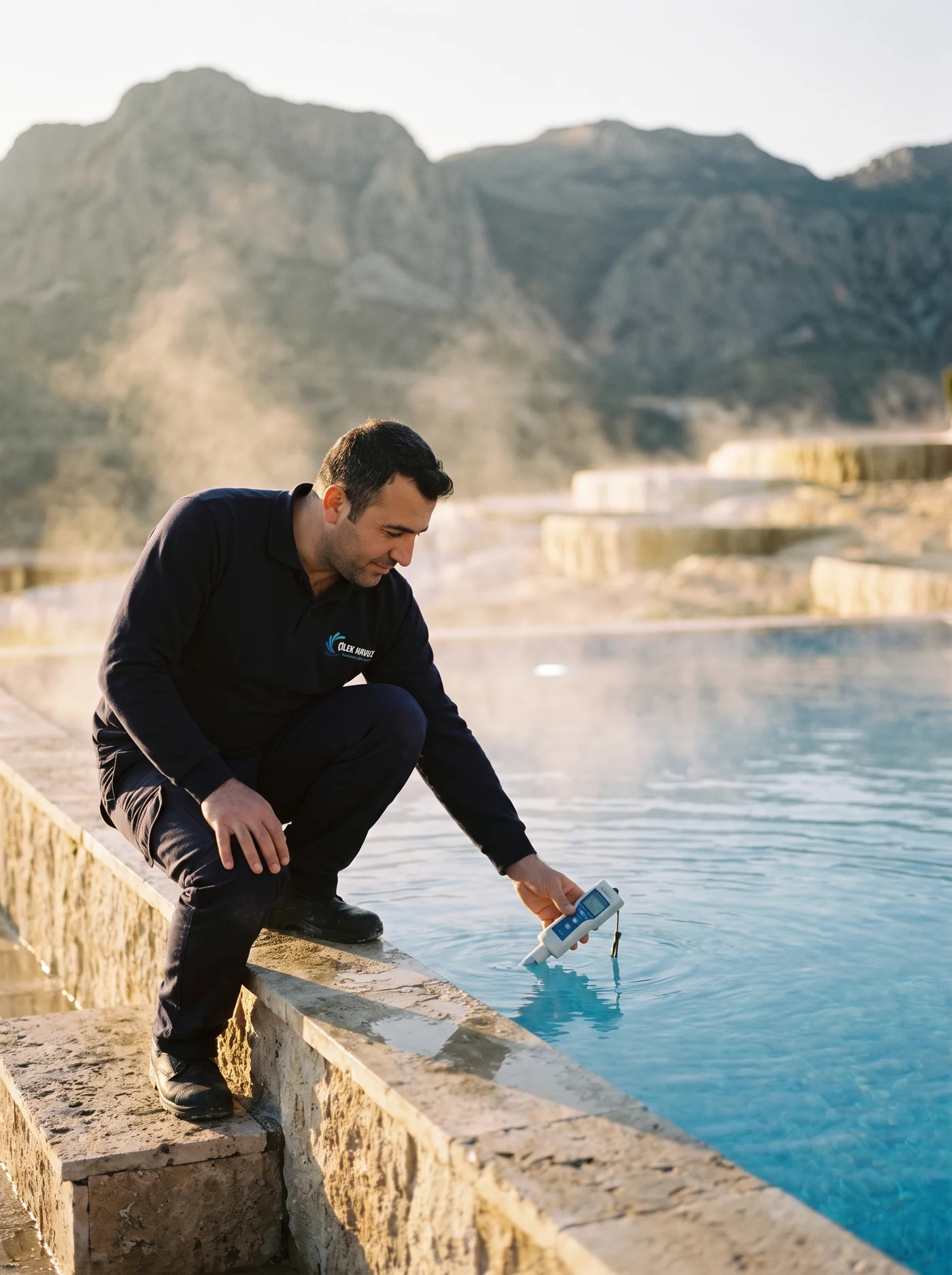
The pool is filled in stages; temperature stability, heat exchanger and pump performance, dosing calibration and the overflow and drainage lines are each tested in turn.
At handover the operating team is trained in water monitoring, backwashing and record-keeping. Thermal water is a living chemistry; the habit of regular measurement catches a fault before it turns into a cost.
- Staged first fill
- Temperature stability measurement
- Heat exchanger and pump tests
- Dosing calibration
- Overflow and drainage test
- Operating team training
- Maintenance and monitoring guide
- Handover record
Handover is the beginning of monitoring
The behaviour of thermal water can change with the season and the flow rate. An operation that acquires the habit of regular measurement catches a small deviation before it becomes major damage; we stay with you after handover as well.
In their own words,their own stories
From corporate facilities to villa projects — short story videos from the names who trusted us.
 Delivered with confidenceMinistry of National Defence
 Thermal comfortTenzile Erdoğan Thermal Hotel
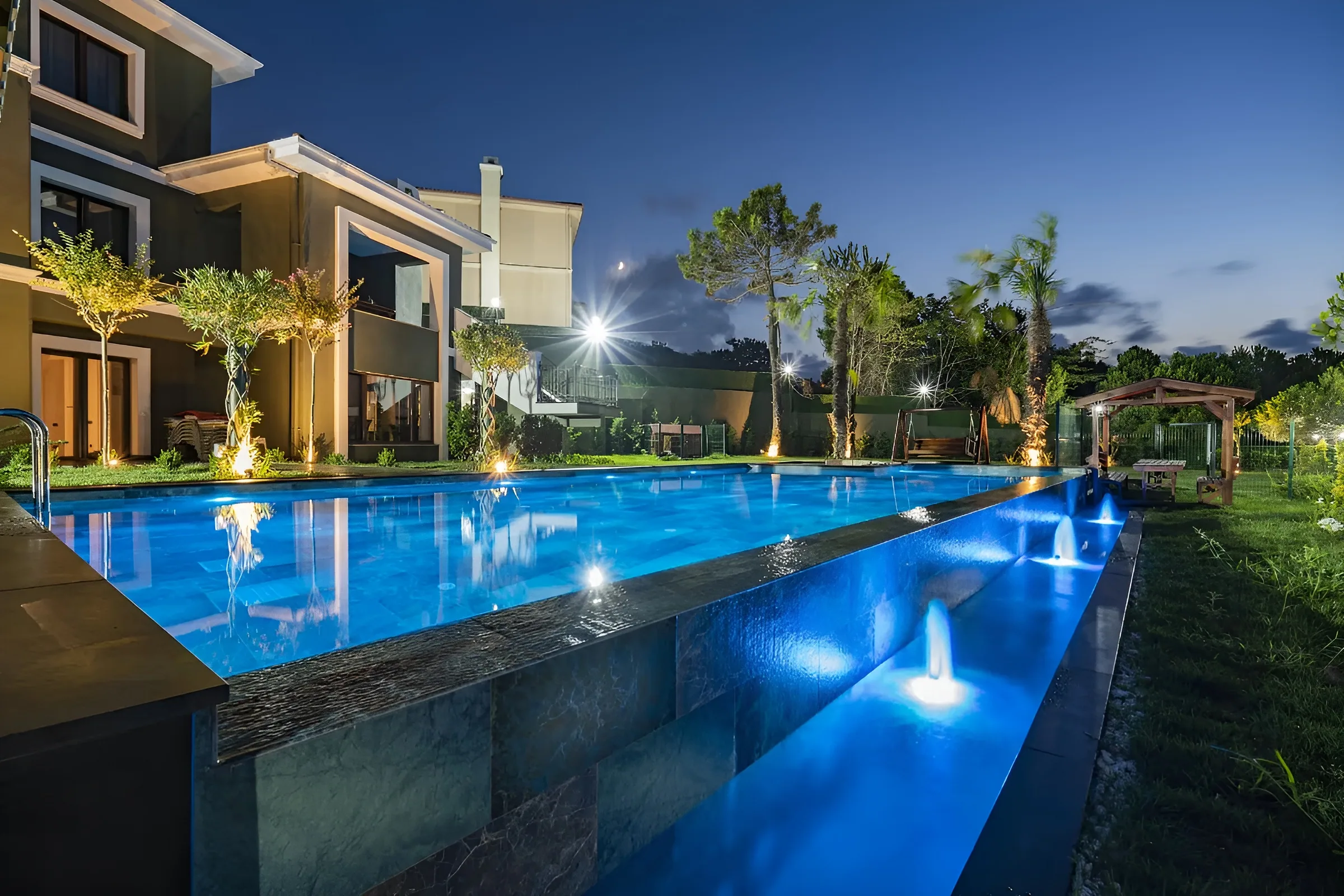 Dreams came trueMehmet Sevigen
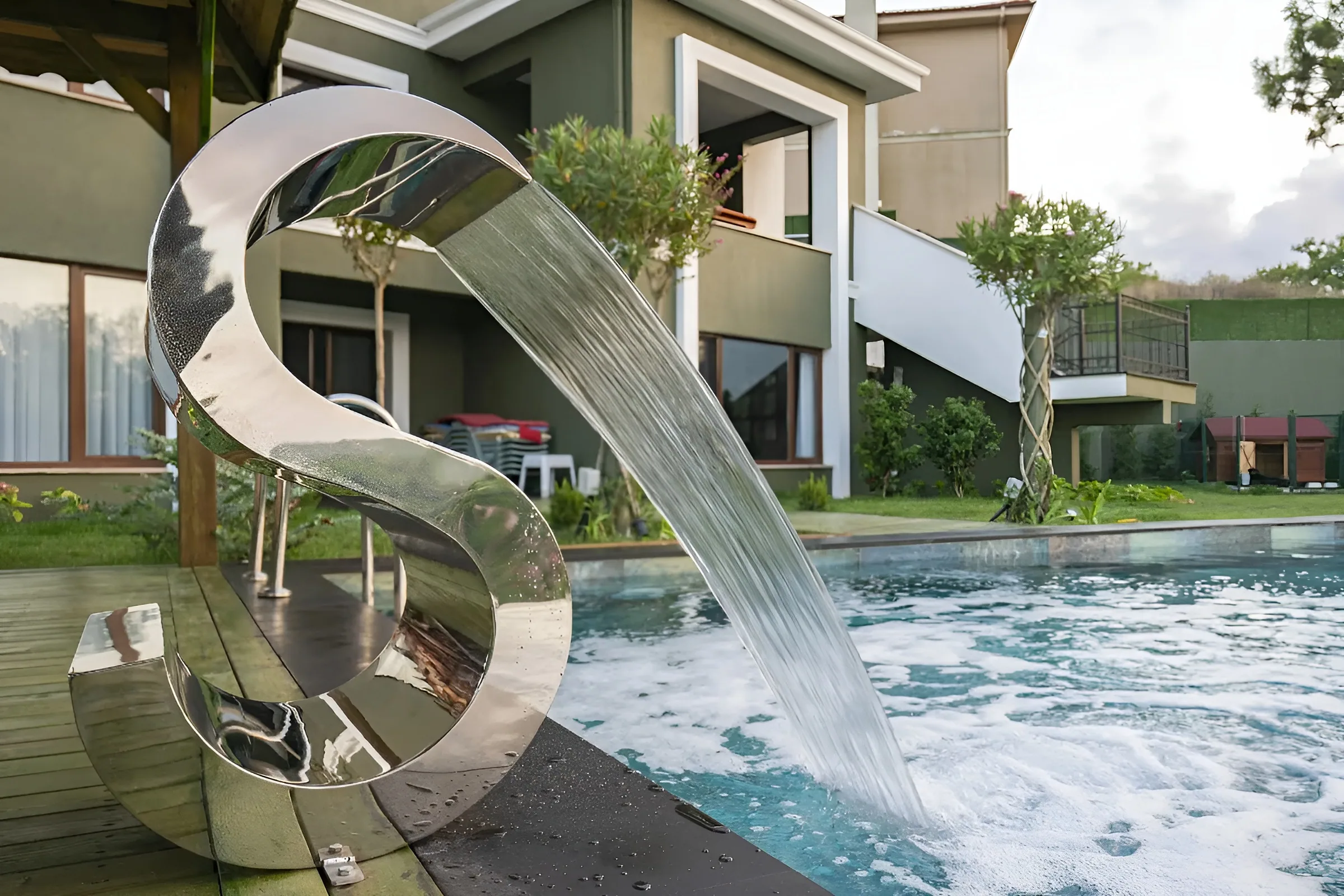 The garden's new heartHakan Gönen
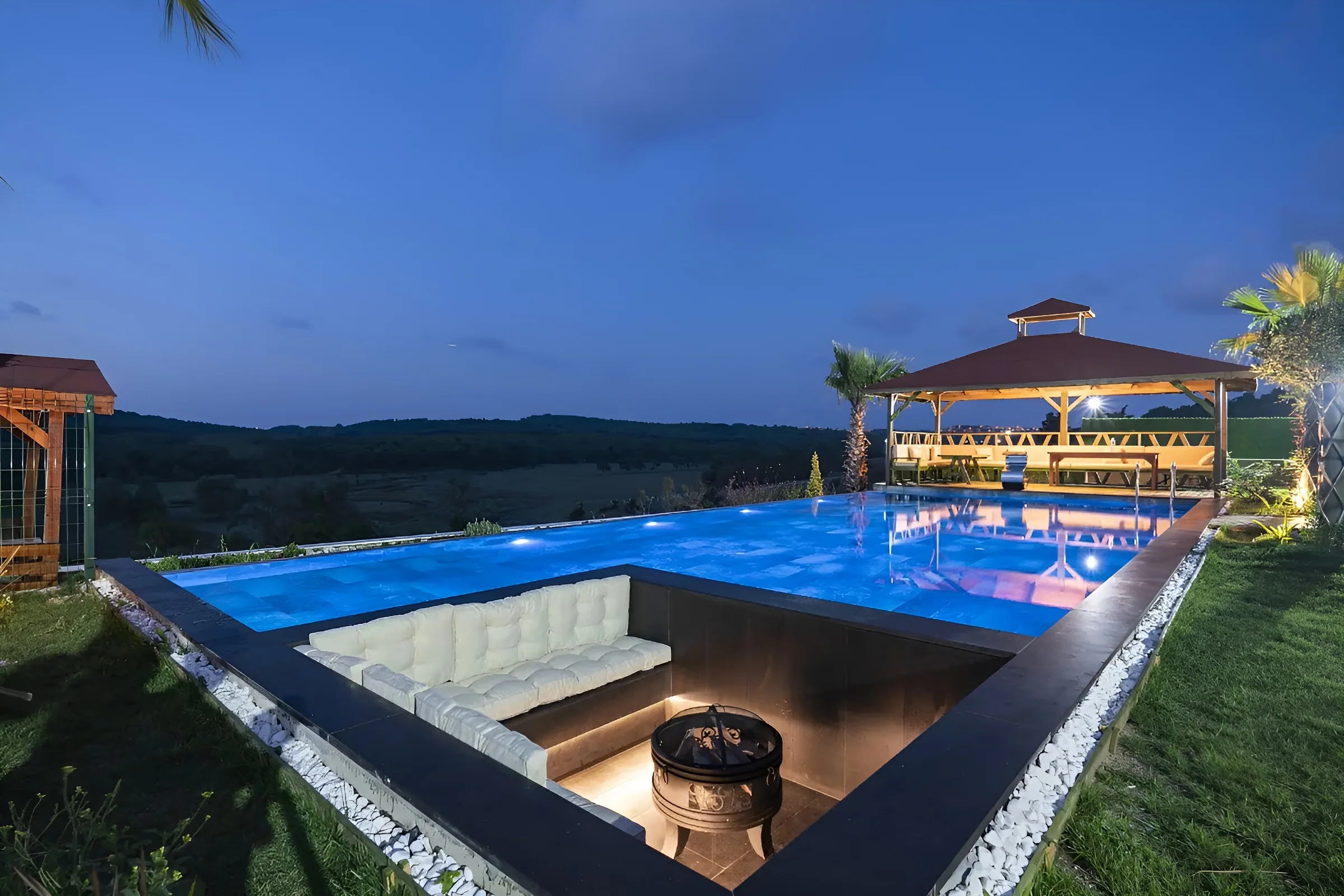 Holiday at homeÇetin Uğurlu
Company & Contact
To talk about your project, we are one call away.
Legal Name
Çilek Havuz
Founded
1998 · Istanbul
Head Office
Çilek Plaza, Eyüp Sultan Mah. Yakacık Cd. Feshane Cd. No: 2 D:4 D:1, 34885 Sancaktepe / İstanbul
Service Area
All of Türkiye · exports to 14 countries
Portfolio ·
A selection of pool and spa projects we have brought to life all across Türkiye.
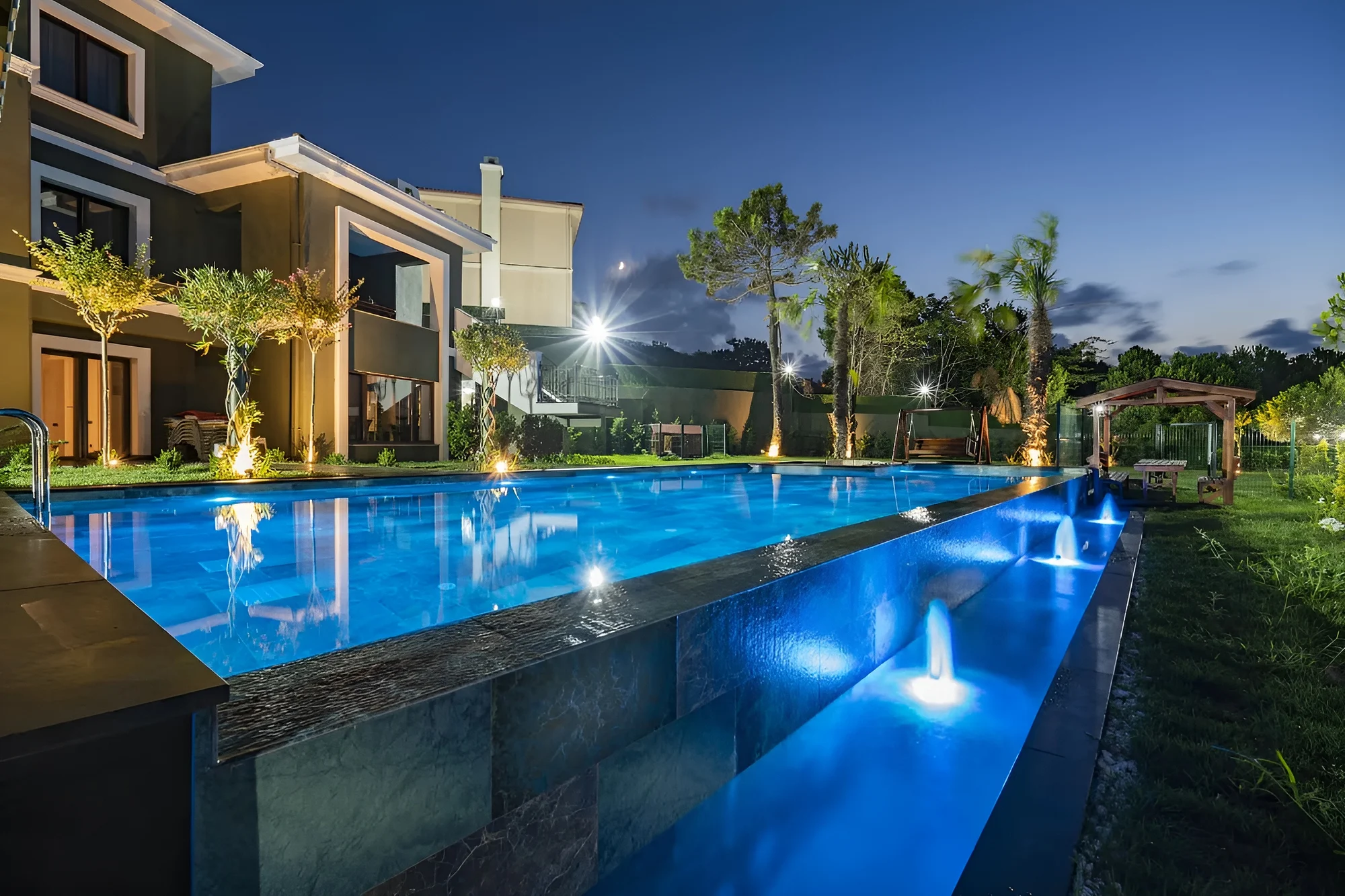 Villa
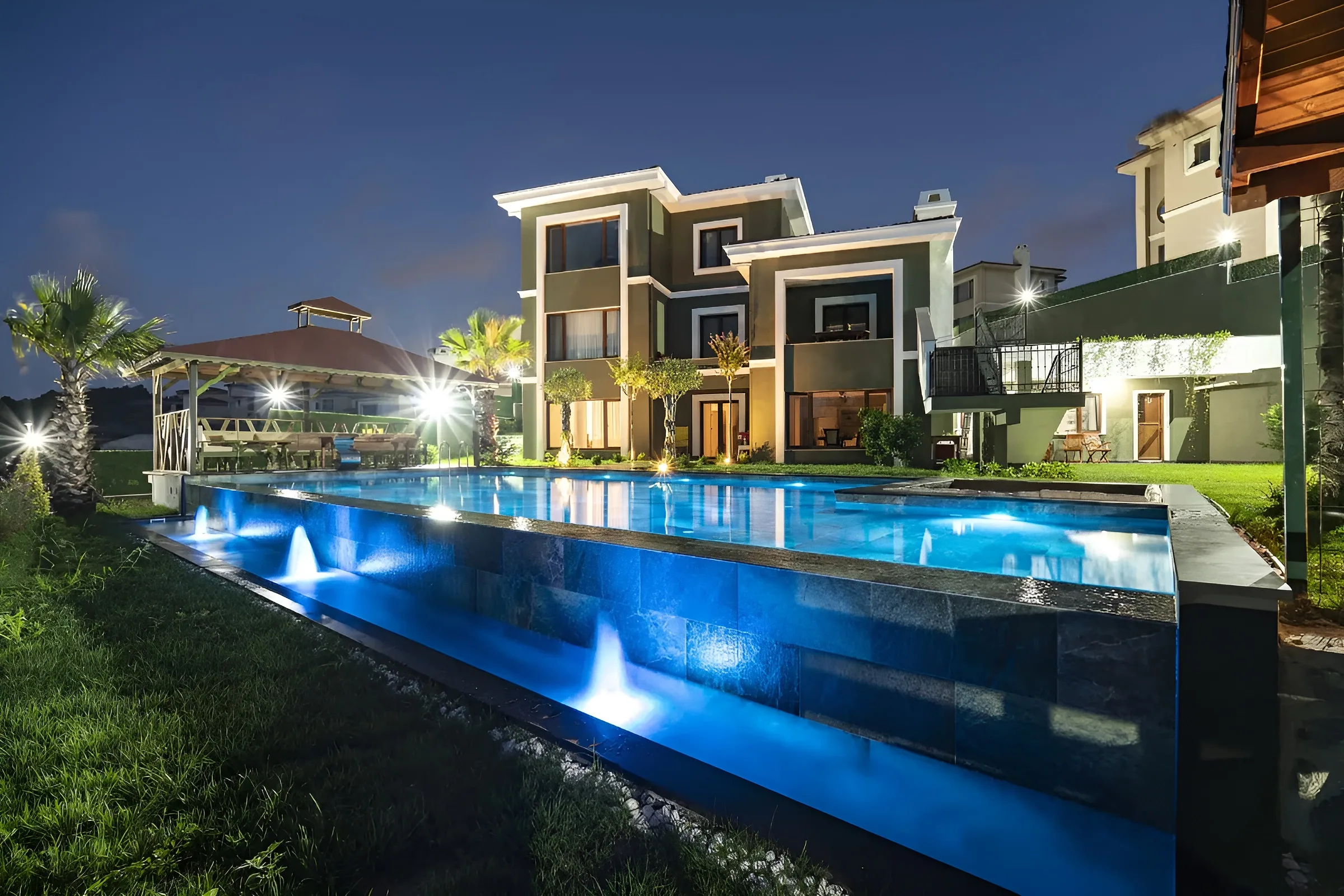
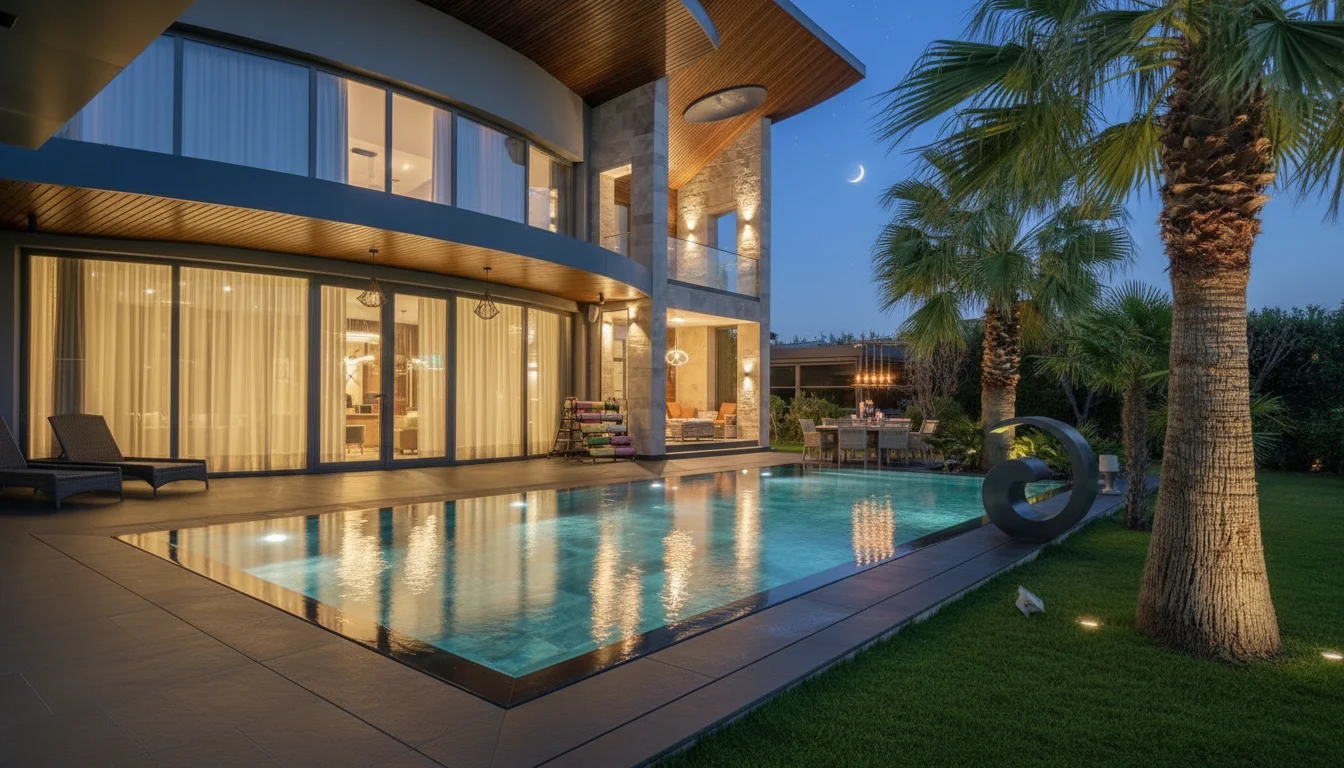
VillaMehmet Sevigen · Çatalca Infinity Pool
A 12×6 m reinforced-concrete infinity pool completed in Çatalca, Istanbul, in 2025.
- Location
- Çatalca / İstanbul
- Completion
- 2025
 Villa
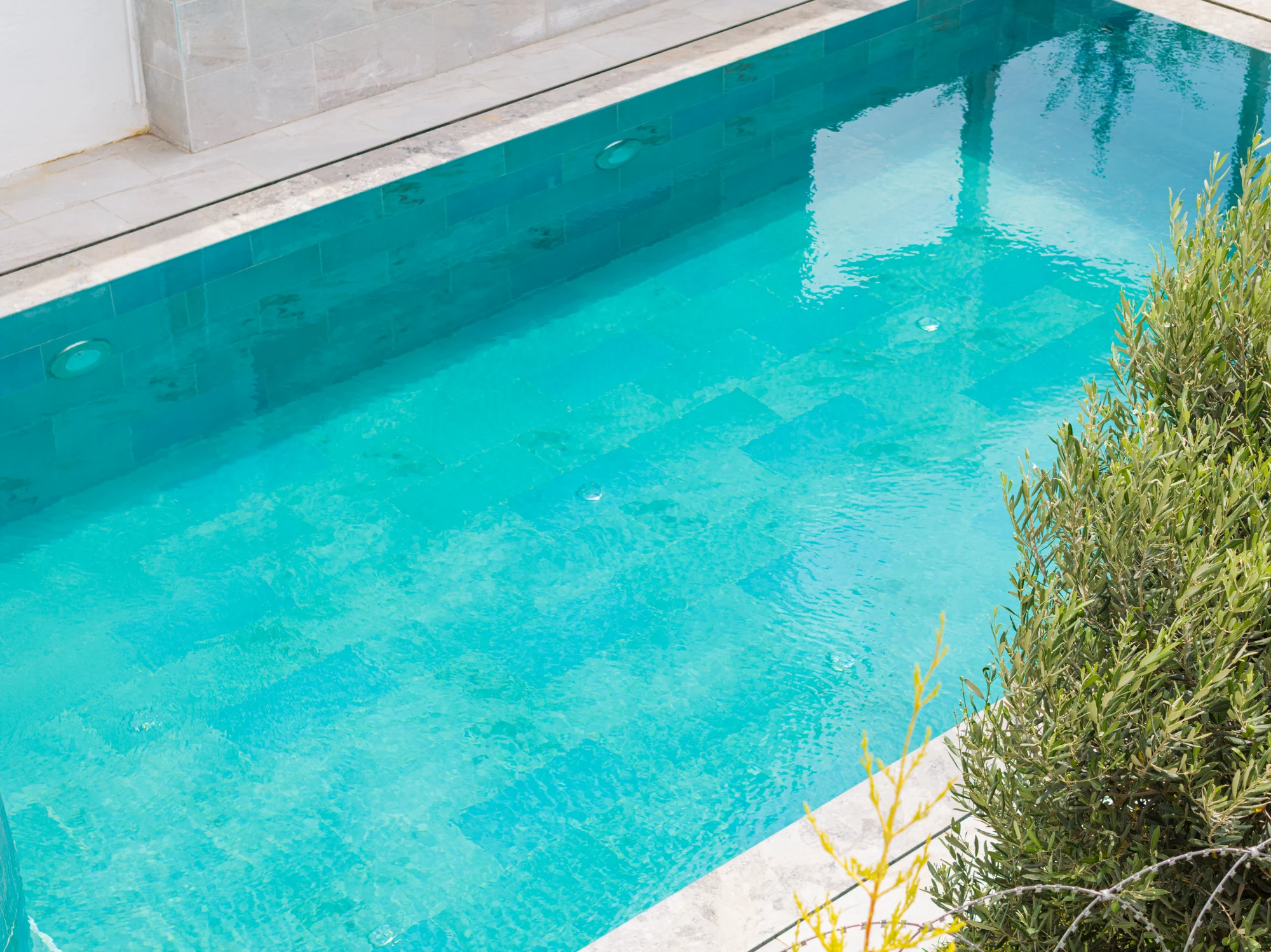
VillaHakan Gönen · Hadımköy Hidden-Overflow Pool
An 11×6 m hidden-overflow concrete pool completed in Hadımköy, Istanbul, in 2024.
- Location
- Hadımköy / İstanbul
- Completion
- 2024
 Villa
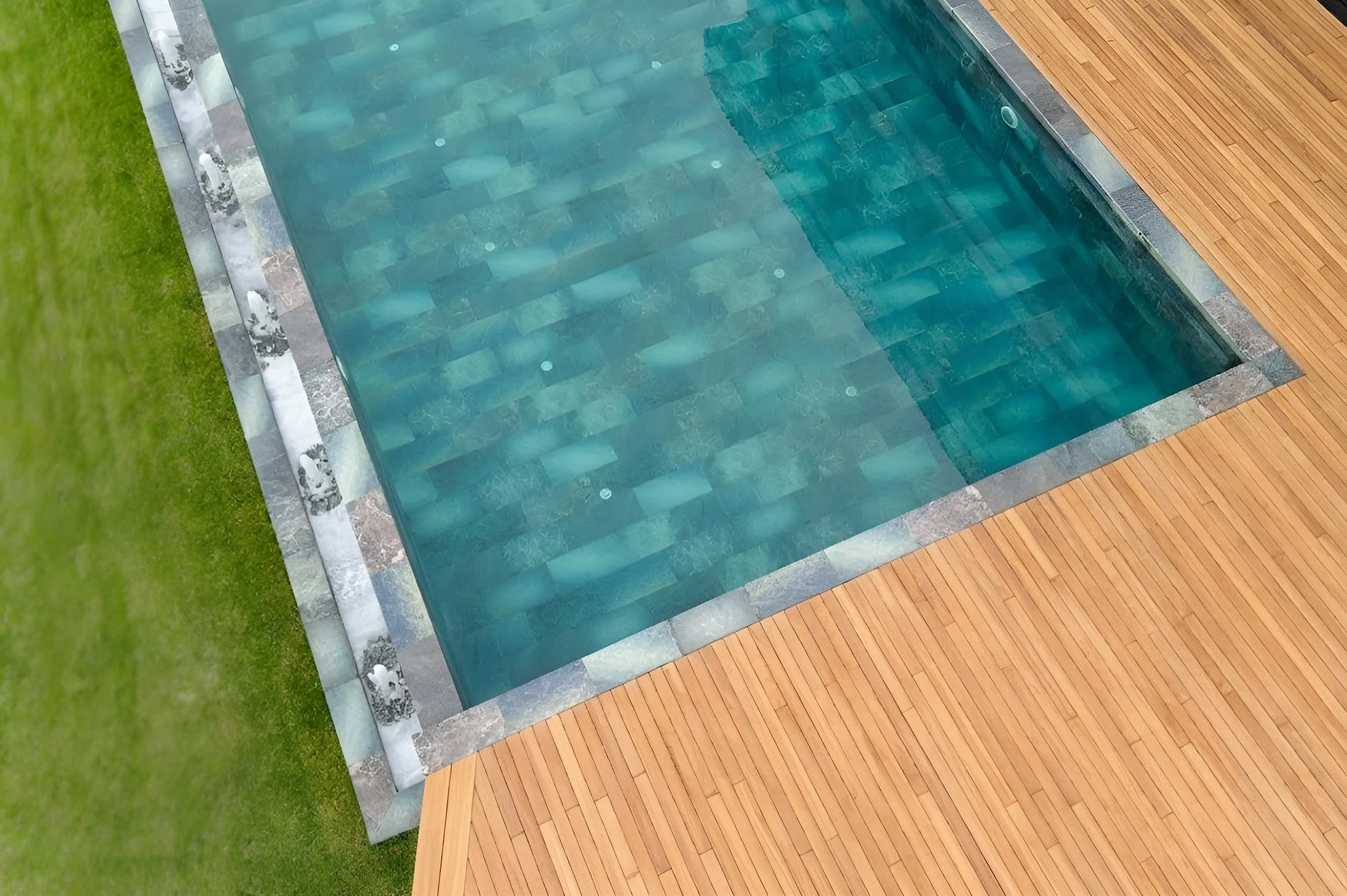
VillaZeynep Mayadağlı · Silivri Hidden-Overflow Pool
A 5×10 m hidden-overflow concrete swimming pool completed in Silivri, Istanbul, in 2024.
- Location
- Silivri / İstanbul
- Completion
- 2024
 Villa
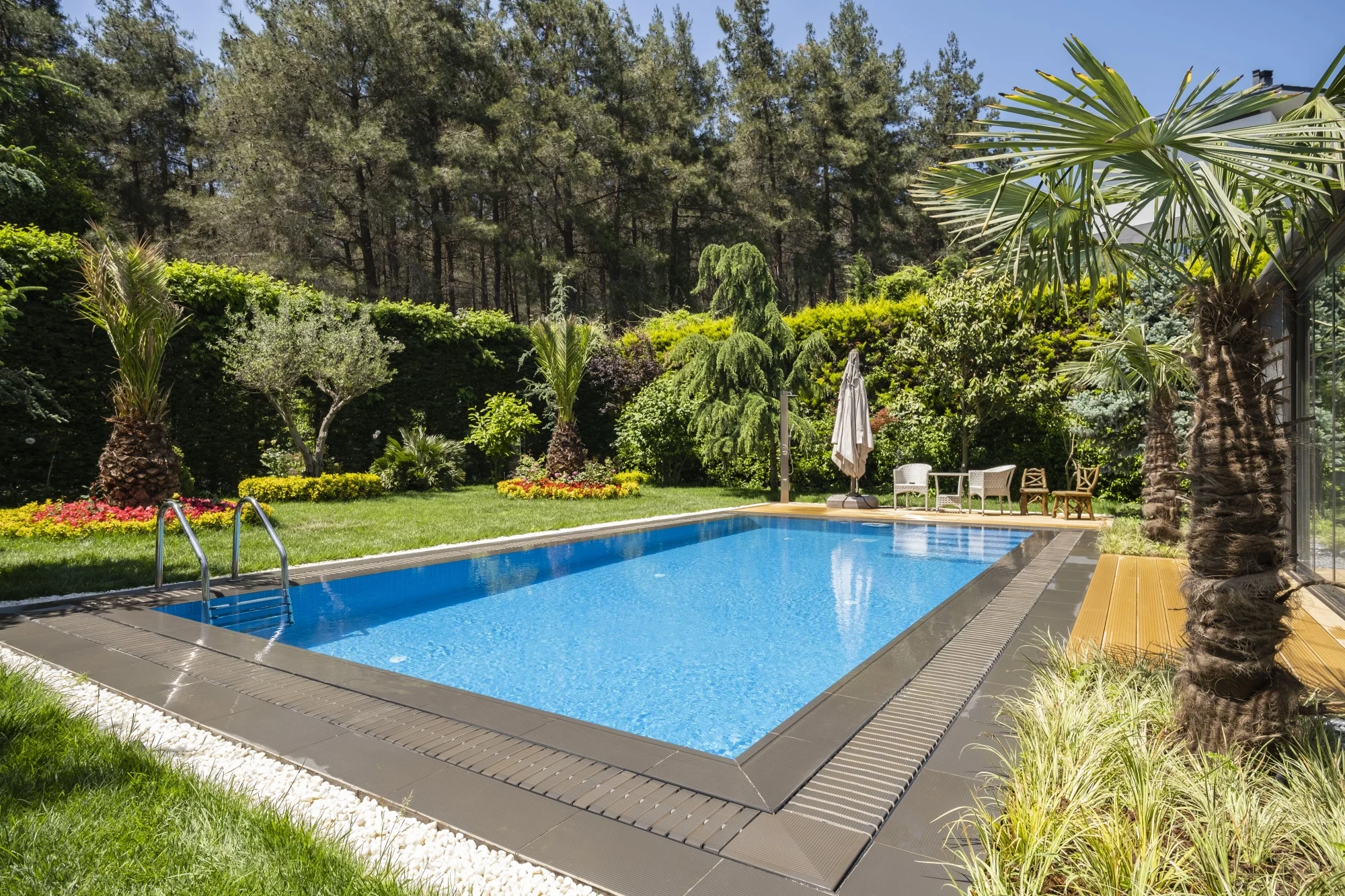
VillaÇetin Uğurlu · Villa Pool
A private villa pool project completed in Istanbul.
- Location
- İstanbul
- Completion
- 2024
 Villa
VillaRıza Latif · Çekmeköy Overflow Pool
An overflow concrete swimming pool completed in Çekmeköy, Istanbul, in 2024.
- Location
- Çekmeköy / İstanbul
- Completion
- 2024
 Villa
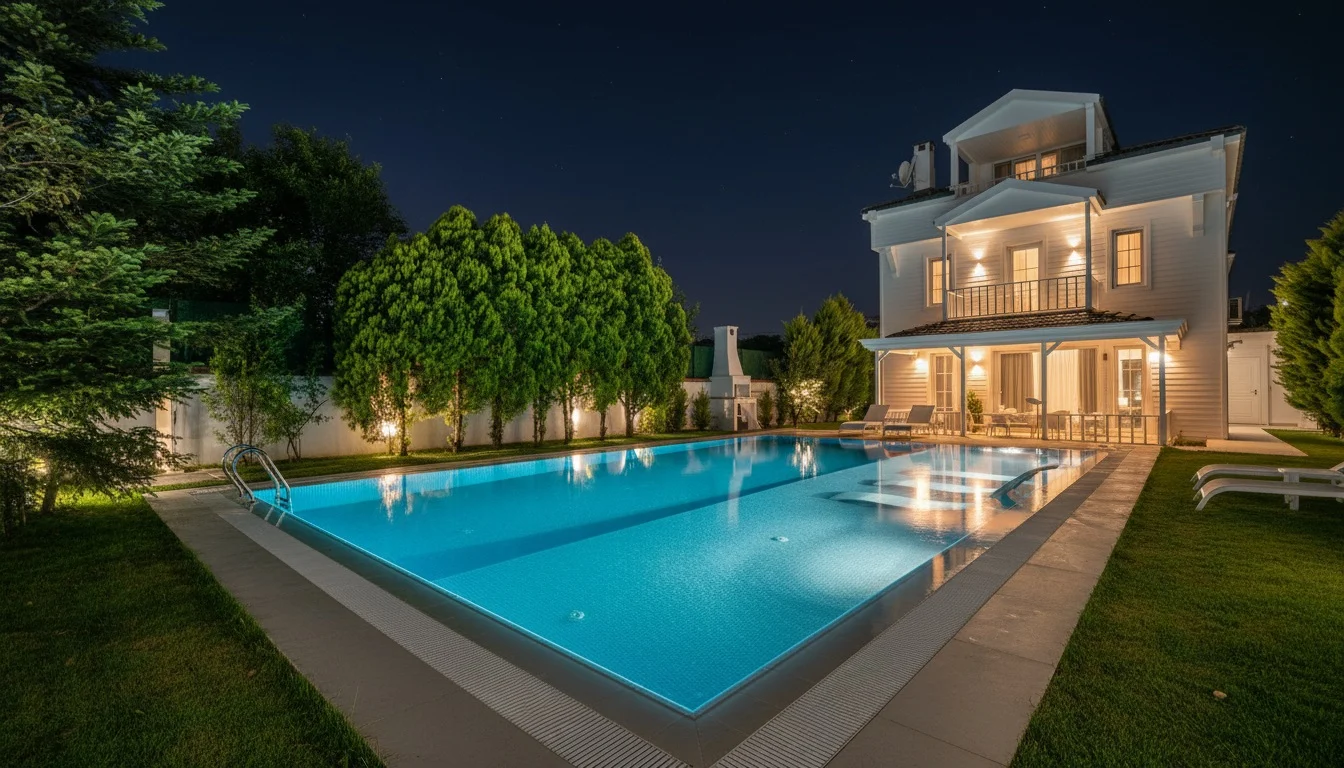
VillaCihan Kızılkaya · Şile Pool Project
A private villa pool project completed in Şile, Istanbul.
- Location
- Şile / İstanbul
- Completion
- 2024
 Villa
VillaDilan Polat · Villa Pool
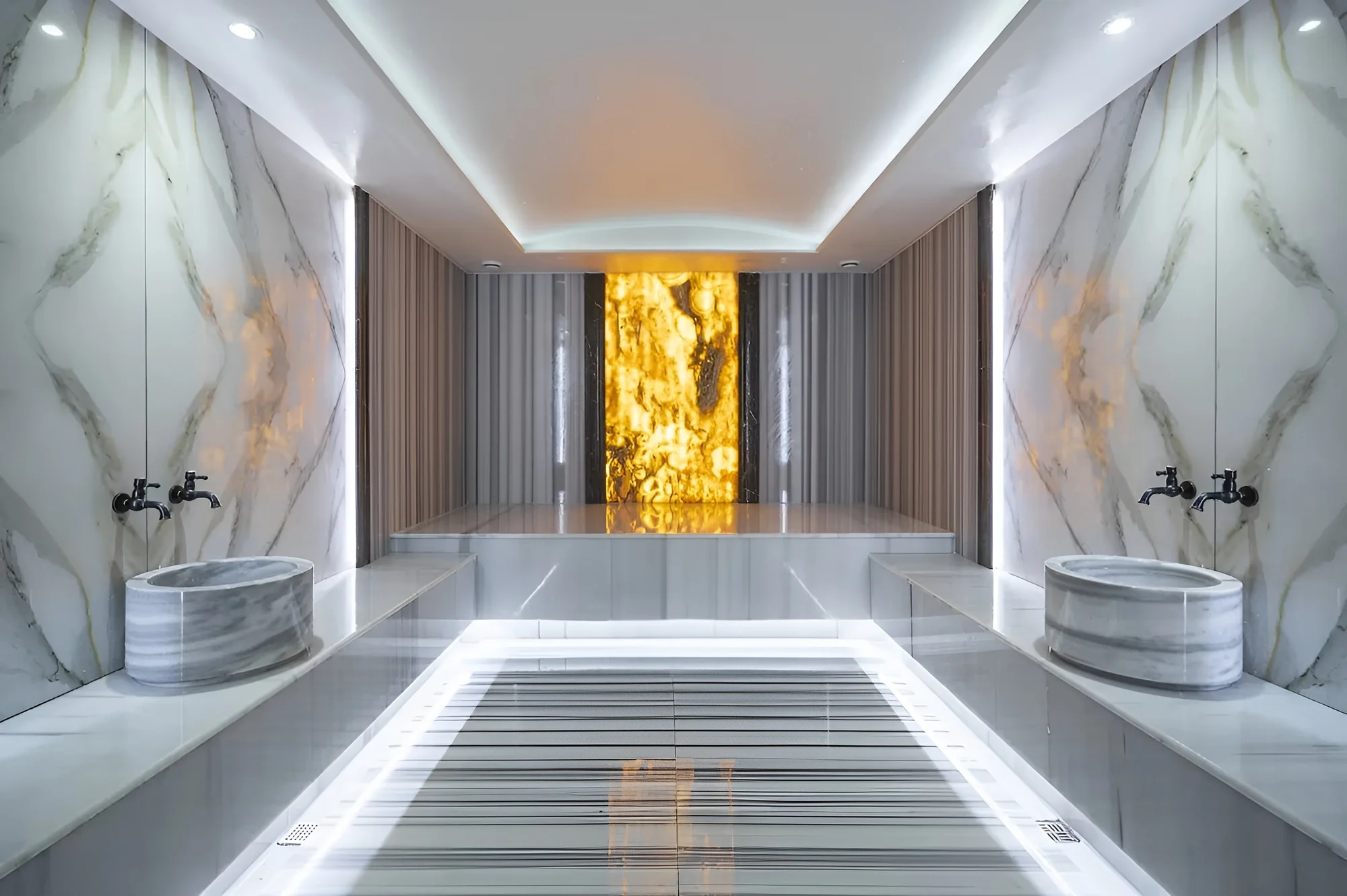
A private villa pool project completed in Istanbul.
- Location
- İstanbul
- Completion
- 2024
 Residence
Efor Holding · Pool Project
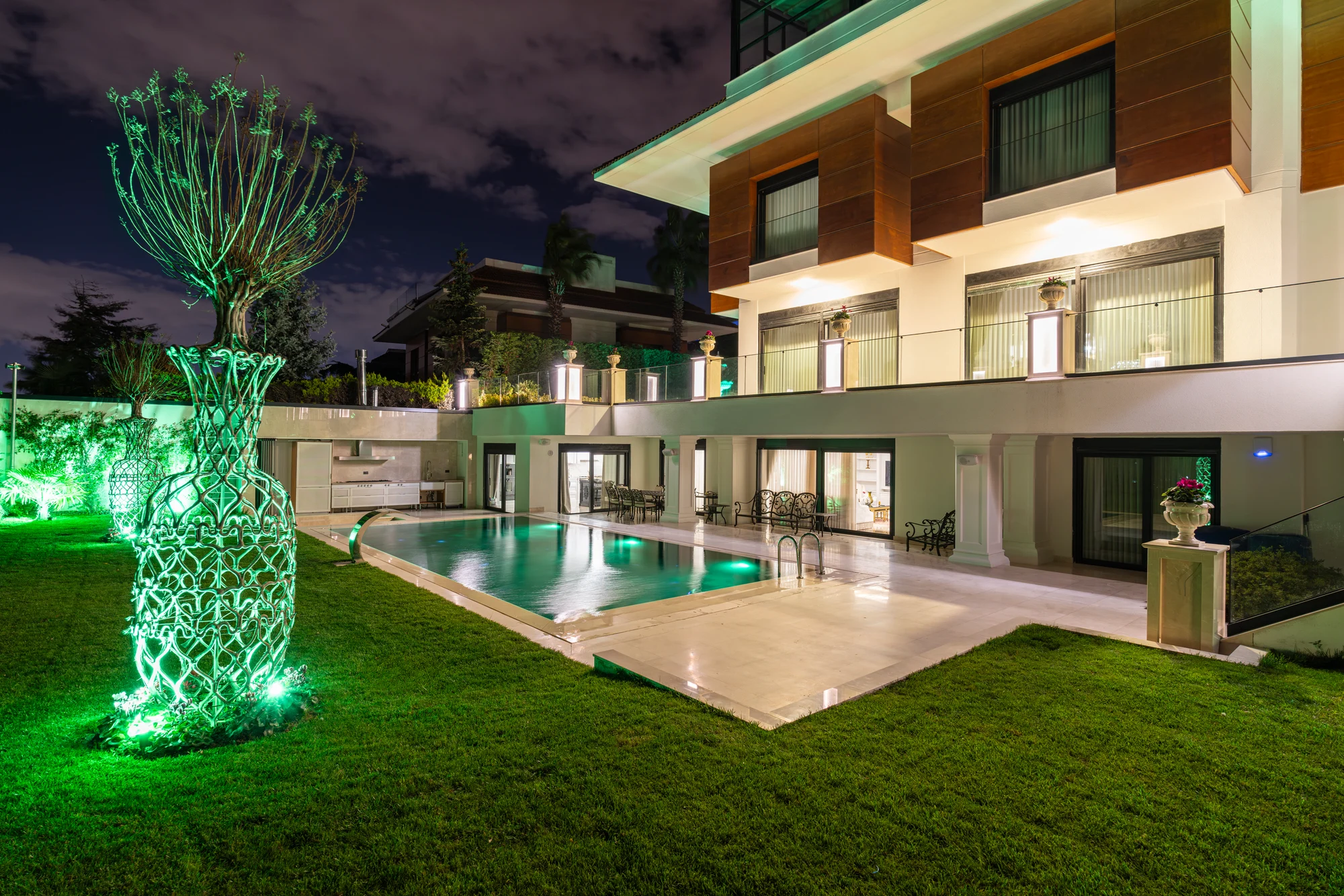
A corporate pool project completed for Efor Holding.
- Location
- İstanbul
- Completion
- 2024
 Spa & Wellness
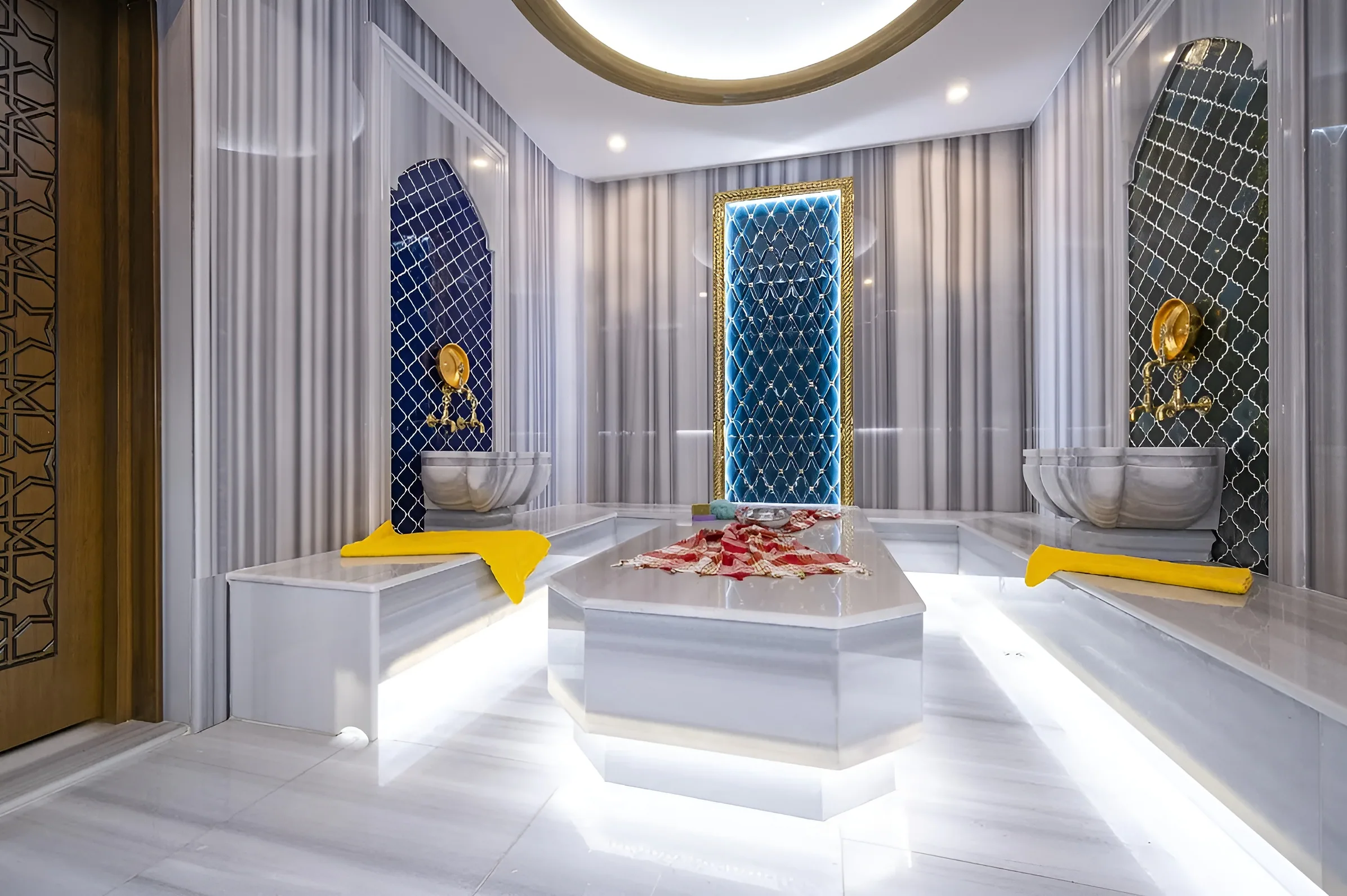
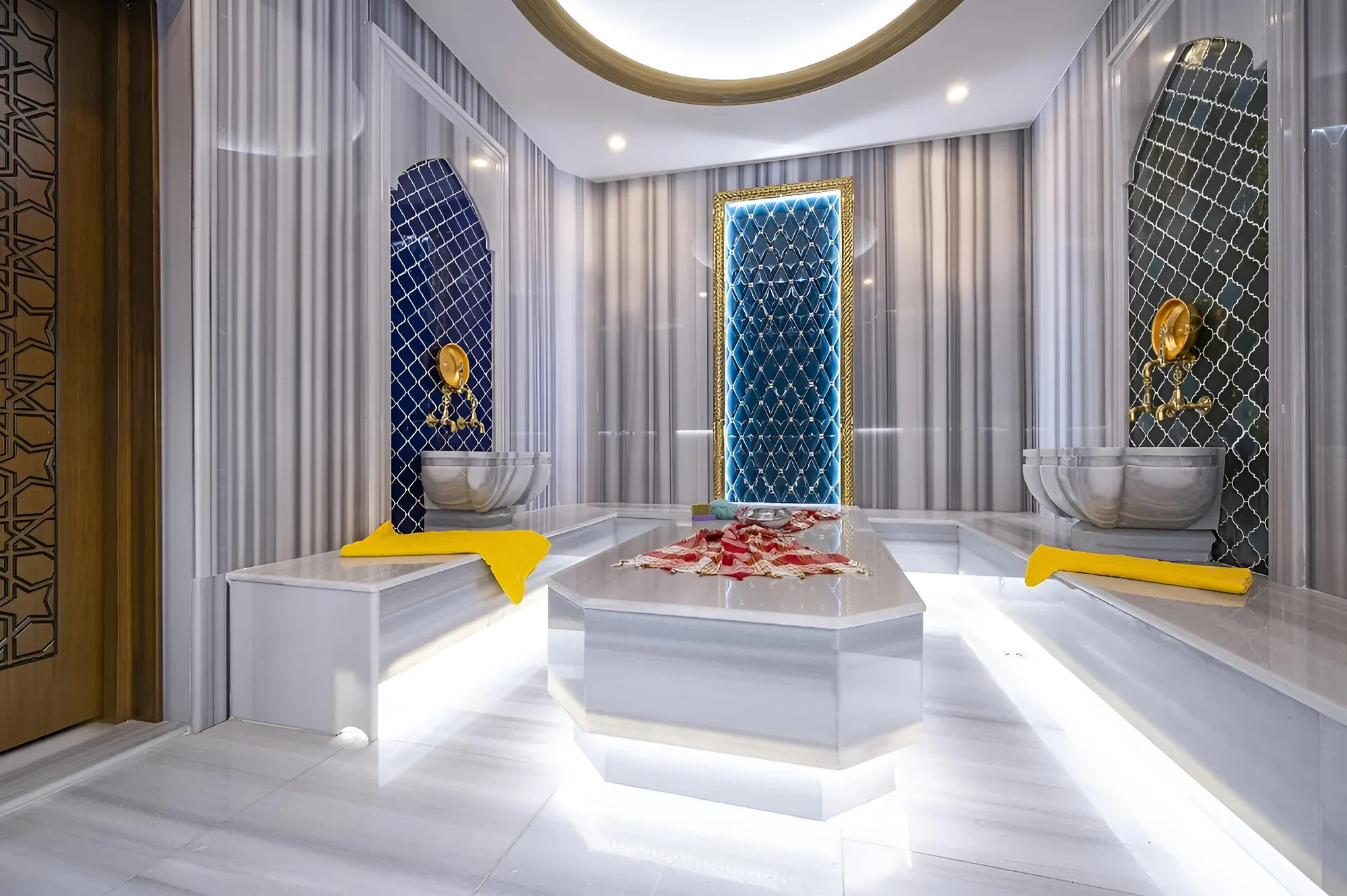
Sinan Türker · Yalova Turkish Hammam & Sauna
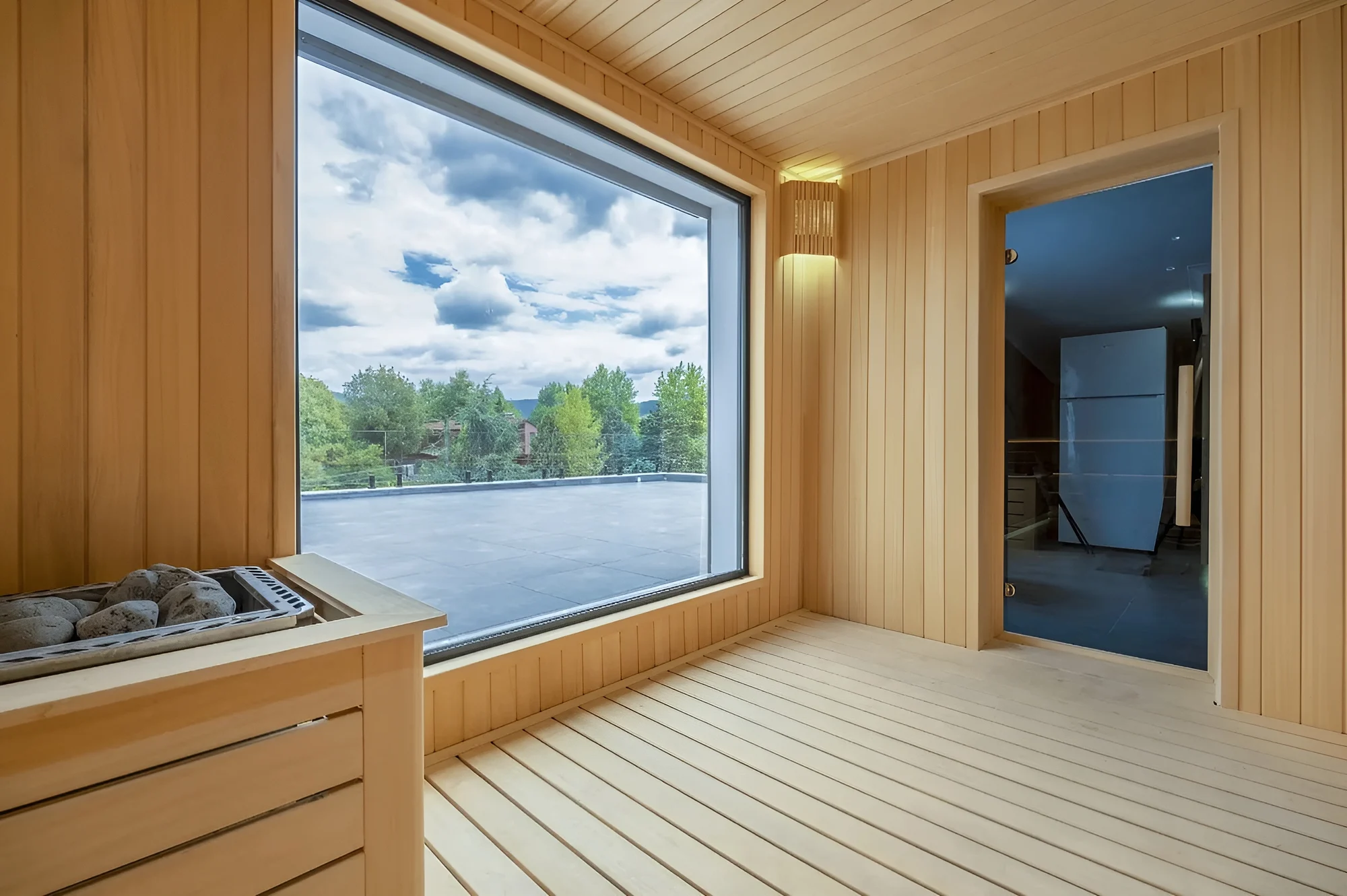
A Turkish hammam and sauna wellness project completed in Yalova in 2025.
- Location
- Yalova
- Completion
- 2025
 Spa & Wellness
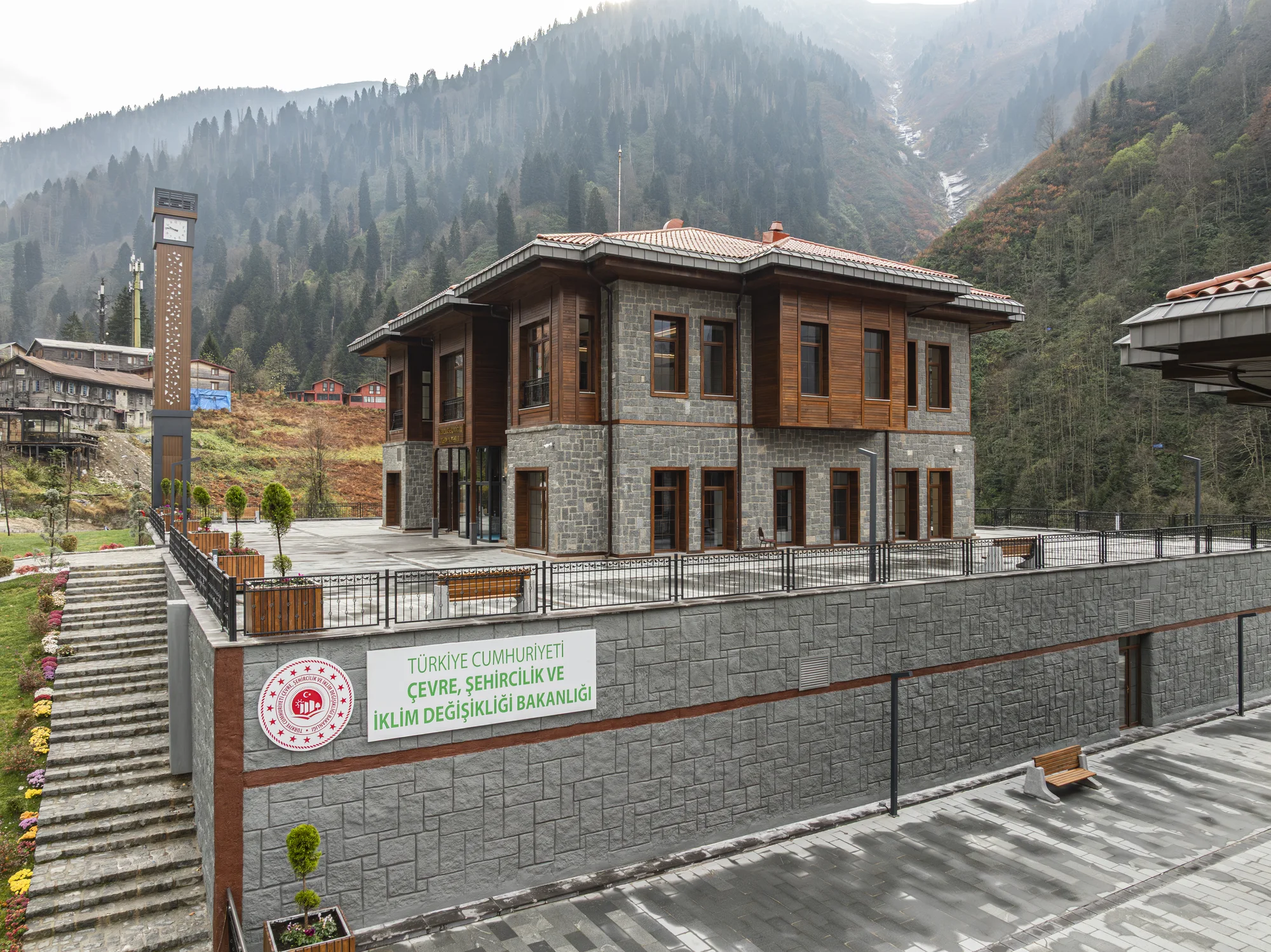
Kudu İnşaat · Yalova Hammam
A traditional Turkish hammam completed in Yalova in 2025.
- Location
- Yalova
- Completion
- 2025
 Thermal
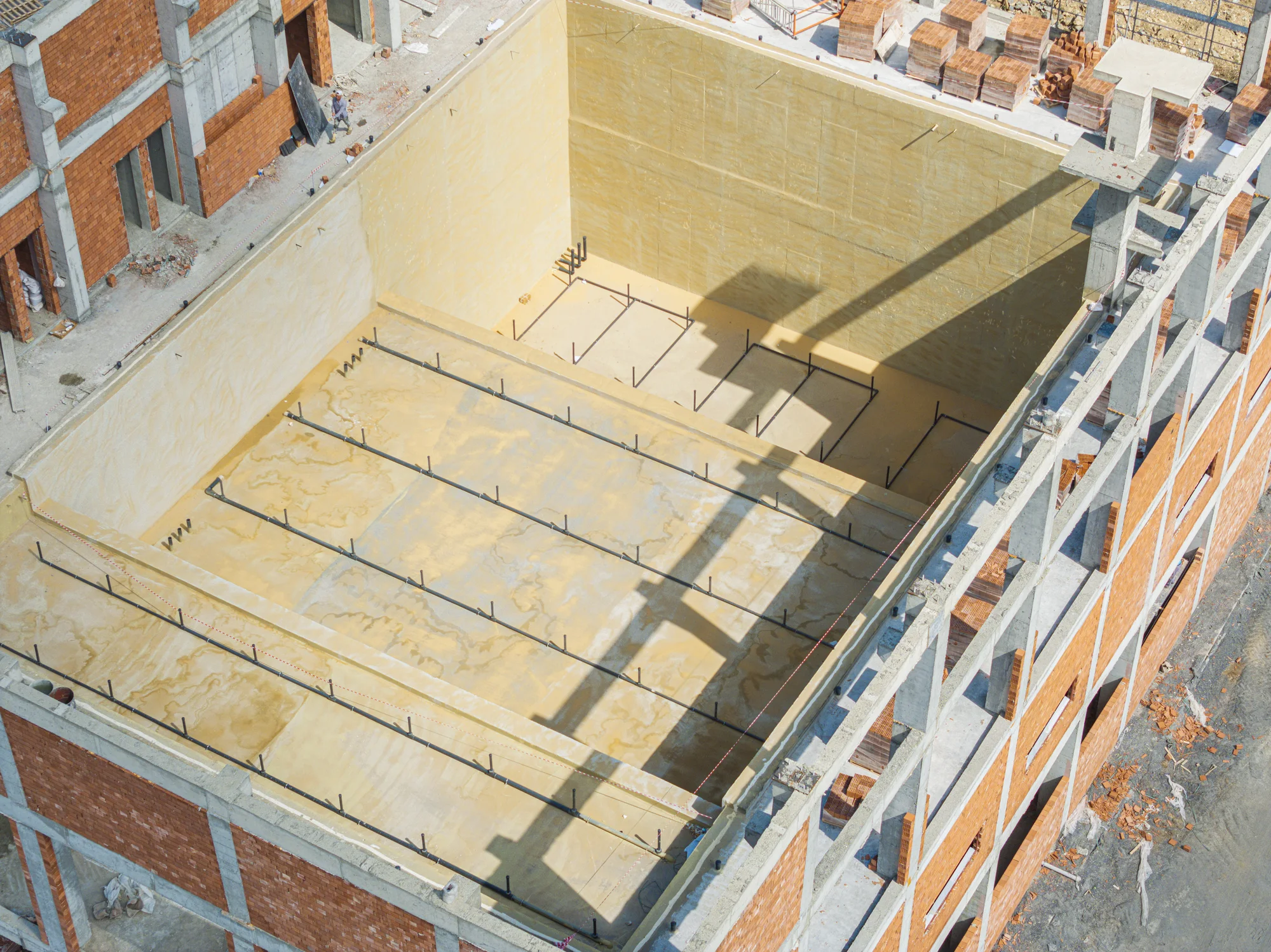
Ayder Tenzile Erdoğan Thermal Hotel
In partnership with TOKİ we delivered 42 wet areas turnkey — a complete spa & wellness composition reaching from pools and thermal pools to sauna, steam room, salt room, jacuzzi and shock shower, and from VIP and suite Turkish hammams to Türkiye's largest göbektaşı hammam.
- Location
- Ayder Plateau / Rize
- Completion
- 2025
 Public Sector
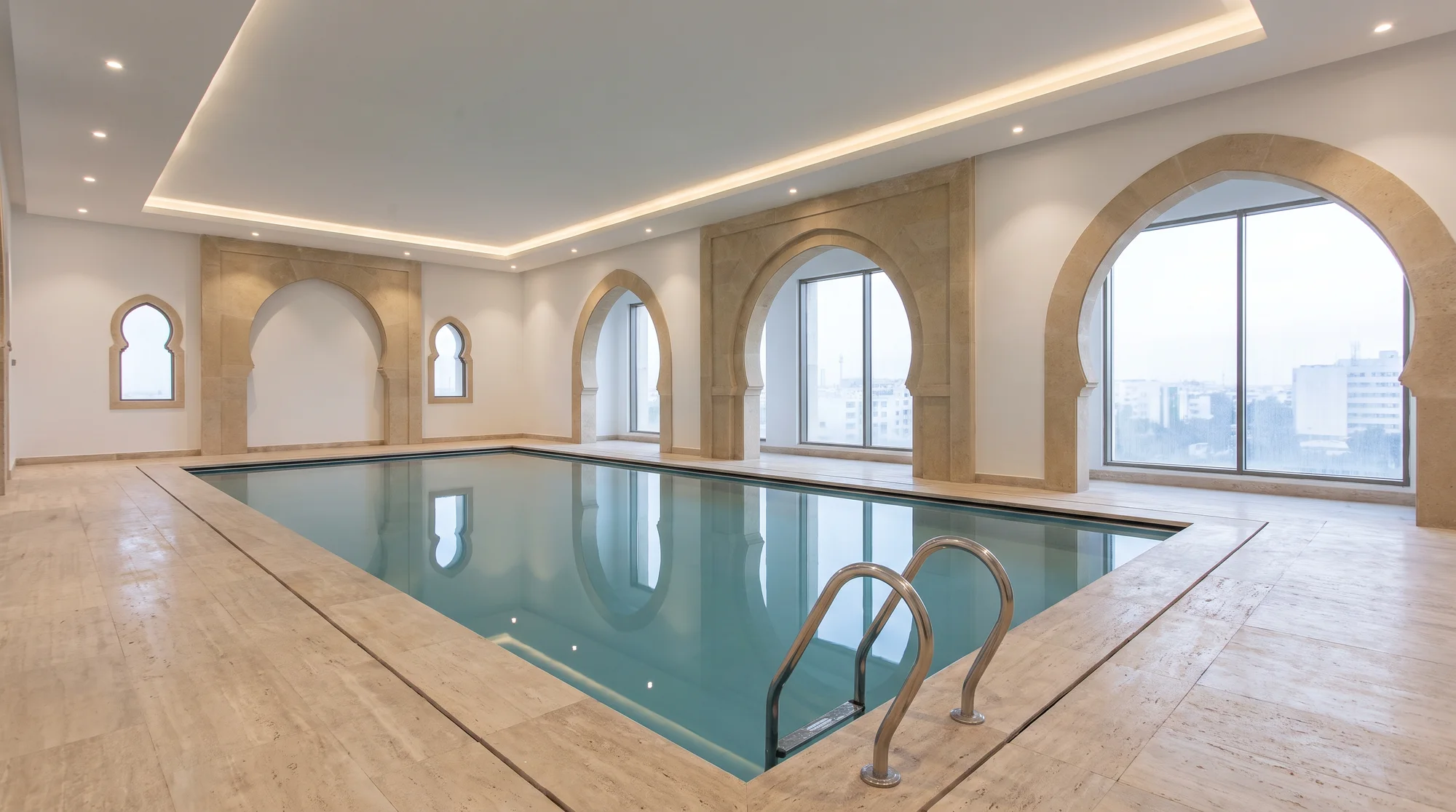
Ministry of National Defence · SAS Training Pool
In Riva we built Türkiye's deepest swimming pool turnkey — 33×22 metres and 10 metres deep. We are proud to have played our part in a facility where our country's heroes will train. The pool's water is disinfected by a 600-gram ozone system — making this Türkiye's largest swimming pool using ozone disinfection.
- Location
- Riva / Istanbul
- Completion
- 2024
 Spa & Wellness
Sofitel Algiers Hamma Garden
For China State Construction Engineering Corporation (CSCEC) we completed the Sofitel hotel's entire spa turnkey — from pools and hydrotherapy pools to jacuzzi, Vichy shower, Turkish hammam, sauna and massage systems.
- Location
- Algeria
- Completion
- 2020
Frequently Asked Questions
Every question on your mind; answered clearly.
Çilek Havuz Technical Team
Pool & Wellness Engineering
- Response Time
- Same day
- Channels
- Phone · E-mail · WhatsApp
If the answer you are looking for is not here, send your question directly to us and our team will reply as soon as possible.
Book a free site surveyThe first step is a laboratory analysis of the spring water; every thermal source has its own chemical fingerprint, and every decision from materials to the heat exchanger follows that profile. A material chosen without an analysis may work perfectly well at another source and still wear out prematurely in your water. We begin the process with the analysis and make the report the foundation of the project.
Çilek Havuz Technical Team
Because hot, mineral-laden water calls for corrosion-resistant metals, heat-resistant seals, a chemically stable finish and, in most projects, a heat exchanger. Standard pool materials wear out quickly in these conditions, so the material grade goes up. In return, when the heat of the source is managed correctly the heating cost largely disappears, and the difference is recovered in operation.
Çilek Havuz Technical Team
Connecting it directly is not advisable; the materials, pipework and equipment of a standard pool are not designed for an aggressive mineral load and high temperatures. Adapting it is a broad engineering decision, taken by examining the existing structure alongside the laboratory profile of the water. With an on-site survey we report what your existing facility can and cannot take.
Çilek Havuz Technical Team
Hygiene comes from filtration, scheduled water renewal and continuous monitoring of the water balance working together. Because mineral-laden hot water is renewed more often, a fresh-water plan is part of the design; in commercial facilities, the measurement and record-keeping regime required by the relevant health legislation is put in place. Automatic dosing and continuous measurement keep human error to a minimum.
Çilek Havuz Technical Team
It cannot be eliminated entirely, but with the right ventilation it can be managed at a comfortable level; because the odour concentrates above all in enclosed spaces, room ventilation is planned at the very start of the design. Ventilation is needed not only for comfort but also to stop humid, mineral-rich air from degrading the building fabric. The solution is sized according to the profile of the source and whether the space is enclosed or not.
Çilek Havuz Technical Team
We take on the structural and engineering side of a thermal pool; the relaxation and comfort that hot, mineral-rich water offers are supported by well-judged temperature zones and a safe design. Therapeutic use and health effects are the domain of doctors, and we make no claims in that area. In the design, safe entry, handrails and accessibility are standard for every user.
Çilek Havuz Technical Team
Yes; a thermal pool is maintained more frequently than a standard pool, and the system is designed accordingly. More frequent filter backwashing, monitoring surfaces for limescale, corrosion checks on metal components and regular water testing are all part of the routine. A technical space laid out for easy maintenance access lightens that load considerably.
Çilek Havuz Technical Team
The permits required vary with the scale of the facility and its intended use. Commercial thermal spas and hotel pools are subject, alongside the building permit, to the health legislation governing pools open to shared use, while residential-scale projects proceed within a simpler framework. We establish the list of permits your project calls for together at the site survey stage, and prepare the technical documentation to suit that process.
Çilek Havuz Technical Team