

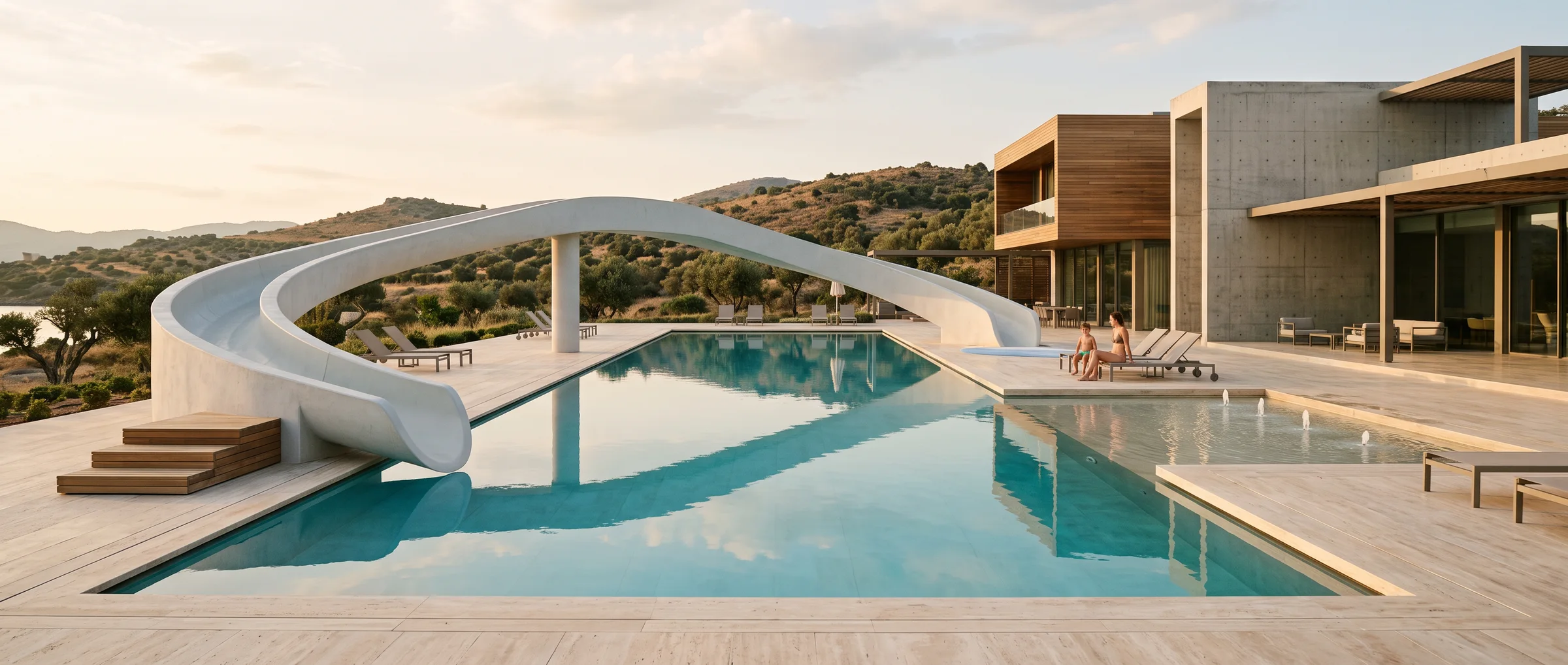
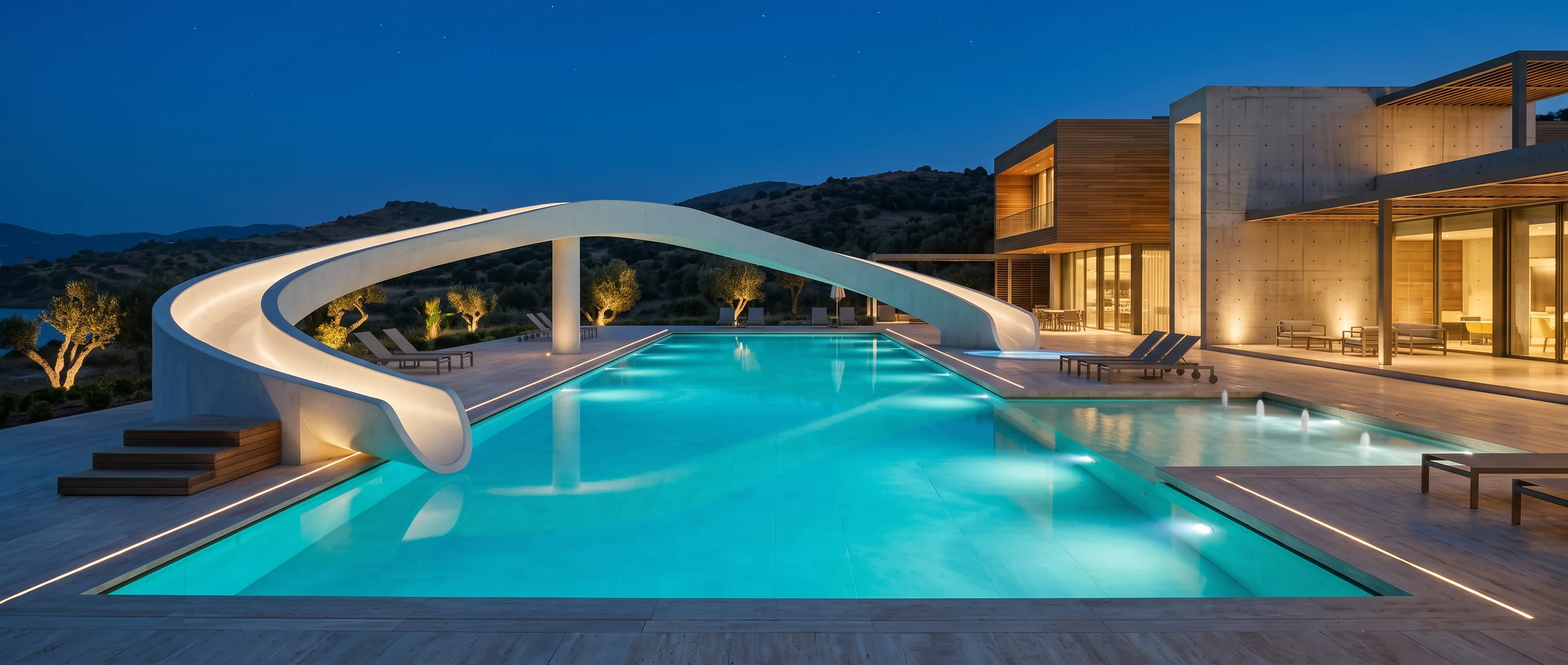
Aquapark Construction
Slide-equipped, entertainment-focused aquapark solutions.
Çilek Havuz in Numbers
We build an aquapark not from a slide catalogue, but from capacity, flow-rate and safety calculations.
- 33+
- Years
- 14
- Export
- 500+
- Projects
Aquapark Construction — Frames from Our Projects
Frames from Our Projects
06 media
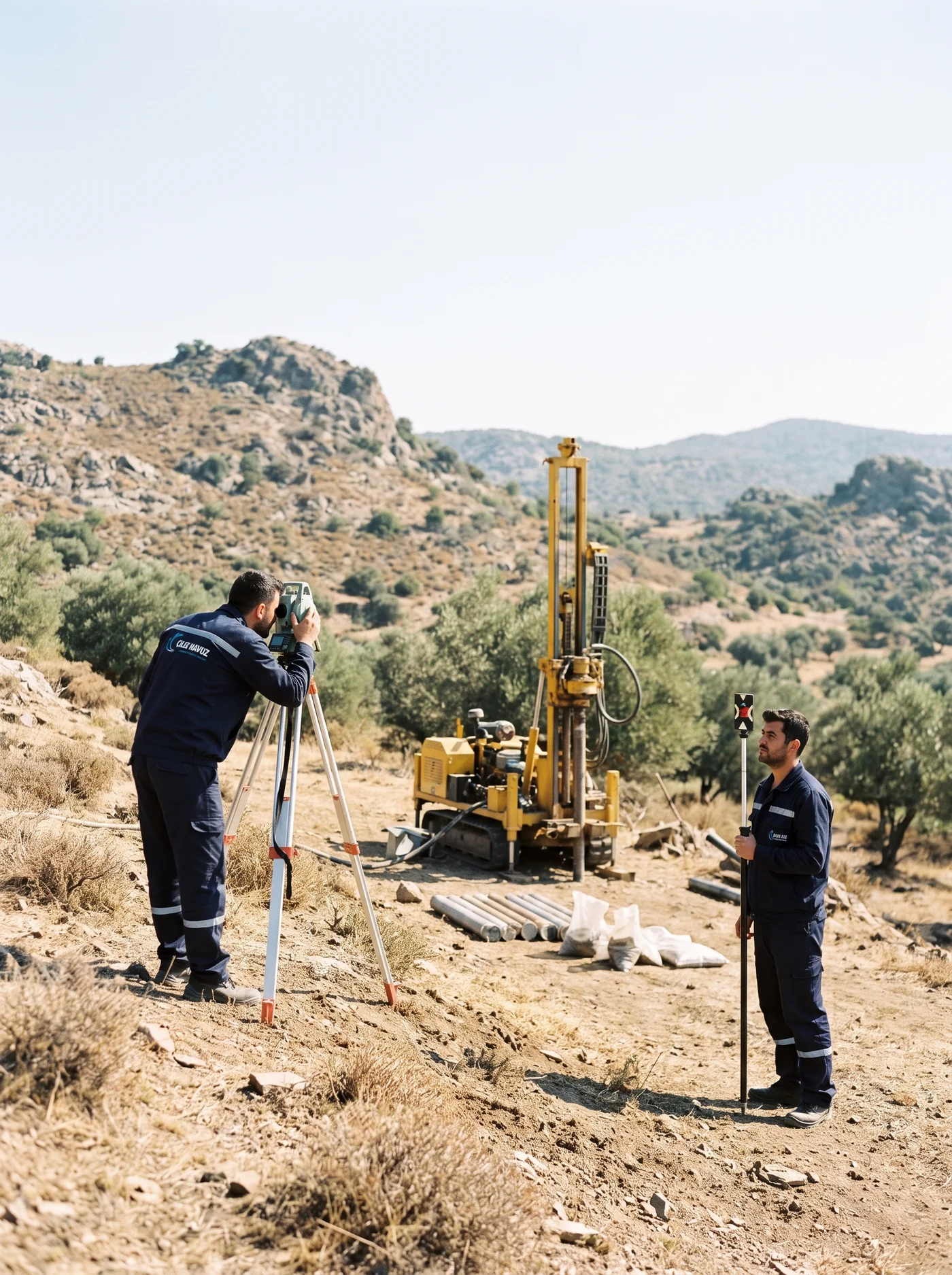
An aquapark is the most heavily loaded relative in the pool family: slide towers impose heavy point loads on the ground, while pool structures and balance tanks spread over a wide area. That is why our first step is the land itself; ground bearing capacity, falls and levels, groundwater and the existing infrastructure are studied on site.
The operating side of the investment is settled at the same stage: will the park serve hotel guests, or sell day tickets? The target visitor profile, the length of the season and the water and electrical capacity are questions to be answered before the attraction list.
- Soil study and bearing capacity
- Site falls and level analysis
- Water source and mains capacity
- Electrical infrastructure and power requirement
- Target visitor profile and season length
- Operating model (hotel guests / day visitors)
- Zoning and permit framework
- Preliminary feasibility and budget range
Why it matters
In aquapark projects the most expensive mistakes begin below ground: towers and pool structures set on ground that has not been studied exact a price in settlement and leaks for years. We take no layout decision before the study is done.
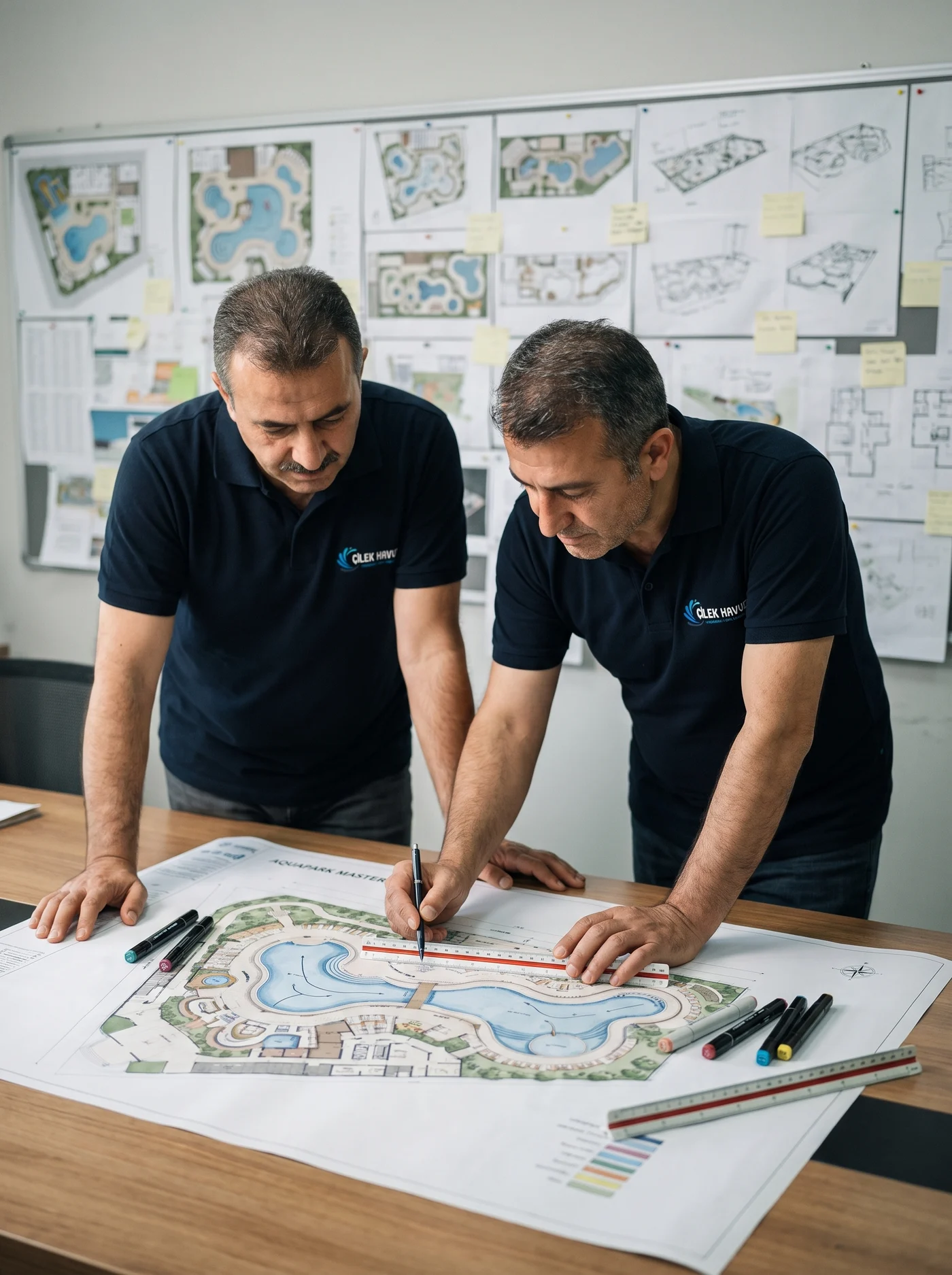
A good aquapark is planned like a small city: children's, family and adrenaline zones are separated by age group; wet and dry circulation routes are composed so that they never cross, and lifeguard sightline positions are placed to leave no blind spot.
Capacity is calculated from the water surface, the hourly user throughput of each attraction and the balance of relaxation space. Loungers, shaded areas, food and beverage and the wet areas are all part of that calculation, because a guest spends the whole day not in the water but across the park as a whole.
- Zoning by age group
- Instantaneous and daily capacity targets
- Hourly throughput calculation per attraction
- Queue, stair and tower circulation
- Lifeguard sightline positions and lines of view
- Loungers, shade and relaxation areas
- Food and beverage and wet-area layout
- Expansion reserve for later phases
Capacity is a comfort calculation, not a ticket count
The wrong capacity shows itself in the queue: a crowd waiting in front of the most expensive slide quietly erodes guest satisfaction. The right measure is not tickets sold but visitors carried without trouble.
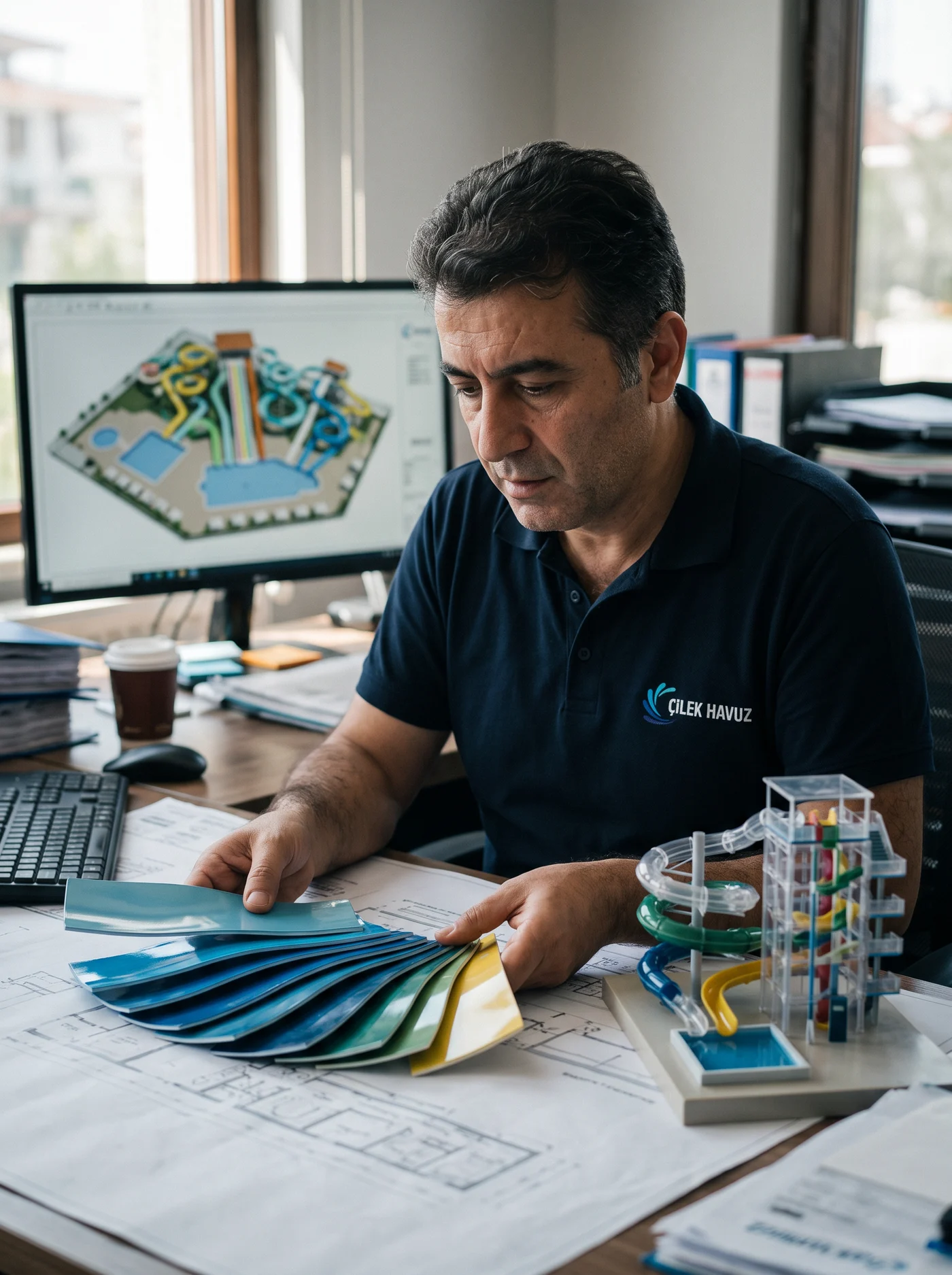
The slide family is wider than people assume: open and enclosed body slides, family slides ridden on rafts, steep speed slides, funnel and bowl types, side-by-side racer lanes. To these are added the wave pool, the current channel (lazy river) and children's play structures with water castles.
The selection comes from the capacity plan, not from a catalogue: a balanced mix offering each age group its own level of excitement; colours and forms in keeping with the theme; the type of landing pools and the safety clearances are decided together. On glass-fibre reinforced (GRP) modules, surface quality and UV resistance are not open to negotiation.
- Body and tube slide selection
- Family (raft) slide and racer lanes
- Steep speed slide decision
- Wave pool and wave scenarios
- Current channel (lazy river) route
- Children's play structure and zero-depth entry
- Landing pool types and safety clearances
- GRP module quality and fit with the theme
The children's zone is the heart of the park
Families come to the park for their children: a play structure with zero-depth entry, a tipping bucket and mini slides often brings back more guests than the tallest tower. Budget saved on the children's zone is repaid in operation.
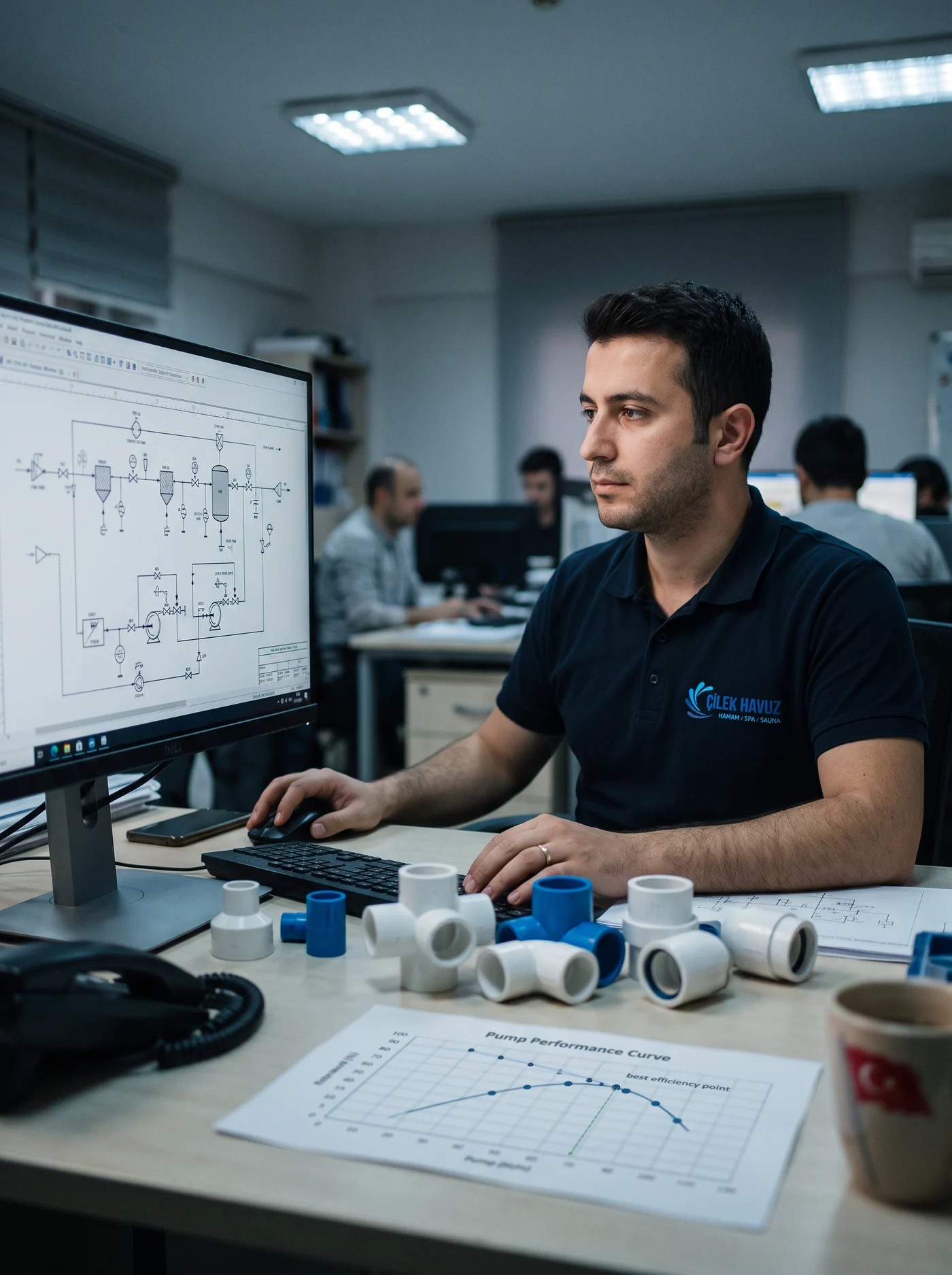
In an aquapark the water never stops: each slide is fed by its own fixed flow rate, and the wave pool and the current channel call for their own pump sets. Balance tanks, pipe diameters and pump redundancy are sized to the sum of those flows.
Heavy use means a short turnover time in filtration: a constant load of fresh contamination enters the system, and the water has to stay hygienic even on the busiest day. Automatic dosing and measurement points manage that load with data, while variable-speed pumps and heat recovery reduce the operating bill from the outset.
- Attraction feed flow rates
- Pump sets and redundancy
- Sizing of the balance tanks
- Turnover time and filter capacity
- Automatic dosing and measurement points
- Pipe diameters and hydraulic balance
- Variable-speed pumps and energy plan
- Plant room layout and access
Water carries the slide; the calculation carries the water
In a park with weak hydraulic calculations, even the most expensive slide either runs dry or flows slowly. No attraction is ordered before flow, tank and filter are resolved in a single equation.
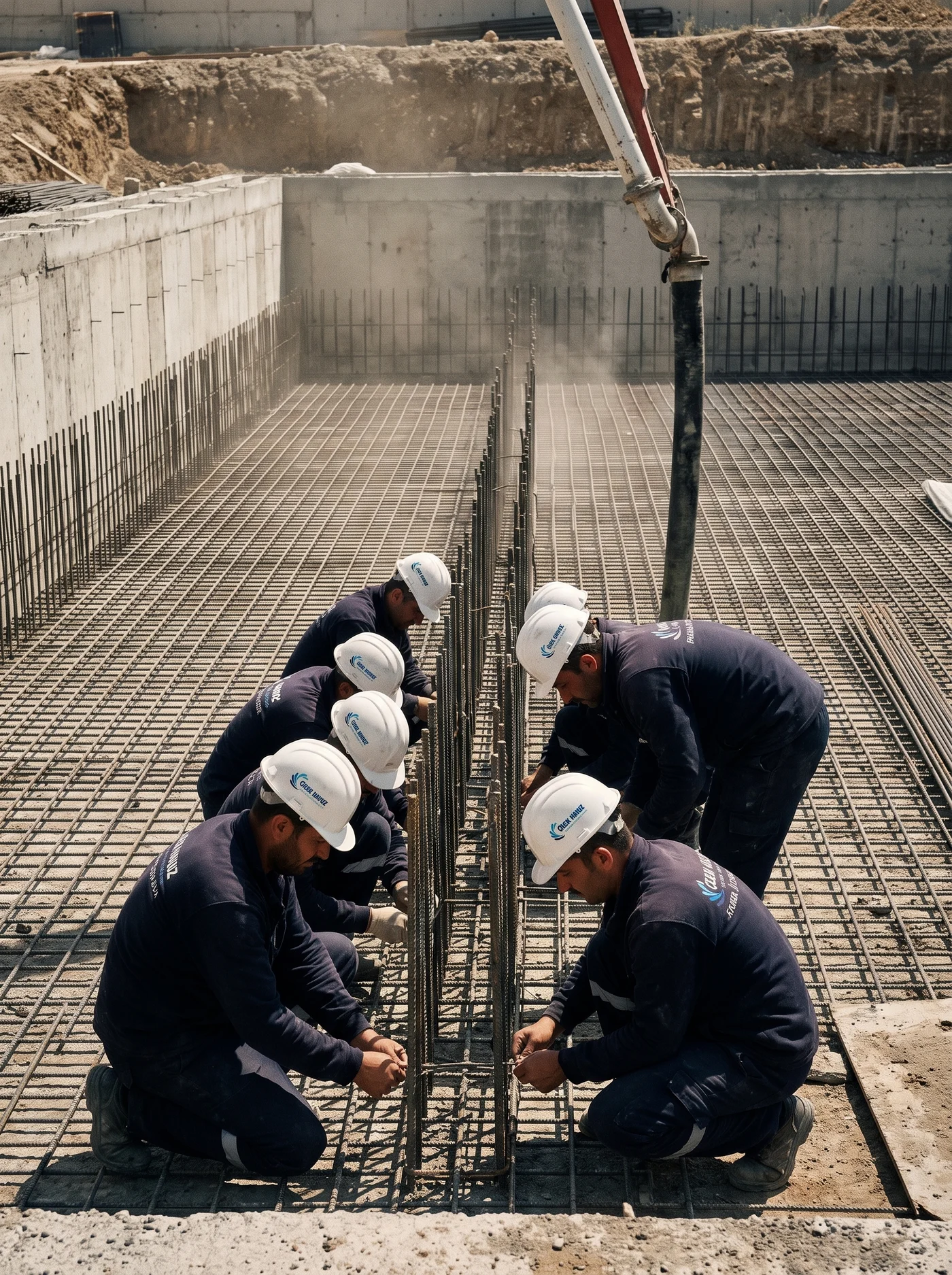
Pool structures, the wave chamber, the current channel and the landing pools are built in watertight concrete with two-way reinforcement. Tower foundations are cast to the structural design; pipe galleries and infrastructure ducts are planned so that they can be reached without excavation when maintenance is needed years later.
Every water structure is put through a leak test before the finish goes on. At aquapark scale even a small leak means a serious loss of water and energy over a season; no structure moves to the next stage without a test record.
- Earthworks and ground improvement
- Tower and platform foundations
- Pool structures and two-way reinforcement
- Wave chamber and channel construction
- Waterproofing and leak testing
- Pipe galleries and infrastructure ducts
- Drainage and rainwater lines
- Surface preparation before the finish
Waterproofing cannot be put right afterwards
A waterproofing error left beneath the finish shows itself in operation only through the water bill; at that point the repair costs many times what the construction did. Handover without testing does not exist in our vocabulary.
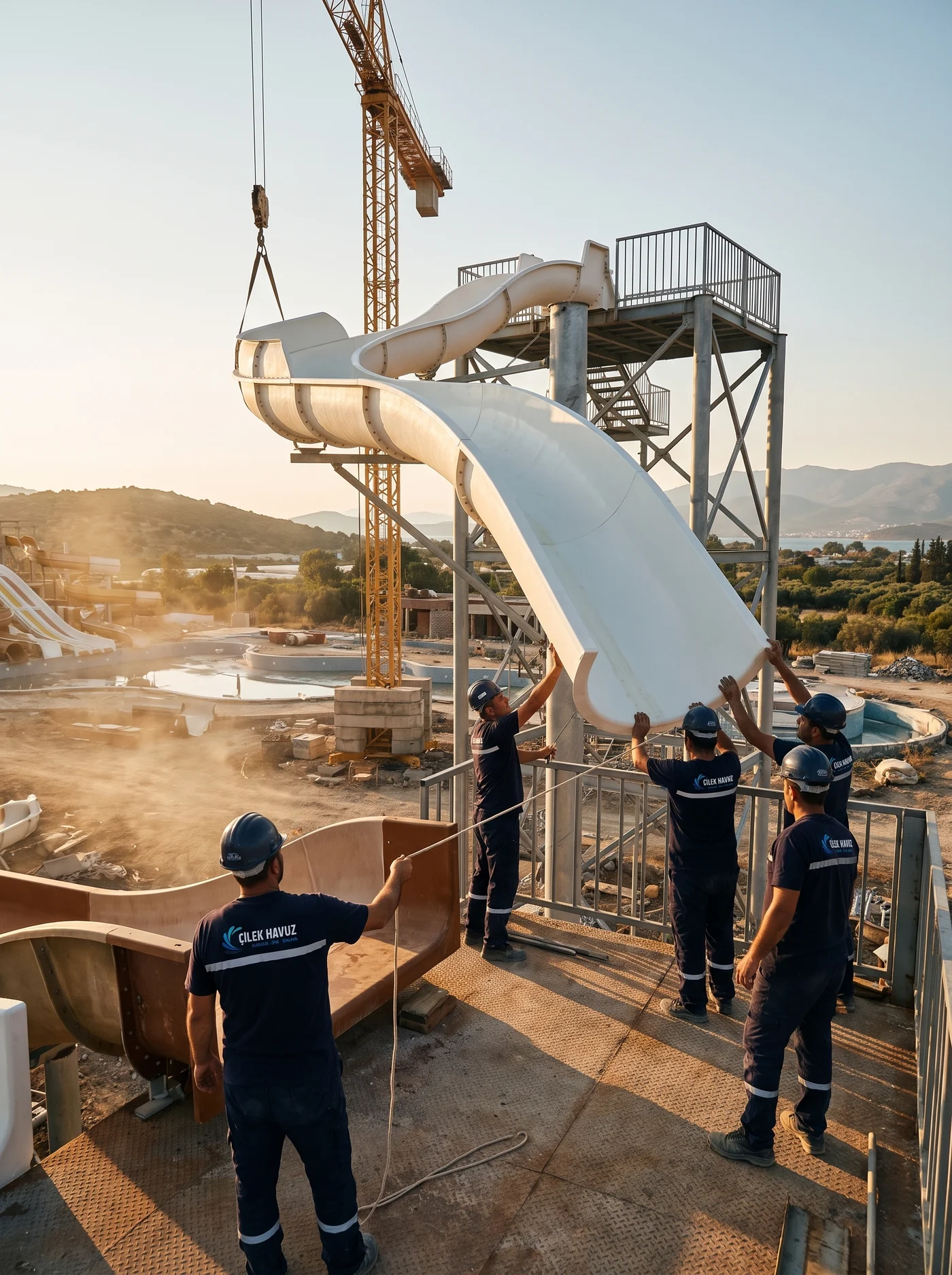
Towers and platforms are built in steel protected against corrosion; handrail heights and step dimensions are fabricated to the safety design. GRP slide modules are installed to the tower and to one another with gasketed joints, aligned to the millimetre.
In a slide, comfort and safety are hidden in the joints: a step in level, a burr or a protruding gasket is a direct risk of injury for a user travelling at speed. Every flume is therefore scanned by hand, and gradients and curves are trialled with water running.
- Tower and platform installation
- Handrail and step safety
- GRP module joints and gaskets
- Surface smoothness check (scanned by hand)
- Gradient and curve tolerances
- Anchorage and vibration checks
- Corrosion protection
- Trial runs with water flowing
A flume not scanned by hand is not handed over
The quality of a slide is told not by its brochure but by its joints. A single step in level between modules makes itself felt across thousands of rides through the season; every detail skipped at installation comes back in operation.
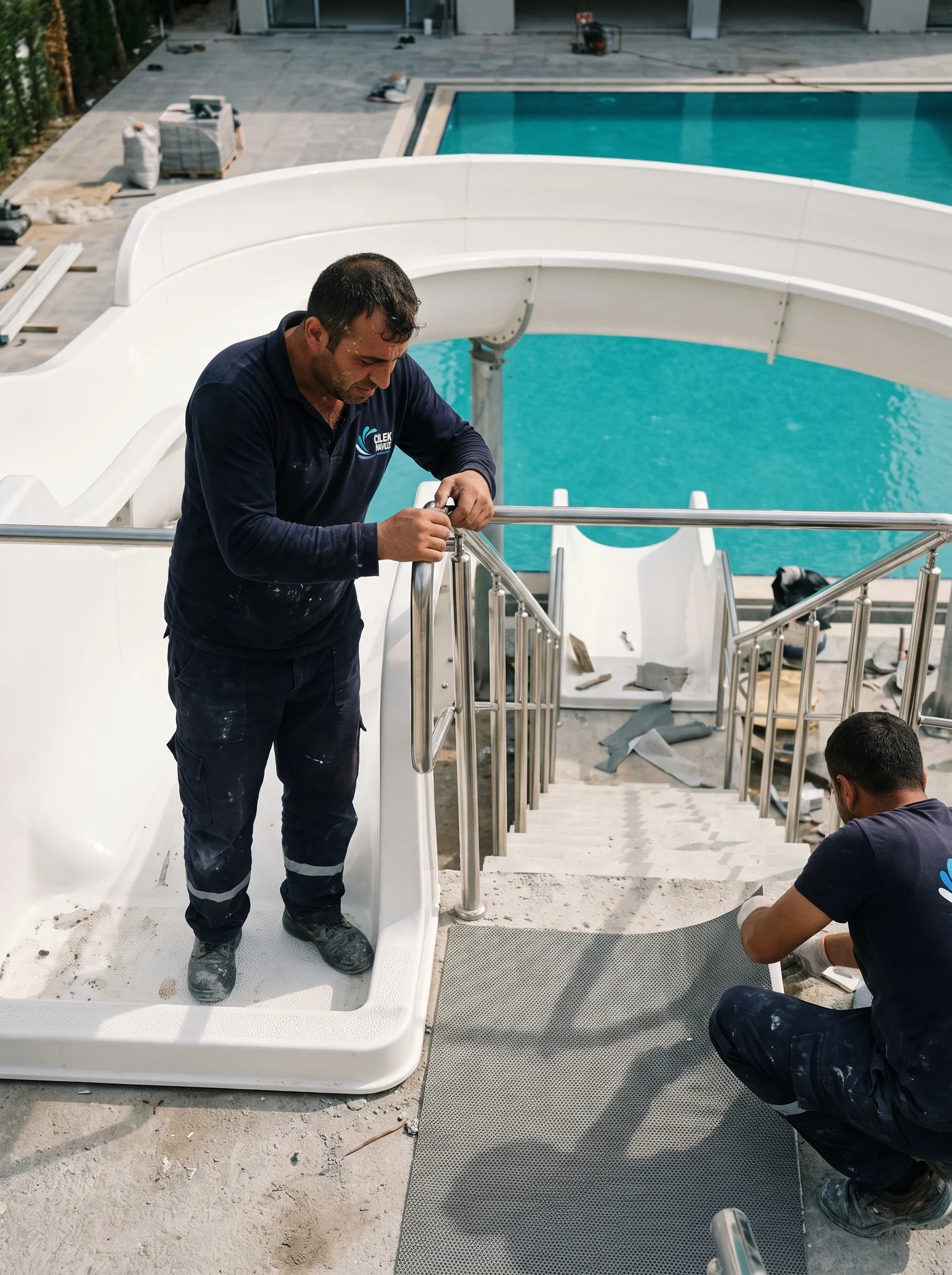
Safety is not a piece of equipment but a layer worked into every step of the design: the project is engineered to international safety standards, and non-slip surfaces, depth markings, softened edges and the exit directions from landing pools are the visible parts of that layer.
The operating side is set up from the outset too: height and age restriction signs, lifeguard stations, the first aid point and the emergency plan are all in place before opening. Safety goes on living after handover through periodic inspection checklists.
- Engineering to international safety standards
- Non-slip floor applications
- Depth and warning signage
- Height and age restriction signs
- Landing pool safety clearances
- Lifeguard stations and lines of view
- First aid point and emergency plan
- Periodic safety checklist
The precondition of fun
A guest remembers the speed of the slide and never notices the safety layer — and that is exactly as it should be. Safety that goes unnoticed is safety built correctly; it is also what takes the stress out of inspection day.
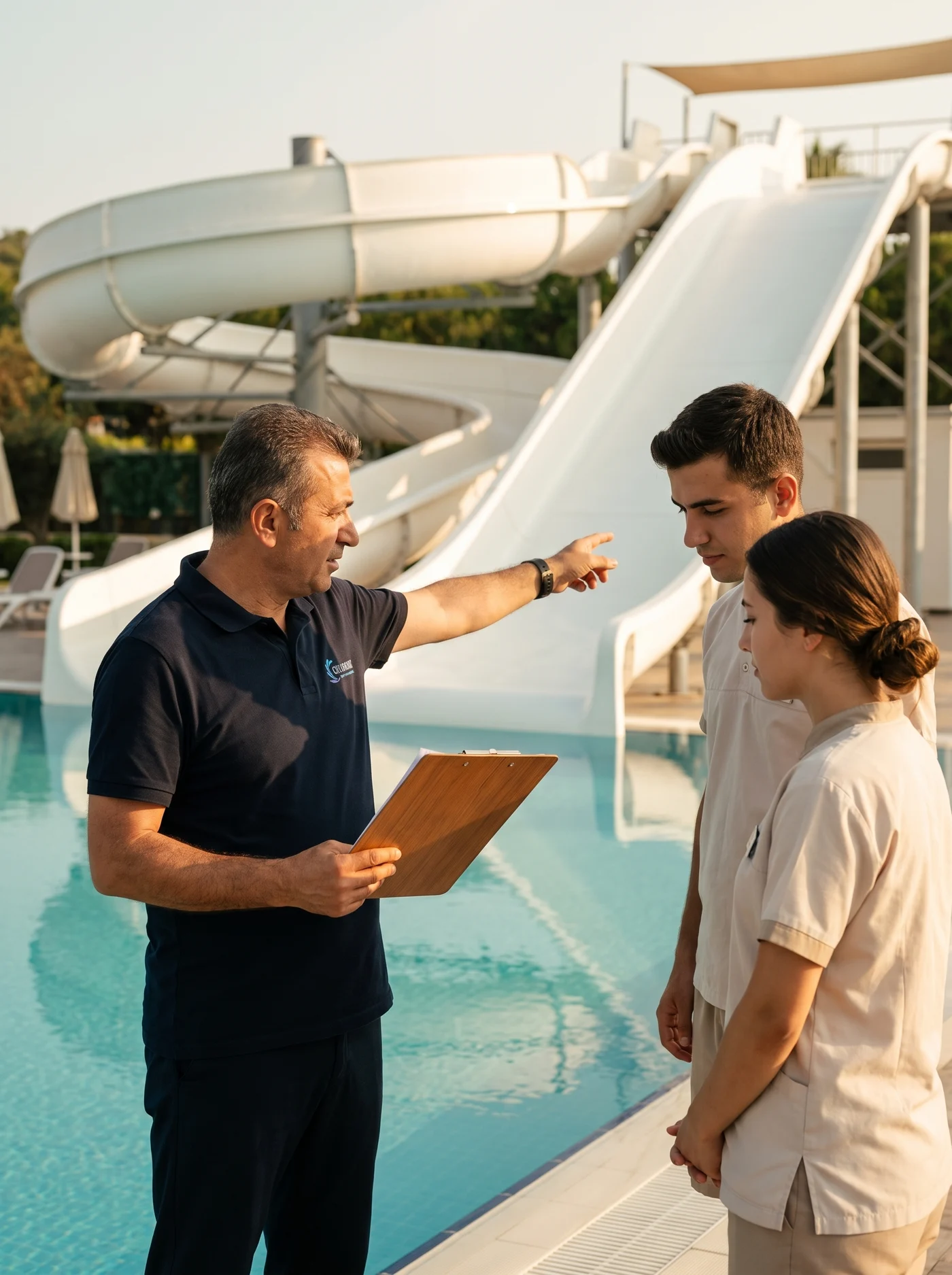
Before opening, the park is rehearsed from end to end: water readings and flow rates are measured, wave scenarios are run and every slide is tested with trial rides. Problems are found and closed out before the guests arrive.
Handover is completed with training for the operating team: the water chemistry routine, daily checklists and the season opening and closing procedure are passed to your team. After that we stay with the park through a maintenance agreement, a spare-parts plan and pre-season overhauls.
- Water chemistry and flow rate tests
- Attraction trial rides
- Wave and scenario rehearsals
- Staff operating training
- Handover of the daily checklists
- Season opening and closing procedure
- Maintenance agreement and spare-parts plan
- Handover file and warranty documents
An aquapark does not end at handover
The first season is the system's real examination: pump programmes and dosing curves are fine-tuned with usage data. A park that goes without its pre-season overhaul carries the risk of a breakdown in its busiest week.
In their own words,their own stories
From corporate facilities to villa projects — short story videos from the names who trusted us.
 Delivered with confidenceMinistry of National Defence
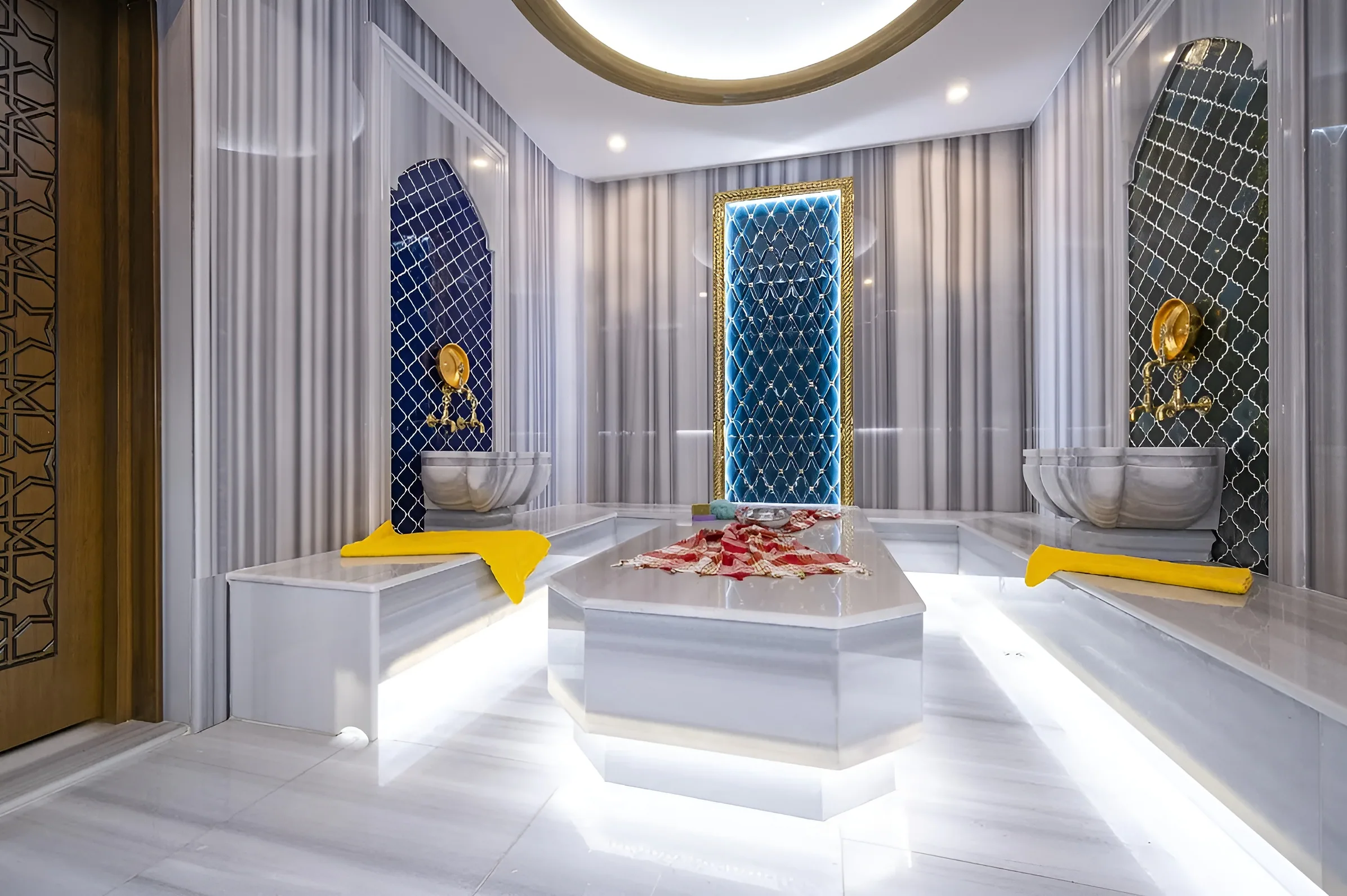 Thermal comfortTenzile Erdoğan Thermal Hotel
 Dreams came trueMehmet Sevigen
 The garden's new heartHakan Gönen
 Holiday at homeÇetin Uğurlu
Company & Contact
To talk about your project, we are one call away.
Legal Name
Çilek Havuz
Founded
1998 · Istanbul
Head Office
Çilek Plaza, Eyüp Sultan Mah. Yakacık Cd. Feshane Cd. No: 2 D:4 D:1, 34885 Sancaktepe / İstanbul
Service Area
All of Türkiye · exports to 14 countries
Portfolio ·
A selection of pool and spa projects we have brought to life all across Türkiye.
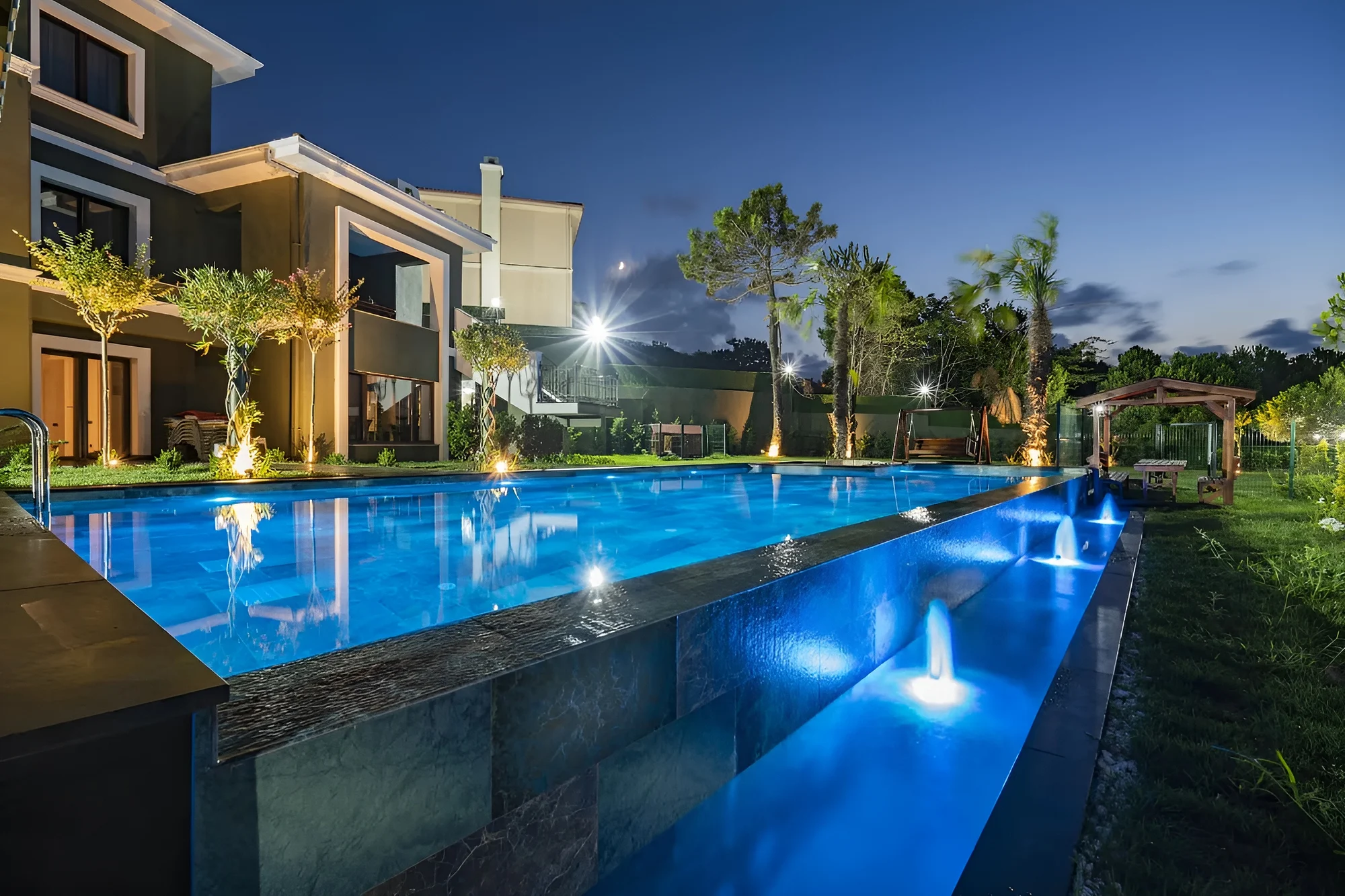 Villa
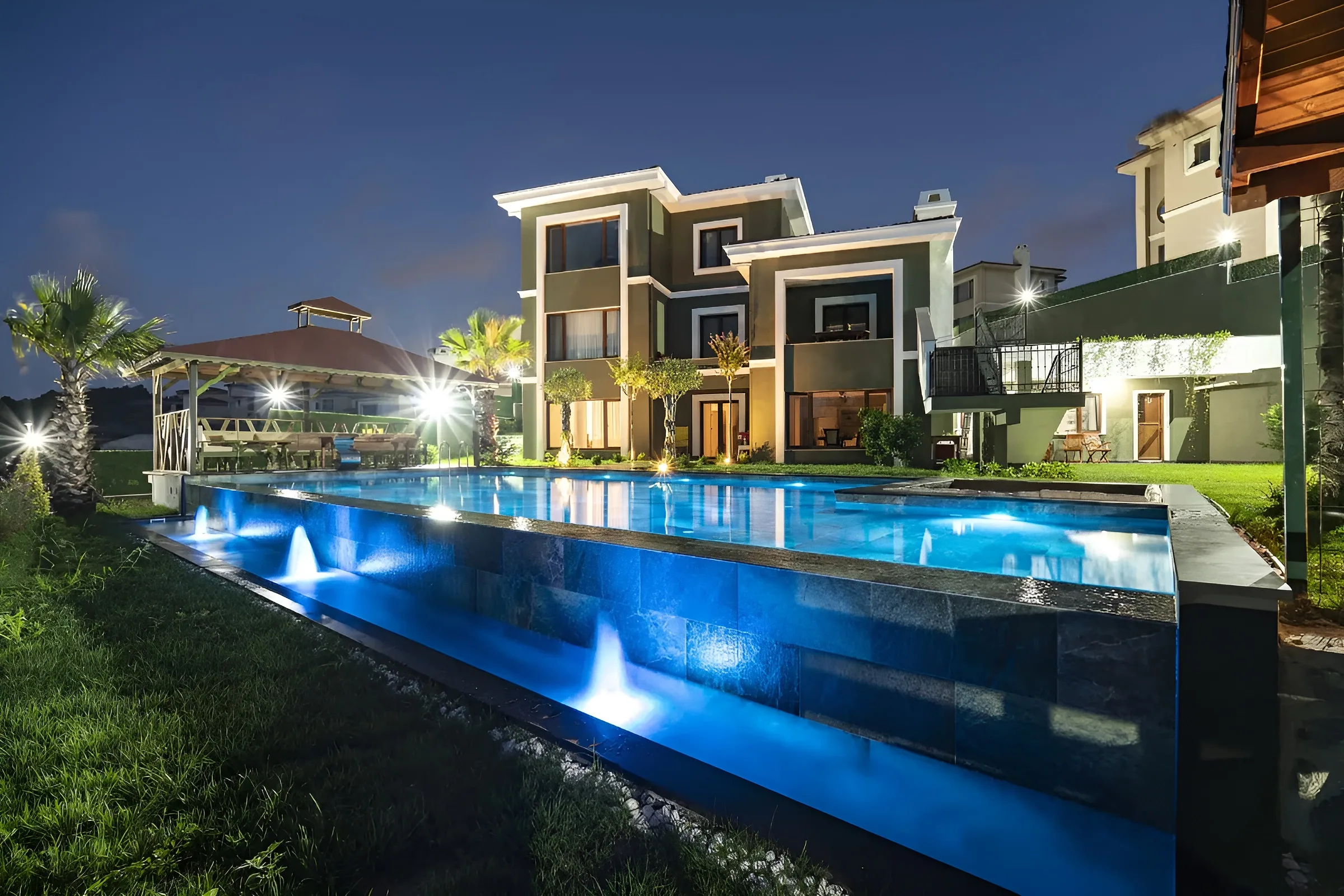
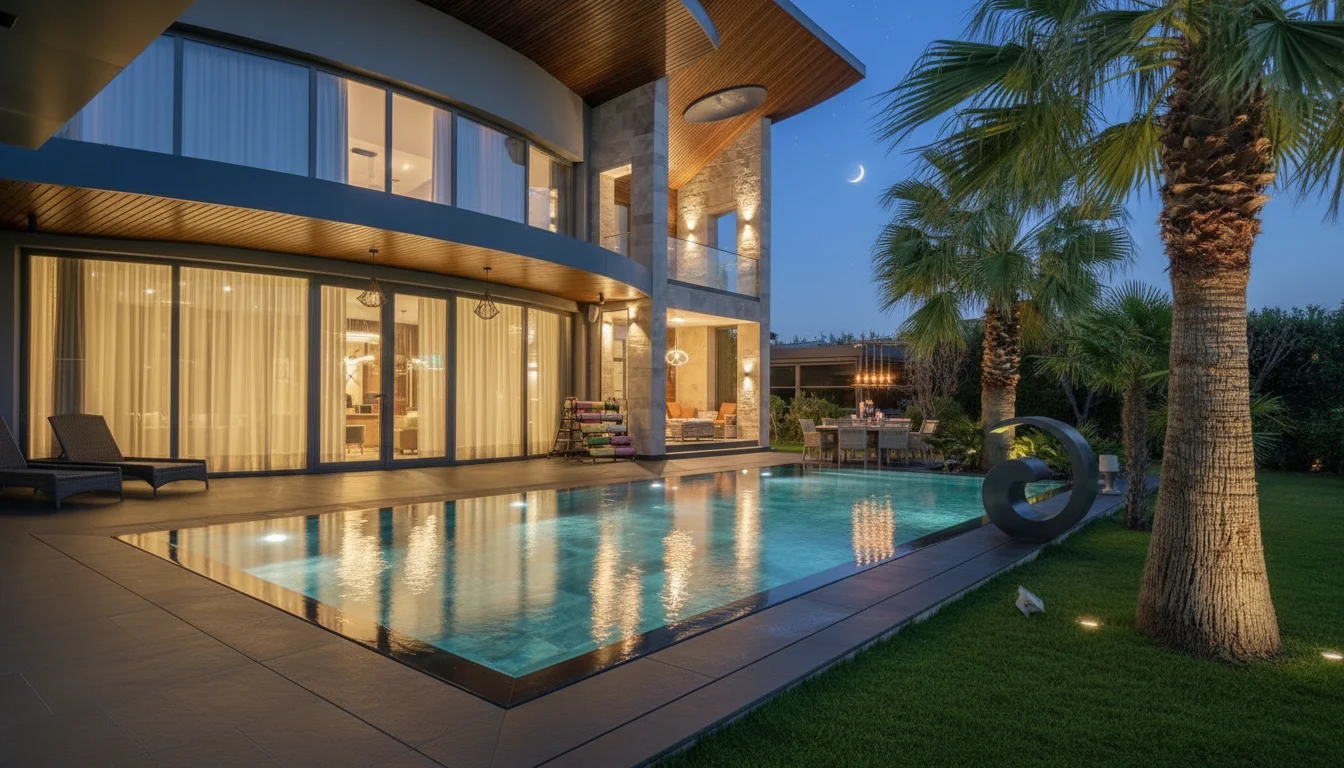
VillaMehmet Sevigen · Çatalca Infinity Pool
A 12×6 m reinforced-concrete infinity pool completed in Çatalca, Istanbul, in 2025.
- Location
- Çatalca / İstanbul
- Completion
- 2025
 Villa
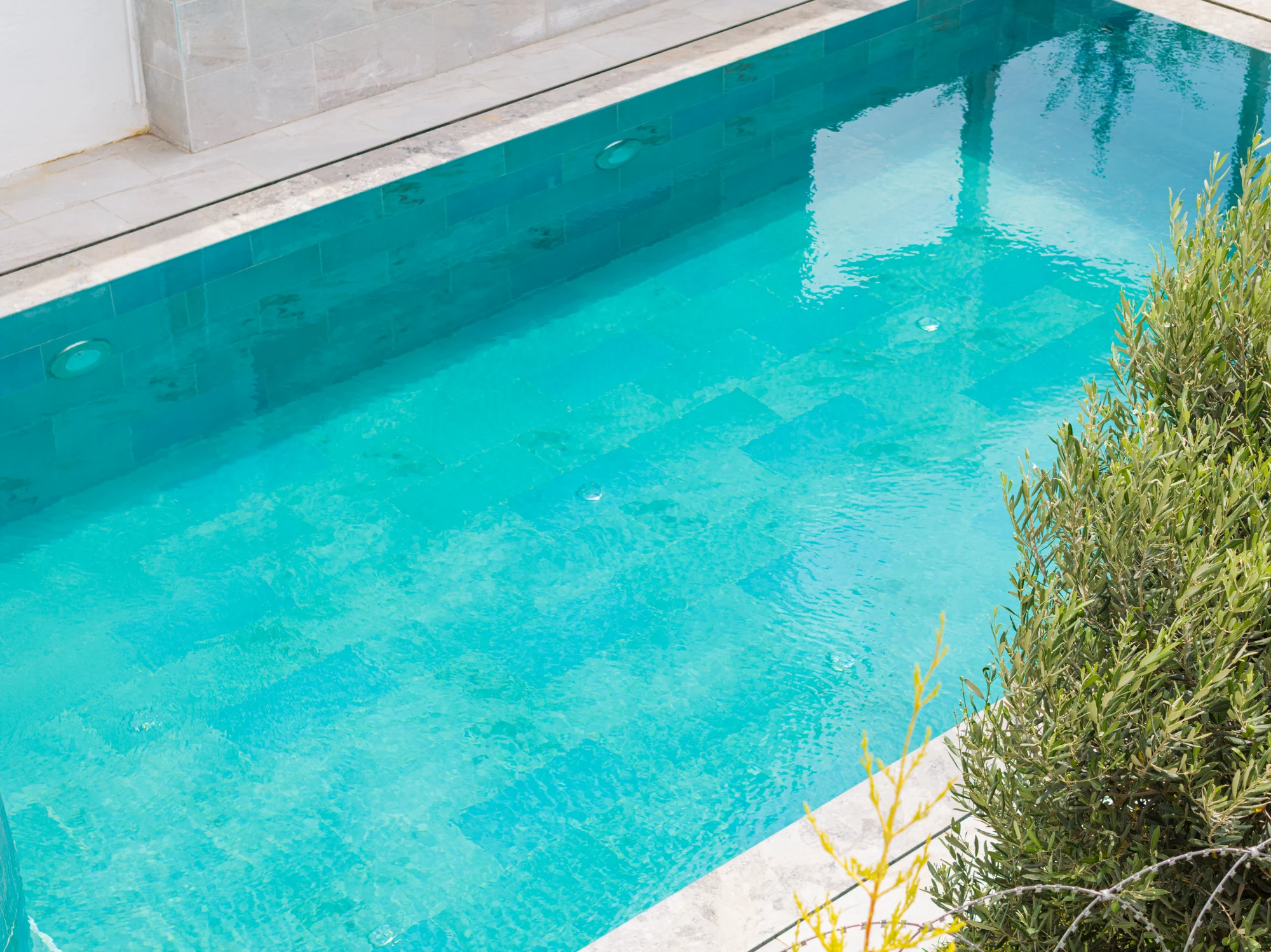
VillaHakan Gönen · Hadımköy Hidden-Overflow Pool
An 11×6 m hidden-overflow concrete pool completed in Hadımköy, Istanbul, in 2024.
- Location
- Hadımköy / İstanbul
- Completion
- 2024
 Villa
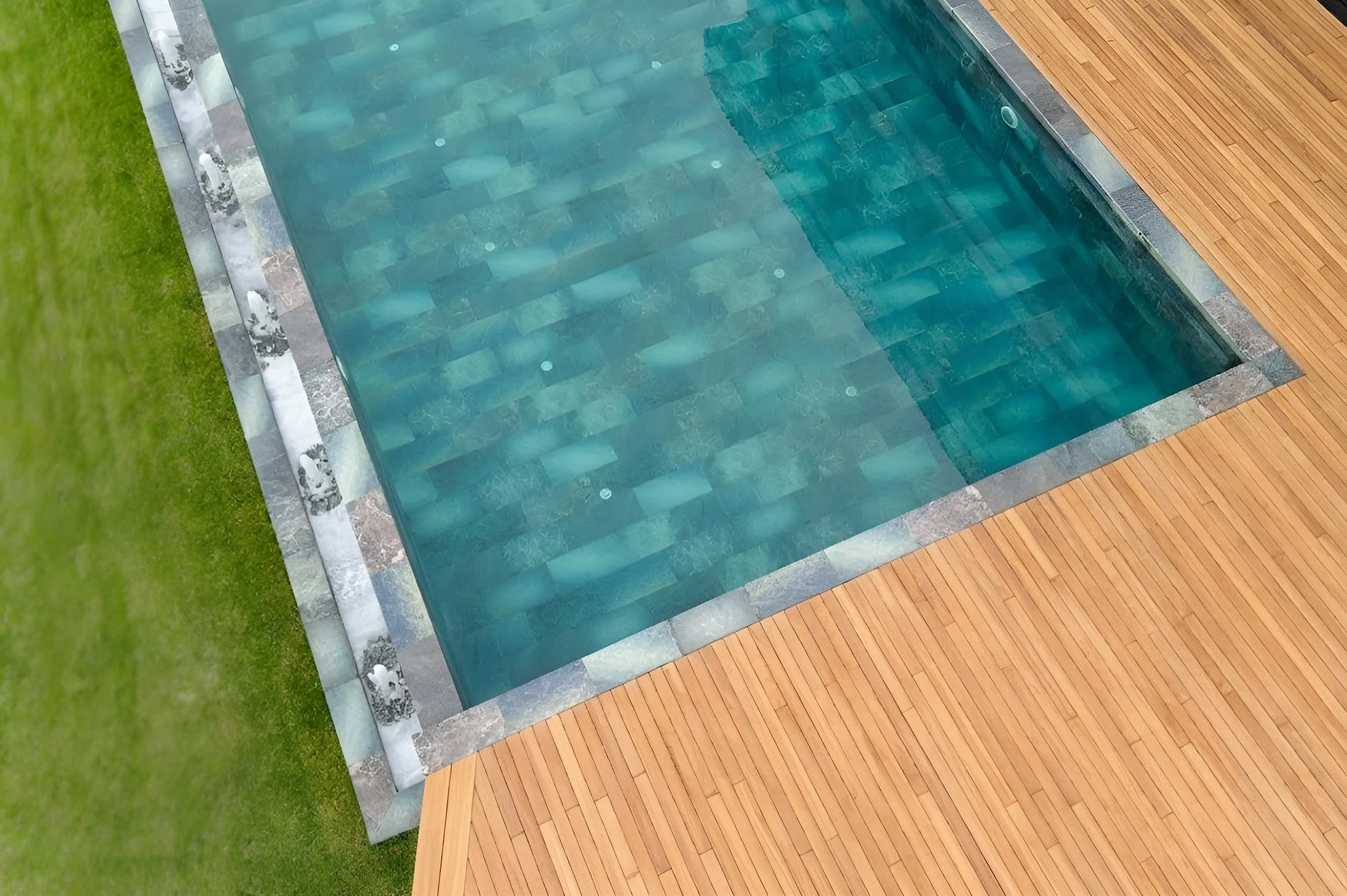
VillaZeynep Mayadağlı · Silivri Hidden-Overflow Pool
A 5×10 m hidden-overflow concrete swimming pool completed in Silivri, Istanbul, in 2024.
- Location
- Silivri / İstanbul
- Completion
- 2024
 Villa
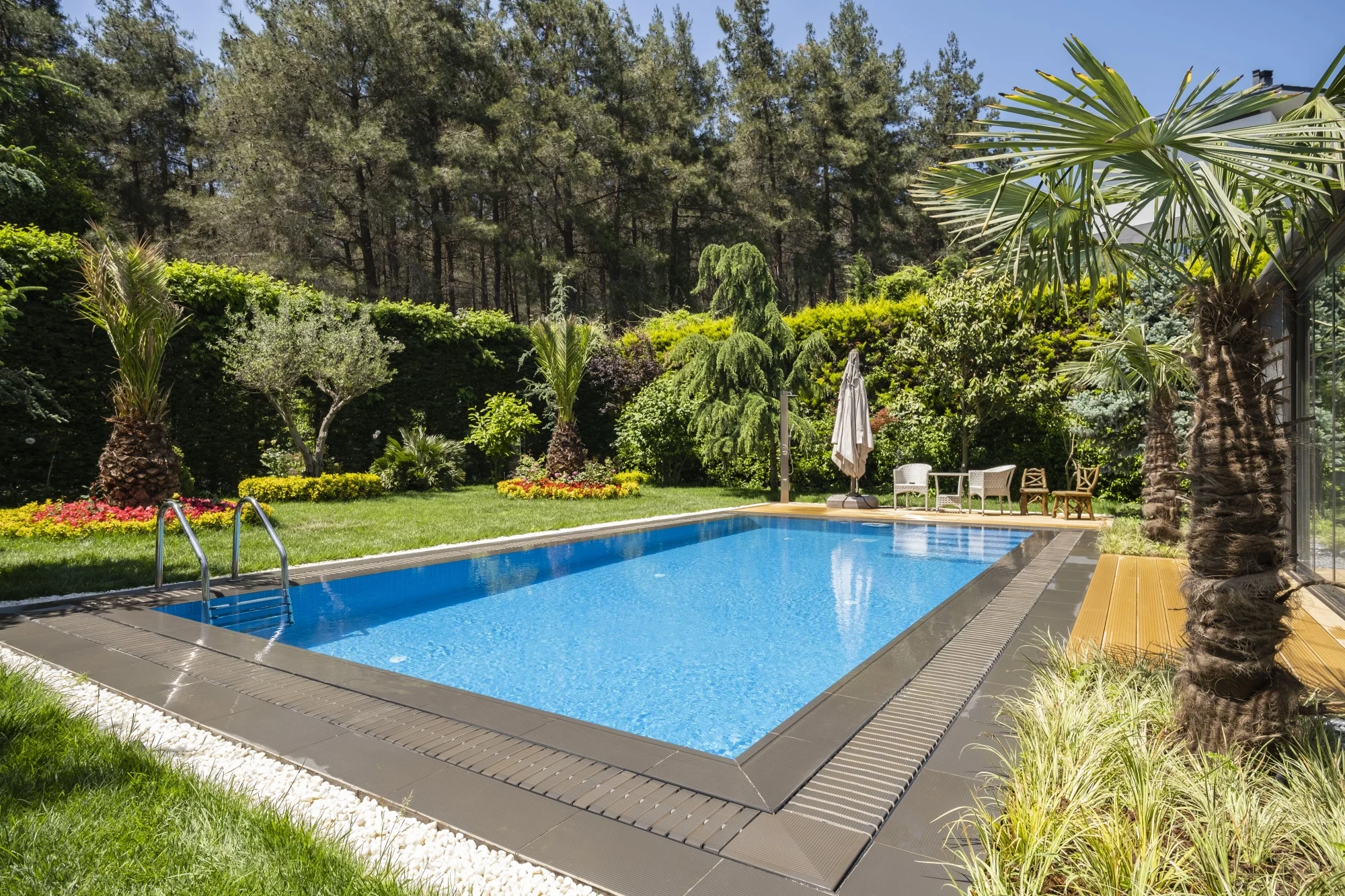
VillaÇetin Uğurlu · Villa Pool
A private villa pool project completed in Istanbul.
- Location
- İstanbul
- Completion
- 2024
 Villa
VillaRıza Latif · Çekmeköy Overflow Pool
An overflow concrete swimming pool completed in Çekmeköy, Istanbul, in 2024.
- Location
- Çekmeköy / İstanbul
- Completion
- 2024
 Villa
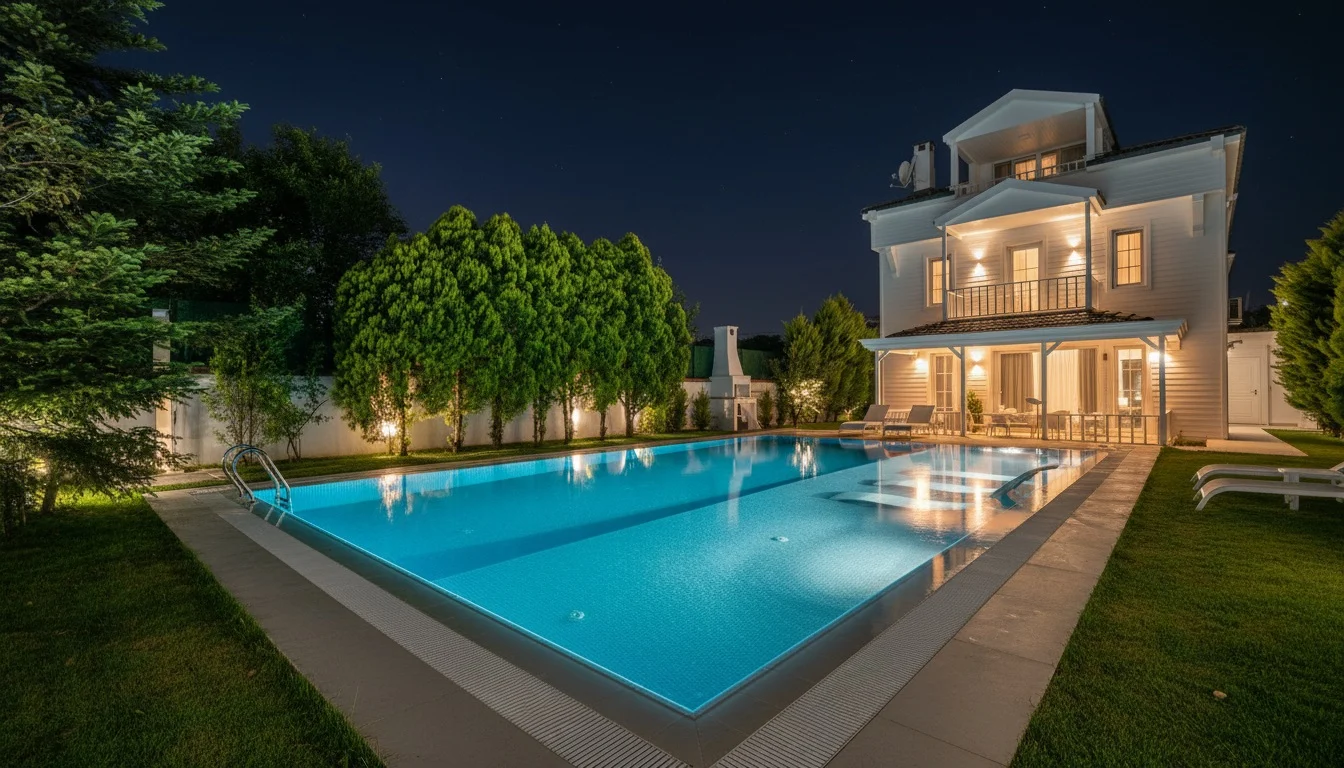
VillaCihan Kızılkaya · Şile Pool Project
A private villa pool project completed in Şile, Istanbul.
- Location
- Şile / İstanbul
- Completion
- 2024
 Villa
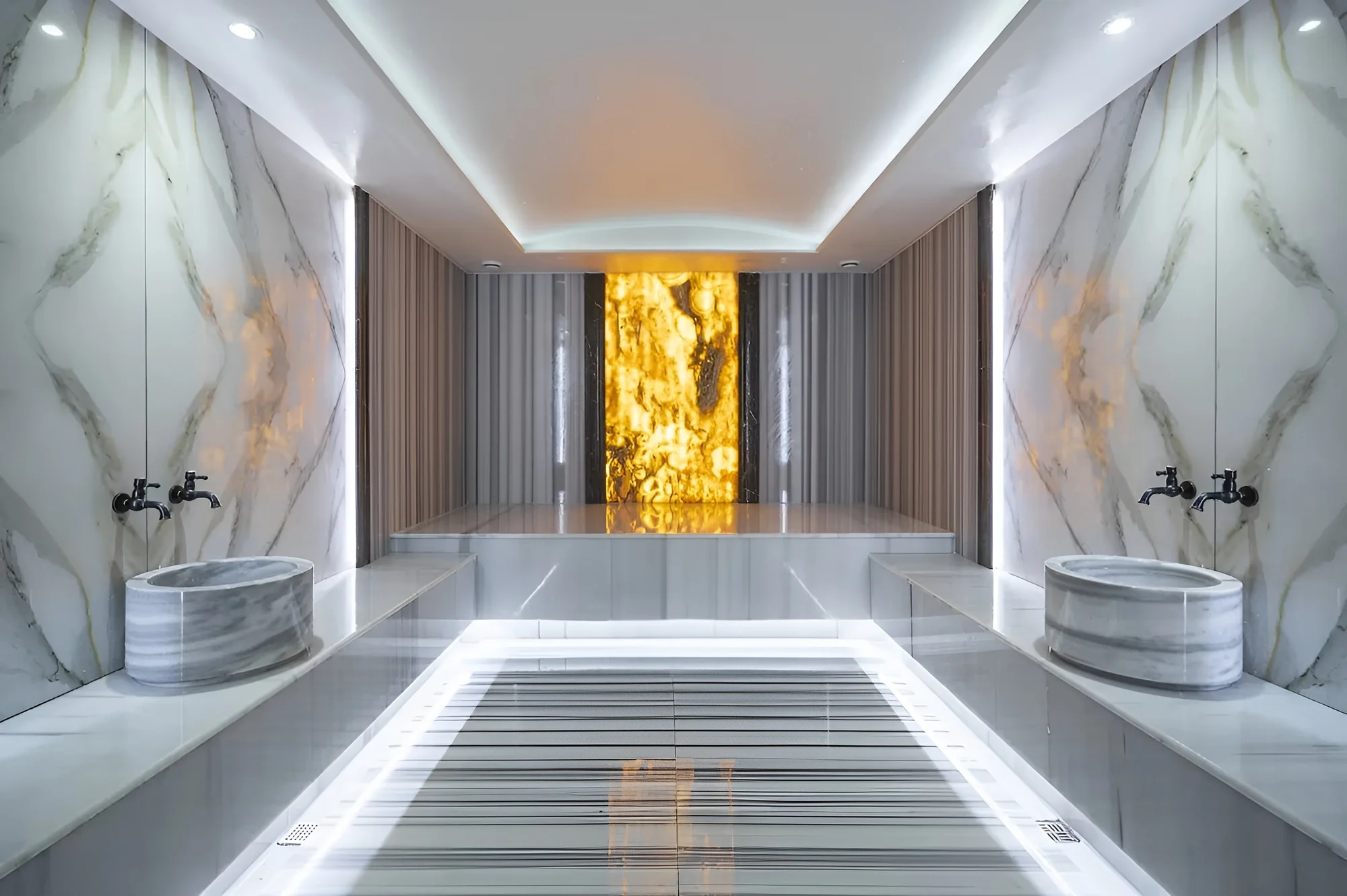
VillaDilan Polat · Villa Pool
A private villa pool project completed in Istanbul.
- Location
- İstanbul
- Completion
- 2024
 Residence
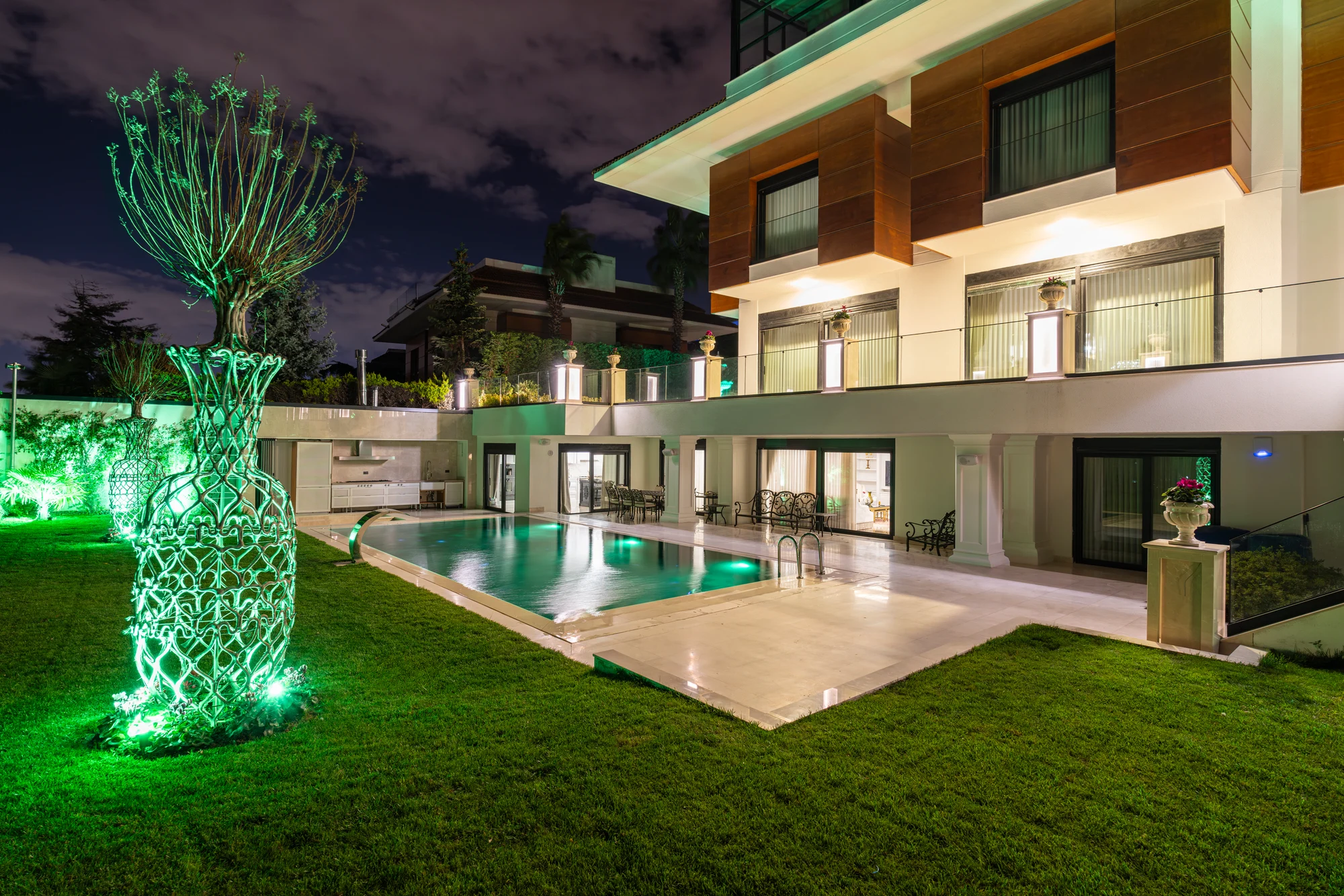
Efor Holding · Pool Project
A corporate pool project completed for Efor Holding.
- Location
- İstanbul
- Completion
- 2024
 Spa & Wellness
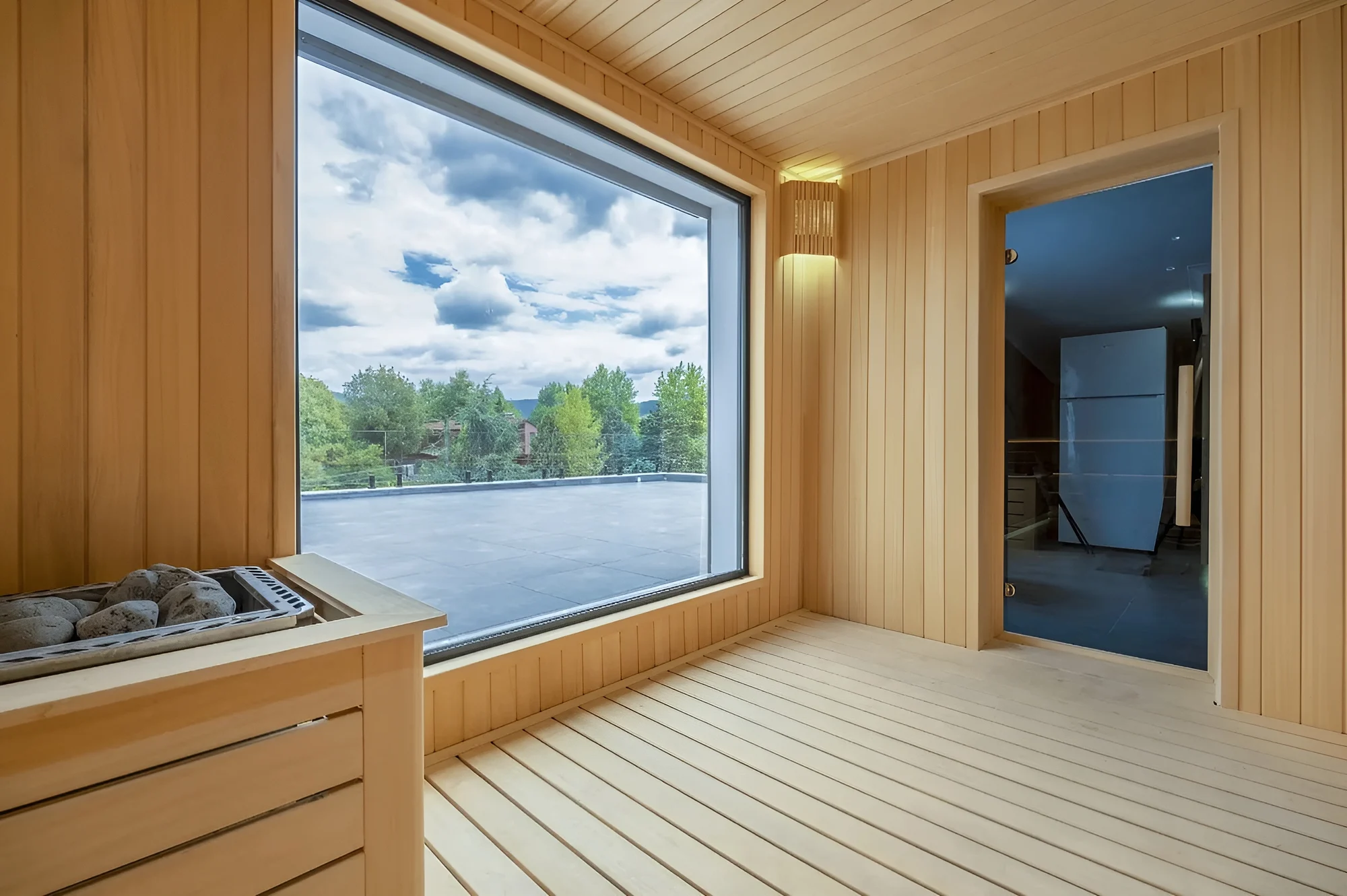
Sinan Türker · Yalova Turkish Hammam & Sauna
A Turkish hammam and sauna wellness project completed in Yalova in 2025.
- Location
- Yalova
- Completion
- 2025
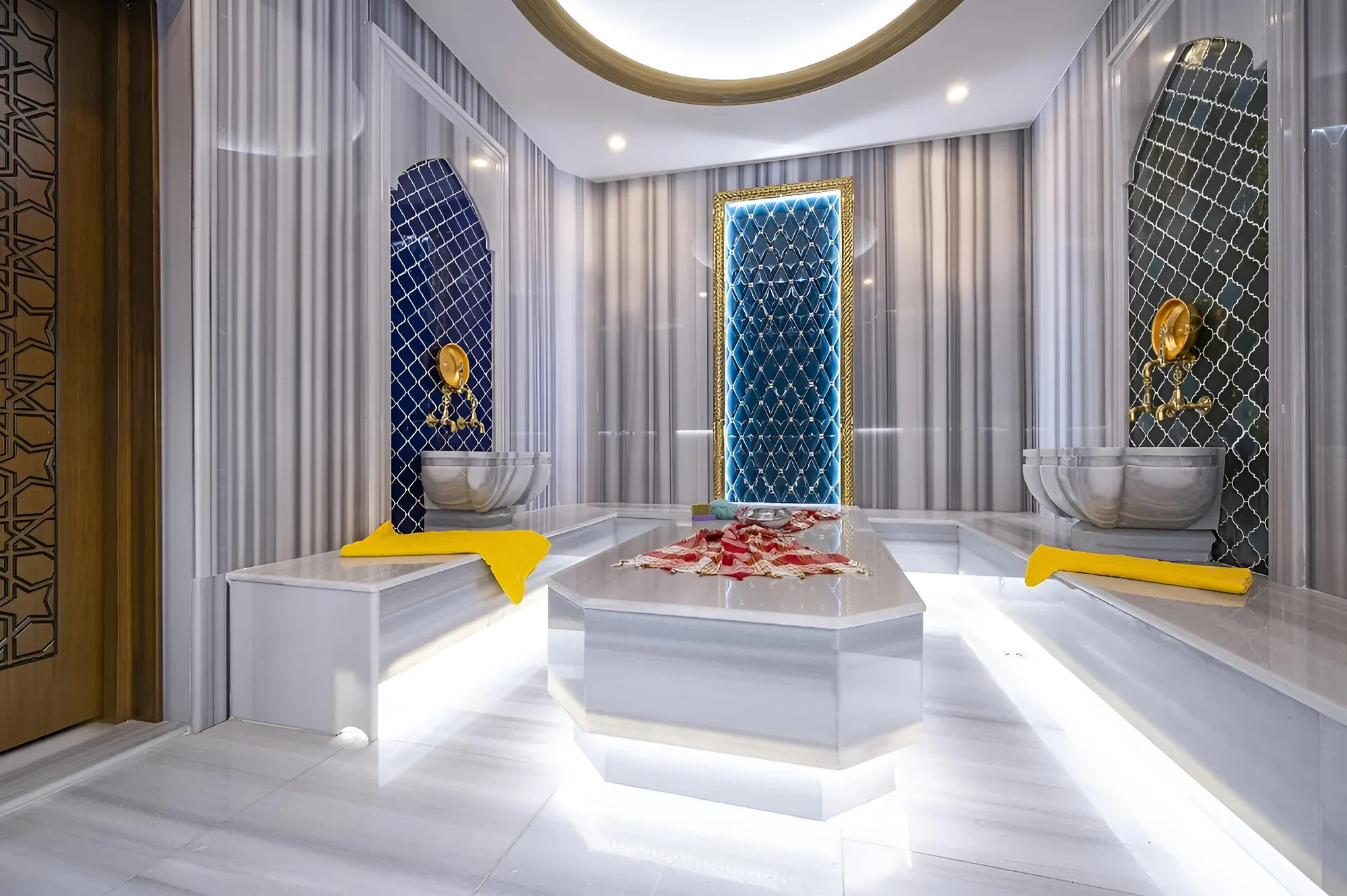 Spa & Wellness
Kudu İnşaat · Yalova Hammam
A traditional Turkish hammam completed in Yalova in 2025.
- Location
- Yalova
- Completion
- 2025
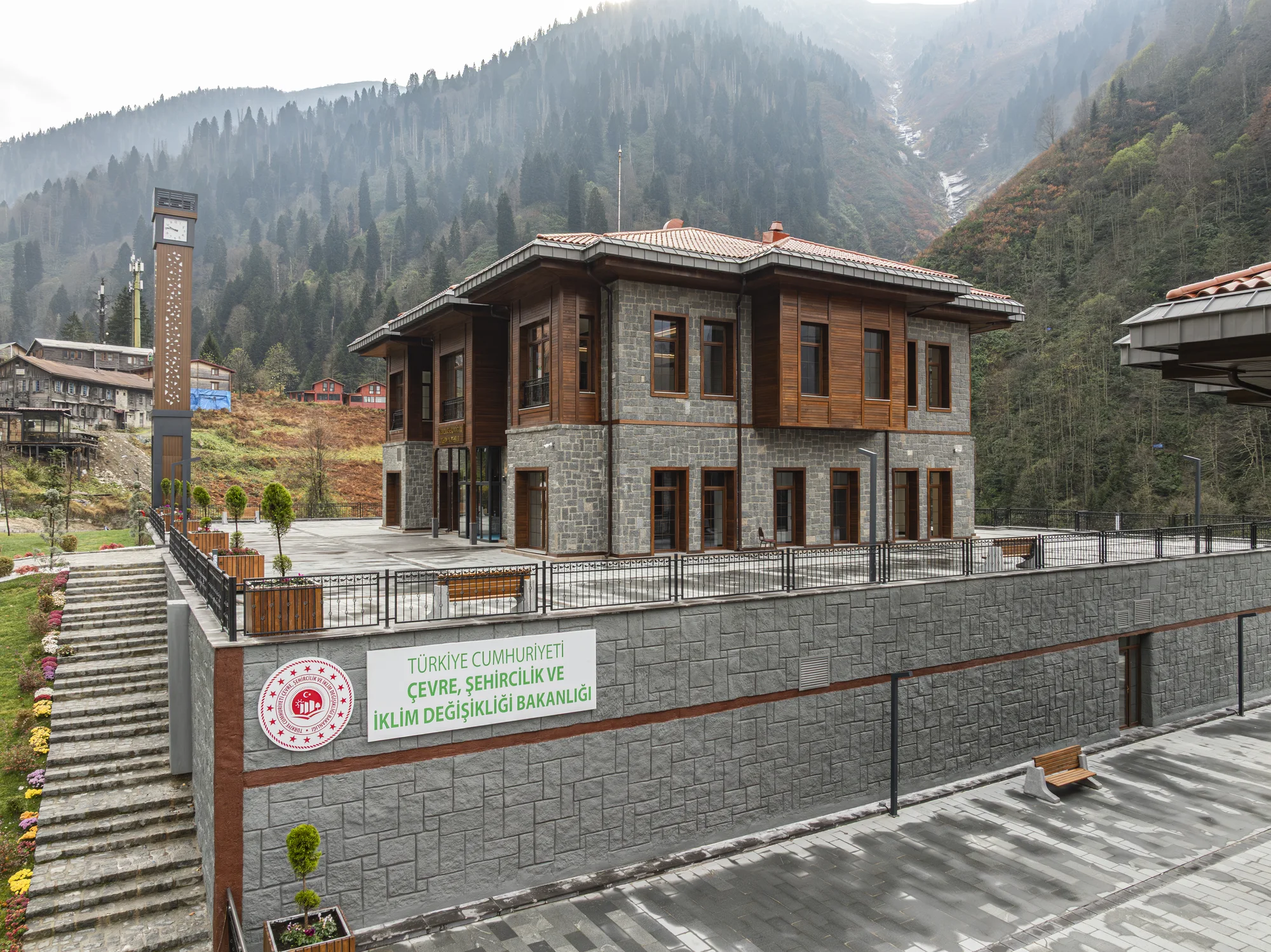 Thermal
Ayder Tenzile Erdoğan Thermal Hotel
In partnership with TOKİ we delivered 42 wet areas turnkey — a complete spa & wellness composition reaching from pools and thermal pools to sauna, steam room, salt room, jacuzzi and shock shower, and from VIP and suite Turkish hammams to Türkiye's largest göbektaşı hammam.
- Location
- Ayder Plateau / Rize
- Completion
- 2025
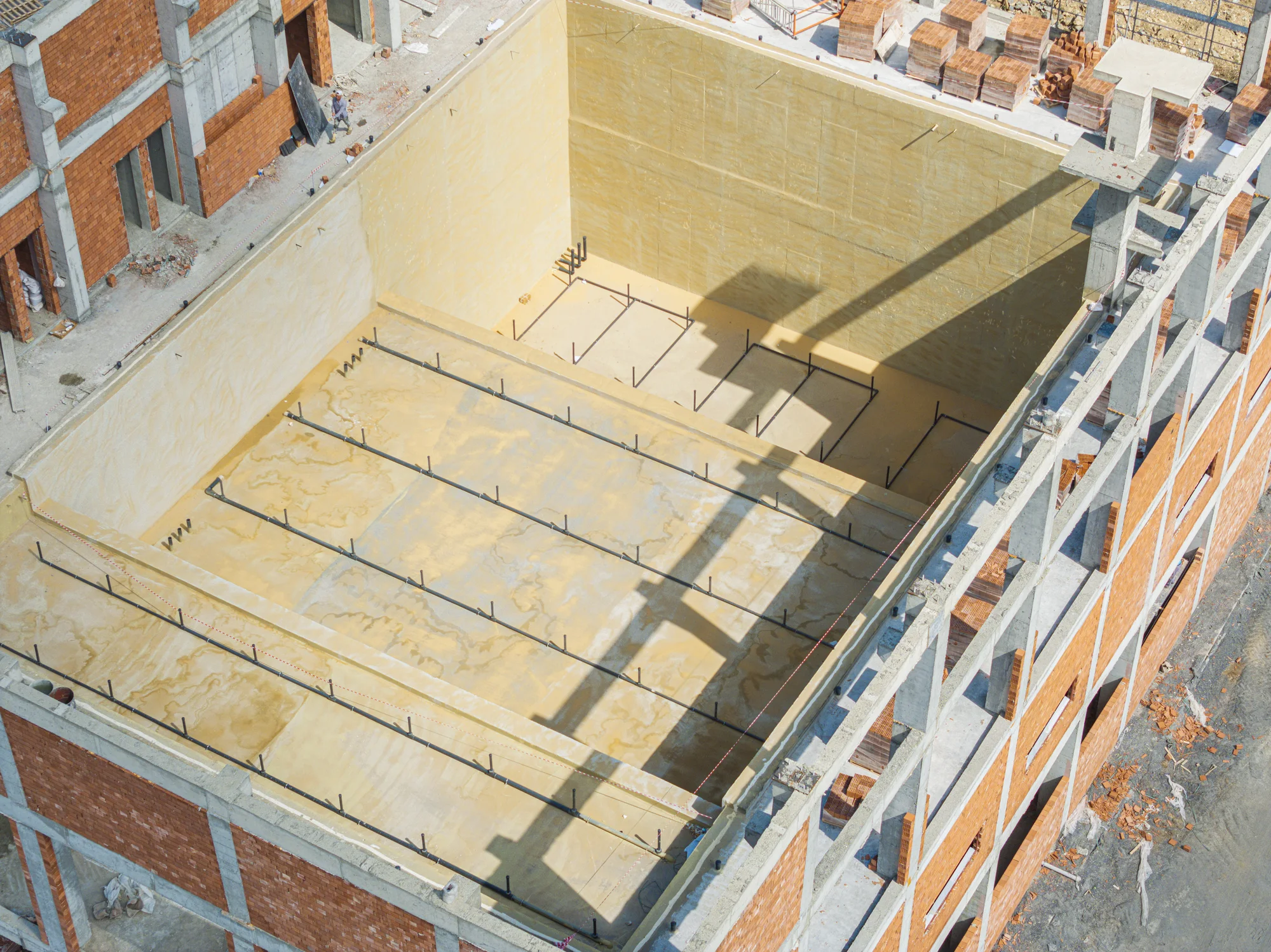 Public Sector
Ministry of National Defence · SAS Training Pool
In Riva we built Türkiye's deepest swimming pool turnkey — 33×22 metres and 10 metres deep. We are proud to have played our part in a facility where our country's heroes will train. The pool's water is disinfected by a 600-gram ozone system — making this Türkiye's largest swimming pool using ozone disinfection.
- Location
- Riva / Istanbul
- Completion
- 2024
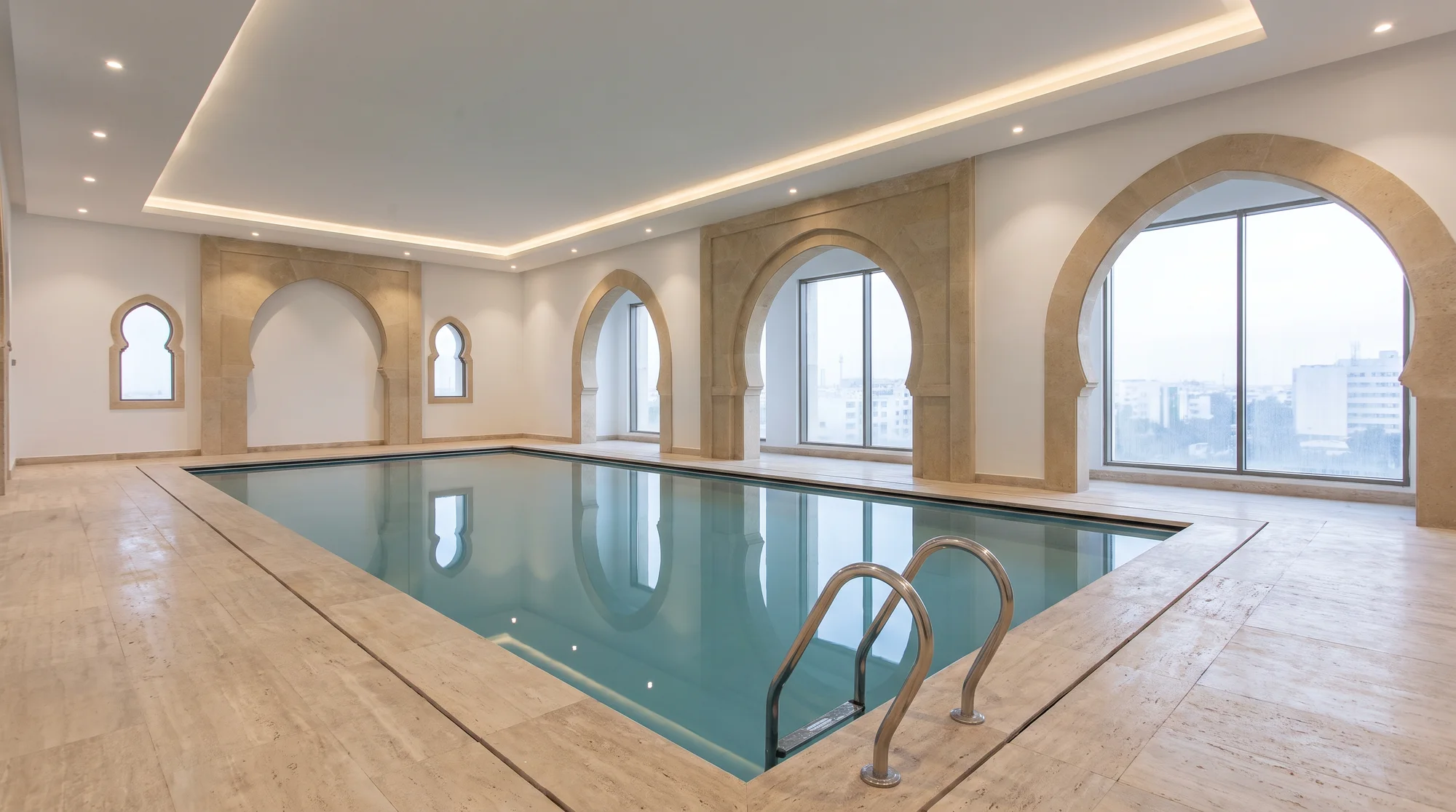 Spa & Wellness
Sofitel Algiers Hamma Garden
For China State Construction Engineering Corporation (CSCEC) we completed the Sofitel hotel's entire spa turnkey — from pools and hydrotherapy pools to jacuzzi, Vichy shower, Turkish hammam, sauna and massage systems.
- Location
- Algeria
- Completion
- 2020
Frequently Asked Questions
Every question on your mind; answered clearly.
Çilek Havuz Technical Team
Pool & Wellness Engineering
- Response Time
- Same day
- Channels
- Phone · E-mail · WhatsApp
If the answer you are looking for is not here, send your question directly to us and our team will reply as soon as possible.
Book a free site surveyScale sets the timeline: a mid-sized hotel aquapark is in most cases planned to fit into the winter period when the facility is closed, while large day-visitor parks are delivered in phases. The critical path runs through the reinforced-concrete water structures and the slide installation; stages such as leak testing are never rushed. After the site survey we share a realistic works programme in writing.
Çilek Havuz Technical Team
Yes — we will not even settle the layout without one. Slide towers impose heavy point loads on the ground, while the pool structures, the wave chamber and the balance tanks spread their load over a wide area. A layout decided without knowing the ground's bearing capacity and the groundwater comes back as settlement, cracking and leaks, and repairing those errors once the park is in operation costs many times more than the study itself.
Çilek Havuz Technical Team
Capacity is calculated by assessing the water surface, the hourly user throughput of each attraction and the balance of relaxation space together, and the system is sized for the busiest day. Sun loungers, shaded areas and food-and-beverage spaces enter the calculation too; a guest does not spend the whole day in the water. Getting capacity wrong shows up in queues and in dissatisfaction, which is why the attraction list is drawn up after the capacity plan.
Çilek Havuz Technical Team
Yes — at handover we pass staff training, daily checklists and the season opening and closing procedure to your team, and from there we stay with the park through a maintenance agreement, a spare-parts plan and pre-season overhauls. Using the usage data from the first season, pump programmes and dosing curves are fine-tuned. For us an aquapark is not a project that ends at handover but one that matures in operation.
Çilek Havuz Technical Team
Yes; adding an aquapark or a children's zone with slides to the grounds of an existing hotel or holiday resort is one of the scenarios we handle most often. At the site survey we assess the existing plant room, the water and electrical capacity and the ground conditions; the new attractions are either connected to the existing infrastructure or built with their own independent system. The work is scheduled for the facility's closed period, so your season is protected.
Çilek Havuz Technical Team
Design and construction follow international safety standards: non-slip surfaces, depth markings and warning signage, safety clearances around landing pools, height and age restrictions and lifeguard sightlines are all part of the design. Safety does not end at handover; periodic inspection checklists and an emergency plan for the operating period are also put in place before opening.
Çilek Havuz Technical Team
The largest items are energy, water and chemicals, and all three are set at the design stage. Variable-speed pumps, heat recovery, correctly sized filtration and automatic dosing noticeably reduce the annual bill. The cheapest installation quote usually means the most expensive operation — we recommend making the decision on total cost of ownership.
Çilek Havuz Technical Team
Zero-depth entry splash areas, water castles and tipping-bucket play structures, mini slides and jet-spray floors are the attractions the youngest age group can play on safely. The children's zone is planned as a separate area, in shallow water and with an uninterrupted lifeguard sightline. Families come to the park for their children; the investment made in this zone is the item that pays for itself fastest in operation.
Çilek Havuz Technical Team