

Choosing Hammam Marble: Veining, Porosity, Heat Retention
We explain the criteria you need to choose the right marble for a hammam: veining structure, porosity, heat retention, slip resistance and maintenance, and touch on how the choice affects cost.
We explain the criteria you need to choose the right marble for a hammam: veining structure, porosity, heat retention, slip resistance and maintenance, and touch on how the choice affects cost.
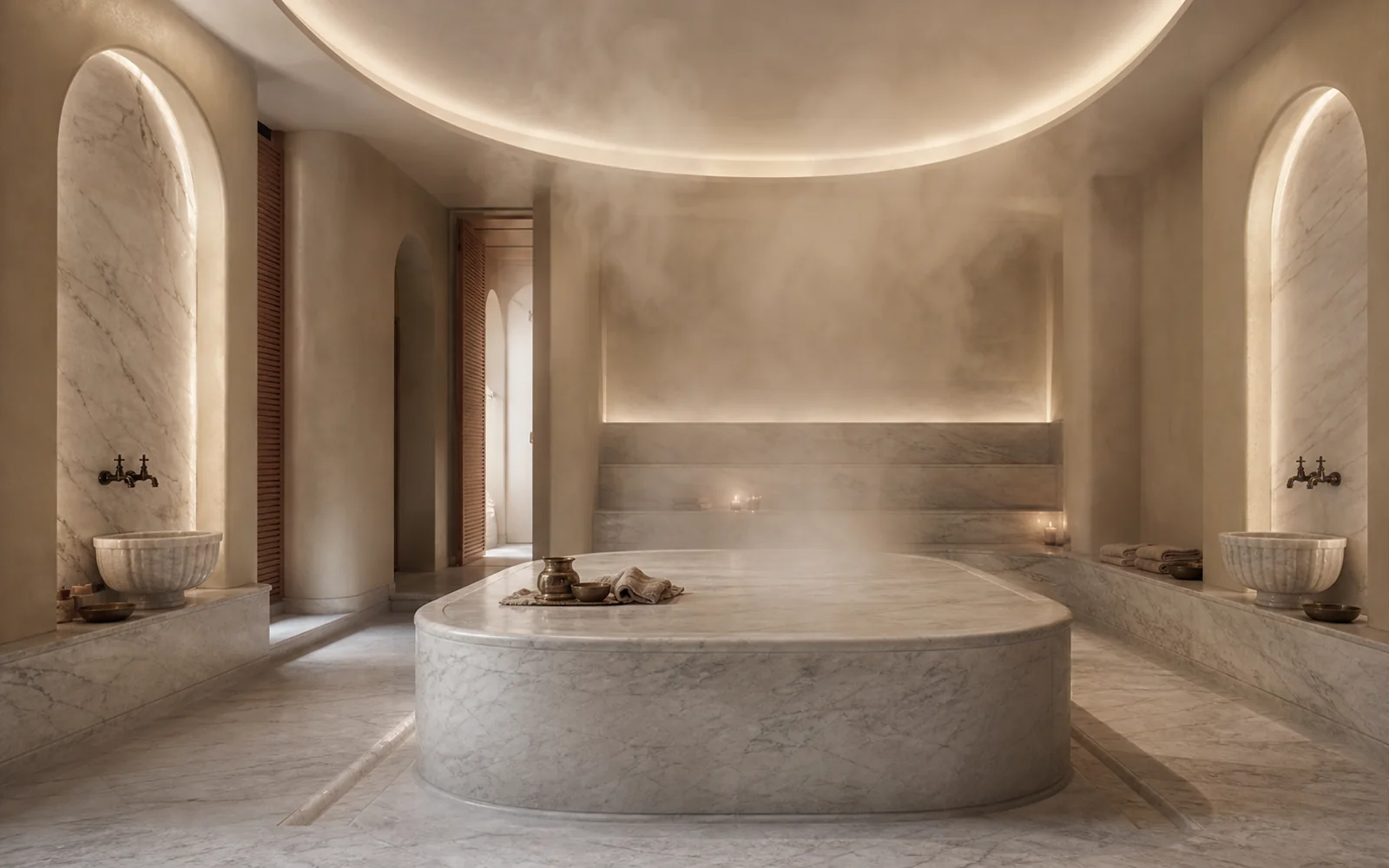
Marble has been an indispensable material of baths for centuries; because it is a natural stone that retains heat well and maintains its aesthetics in a constantly humid environment. However, not every marble is equally suitable for a bath. A bath is an environment that is constantly hot, humid and in contact with water; In these conditions, an incorrectly selected marble may stain, become dull, slippery or crack over time. Therefore, choosing marble is a durability and safety decision beyond aesthetics.
To choose the right marble, it is necessary to look not only at the color and pattern but also at the physical properties of the stone. Porosity, heat retention behavior, effect of surface treatment on anti-slip and maintenance requirement; All of them should be evaluated together. In this guide, we explain what criteria you should pay attention to when choosing bath marble, the general characteristics of frequently used marble types, and the impact of the choice on long-term costs.
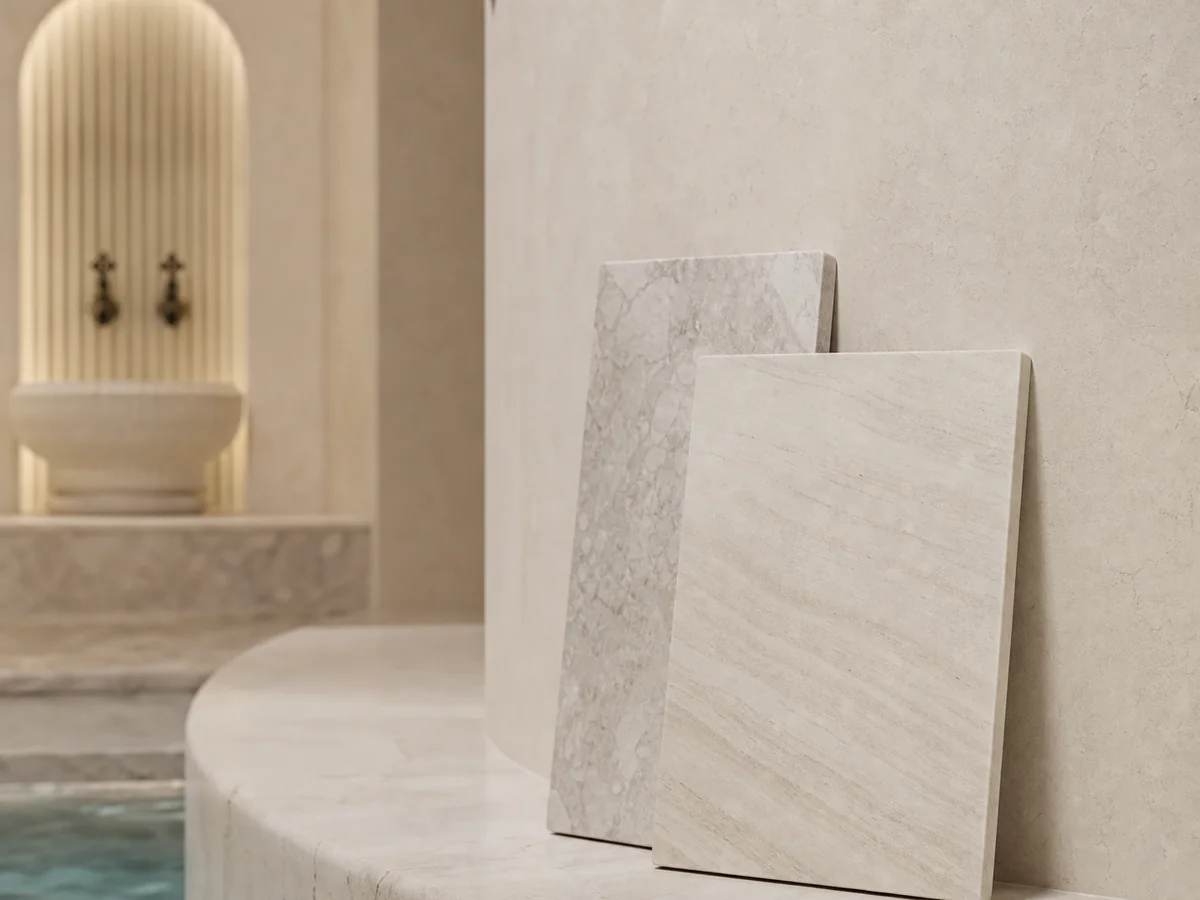
Although the vein pattern and color of the marble may seem like an aesthetic choice at first glance, the structure of the veins also gives a clue about the behavior of the stone. Veins are different bands of minerals within the marble, and in some cases these areas can show different hardness and absorbency than the rest of the stone. Although some marbles with prominent and soft veins are visually impressive, these vein areas may be more sensitive with intensive use. For this reason, pattern selection should be made not only based on visuality, but also by considering the intensity of use.
Color choice concerns both aesthetics and practical use. Light-colored marbles add a spacious and classic atmosphere to the baths; Dark tones create a more closed and calm atmosphere. While light colors are sometimes advantageous in hiding water stains and lime marks, these marks may be more visible on dark surfaces. It is best to make the decision on the grain and color by evaluating the design language and usage profile of your bath together.
Porosity is the ratio of micro voids on the surface and internal structure of the marble and is perhaps the most critical criterion in a wet environment such as a bath. A highly porous marble absorbs water and moisture more; This can lead to stain formation, lime accumulation and hygiene problems over time. Absorbed moisture can also accelerate the wear of the surface by creating tension within the stone during heating-cooling cycles. For this reason, densely textured marbles with low water absorption rate are preferred in the bath.
Porosity is not always easy to understand directly by eye; Therefore, it is important to look at the technical values of marble, such as its water absorption rate. Even if a marble with high porosity is selected, absorption can be reduced to some extent with appropriate protective applications; but this becomes a balance that requires regular maintenance. The most reliable approach is to choose a low-porosity marble suitable for the bath environment from the beginning. When making the selection, we evaluate the technical characteristics of the stone together and determine the most suitable marble for your bath.
Heat is at the core of the bath experience, and the heat retention behavior of marble directly affects this experience. A good bath marble should be able to absorb heat and retain it for a while, and ensure that the heat is felt evenly and for a long time, especially on heated surfaces such as navel stones. Marbles with dense mass store heat and provide a more stable temperature; This positively affects both comfort and heating efficiency.
Non-slip is the basis of safety. Since bath floors can be constantly wet and soapy, an extremely smooth polished surface poses a risk of slipping. The surface treatment of marble in floors and wet areas should be chosen to have a texture that will reduce slipping; On the other hand, a smoother process may be preferred on seating surfaces that come into contact with the skin, such as navel stones. Using different surface treatments in different regions is the best way to ensure both safety and comfort.
Marble is a material that lasts for many years when looked after correctly, but can wear out quickly if neglected. The biggest enemies of marble in the bath are acid and harsh cleaning products; Cleaners containing lemon, vinegar and acid dull and corrode the marble surface over time. Using neutral pH products and soft cloths suitable for marble preserves the shine of the surface. Rinsing the surface after use prevents the accumulation of lime and soap residue.
For long life, it is beneficial to periodically maintain the marble with a suitable protector; This process protects the stone by reducing the pores' absorption of water and stains. The condition of the joints should be checked regularly and any water leaks that may occur should be detected early. Regular and correct maintenance preserves both the aesthetics and hygiene of the marble and eliminates the need for frequent renewal. Thus, your initial investment retains its value for many years.
Marble selection is one of the most determining items of the bath cost, and the impact of the decision is not limited to the initial investment. There can be significant differences between different types of marble in both material price and workmanship; While rare and difficult to process marbles increase the cost, more common stones suitable for the bath environment can offer a balanced solution. However, making the choice based only on square meter price is often misleading.
The real cost comes in the long-term behavior of the stone. A cheap but unsuitable marble for a bath; It may require replacement within a few years due to premature staining, dulling or cracking, which more than offsets the savings on the initial investment. Our advice for an investor who wants to evaluate the bath cost holistically is to weigh the marble in terms of durability, ease of maintenance and lifespan. By evaluating the choice in terms of both aesthetics and total cost, we determine the most suitable marble for your bath.
Image gallery
04 görsel
 01
01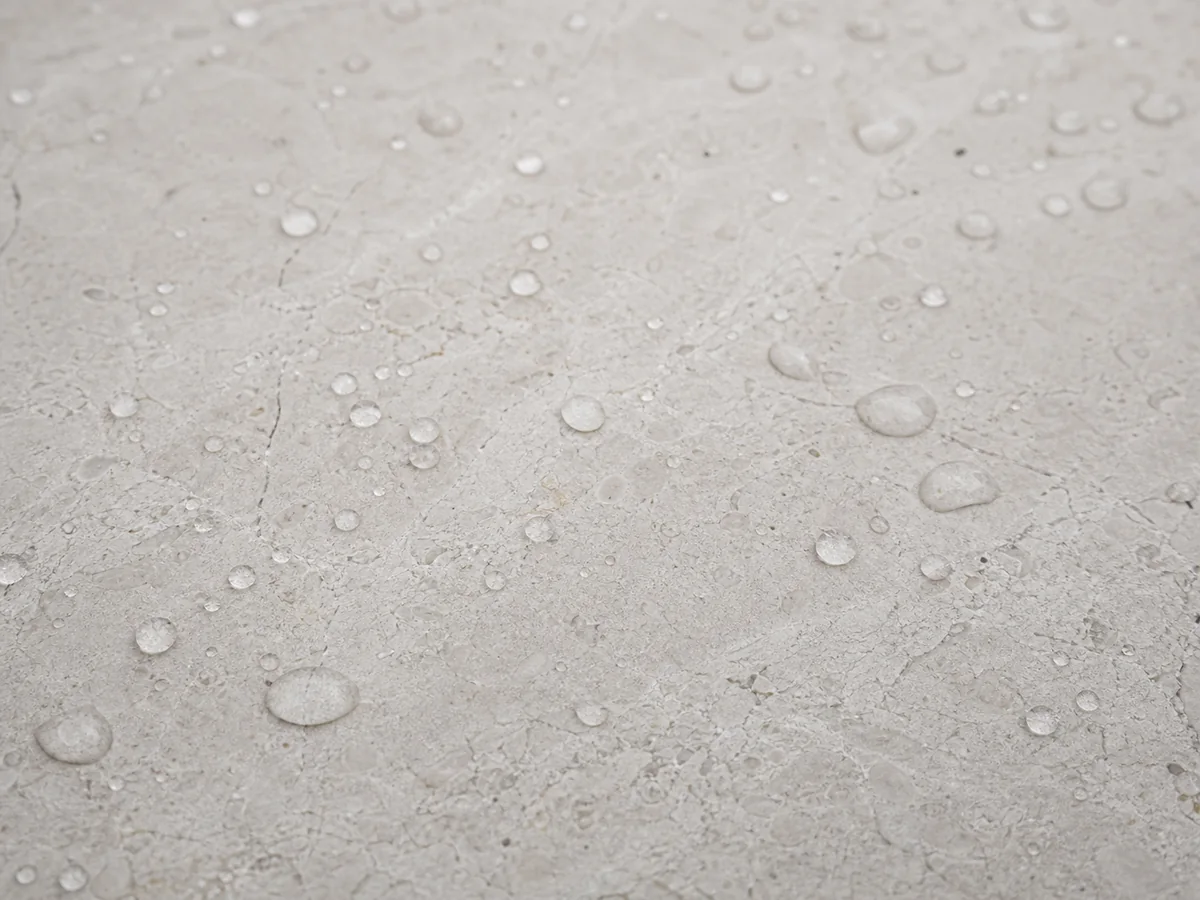 02
02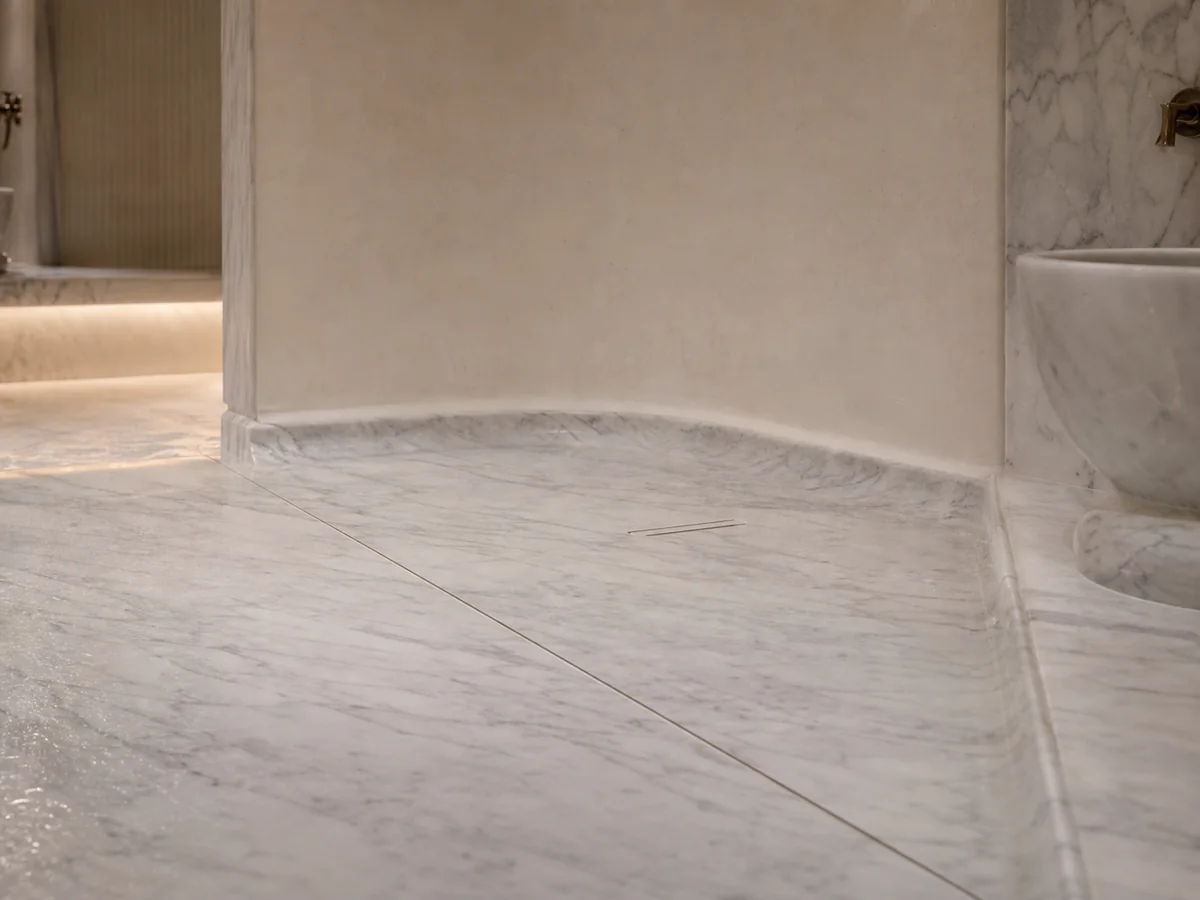 03
03 04
04Company & Contact
To talk about your project, we are one call away.
Legal Name
Çilek Havuz
Founded
1998 · Istanbul
Head Office
Çilek Plaza, Eyüp Sultan Mah. Yakacık Cd. Feshane Cd. No: 2 D:4 D:1, 34885 Sancaktepe / İstanbul
Service Area
All of Türkiye · exports to 14 countries
Related articles
Keep reading.
Sık Sorulan Sorular
Our readers' most asked; with expert answers.
Çilek Havuz Content & Technical Team
Guides & Technical Content
- Response Time
- Same day
- Channels
- Phone · E-mail · WhatsApp
If the answer you are looking for is not here, send your question directly to us and our team will reply as soon as possible.
Book a free site surveyIn some projects, porcelain or technical stone surfaces are considered as alternatives due to their low water absorption rate and durability; However, the heat retention behavior and texture of natural marble offers a different experience. The thermal mass of marble stands out especially on heated surfaces such as navel stone. We can evaluate together which surface is suitable for you, based on your budget, aesthetic expectations and usage intensity.
Çilek Havuz Content & Technical Team
Yes, this is often the best approach; While surface-treated stones with high slip resistance are preferred on wet surfaces, smoother and heat-retaining marbles can be used on surfaces that come into contact with the skin, such as navel stone. Applying a single marble everywhere may require compromises in terms of safety in one region and comfort in another. Planning the appropriate marble and surface treatment according to the regions gives the most balanced result.
Çilek Havuz Content & Technical Team
Beyond color and pattern, it is necessary to look at the technical values of the stone, such as water absorption rate (porosity) and density; These values give a concrete idea about the behavior of the stone in a wet environment. Visual inspection alone is not sufficient. We recommend that you request the technical specifications of the candidate marble from the supplier and evaluate the selection with these data.
Çilek Havuz Content & Technical Team
Protective applications partially close the pores of the marble, reducing water and stain absorption and making the surface easier to clean. This protection is not permanent; Depending on the intensity of use and cleaning products, its effectiveness decreases over time and must be renewed periodically. Planning the renewal frequency according to the type of stone and the intensity of use of your bath will extend the life of the marble.
Çilek Havuz Content & Technical Team
Products containing acid should never be used on these stains, as they permanently dull the marble; For light marks, neutral cleaners suitable for marble are preferred. In case of deep dulling and wear, a professional process such as re-polishing (polishing) of the surface may be required. Since correctly determining the type of stain determines the solution, we recommend that you get expert support for permanent scars.
Çilek Havuz Content & Technical Team
Absolutely; Even the best quality marble experiences water leakage, loosening and premature wear when installed poorly or jointed incorrectly. Since the bath is a constantly wet environment, waterproof, smooth joints and correct infrastructure workmanship determine the performance of the stone. For this reason, we recommend that you pay attention to flooring workmanship as much as marble selection and have the work done by an experienced team.
Çilek Havuz Content & Technical Team