

Pool Maintenance
Water chemistry, equipment and periodic maintenance.
Çilek Havuz in Numbers
We manage your water by measurement and listen to your equipment before it whispers a fault.
- 33+
- Years
- 14
- Export
- 500+
- Projects
Pool Maintenance — Frames from Our Projects
Frames from Our Projects
06 media
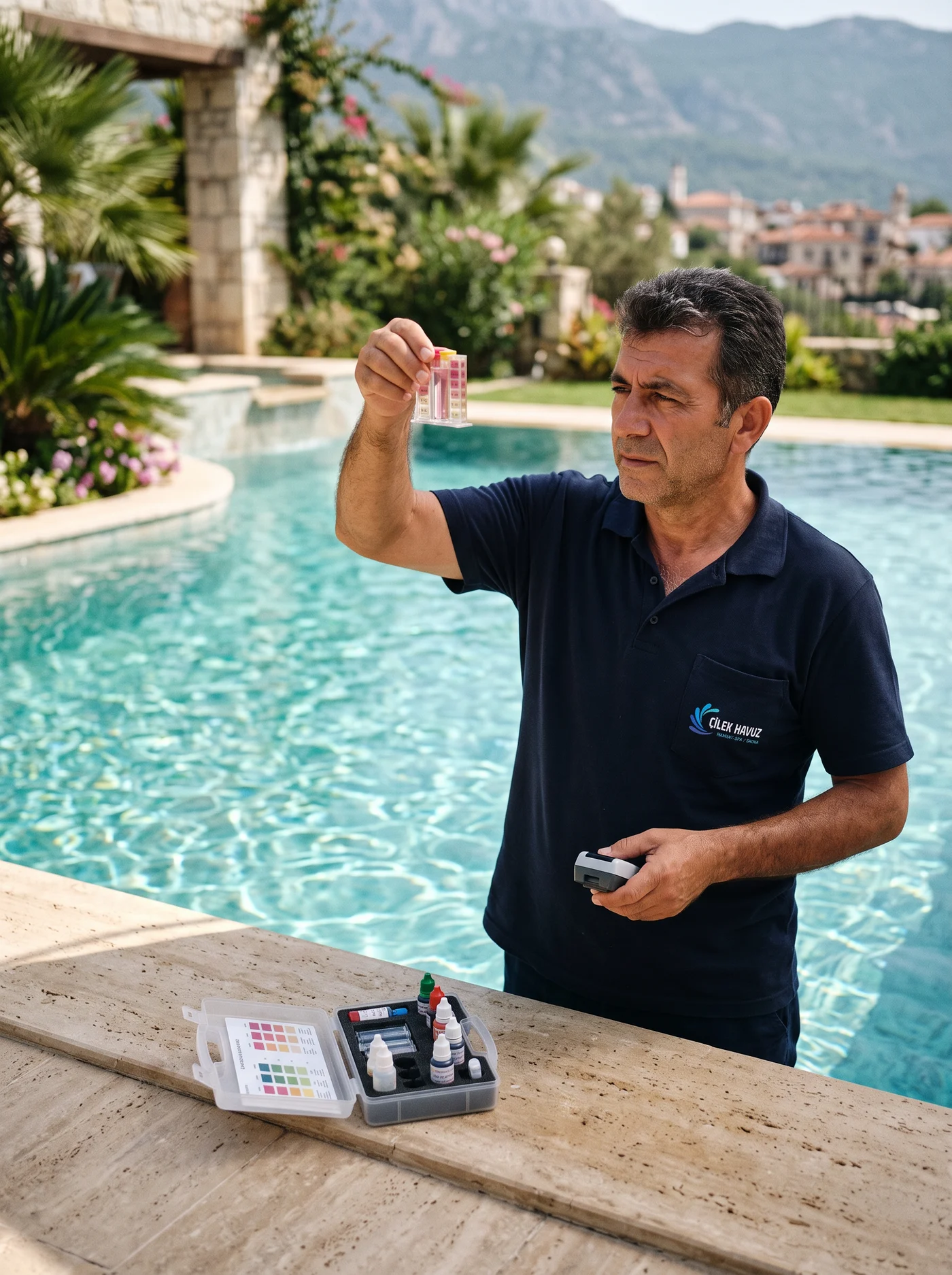
Every visit begins not with the water but with the numbers: pH and free chlorine are measured with a digital test, while alkalinity, calcium hardness and cyanuric acid are tracked on a monthly panel. The colour scale is only a cross-check — the verdict belongs to the instrument.
Every value measured is entered on the visit card. A single measurement is a photograph; the values accumulating on the card are a film — the trend reveals problems before they show any symptom.
- pH measurement (target 7.2–7.6)
- Free chlorine measurement (target 1–3 ppm)
- Monthly panel: total alkalinity (80–120 ppm)
- Monthly panel: calcium hardness (200–400 ppm)
- Monthly panel: cyanuric acid (30–50 ppm)
- Water temperature and general observation
- Taking the sample at the correct depth and point
- Entering the values on the visit card
Why it matters
Water that looks clear may not be healthy: the chlorine may be spent, the pH may have drifted. By the time you notice it by eye the problem has already grown; measurement brings the intervention forward, ahead of the crisis.
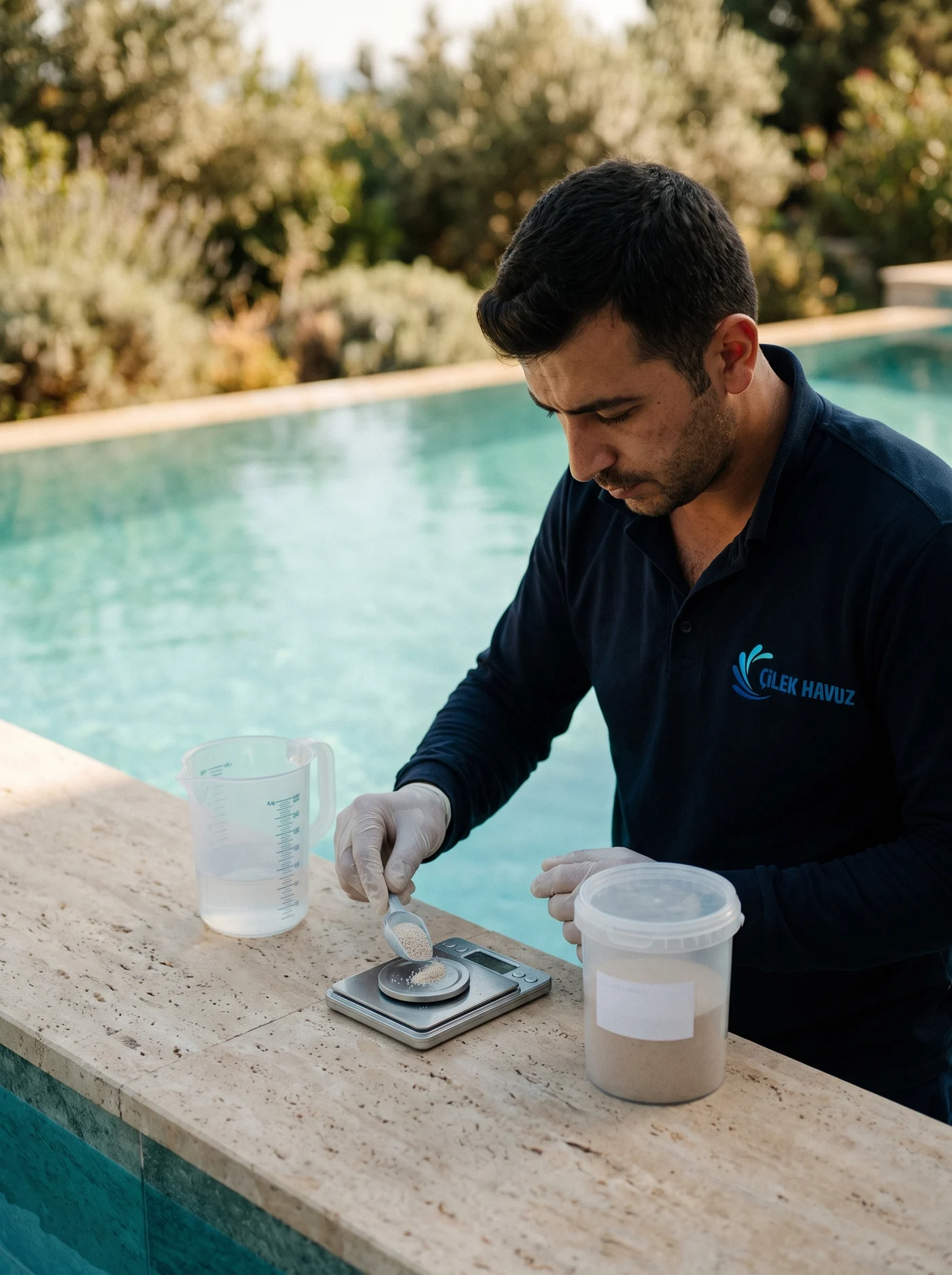
Dosing rests not on guesswork but on the water volume of the pool: every chemical is calculated on m³ and the water is drawn back into its ideal range. Too little chemical invites algae, too much invites irritation and equipment wear.
The order matters as much as the dose: pH and alkalinity are balanced first, then the chlorine is adjusted, and the algaecide is added last. Chemicals are always added to the water and never mixed with one another; the dosing curve is updated for the season and the intensity of use.
- Calculation on pool volume (m³)
- pH and alkalinity correction first
- Chlorine level adjustment next
- Weekly preventive algaecide
- Always adding the chemical to the water
- Never mixing chemicals with one another
- Applying during circulation
- Updating the dosing curve for the season
Water pushed to the extremes exacts a price twice
First from swimming comfort, then from equipment life. Water held in the ideal range protects both; chlorination carried out before the pH is adjusted is carrying water in a bucket whose hole has not been plugged.
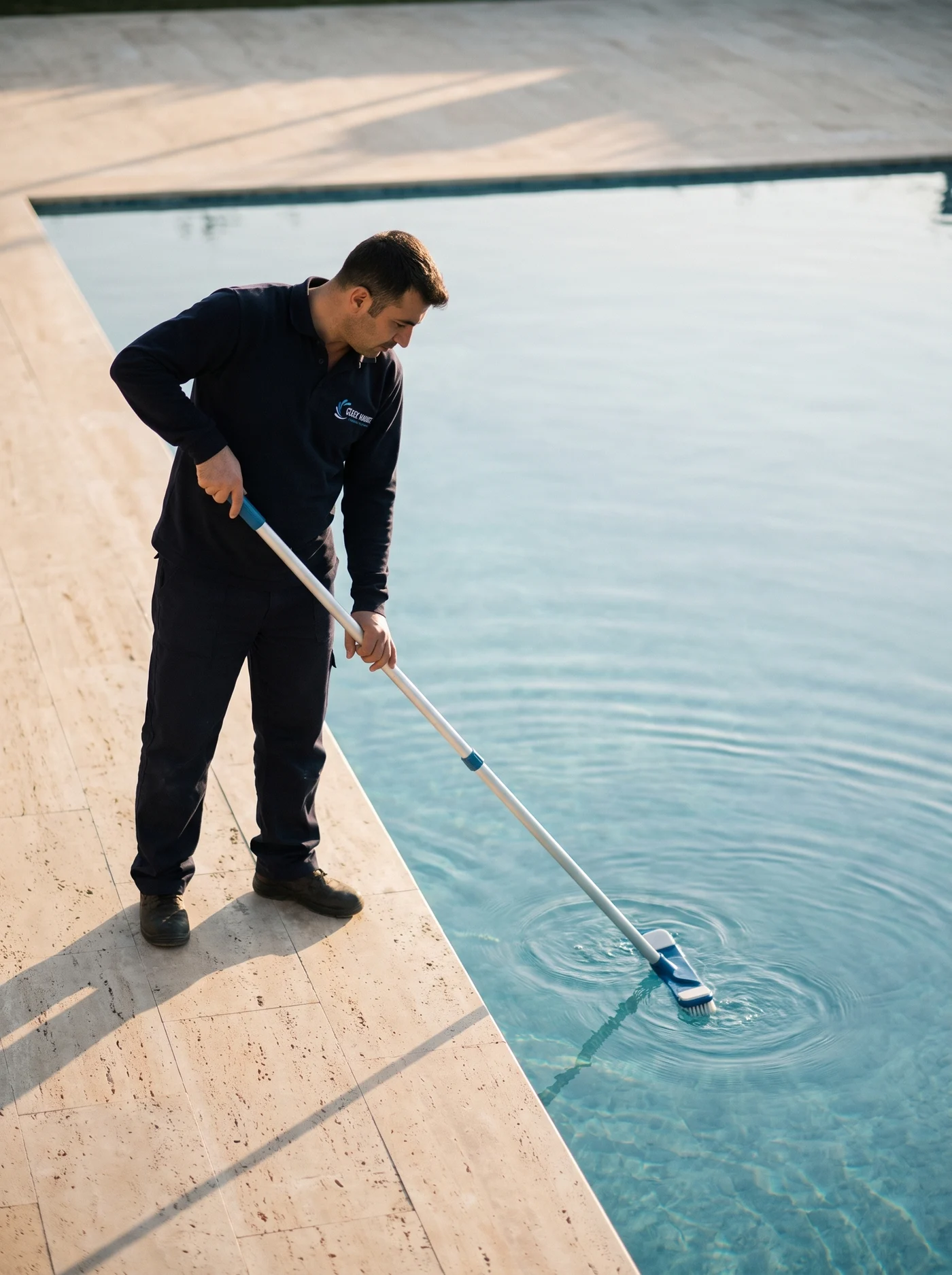
Chemistry protects the water from invisible enemies; visible dirt is dealt with by mechanical cleaning. Leaves and coarse debris on the surface are collected with a net before they sink, the scum line and the walls are brushed, and the floor is cleared with a vacuum or a robot.
This step is more than aesthetics: the organic load building up on the floor quietly consumes your chlorine. In a pool where physical cleaning is neglected, the chemical cost rises too — a clean pool stays in balance with fewer chemicals.
- Removing leaves and coarse debris from the surface
- Cleaning the waterline (scum line)
- Brushing the walls and the steps
- Cleaning the floor with a vacuum or a robot
- Emptying the robot's filter basket
- Checking the overflow channel and gratings
- Wiping the ladder and stainless fittings
- Checking the condition of the cover, where fitted
Chlorine does not sweep up a sunken leaf
However much chlorine you add, the only answer to mechanical dirt is mechanical cleaning. A robot is an excellent aid; but because it does not measure water chemistry it takes its place within the routine, not the place of the routine.
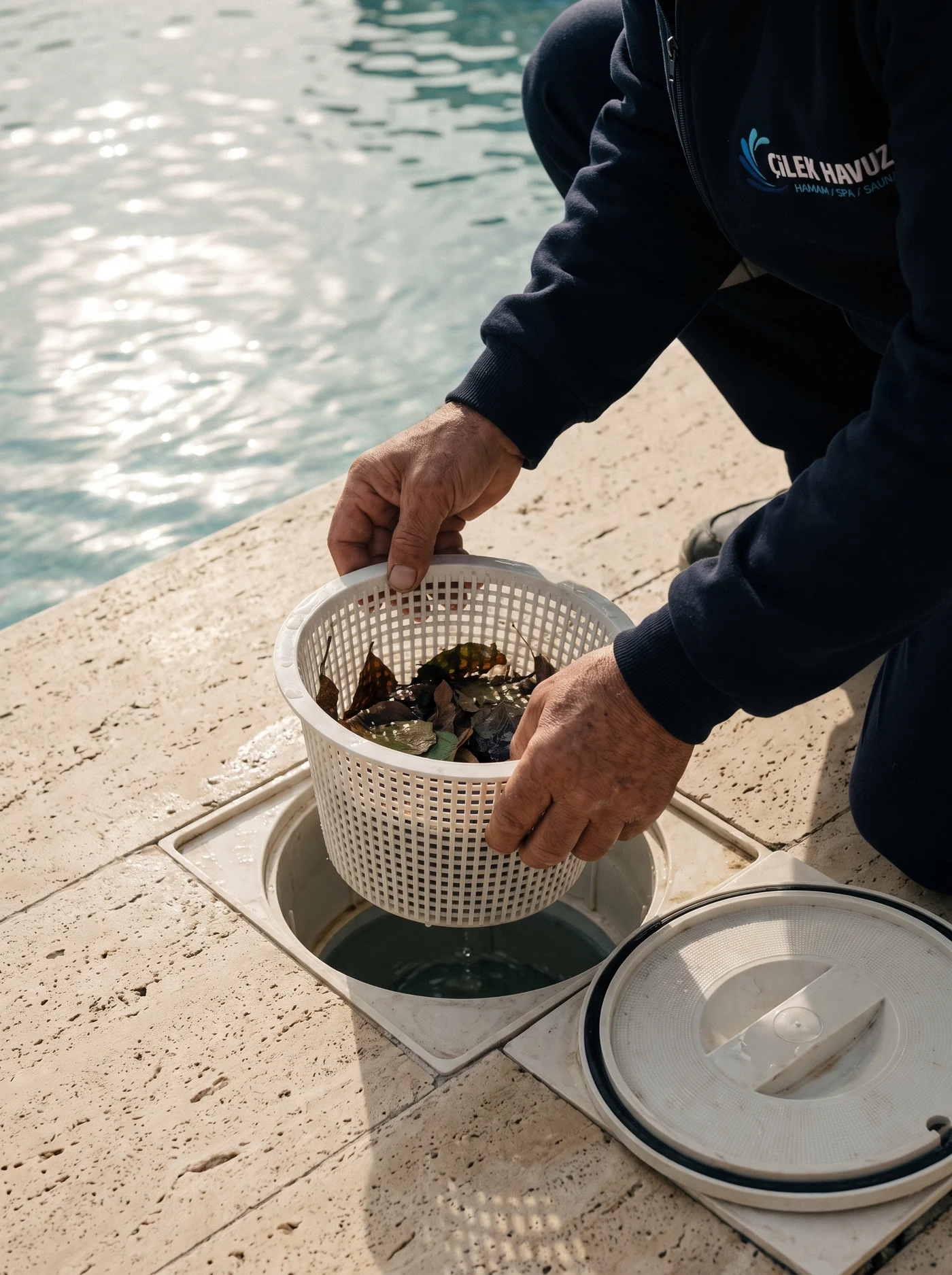
Skimmer throats and baskets are emptied and washed at every visit; the pump's pre-filter basket is cleaned with the same discipline. A blocked basket lowers the flow rate, tires the pump for nothing and erodes the filtration efficiency of the whole season.
On the same round the water level is held at the skimmer line, and the flow from the return nozzles and the seating of the basket and lid gaskets are checked. A line drawing in air usually gives its fault away here.
- Emptying and washing the skimmer baskets
- Checking the skimmer lids and throats
- Cleaning the pump pre-filter basket
- Checking baskets and lids for cracks
- Holding the water level at the skimmer line
- Checking the flow at the return nozzles
- Checking the vacuum line and valves
- Gaskets seated fully in place
The cheapest cure for a drop in flow
The place to look before replacing a pump is the baskets: a blockage is the most frequent and the least costly cause of weak flow to resolve. That is why this step is never skipped on any visit.
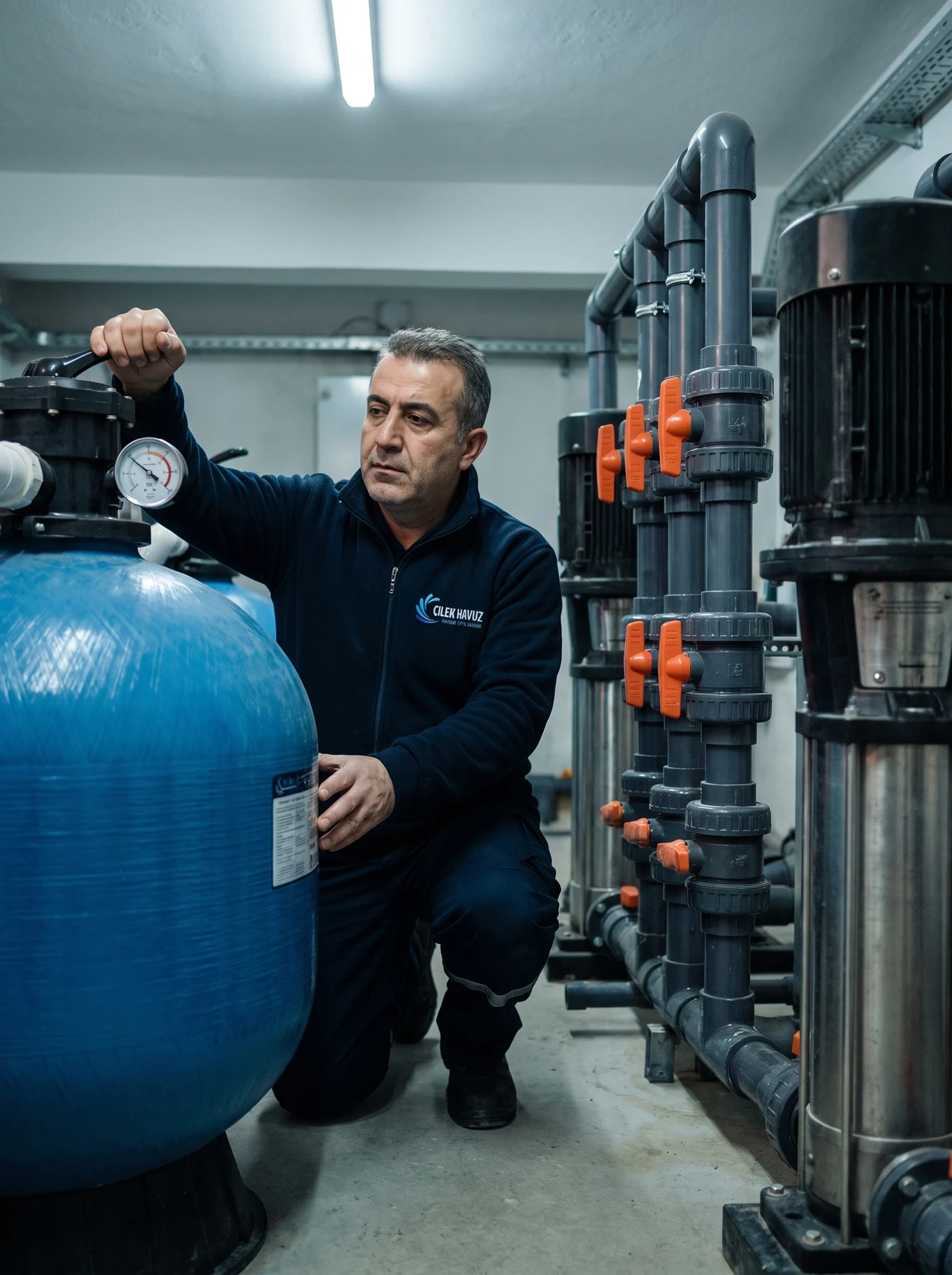
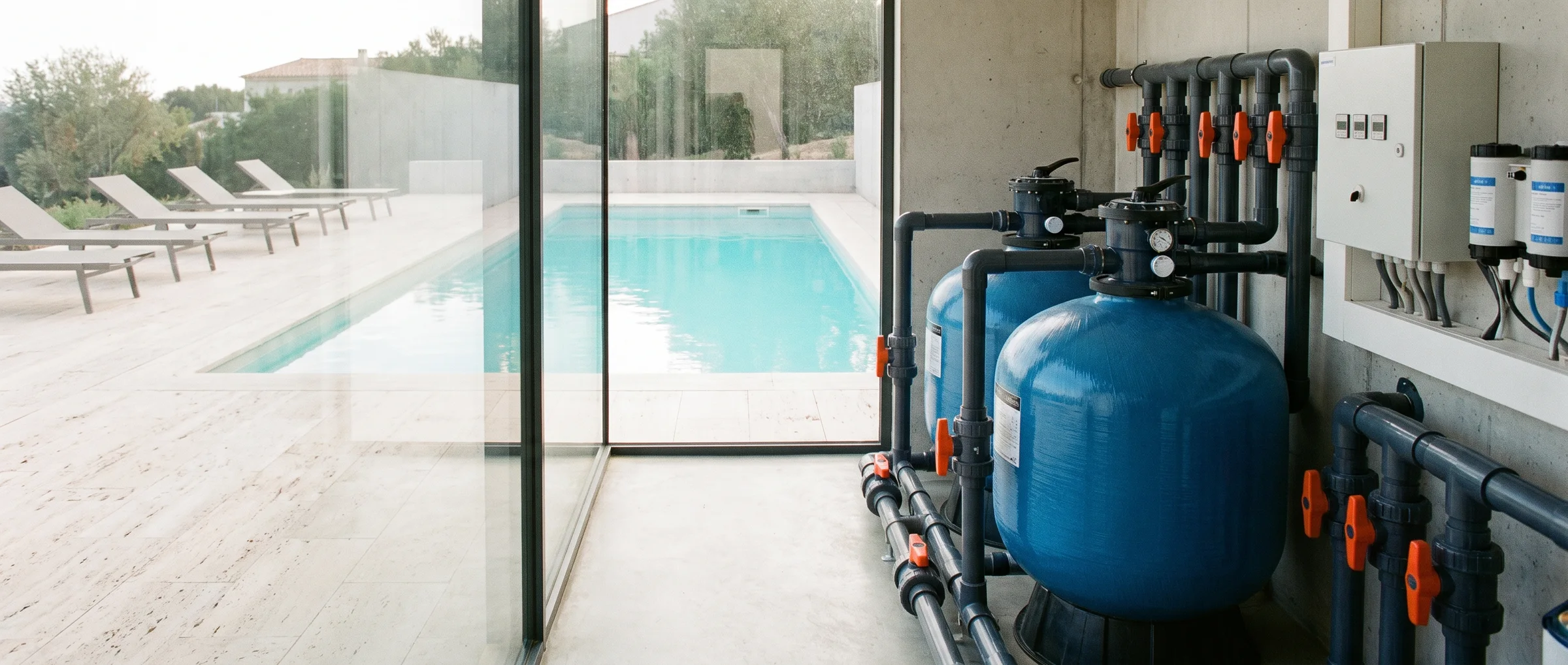
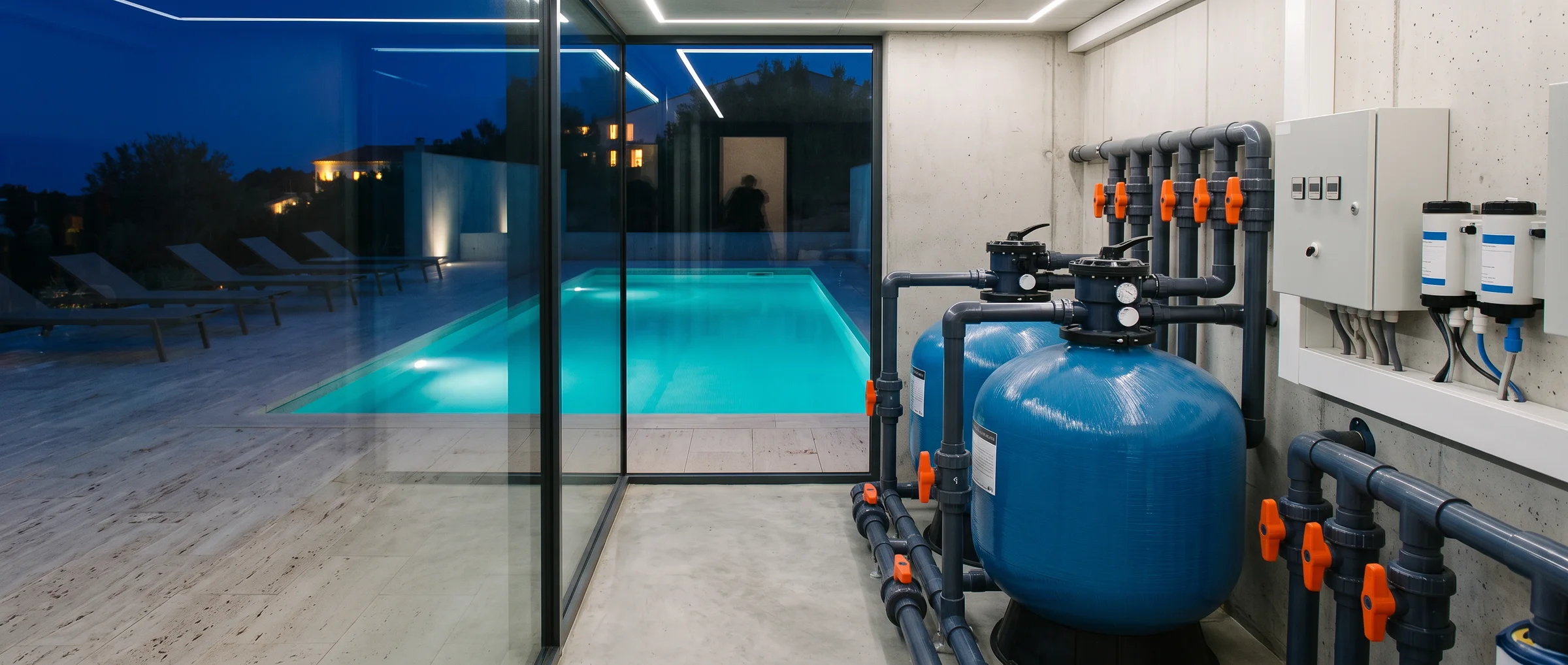
If maintenance ended with the water it would be half done: the plant room is listened to at every visit as well. The filter pressure is read and compared against its clean starting value; if the needle has risen noticeably, the filter is backwashed and always finished off with a rinse.
The pump is listened to, the mechanical seal and gaskets are scanned for leaks, and the heating and automation are checked for fault codes. Faults arrive not all at once but through quiet symptoms; a symptom caught early saves the season.
- Reading and comparing the filter pressure
- Backwashing where required
- Rinsing after backwashing
- Listening for pump noise and vibration
- Scanning the mechanical seal and gaskets for leaks
- Checking valve positions and for leaks
- Heating and automation fault codes
- Checking the dosing unit and probes
A fault arrives in a whisper
A pump that changes note, a rising pressure and a small trace of a leak announce the breakdown of weeks ahead. Work that is a small repair on the day of the signal is a major expense in mid-season.
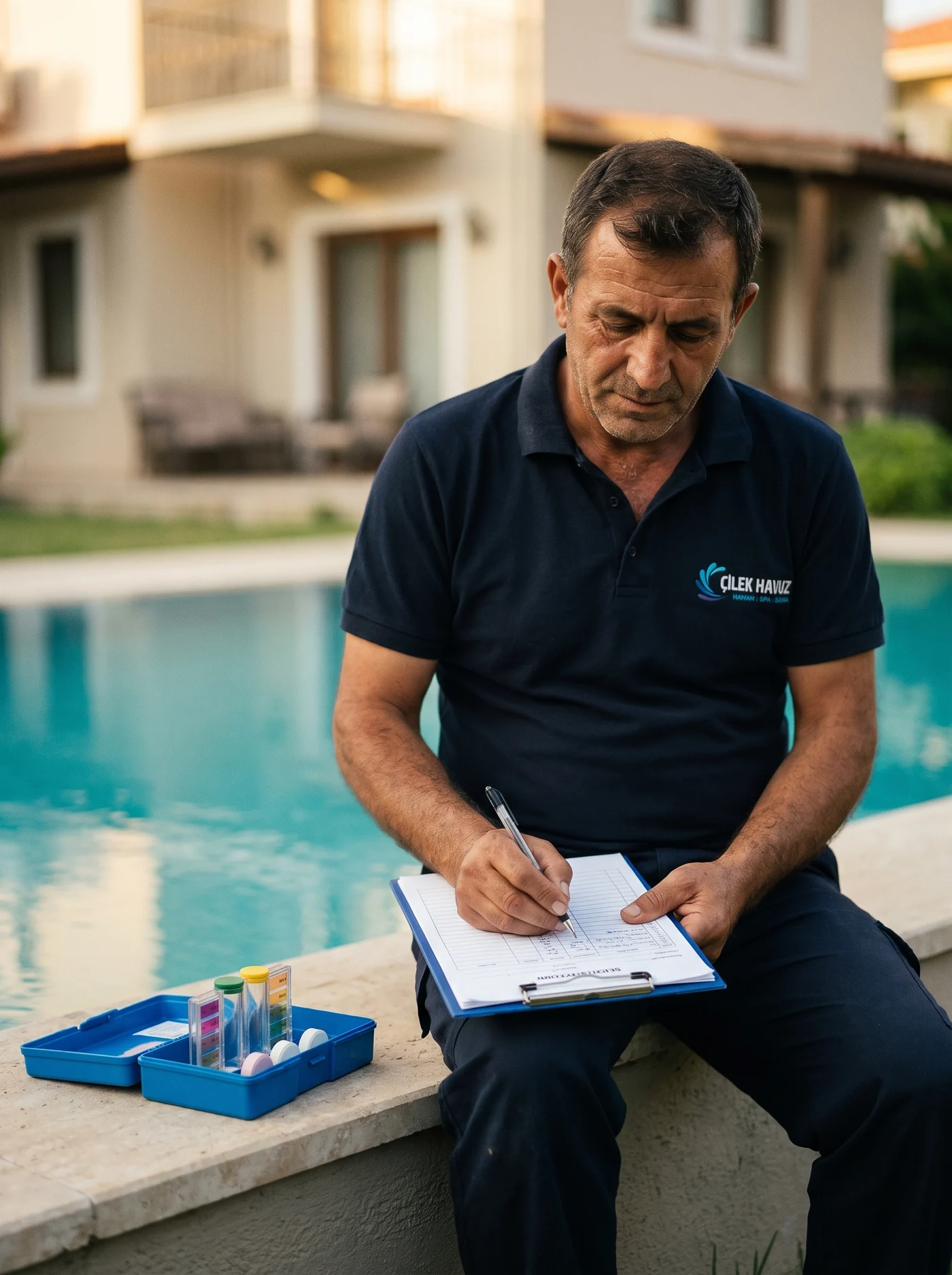
The visit closes with the measured values and the work carried out being sent to you in writing. You do not need to be at home; you can follow the state of your pool from the report even when you are away, and at the end of the season the whole history is gathered in a single file.
The discipline of record-keeping is a comfort in a villa and a necessity in a commercial facility: in residential-complex and hotel pools, measurement records give management an auditable order and a file ready for health inspections.
- Recording the measured values
- Listing the work carried out
- Noting early findings
- Recommendations and planned repair items
- Photographic record where necessary
- Sending the report after the visit
- Seasonal trend assessment
- Inspection file order for facilities
A trend says far more than a single measurement
A slowly rising filter pressure, or a pH that keeps drifting, is invisible without the values accumulated on the card. Maintenance with reporting turns your pool into a system with a memory.
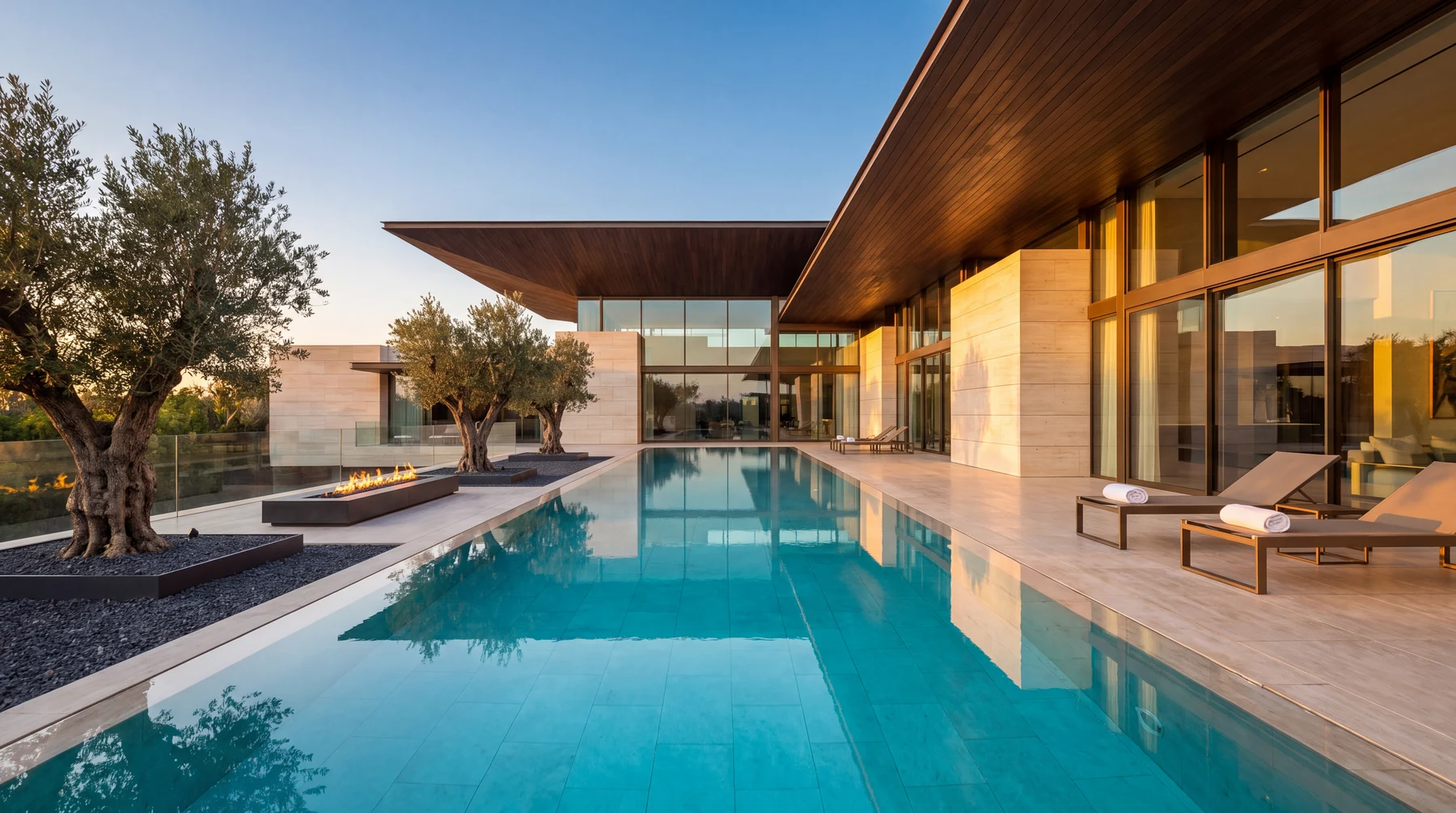
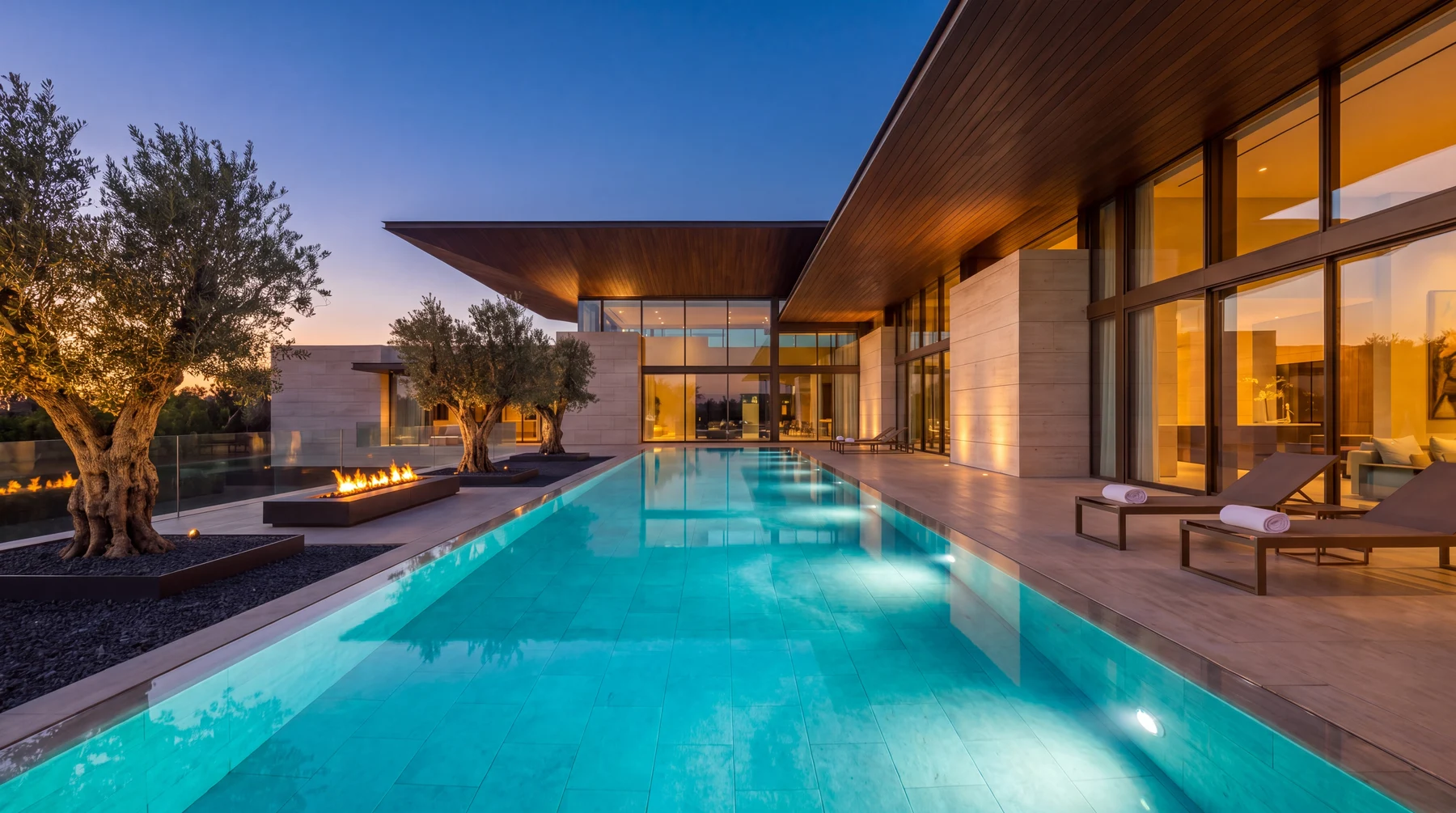
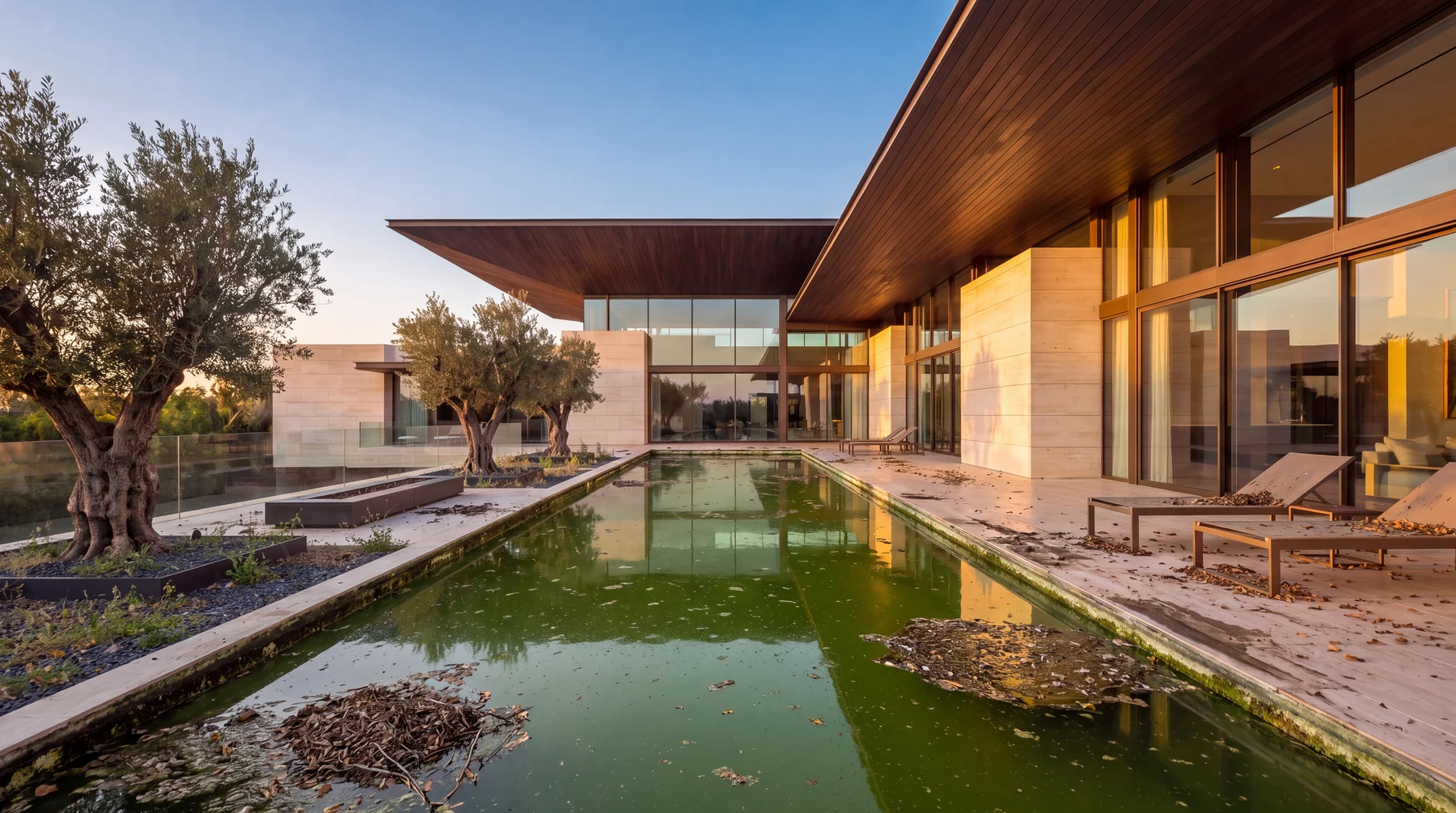
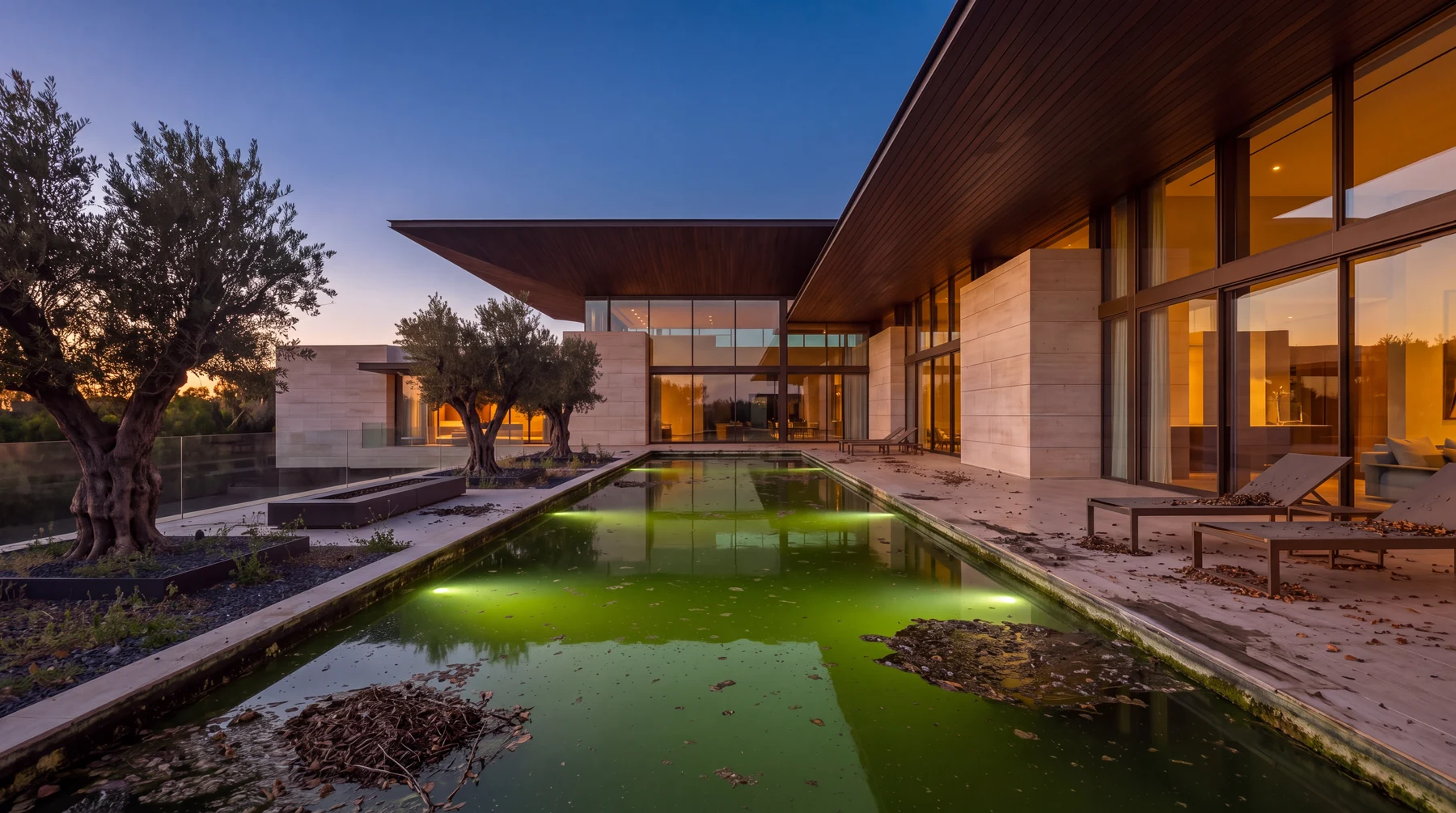
Our projects
Every project is a transformation story; see the before and after for yourself.
In their own words,their own stories
From corporate facilities to villa projects — short story videos from the names who trusted us.
 Delivered with confidenceMinistry of National Defence
 Thermal comfortTenzile Erdoğan Thermal Hotel
 Dreams came trueMehmet Sevigen
 The garden's new heartHakan Gönen
 Holiday at homeÇetin Uğurlu
Company & Contact
To talk about your project, we are one call away.
Legal Name
Çilek Havuz
Founded
1998 · Istanbul
Head Office
Çilek Plaza, Eyüp Sultan Mah. Yakacık Cd. Feshane Cd. No: 2 D:4 D:1, 34885 Sancaktepe / İstanbul
Service Area
All of Türkiye · exports to 14 countries
Portfolio ·
A selection of pool and spa projects we have brought to life all across Türkiye.
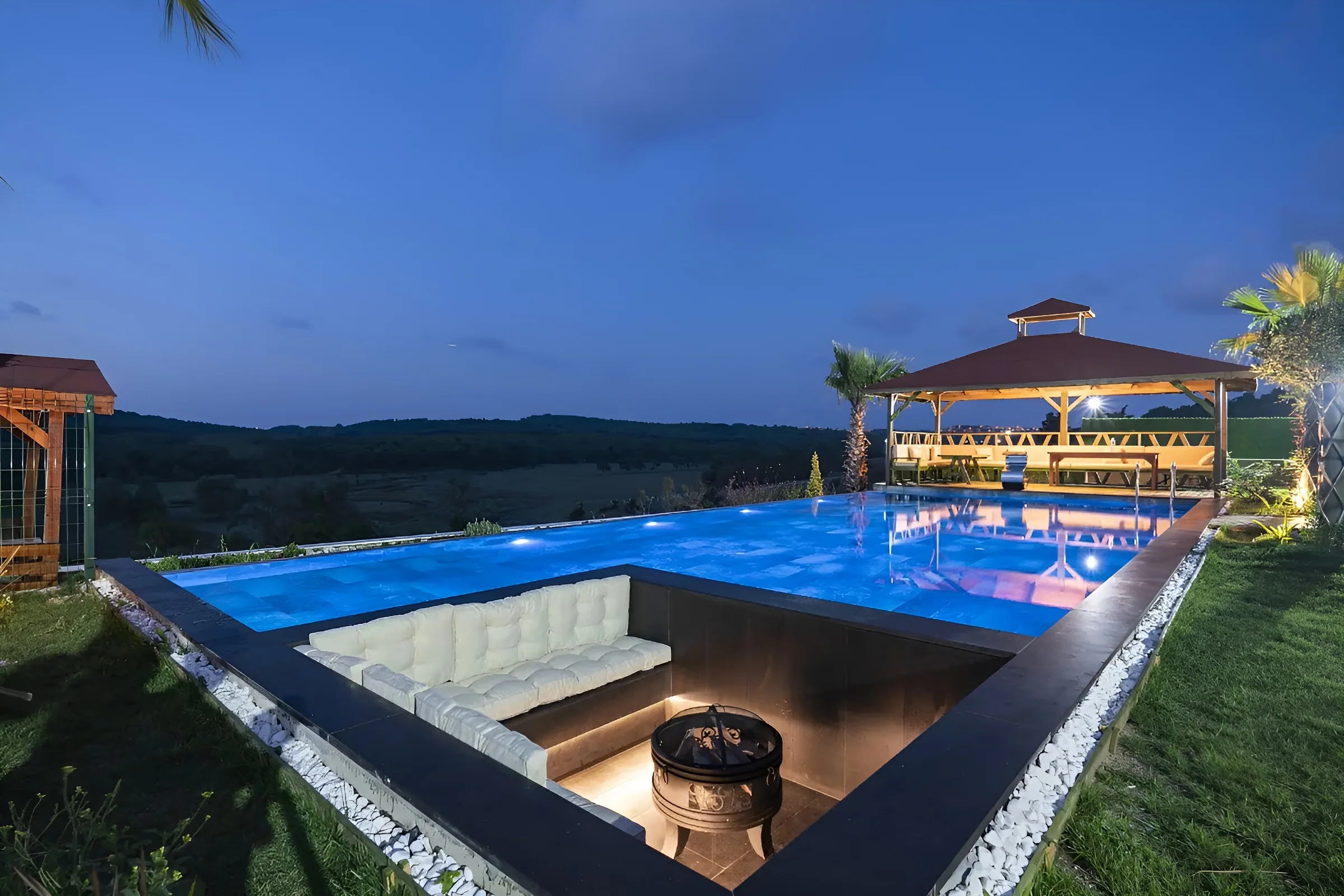
 Villa
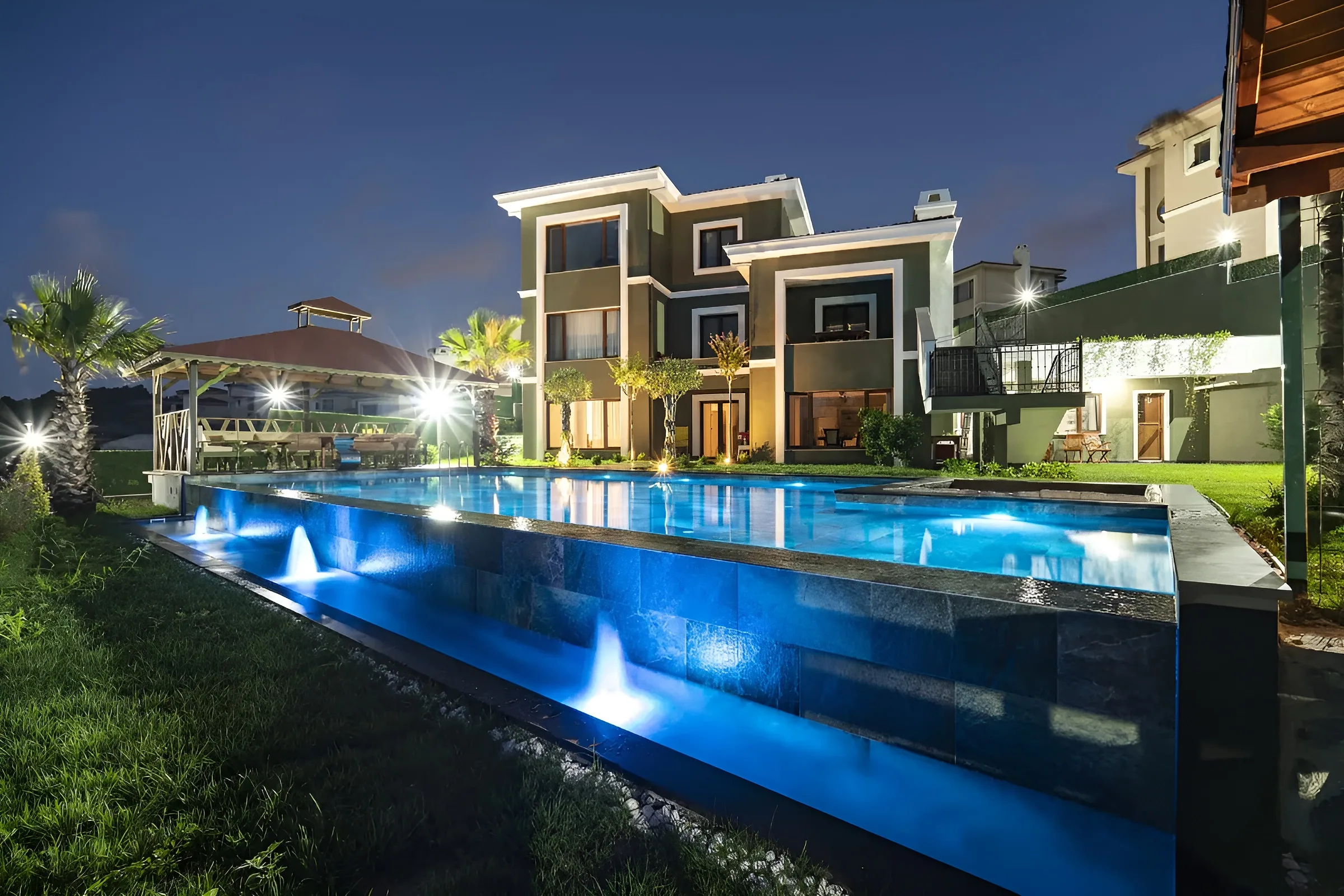
VillaMehmet Sevigen · Çatalca Infinity Pool
A 12×6 m reinforced-concrete infinity pool completed in Çatalca, Istanbul, in 2025.
- Location
- Çatalca / İstanbul
- Completion
- 2025
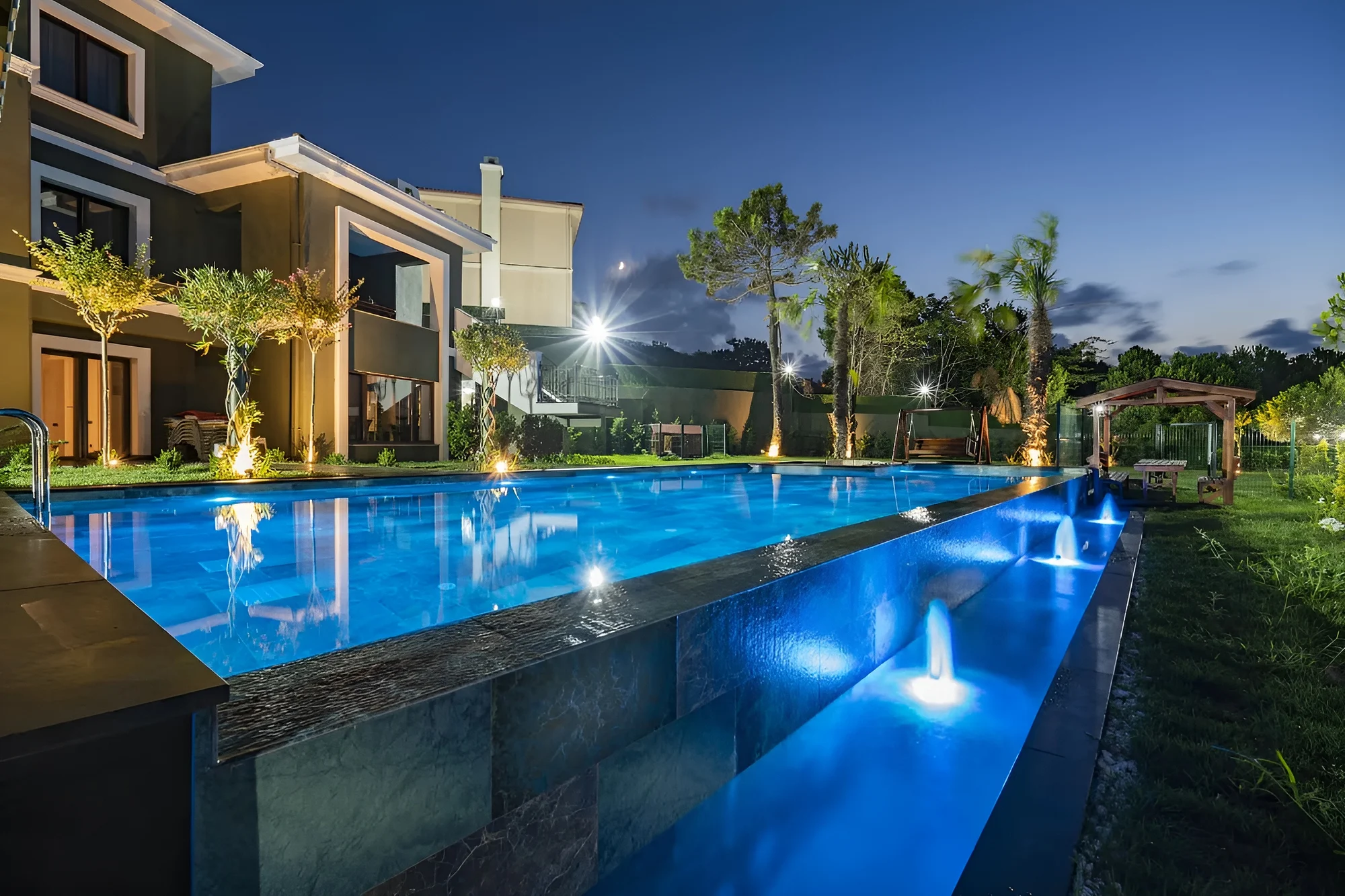
 Villa
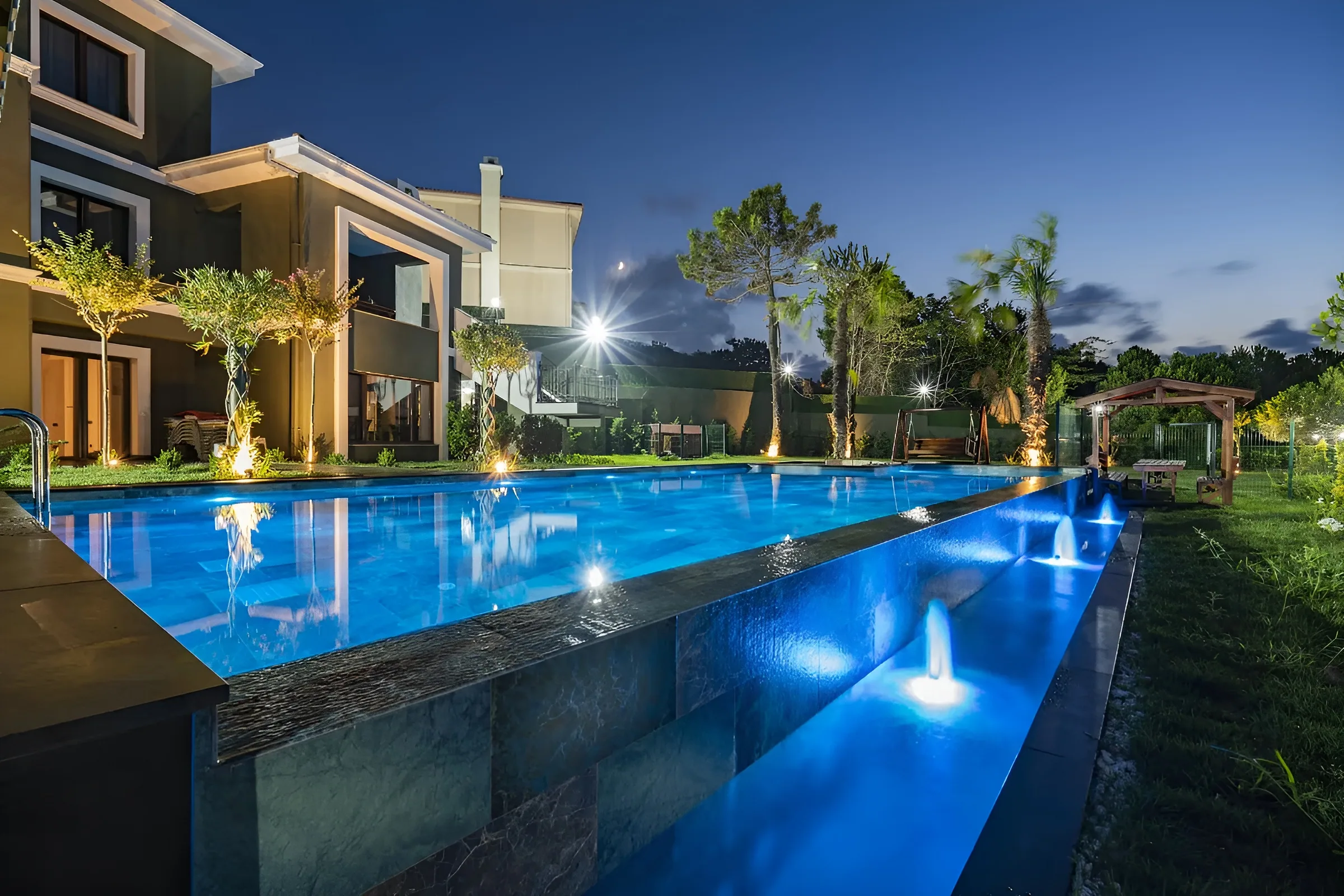
VillaHakan Gönen · Hadımköy Hidden-Overflow Pool
An 11×6 m hidden-overflow concrete pool completed in Hadımköy, Istanbul, in 2024.
- Location
- Hadımköy / İstanbul
- Completion
- 2024
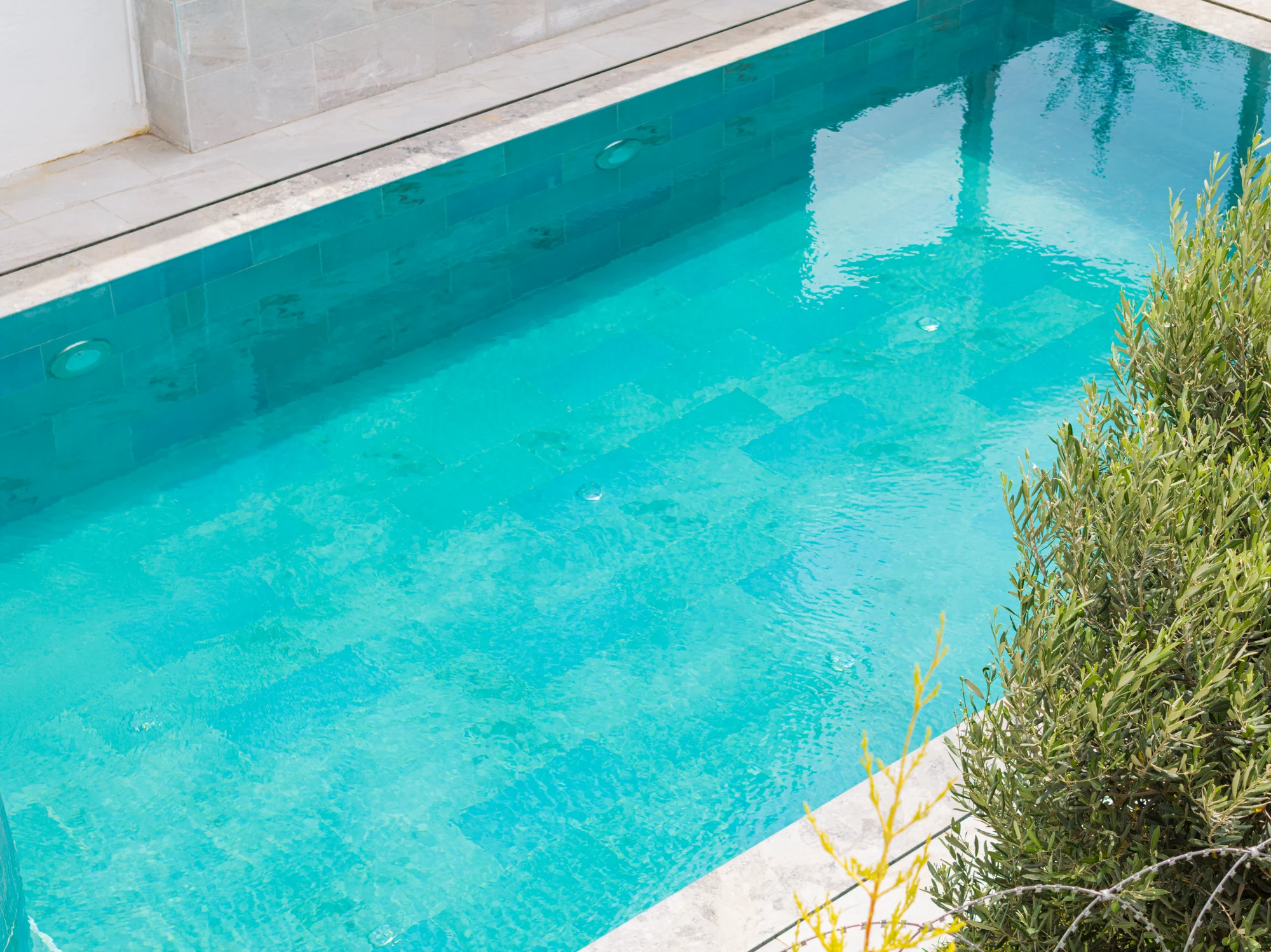 Villa
VillaZeynep Mayadağlı · Silivri Hidden-Overflow Pool
A 5×10 m hidden-overflow concrete swimming pool completed in Silivri, Istanbul, in 2024.
- Location
- Silivri / İstanbul
- Completion
- 2024
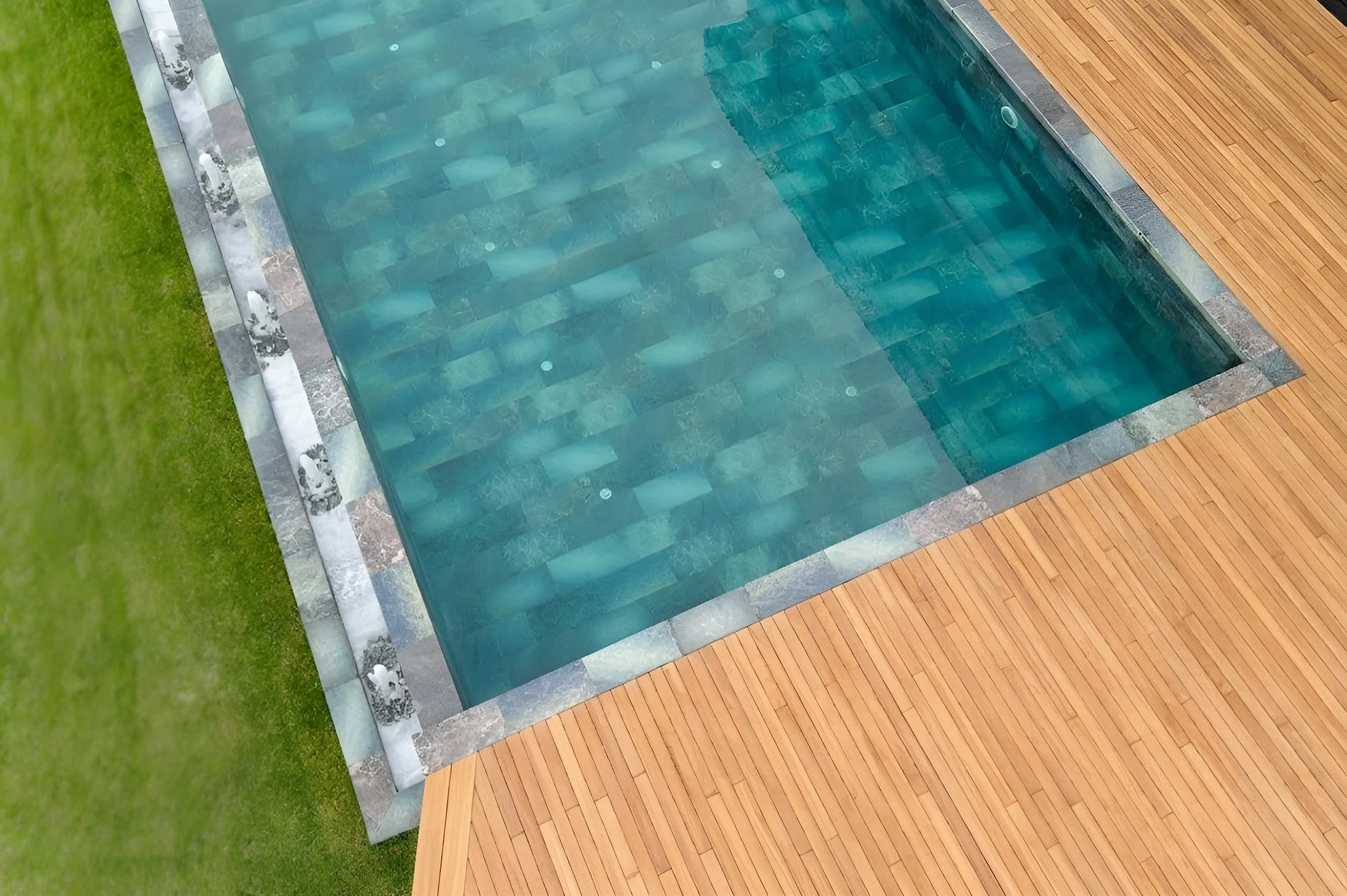 Villa
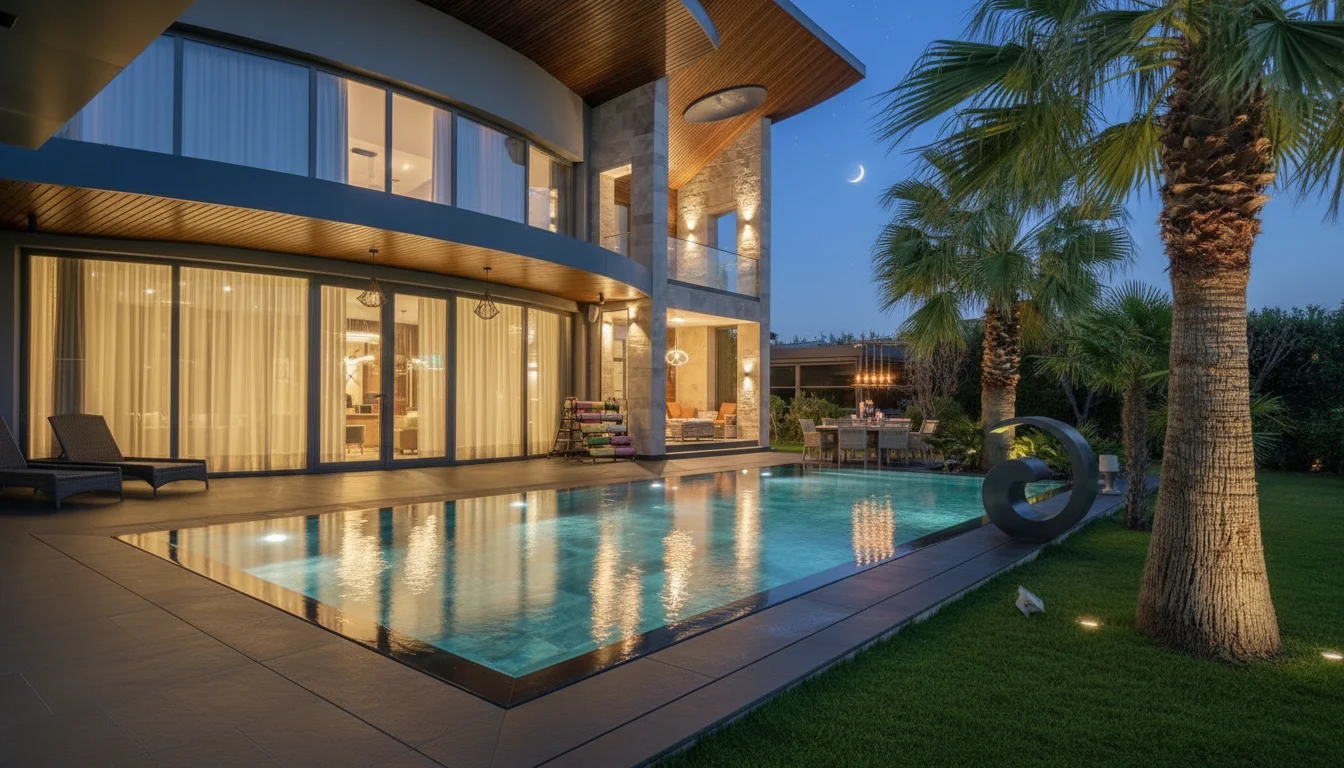
VillaÇetin Uğurlu · Villa Pool
A private villa pool project completed in Istanbul.
- Location
- İstanbul
- Completion
- 2024
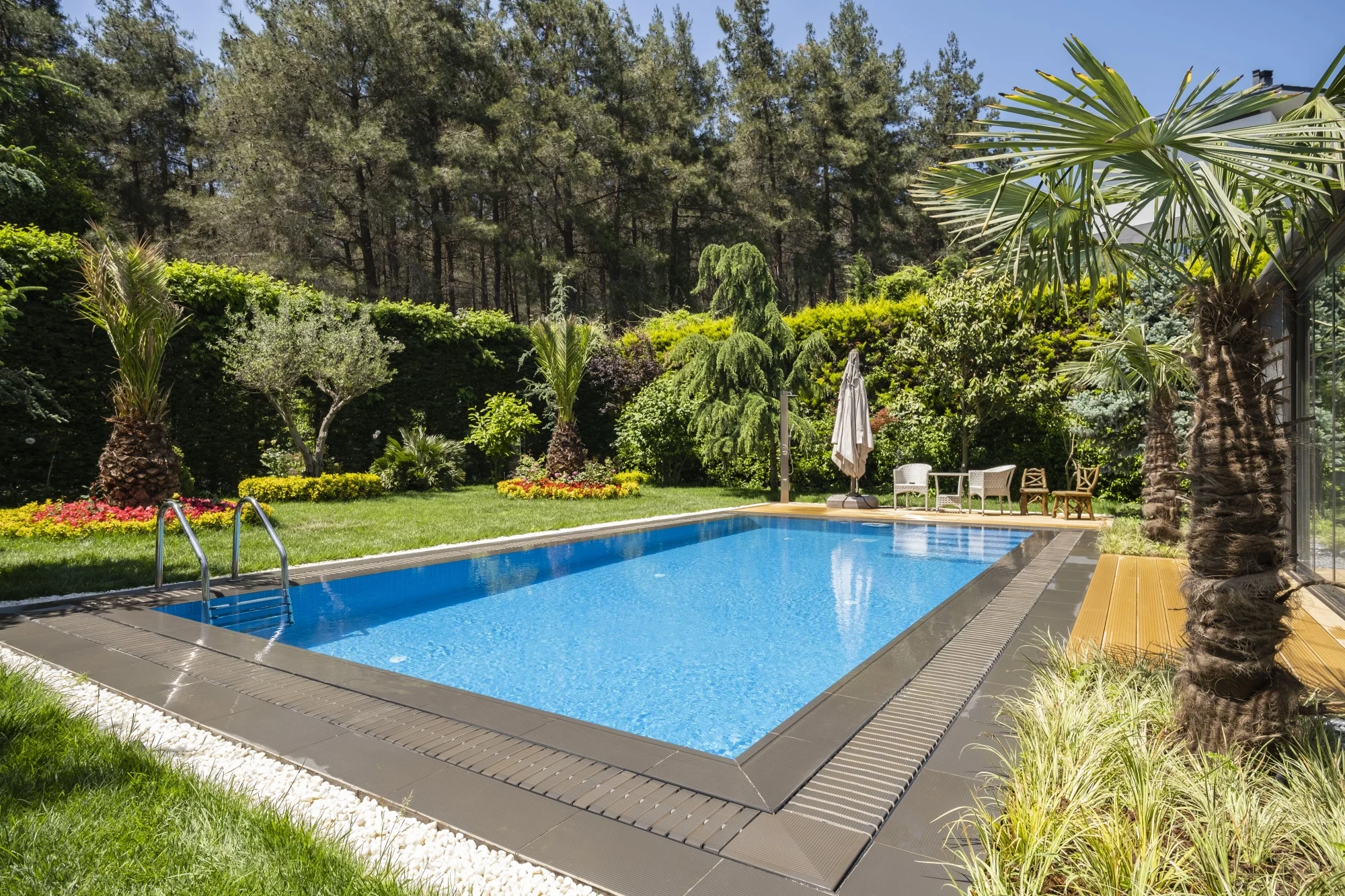 Villa
VillaRıza Latif · Çekmeköy Overflow Pool
An overflow concrete swimming pool completed in Çekmeköy, Istanbul, in 2024.
- Location
- Çekmeköy / İstanbul
- Completion
- 2024
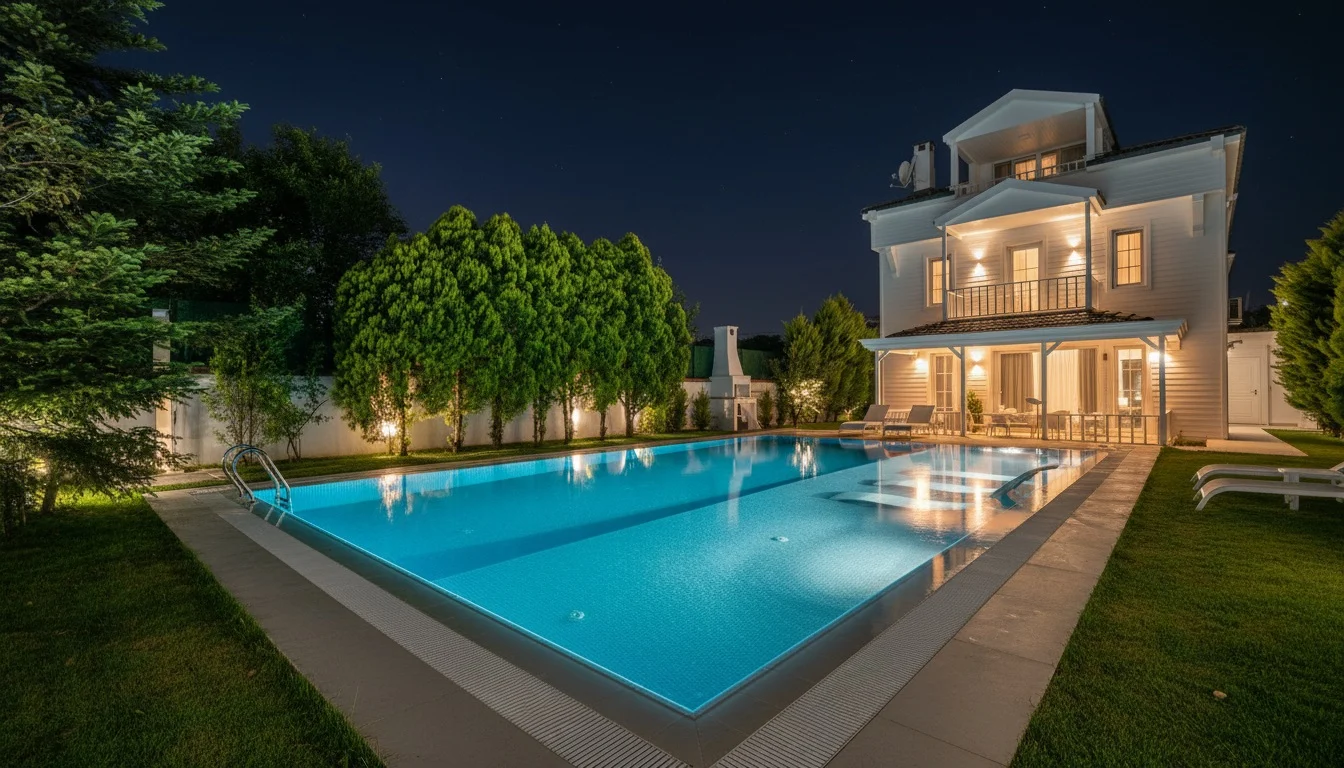 Villa
VillaCihan Kızılkaya · Şile Pool Project
A private villa pool project completed in Şile, Istanbul.
- Location
- Şile / İstanbul
- Completion
- 2024
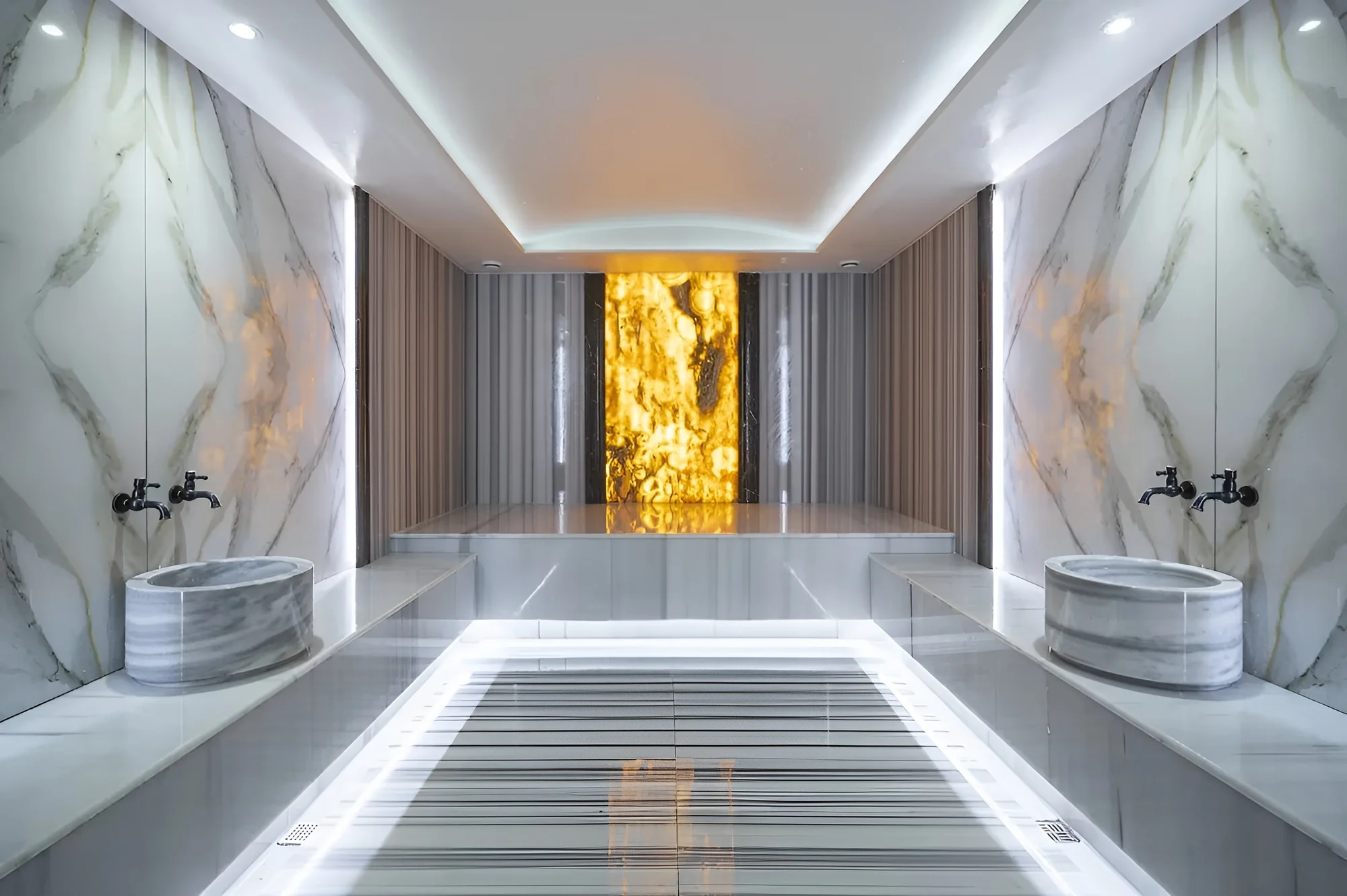 Villa
VillaDilan Polat · Villa Pool
A private villa pool project completed in Istanbul.
- Location
- İstanbul
- Completion
- 2024
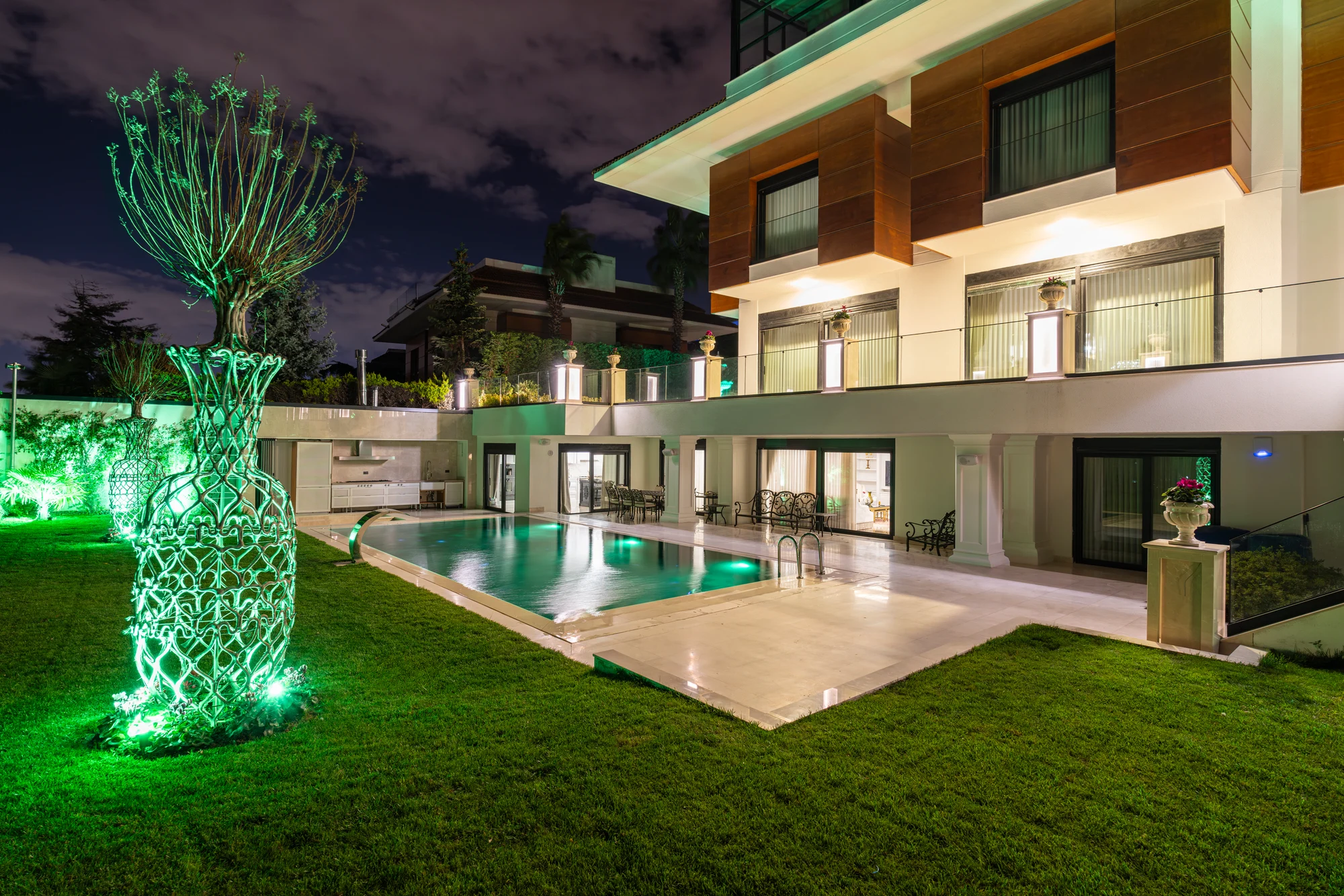 Residence
Efor Holding · Pool Project
A corporate pool project completed for Efor Holding.
- Location
- İstanbul
- Completion
- 2024
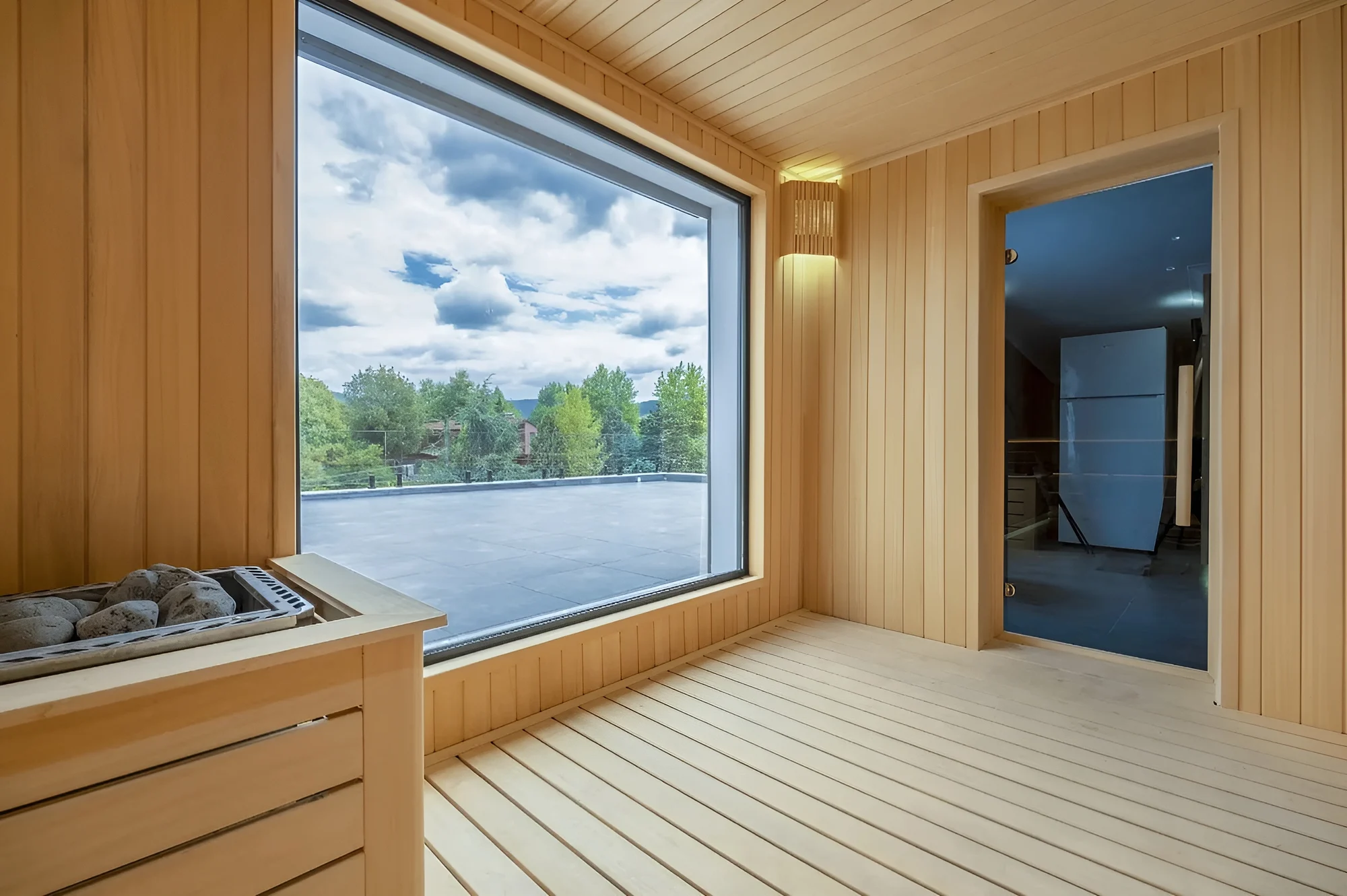 Spa & Wellness
Sinan Türker · Yalova Turkish Hammam & Sauna
A Turkish hammam and sauna wellness project completed in Yalova in 2025.
- Location
- Yalova
- Completion
- 2025
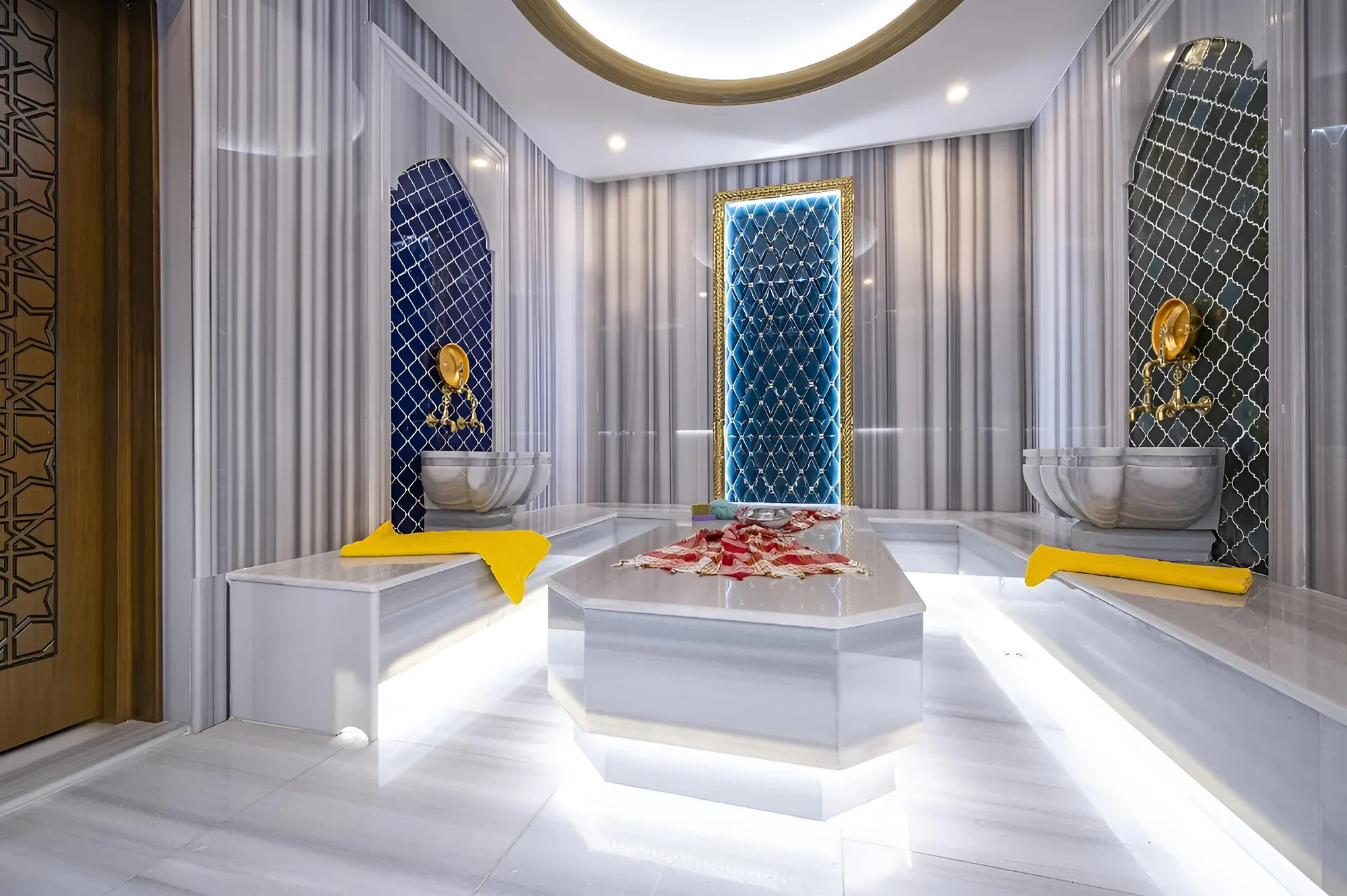 Spa & Wellness
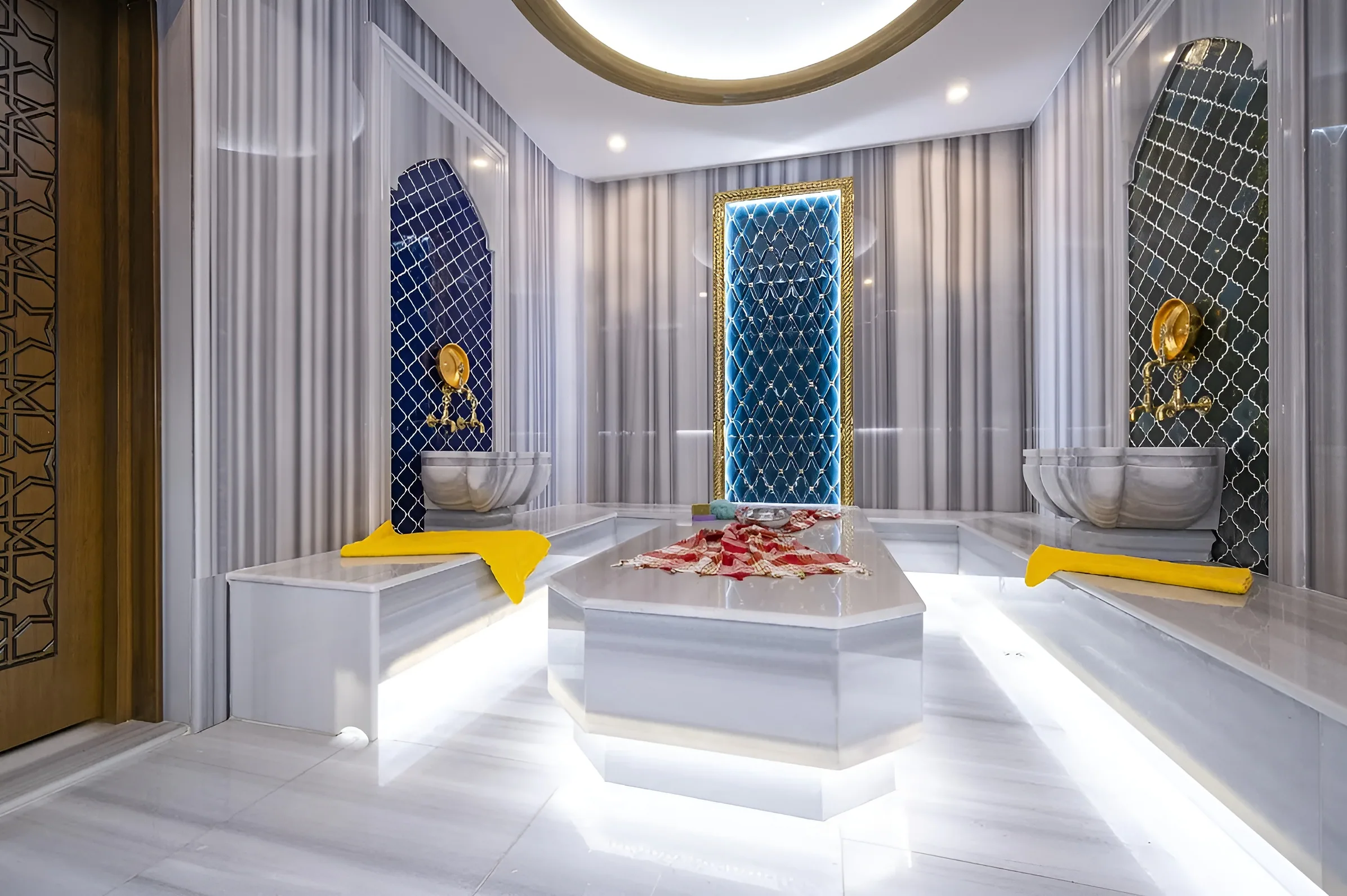
Kudu İnşaat · Yalova Hammam
A traditional Turkish hammam completed in Yalova in 2025.
- Location
- Yalova
- Completion
- 2025
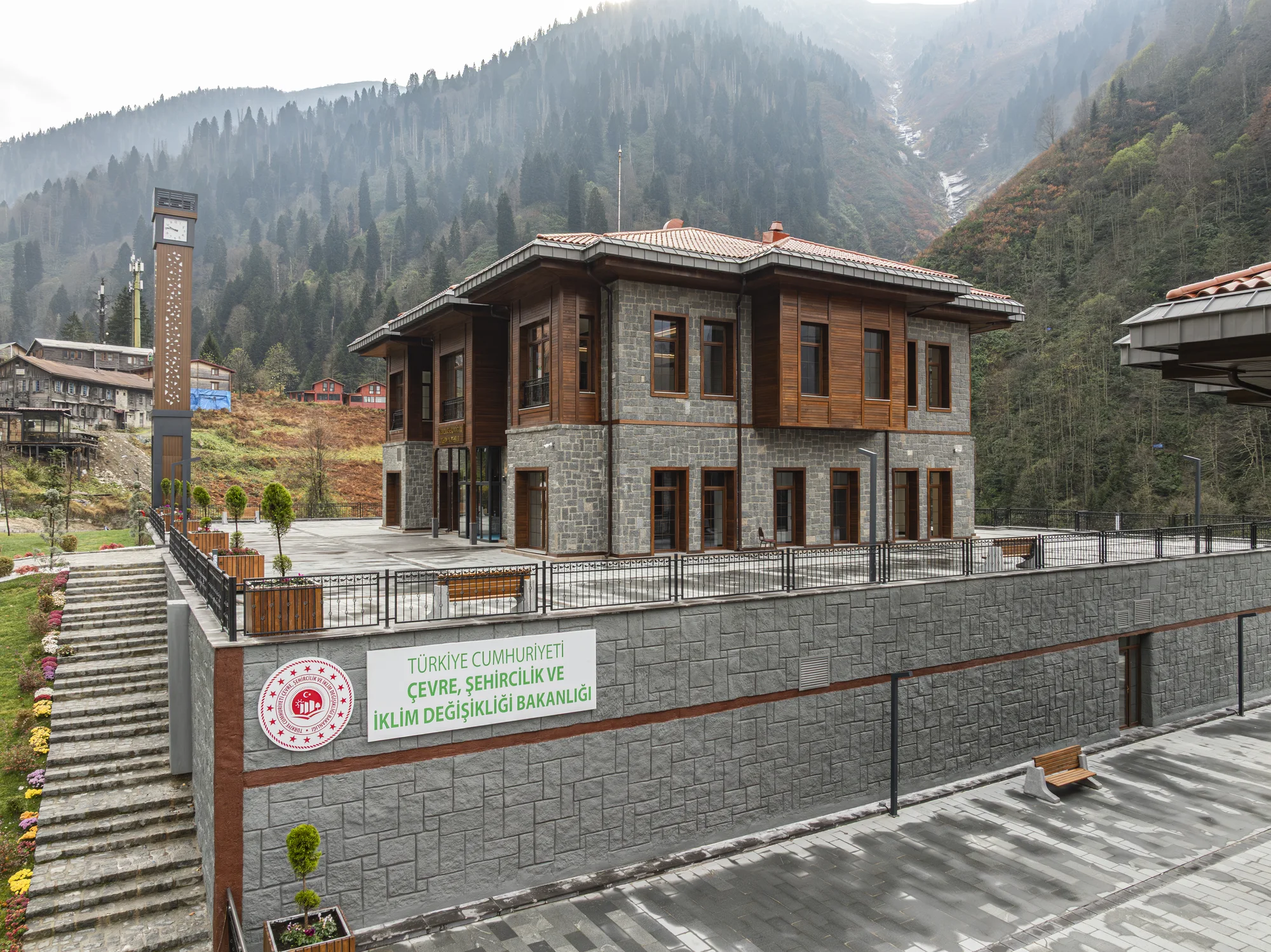 Thermal
Ayder Tenzile Erdoğan Thermal Hotel
In partnership with TOKİ we delivered 42 wet areas turnkey — a complete spa & wellness composition reaching from pools and thermal pools to sauna, steam room, salt room, jacuzzi and shock shower, and from VIP and suite Turkish hammams to Türkiye's largest göbektaşı hammam.
- Location
- Ayder Plateau / Rize
- Completion
- 2025
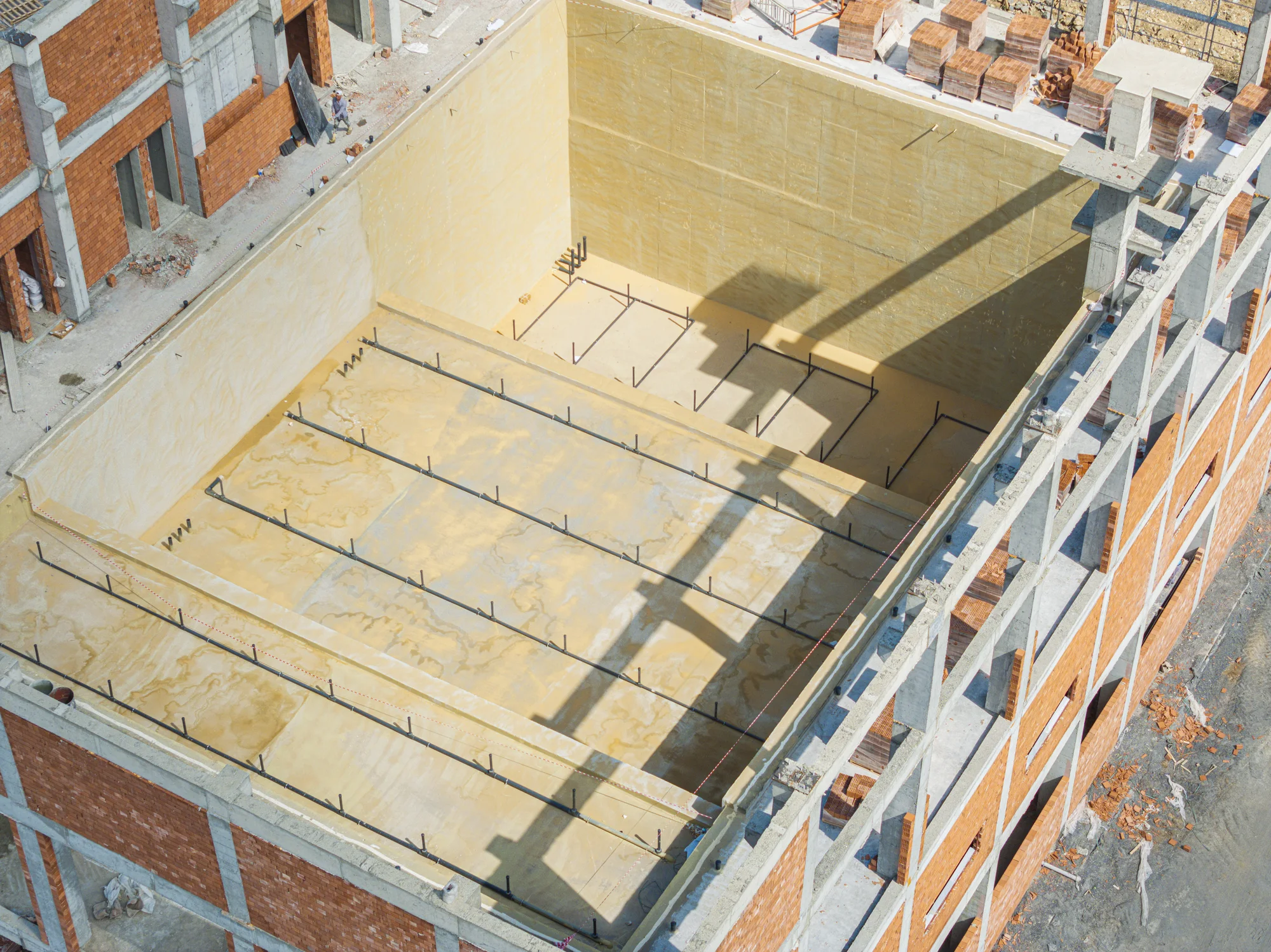 Public Sector
Ministry of National Defence · SAS Training Pool
In Riva we built Türkiye's deepest swimming pool turnkey — 33×22 metres and 10 metres deep. We are proud to have played our part in a facility where our country's heroes will train. The pool's water is disinfected by a 600-gram ozone system — making this Türkiye's largest swimming pool using ozone disinfection.
- Location
- Riva / Istanbul
- Completion
- 2024
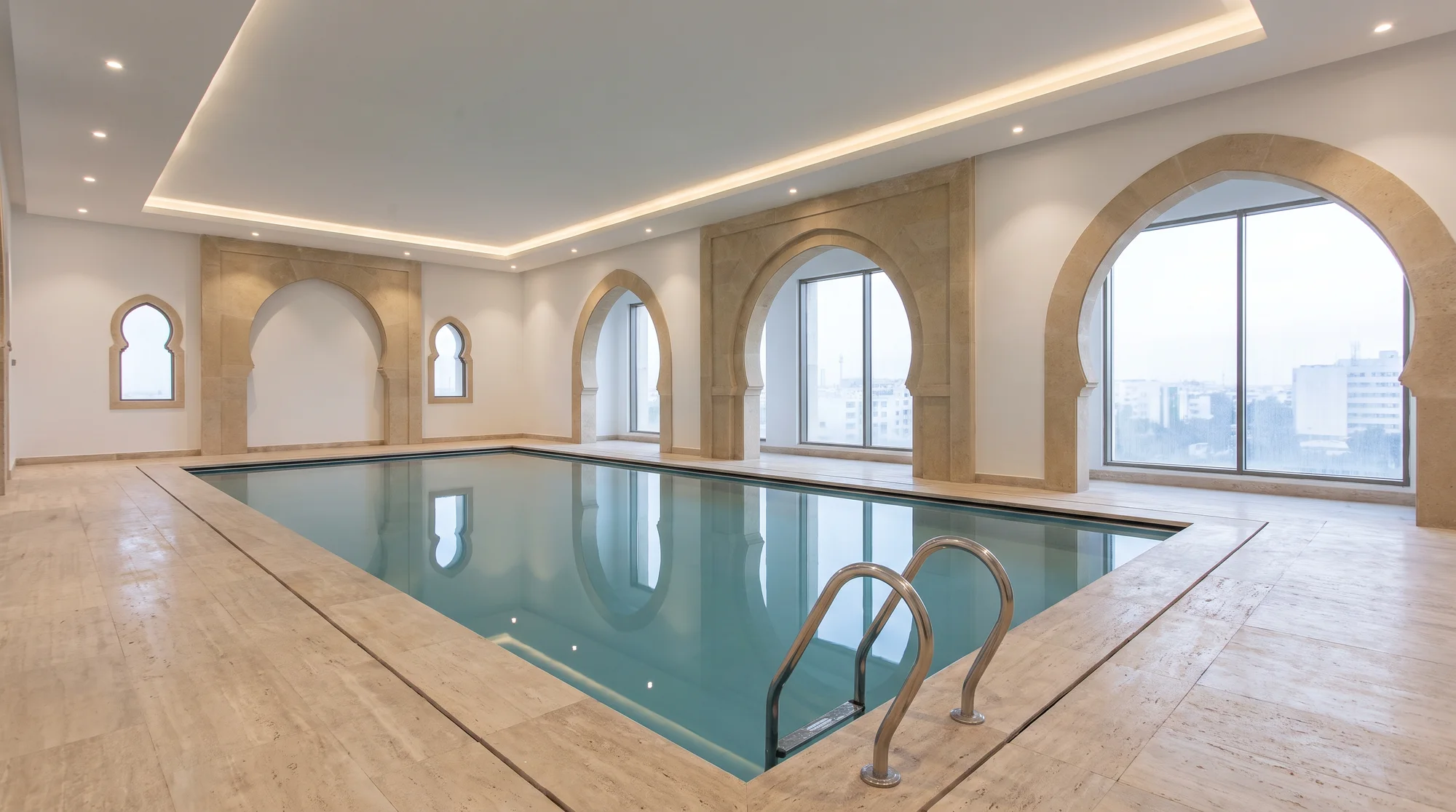 Spa & Wellness
Sofitel Algiers Hamma Garden
For China State Construction Engineering Corporation (CSCEC) we completed the Sofitel hotel's entire spa turnkey — from pools and hydrotherapy pools to jacuzzi, Vichy shower, Turkish hammam, sauna and massage systems.
- Location
- Algeria
- Completion
- 2020
Frequently Asked Questions
Every question on your mind; answered clearly.
Çilek Havuz Technical Team
Pool & Wellness Engineering
- Response Time
- Same day
- Channels
- Phone · E-mail · WhatsApp
If the answer you are looking for is not here, send your question directly to us and our team will reply as soon as possible.
Book a free site surveyThrough the swimming season a weekly rhythm is essential: water testing, chemical dosing, surface and floor cleaning and the skimmer basket are attended to every week. Monthly visits add filter backwashing and the balance parameters, while the change of season brings the opening and winterisation procedures. The programme is settled at the site survey according to how heavily the pool is used.
Çilek Havuz Technical Team
The standard scope covers water-chemistry testing and dosing, surface and floor cleaning, skimmer and basket servicing, filter backwashing, checks on the pump and equipment, and a written status note after every visit. Chemical supply, robotic cleaning and fault call-outs are added depending on the package; the Çilek Havuz technical team builds the plan that suits your usage together with you.
Çilek Havuz Technical Team
The main criteria are the volume and type of the pool (skimmer or overflow), the frequency of visits, whether chemicals are included in the package, and the location. Indoor pools and heavily used facilities call for more frequent checks. After the free site survey, the scope and the price are presented in writing, item by item.
Çilek Havuz Technical Team
Green water usually comes from algae and an imbalance in dosing, cloudiness from a filtration or balance problem. With the right diagnosis, shock treatment, a clarifier and intensive filtration are applied, and in most cases the water is swimmable again within 24-48 hours. Draining the pool is rarely necessary — diagnosis first, then intervention.
Çilek Havuz Technical Team
Basic dosing can be done by a home user; the difference lies in the discipline of measurement. In professional maintenance the water is assessed across pH, chlorine, alkalinity and hardness together, dosing is calculated on m³, and the readings are recorded. That prevents both the health risk and the silent damage the wrong chemical does to equipment.
Çilek Havuz Technical Team
Yes — winterisation is the most critical maintenance of the season. The water level is set, winterising chemicals are applied, the equipment is protected and the pool is covered, with the water monitored through periodic checks. A properly winterised pool goes into summer after a short spring opening; one that is not winterised starts the season with green water and a breakdown.
Çilek Havuz Technical Team
A robot is an excellent aid for cleaning the surface and the floor; it does not, however, measure water chemistry, dose chemicals, backwash the filter or spot an equipment fault. The healthiest arrangement is the twofold one, in which the robot takes on the daily cleaning while periodic maintenance manages the chemistry and the equipment.
Çilek Havuz Technical Team
The practical rule is the pressure gauge: when the filter pressure rises above its normal operating value, or the water flow drops visibly, it is time to backwash; in routine maintenance this check is made at every visit. Where needed it is finished off with a rinse, and the condition of the sand or glass media is assessed seasonally.
Çilek Havuz Technical Team
Yes. At the first survey we examine the structure of the pool, the plant room and the water readings, and report any chronic problems — leaks, inadequate filtration, the wrong equipment. A 'reset' service then brings the water to its ideal balance and the routine schedule begins — what matters is not who built the pool, but how it is managed from here on.
Çilek Havuz Technical Team
You do not. Visits take place on a scheduled day and at a scheduled time, and after each one the readings taken and the work carried out are sent to you in writing. That way you can follow the state of your pool even when you are away, and see the entire maintenance history in a single report at the end of the season.
Çilek Havuz Technical Team
Since 1993, Çilek Havuz has provided periodic maintenance for villa, residential-complex, hotel and commercial-facility pools all across Türkiye, and also takes on pools it did not build itself. A free site survey can be arranged for your province.
Çilek Havuz Technical Team